- Season 7 Trailer
- The Jancis Robinson EXCLUSIVE Part 1
- The Jancis Robinson EXCLUSIVE Part 2
- Chile Wines of the Year 2025
- SAN LEONARDO – The insider’s Guide
- The Story of The Billionaire’s Vinegar – Part 1
- The Story of The Billionaire’s Vinegar – Part 2
- Blind Tasting Top 2021 Super Tuscans
- Top of the Pops: Classic Fizz Beyond Champagne
- Rock and Rhône
- Our WINES OF THE YEAR (2025)
- Our BOOKS OF THE YEAR (2025)
- Hugh Johnson UNCUT
- McLaren Vale – Boxer to Ballerina
- McLaren Vale – The Grenaissance
- Peter Fraser – A Tribute
- New Zealand Wines of the Year 2026
- Sam Neill UNCUT
- Giveaway EXTRAVAGANZA + Game-changer Coravin
- Greg Lambrecht UNCUT
- The Story of Stalin’s Wine Cellar PART ONE
- The Story of Stalin’s Wine Cellar PART TWO
- Drop Stop: Wine’s Big Water Issue
- Missing the Point?
- Keep Calm and Sauvignon
- Yeastie Boys: Wine’s Modern Microbial Solutions
- Adelaide Hills: Lofty Ambitions
- Natural Wine RELOADED
- The Judgement of Paris 50 Years On
- The Greatest Chardonnay Showdown
- Pays d’Oc Part 1 – Land of the Free
- Pays d’Oc Part 2 – Future Proofing
- News & GB Wine Update
- Wine Travel: The Inside Steer
Summary
Fancy a story about warriors, monks, family strife, an undercover grape variety, risking financial ruin for stubbornly sticking to stylistic guns, and deliciously drinkable fine wine?
Thought you might.
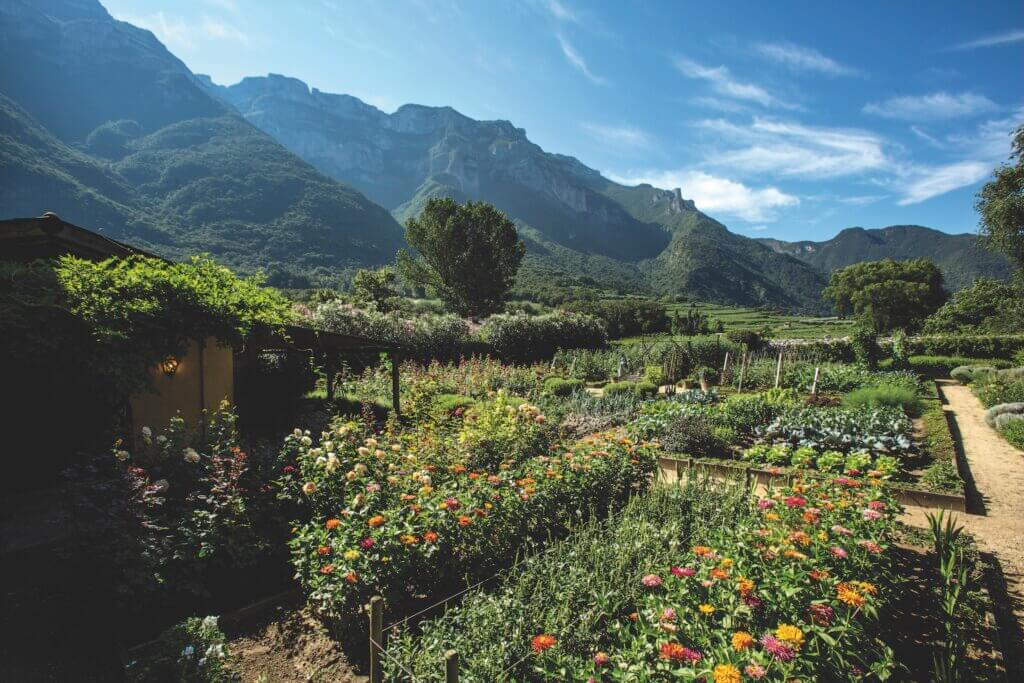
So join us as we get a privileged glimpse into the San Leonardo wine estate in Italy’s northern Trentino Valley, not far from Verona and Lake Garda.
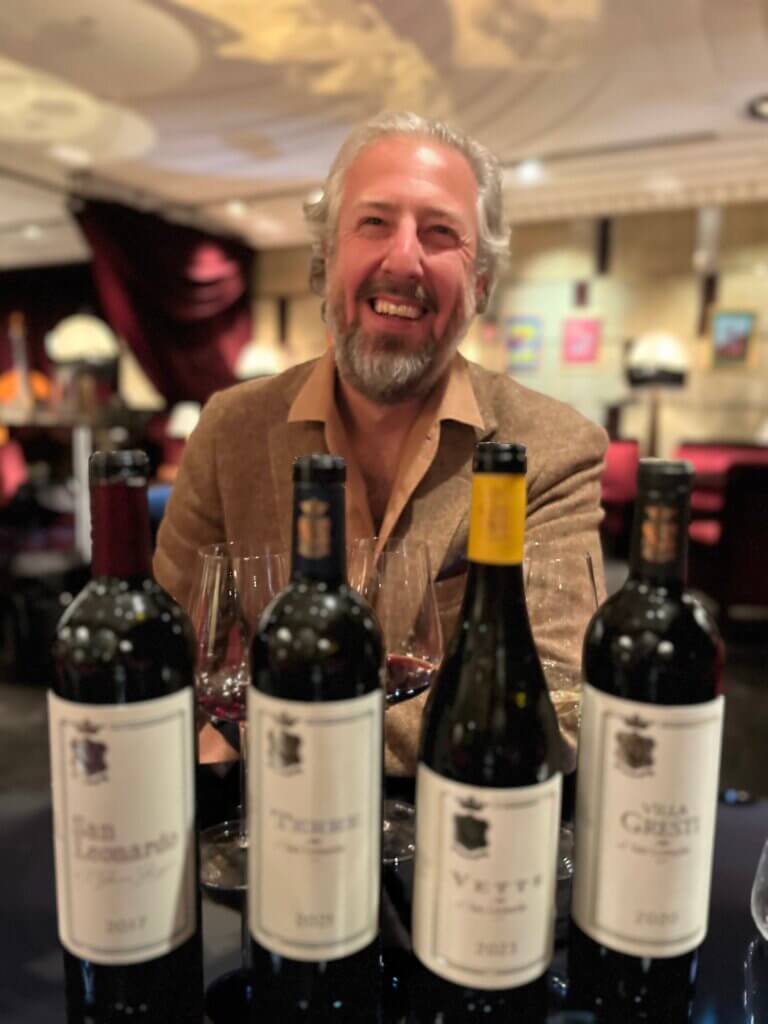
Our guides are estate co-owner and manager Anselmo Guerrieri Gonzaga, Master of Wine Alex Hunt, and a bunch of pretty tasty bottles.
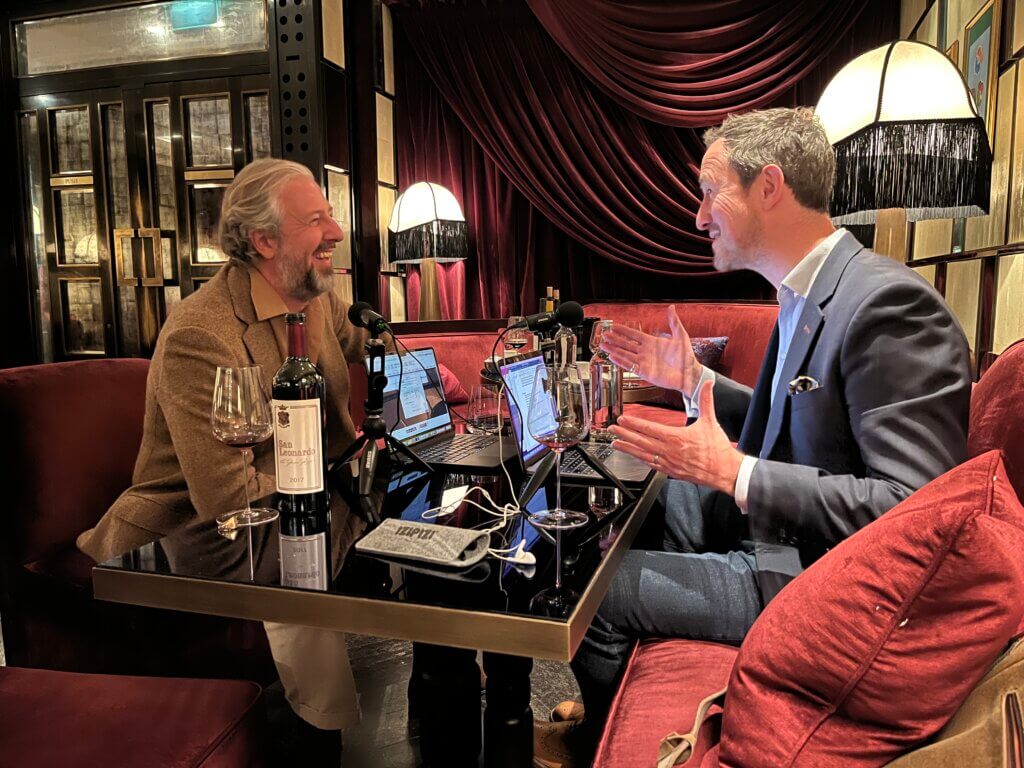
San Leonardo makes a number of wines, all refined and understated. But it’s best known for its top red, a discreet yet complex blend of Cabernet, Carmenere and Merlot.
Despite being dubbed, ‘The Sassicaia of the north’, it’s tended to fly under the radar, remaining something of an insider’s tip, meaning the wine hasn’t shot up in price as much as many of its more vaunted SuperTuscan cousins.
Along the way, we discuss bodybuilders, banana plantations, wine as ‘an energy drink’, Sassicaia, aubergines, Teroldego, hoodwinking bankers, ‘Nordic’ wine, how Carmenere came to Trentino and why Anselmo’s dad Carlo called him, ‘an idiot’.
Starring
- Anselmo Guerrieri Gonzaga – San Leonardo
- Alex Hunt MW – Berkmann Wine Cellars
- Susie & Peter
Subscribe
Sign up to Wine Blast PLUS to support the show, enjoy early access to all episodes and get full archive access as well as occasional subscriber-only content.
Just visit WineBlast.co.uk to sign up – it’s very easy, and we will HUGELY appreciate your support.

It takes a monumental amount of work to make Wine Blast happen. Your support will enable the show to continue and grow – and we have lots of fantastic ideas of things we’d like to develop as part of Wine Blast to maximise the wine fun. The more people who sign up, the more we’ll be able to do.
We currently have an 15% Early Bird discount on initial headline subscription prices – just use the Promo Code magnum25 when you pay. But it’s a limited time offer – so don’t hang around!
Links
- You can find our podcast on all major audio players: Apple Podcasts, Spotify, Google, Amazon and beyond. If you’re on a mobile, the button below will redirect you automatically to this episode on an audio platform on your device. (If you’re on a PC or desktop, it will just return you to this page – in which case, get your phone out! Or find one of the above platforms on your browser.)
Wines
As promised on the episode, here are Peter’s tasting notes from a San Leonardo vertical held in London in December 2017, in the company of Marchese Carlo Guerrieri, his son Anselmo Guerrieri and long-time estate manager Luigino Tinelli.
San Leonardo 1986, 12.5%
- Lovely elegant pale developed hue. Glorious claret-esque aromas, baccy, dried herbs, roasted pepper. Energy, presence and class. Smooth, silky approach. Mineral undertow. Lovely stuff, elegant, fine, discreet. Not a total stunner. Not super winning. But yet understated savoury elegant discreet. With lovely texture that marries real silky smoothness and roundness with freshness and a certain tension. Intriguing confluence. Nice energy on finish but could be bigger. Intentionally mid-weight. Coming back to it at end, has such staying power, resonance and lovely lovely length, it’s seriously impressive. So I go up from 8-7.5 to 8/10 at least. (PJR, Dec 2017)
San Leonardo 1990, 12.8% (en magnum)
- Sightly toffee edge to elegant red/bk fruit plus roasted herbs. Seems to have puppy fat, somehow. Maybe the magnum effect? Certainly younger than the 1986. Juicier acidity and more presence on the palate, touch more weight and succulence. Very elegant, savoury, perhaps needs a few more years to develop. Still some firm grippy tannin in there. Like this. More to it. 7.5-8, maybe 8.5/10 in time. (PJR, Dec 2017)
San Leonardo 1995, 13%
- Again, slightly toffee aromas, quite young it seems. Colour also fairly youthful. Very green notes here, grassy and bell pepper. Earthy, papyrus too. This wine has a regular rusticity to it. Not unappealing but it is ‘vini campesini’. Really grippy tannin and slightly hollow, lean, sinewy. Seems like a cool vintage that hasn’t come round and is a bit too skinny. Tiny bit short too. Not super impressive. Despite savoury tension. 7.5/10 (PJR, Dec 2017)
San Leonardo 1997, 13%
- Really evocative leaping perfume here. Yes green, grilled pepper and herbal tones. But also warm earth. And dried blossom flowers. Dried fruit. A certain carnality, dried or cured meat to it as well. But definitely with that seasoning of dried pepper/paprika. Fluid, good energy and grip, focus. Savoury, defined, linear. Foodie. Grippy. Gastronomic. Maybe a touch of oxidative notes on the finish, but it’s a fab wine. Love this in its elegance, expression and focus. Not a wine for the faint hearted though: linear, grippy, slightly austere. But glacial beauty. 8-8.5/10 (PJR, Dec 2017)
San Leonardo 1999, 13%
- Smoky, dark fruit, seems a bit fuller in the lip than others, maybe slightly riper and less green. But still lovely savoury peppery complexity. Juicy, grippy attack. Elegantly drying tannin. Maybe not the ultimate length and persistence of others here, but it has more mid-palate weight, more extraction it would seem. More abundant tannin. Still hallmark elegance, savoury style. Just a bit broader. Yet could do with a bit more core. Nonetheless, this style works very well. Still got time to go. (7.5)-8/10 (PJR, Dec 2017)
San Leonardo 2000, 13%
- Seems young and reticent. Earthy red fruit. Not nearly as green aromatically as before, yet still some herbal freshness. Sadly, palate is a different style. Broad, big, muscular, hollow. All extraction and no core focus. Out of kilter, different register. Is it just young? Not convinced. Still nice, still savoury, still drinkable. But…lost a bit of beauty. 7/10 (PJR, Dec 2017)
San Leonardo 2001, 13%
- Hmm, interesting. Different note here. Toffeed, smoky, seems quite developed, more so than the others in some ways. Papyrus, baccy. Complex, dried meats, dried grass. There is a slightly green here but not as vivid or overt as previous vintages. Certainly a complex, evocative aroma. Palate is…grippy, savoury, complex and layered. Lots of tannin here, more than before, but has the architecture to sustain it. Seems a bigger, more extracted style. Works here. Could do with a touch more electricity, focus to it. Intriguing style, probably one of the more rewarding wines here. Still young, to develop 10-30 years I’d say. New era? 8-8.5/10 (PJR, Dec 2017)
San Leonardo 2004, 13.5%
- Young. Earthy and green pepper, seems to be marked by Carmenere. Yes, coolness, freshness, earthiness here. That leafy pepperiness continues into the palate, grippy, tense, linear. Delicious! Maybe a slightly fresher register but lovely energy, focus, precision, sense of a wine easy in its own leanish skin. Will love to see this age and develop too, lovely it. 8/10 (maybe 8.5 in time) (PJR, Dec 2017)
San Leonardo 2007, 13%
- Young. Quite mute. Dark and red fruit plus some earthy hints. Again that slight whiff of beef tallow or slightly rancid animal fat. Certain meatiness to it. Quite muscular in structure, but delicious balance of firm tannin, juicy fruit layers, grip and savoury inflections. Really comes into its own on the palate – so it’s young, and will develop, one for the future. Lovely stuff. Complex, resonant, serious, young, classy. Just maybe lacks a tiny bit of focus and length on the finish. But a minor quibble. This one looks good. (8.5/10) (PJR, Dec 2017)
San Leonardo 2010, 13.5%
- Young, restrained aromas. Some baccy, roasted pepper. Dark and red fruit. Elegant attack, bittersweet fruit. Quite dense and ungiving. Young, certainly, but not sure how this will develop. Will need to stretch out quite a bit to match the 2007, eg. It does have that same meaty/smoky character as others here. But on the palate it’s less fulsome and captivating. Less long. Nice green savoury note on finish. 7.5-/10 (PJR, Dec 2017)
San Leonardo 2011, 13.5%
- Engaging aromas of woodsmoke, smoked meat, roasted pepper, dark fruit. Complex, inviting. Fluid, quite generous attack, elegant all round, still marked a bit by oak, but seems to lack a little profundity. Shame, a bit like the 2010, seems like palate isn’t quite at same level of complexity as others. That said, the tannic finesse and grip is seriously impressive. Has a warmth and spice on the finish that tells of its energy and intensity. Maybe this one will develop. And improve. I’d back it over the 2010. VG. 7.5-8/10 and maybe then some. (PJR, Dec 2017)
San Leonardo 2013, 13%
- Young: balsa, juicy red fruit, creamy. Very young but promising. Savoury, dense, elegantly done, refreshing and lifted on the finish. Still with that green, roasted pepper overlay. I think this is looking v impressive at a young stage. (8-8.5/10) (PJR, Dec 2017)
Wines served at lunch (all in magnum)
- San Leonardo 1988: lean, green, lovely scented tense young still, fine tannin (PJR, Dec 2017)
- San Leonardo 1996 – toffee, earthy, dried green pepper, roasted pepper. Elegant savoury, nicely elegant, works decently in this style, energy, finesse, decent finish, classic discreet elegant style. (PJR, Dec 2017)
- San Leonardo 2003 – bit four -quare, lacks grace and charm and complexity. Maybe the hot vintage? But OK in the context. (PJR, Dec 2017)
These are our favourite vintages, mentioned in the episode, tasted more recently:
Terre di San Leonardo 2021, Vigneti delle Dolomiti IGT Rosso, 13%
- Peter: Elegant aromas of tobacco, fresh red and black fruit, warm earth. Hint of cedar and milk choc too. Classic Bordeaux blend territory. Elegant, not effusive. On the palate it’s juicy and elegant and savoury. Mid-weight. Quite lightweight really. But with elegant presence. Savoury, foodie. Understated, reserved. With nice leafy herbal complexity. Coming back to it the next day, the discreet style has come into its own, refreshing and savoury, and hard to find a cultured Bordeaux blend of this style at this price with this kind of precision. Good value. 7(-7.5)/10 (PJR, Sept 2025)
- Susie: Very Bordeaux style, with bit of an Italian twist. And at £20, great value. Elegant ripe plum, cassis, cedar aromas. Lovely freshness in mouth, blackcurrant leaf quality. Gentle tobacco notes. Dry and savoury. Well balanced. Made for food. Very elegant, stylish, classical. Not loads of character but fine chalky tannin and sour cherry twist to finish. Like it. 7.5/10 (SPR, Sept 2025)
San Leonardo 2017, Vigneti delle Dolomiti IGT, 13%
Lovely cigar box aromas, warm earth, fern, somewhat high toned. Palate is cool and elegant, linear, firm and grippy, insistent. Complete. Wonderful tannin: elegantly drying, succulent, integrated. Long and refined, complex, wonderful. So poised and cultured, like Anselmo. Marries rusticity with refinement – a wonderful combo. Fabulous sculpted CS. 8/10 (PJR, Feb 2025)
San Leonardo 2018, Vigneti Delle Dolomiti IGT, 13%
Bold and woody, darker fruit and black olive and leather notes. Somewhat brooding, quite compelling. In the mouth it’s very smooth, leathery, muscular. It feels as if it needs more time. The tannins are present but not super assertive. There’s a bitter tobacco and olive note to the flavours too. This has the structure to age and would benefit from more time maturing. 8/10 potential (SPR, April 2025)
Get in Touch!
We love to hear from you.
You can send us an email. Or find us on social media (links on the footer below).
Or, better still, leave us a voice message via the magic of SpeakPipe:
Transcript
This transcript was AI generated. It’s not perfect.
Peter: Hello, it’s us againm with more wine and more stories… This one’s a cracker! A top-notch Italian wine estate that has historically been something of an insider’s tip and which has flirted with financial ruin and family strife by doggedly sticking to its stylistic guns and unique identity.
Susie: Yes, welcome to Wine Blast. I’m Susie, he’s Peter. And in this episode we’re focusing on the historic San Leonardo wine estate in Italy’s mountainous northern reaches of Trentino. Set within the evocative surroundings of Verona, Lake Garda and the Dolomite Mountains, it all makes for a dramatic backdrop to an intriguing story and pretty delicious wine. Here’s a taster of what’s coming up:
Anselmo Guerrieri Gonzaga: San Leonardo has the muscles of a runner or a swimmer rather than the bodybuilder. In the beginning of the 2000s, we were in a very difficult situation financially. Nobody wanted any more this wine. I was desperate. I remember going to my father and said, listen, dad, why don’t we put Teroldego in it? And I remember the eyes of my father with his head turning to me and saying, you are an idiot. Go back to the office. And he said, you know, we wait and things will change.
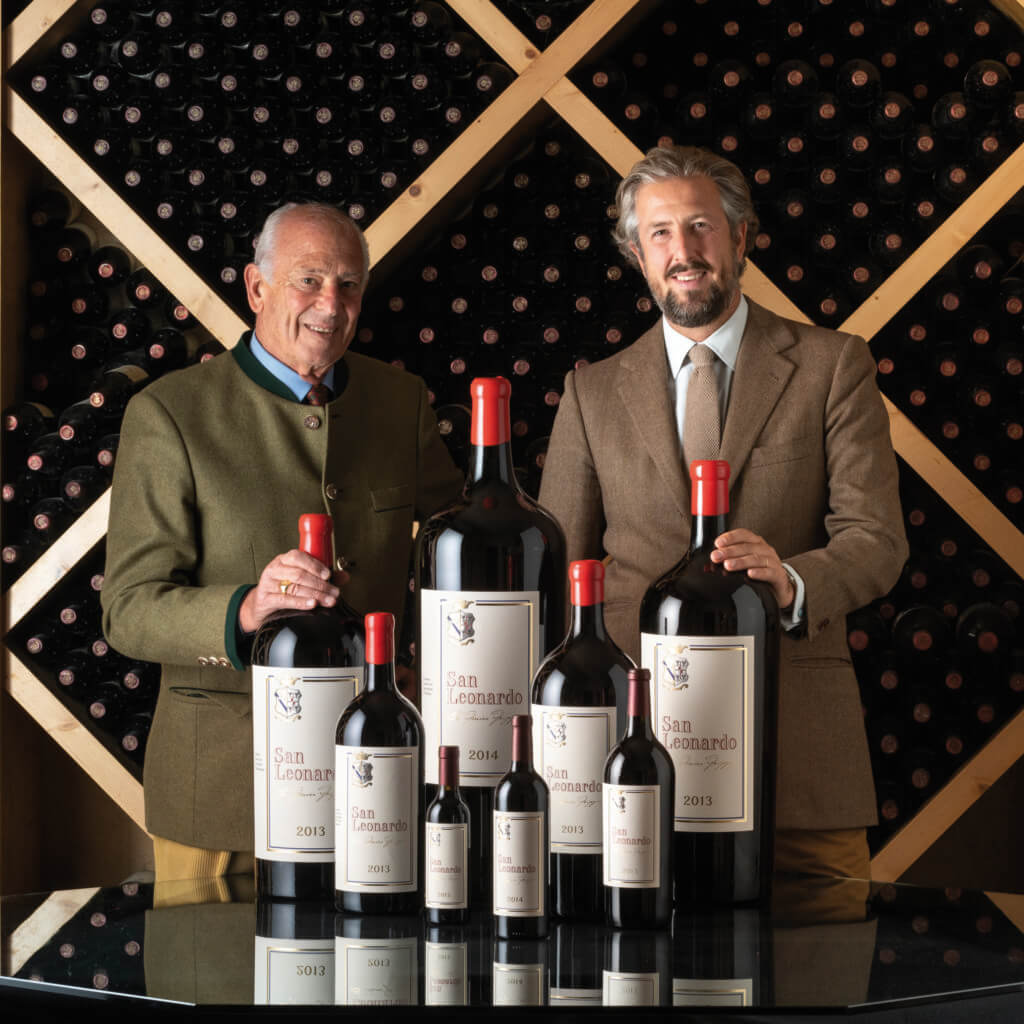
Peter: The cultured tones of Anselmo Guerrieri, Gonzaga. There, that’s the, first and last time I will be saying his name in full for obvious reasons. Anselmo, runs San Leonardo and Co owns it with his family and father, the, Marchese Carlo. we’ll also be hearing from Master of Wine Alex Hunt, purchasing director for San Leonardo’s UK importer, Berkmann Wine Cellars. To give us a bit of extra perspective, and you guessed it, we’re going to be tasting and recommending some really rather special wines.
Susie: I can hear the wine calling my name already. So let’s get started. And first things first, proper introductions over to Anselmo.
Anselmo Guerrieri Gonzaga: I am Anselmo Guerrieri Gonzaga. And, guerrieri in Italian means warriors. And we were the warriors of the Gonzaga family, which was an important family of the Renaissance. and then, finally, in the 1800s, the Guerrieri family married de Gresti, which were the owners of San Leonardo. And we transformed into farmers, let’s say gentlemen farmers. So much more interesting and more happy, kind of profession.
Peter: So you went from being fearsome warriors to being gentlemen farmers?
Anselmo Guerrieri Gonzaga: Absolutely. I would say we always stayed on the red colour, from blood to wine.
Peter: Because your family motto is Belli ac Pacis Amator, is that right?
Anselmo Guerrieri Gonzaga: Exactly. Lovers of War and Peace.
Peter: Lovers of War and Peace. So you’ve covered everything in there.
Susie: So that motto, once again, for those of us not fluent in Latin, is Belli ac Pacis Amator. Lovers of War and Peace. Pretty cool. I think our family motto would probably just be VINI VINI VINI wouldn’t it?
Peter: Amator amator amator!
Susie: but, yeah, I mean, that is quite a family history and identity.
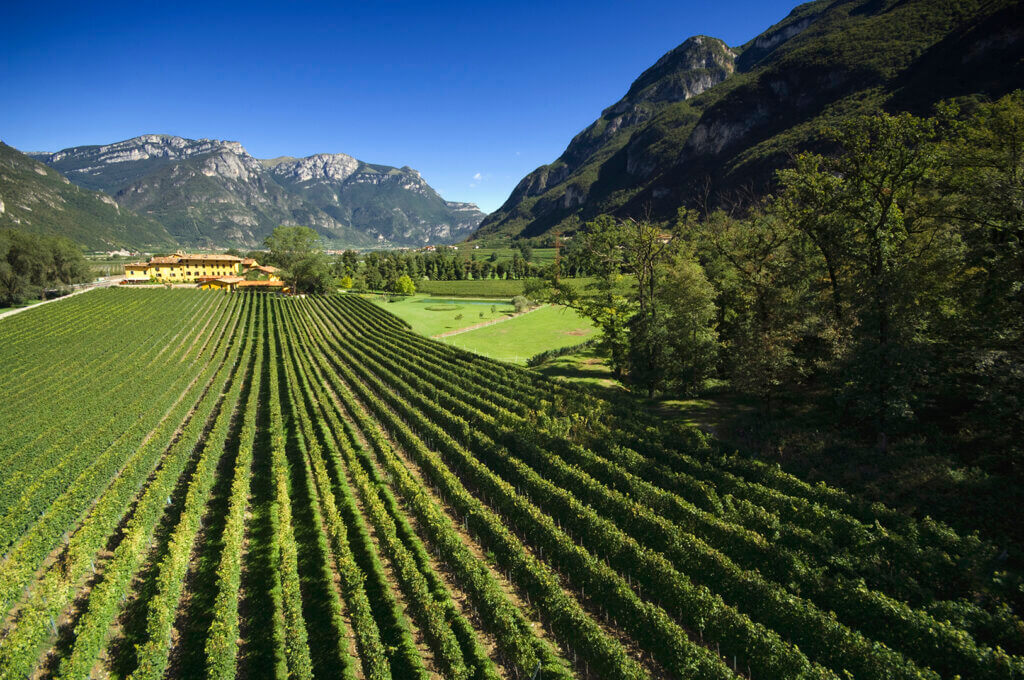
Peter: Yeah, yeah. And I suppose you could argue that that sort of warrior spirit remains, you know, in how the family has remained faithful to its wine vision, you, know, even in the face of strife and conflict. But we’ll come back to that. Meantime, let’s set the scene a bit here. San Leonardo is a beautiful 300 hectare estate flanked by steep hills a short distance north of Verona at the beginnings of the Trentino Valley, which, as you head north, becomes Alto Adige and eventually crosses into Austria.
Susie: And that location is important on, on many levels. Firstly, it’s a good place to grow grapes, and there are testaments to this as far back as the year 927 on this site, so more than a millennium ago. Secondly, being on a busy thoroughfare enabled the small community of Crozier monks to make the estate into a place of rest and hospitality for travellers, even building a small church.
Peter: Over time, the commercial activities of the property grew and San Leonardo made a name for itself, for the quality of its wine, something that was documented as early as 1724. A key moment came in 1890 when Marchese Tullo, grandfather of Carlo Guerrieri, married Gemma di Gresti, owner of the San Leonardo estate. She, by the way, was an amazing woman who worked tirelessly during World War I to help thousands of Italian prisoners of war return home from Russian concentration camps. also helped reconstruct Trentino, which had been devastated by the war, and she was honoured by the Italian Red Cross for her actions.
Susie: Made of stern stuff, this family quite clearly a theme that rather continued when Carlo’s dad sent him off to winemaking school in Switzerland in the 1950s, and on his return hired a different winemaker because he didn’t want Carlo under his feet. Sort of understand that as a parent, but this turned out to be a blessing in disguise because Carlo went off to consult in Tuscany. At the time, winemaking was pretty
00:05:00
Susie: basic and dirty. So with his formal wine training, he could easily help estates clean up and professionalise their production.
Peter: Yeah. Now, Carlo ended up at Tenuta San Guido, producer of the famous Sassicaia in Bolgheri on the Tuscan coast, with, Marchese Mario Incisa della Rocchetta. Anselmo describes Mario as Carlo’s enological godfather, and instilled in him a love of God, Bordeaux wines and grapes, Sassicai, of course, famously being a blend of Cabernet Sauvignon and Cabernet Franc. And if you want to hear more on that story, check out our, Sassicaia episode from season five.
Susie: Now, Carlo returned to San Leonardo in the 1970s when things were still pretty basic on the wine front, and he set about transforming the estate. In 1978, he planted cabernet sauvignon and in 1982 made the first San Leonardo of the modern era. A blend of Cabernet Sauvignon with Carmenere and Merlot. What had been a proud historic wine estate was now ready to take things to the next level with the aim of making truly fine wine.
Peter: Now, Carlo was helped in this by another member of the Italian nobility, a, Piero Antinori, a name that will be familiar to many. Piero lent Carlo his winemaker, no less than Giacomo Tachis, who’s widely considered one of, if not the all time great Italian winemakers, to help get San Leonardo up and running. at this time there was a mini renaissance going on in Italian wine involving all these players using French grapes like Cabernet to ramp up quality, diversity and excitement and give quality minded drinkers something they recognised and could get behind.
Susie: So San Leonardo in its modern incarnation had come into being. It was soon dubbed the Sassicaia of the North. Fast forward to the new millennium and consultant Carlo Ferrini had replaced Giacomo Tachis. What’s more, Carlo Guerrieri’s son Anselmo, having graduated in economics and in his own words, fooled around working on banana plantations and game reserves in South Africa, was suddenly summoned home by his father, who had received a cancer diagnosis. So the future of the estate at the time was uncertain. The young Anselmo, aged 23, was given an ultimatum. He had two weeks to decide whether to work for his dad or be cut loose to make his own way.
Peter: Given everything that’s been said, it’s probably not the world’s biggest spoiler to say Anselmo chose to work with his dad at San Leonardo. There we are. Though, as we know, it’s not always easy working with your family.
Susie: No, no, it’s not easy.
Peter: So at this point we can let Anselmo take over the story.
Anselmo Guerrieri Gonzaga: The first few years were not really beautiful, I must say. But then, of course, wine conquered my heart. it wasn’t my primarily passion. That’s my nature. And animals were my great passion. Then, at the age of 20, I would have drank whatever was on the table. Let’s say I wasn’t a geek of wine at all. I became much after, passionate, of wine. Much before was a passion for the plants and rather the making of the wine, which was fun. I mean, the cellars were beautiful. it’s a lovely work. You cannot, unless your heart is made of stone, you cannot remain, without emotions in front of the making of wine. It is beautiful.
Peter: So tell me, how does this place, then, your geography, as it were, influence your wines?
Anselmo Guerrieri Gonzaga: It does, immensely. Like every other, like every place in the world. terroir, this beautiful word invented by the French, describes so well the genius, loci, something that can be expressed in a place and cannot be reproduced anywhere else, and which shapes what is born there. And, you put together the climate and the people. so, first of all, we are in a very narrow valley between Verona and Trento, just in the middle. So we are 45, 30 miles north of Verona, very close by. We’re much more southern. When you think of Trentino, you think much more of the north. But we’re in a quite warm climate. Mountains are very tall and the valley is very low, 120 metres. But the valley is very narrow, just 800 metres wide. And the mountains go from 120 metres up to 1500 metres. So we have a lot of shade in our place. So the sun arrives late and goes away early. No golden hour, as we call it today. But this influences enormously the vines because we have a very pure light. Because we are in the mountains, there is always air, There is very little mist. So the light is very pure, very white, very intense. So the lumens are very intense, but we do not have that crazy heat or a, huge amount of direct sunlight on the plants. So the plants develop well and they give out a, wine that is never too alcoholic, never too powerful. And so we work much more on the
00:10:00
Anselmo Guerrieri Gonzaga: elegant side. This is because the environment gave us this opportunity.
Peter: But, I mean, Trentino is a region, you know, perhaps more closely associated with, I don’t know, Pinot Grigio or sparkling wine, with Teroldego and Marzemino… you know, how does a refined Bordeaux blend end up in this territory?
Anselmo Guerrieri Gonzaga: first of all, Trentino today is 70% white wine production. But, if we look back 30 years, it was 70% red wines. So Trentino has quite a long history on Bordeaux blends. Much earlier than Tuscany. And, with Veneto, they share, Merlot since the 1920s, as I told you, much earlier than other regions. And the introduction of, Cabernet right after World War II. And also the introduction of Carmenere, which was sold under the name of Cabernet Franc, because no one had an idea what Carmenere was in those days.
Peter: And why did those. Why did the Bordelay varieties come to Italy in the 40s, 50s? Was it just something to sell, something different? I don’t know, something that was known?
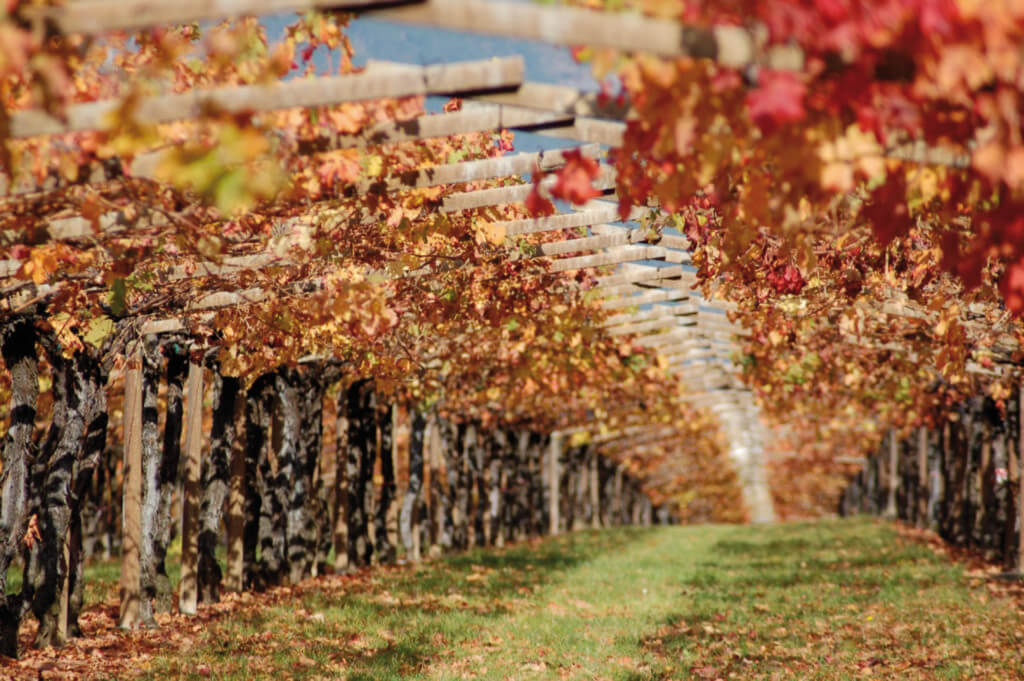
Anselmo Guerrieri Gonzaga: you know, it was, Merlot was introduced in our region in the 1920s because it was highly productive and Tretino was a very hungry place after World War I, we had had enormous, amounts of dead people, enormous damage, to the cultures, lots of bombings and, people needed to eat and, agronomic foundation. In Trentino, who rules a little bit, what the region was looking into. Introduced Merlot, which, together with the pergola system, which was introduced around 1850 when, the, iron, wire was industrialised, was, a perfect combination, a perfect marriage. in pergola, merlot is capable of giving you 200 quintals, which is, 20 tonnes per hectare, which is a fantastic production. And we have to think that today we talk about hedonistic part of wine, but back then I always say wine was an energy drink, so I wouldn’t go far as Red Bull. But, you know, we were making wine for calories. And so the more you made, the better it was. And so you needed to find grace of great production. There was no, let’s say an indigenous variety in our estate that was valuable enough to be kept. And so under my father, he ripped out everything which was remaining and concentrated only on the Bordeaux varieties. We had loads of smaller fields which were making all different. Even Trebbiano was there in those days. But then he was very clear and very strict on the quality. He wanted just to make wines on the hedonistic vision, not on the quantity side.
Peter: So the Carmenere grape variety, can we just focus on that briefly? Can you Just remind, us of the story of Carmenere, air, how it came to your part of the world.
Anselmo Guerrieri Gonzaga: Well, Carmenere is originally from Bordeaux, and it has probably disappeared after phylloxera. so we have to think about the end of the 1800s. This is a grape which is very difficult to grow in. Veneto Trivenito, so Trentino Friuli. It was introduced, because it worked very well on Pergola, which was typical of this area. It was beautiful because when you have lots of leaf, then the Carmenere can express a huge amount of grapes. And so let’s go back to that vision of quantity. and, it wasn’t called Carmenere, simply because the, people had no idea what Carmenere was. It was called Cabernet Franc because Cabernet, it all sounded a little bit better and it was easier. And it was introduced and mismatched for a long, long time. And then people just explanted and replanted other varieties without even having an idea of what they had in their hands. My father on the other side had planted, had the Carmener. He thought it was Cabernet Franc. Then at a certain stage, he wanted to enlarge the production of this single variety. so he called our French, vine producer, Pierre Marie Guillaume, a myth in viticulture. And he says, pierre Marie, send me the best vines of Cabernet Franc. Pierre Marie, fantastic gentleman, he sends him Cabernet Franc. My father plants it down next to the other one. And, first year he looks at it, he says, strange M. Second year he understands there is something completely different because Carmenere has, berries like cherries, and Cabernet Franc has tiny berries and the leaf is different. So he calls Pierre Marie, who says, you know, we did not give you something wrong. You have something wrong, probably. And so then he called Giacomo Tachis, who was working there, and then Atillio Scienza, a famous Italian professor, and they found out this was Carmener. And until San Leonardo 2010, on the back label you will read Cabernet Franc? Because we were not allowed to. It wasn’t in the disciplinary of the region even. And then I went to my father and asked him, why didn’t you, when you learned this grape was different, why didn’t you write it on the back label? He said to me, it was difficult already to sell, a Bordeaux blend coming from Trentino. Imagine if I wrote there was Carmenere, which sounded more like a curse or a bad word, rather than Cabernet Franc, which
00:15:00
Anselmo Guerrieri Gonzaga: was internationally renowned as a grape, variety, and 1990, when he discovered this is the same identical time when Chile discovered that their Carmenere was not Merlot. So it’s a. It’s a parallel, development that we can see in different areas of the world.
Peter: Now, you bottle a solo Carmenere as well, don’t you? Sell a Carmenera wine. But I understand the first wine was. Was there something of a story about the first solo Carmenere?
Anselmo Guerrieri Gonzaga: It was a funny story because I wanted to make some new wines. Of course, you. You are 25, 26.
Peter: This was shortly after you joined?
Anselmo Guerrieri Gonzaga: Yes, yes. Because the first vintage is 2007. So I joined in 2001. And my father did not want me to touch the wines. My first role was to make the grappa, to take care of the grappa, which was made out of San Leonardo. Like all the grappas are made by good distillers outside. Also, he didn’t want. He talked badly about his father not wanting him to work in the cellar. But he did the same more or less with me. no, my father was exceptional with me after. But definitely at the beginning he didn’t want me. And so I wanted to make, ah, a wine. And, you know, I was reading about this is the time of all indigenous varieties and, biodynamics, all these new, trends appearing on the market. Anyways, so I went to our director, Luigi, and I said, listen, I want to make a wine. Why don’t we bottle this Carmenere? It’s the best wine we make. Papa loves it, and it’s part of the San Leaonardo. But we have always a little bit in excess. Let’s make a single production. He said, well, okay, if you want to do it, I’ll hide it for you. So I bought the bottles paying cash so they didn’t appear on the books. And I bought 1,724 magnums, which I was completely insane because I wouldn’t do it today to make a wine with all the distribution we haven’t bought back then. It wasn’t easy. But this is when you’re young and, you have a bit of that, not insanity, but you don’t have experience, which is sometimes a great thing. But it also blocks you from doing a lot of other things. And, anyways, we bottled this wine and then I showed it to my father. I think, it must have been 2015 even. I mean, I wanted the. Because it Takes time, the Carmenere, to become really pleasant. And so I brought him this Magnum, all covered up. I told him, papa, I brought you a Magnum from Paris. It’s a French wine I want you to taste. So I, you know, I want. And so Paris, France. Okay, we are starting. Well, for my father, let’s. Let’s, put the antenna. So he tastes this wine and he goes, you know, and he continues to taste it, and then he says, you know, it’s incredible. It tastes just like our Carmenier. And he said, dad, you’re. You’re phenomenal. You. You spotted it out immediately. It is our. And I had drawn the label, and I took this label from the ones of my great grandfather in 1890, so he couldn’t say it was ugly. And in m. The end, he said, okay, you can sell it. You’re right. It’s. It’s a lovely wine. And this is how Carmene was born.
Susie: That’s such a funny story. I mean, you can just see a young Anselmo desperate to prove himself with this funky, single varietal guerrilla Carmenere Air. And then his wise old dad thinking, yeah, nice one, son. How the hell are we gonna sell 1700 magnums of Trentino Carmenere?!
Peter: Family wine estates are great. Are they? But, boy, you know, you do tend to get some sort of intergenerational strife. It’s great. It’s a great story. That adds to the drama, I suppose, and the fun. But, yeah, you know, interesting about the Carmenera, which, you know, like, in Chile, went totally under the radar until the 1990s. but there’s obviously, you know, quite a bit of it around in Northern Italy. apparently it first came to Trentino, in the late 1800s, according to Anselmo, so, you know, before Merlot. and as well as their solo Carmener, you know, it kind of adds a distinctive edge to the San Leonardo blend as well, doesn’t it?
Susie: Yeah, I mean, we can come on to that, can’t we, when we taste. but I was also interested by this idea of wine as well, calories post war, which is a very understandable reason why a grape variety like Merlot would be planted. but Carlo’s stroke of genius was obviously to realise that with the addition of Cabernet Sauvignon, this Merlot and Carmenere air could be repurposed to make fine wine, in contrast to, say, I don’t know, the more ubiquitous Pinot Grigio in Trentino.
Peter: Yeah, and I think all of that is partly a reflection of their place, isn’t it their sort of shady, windy but sunny site at the foot of the mountain. but we’re going to explore this in a bit more detail in the next part. To recap, so far, San Leonardo is a unique Italian wine, the legacy of warriors and monks and the product of a special place and an indomitable family spirit. over the years there’s been no shortage of strife, but also the odd stroke of genius and a lot of good old fashioned elbow grease.
Susie: So we’re going to hear more from Anselmo now, just by way of preface, Simonet and Sirch are, vine pruning gurus who have helped many leading wine estates improve their vine health and longevity through gentle pruning techniques. We should probably
00:20:00
Susie: do a podcast on them thinking about it anyway. And we get on to this because you asked about what’s changed in the San Leonardo vineyard and winery lately.
Anselmo Guerrieri Gonzaga: Well, definitely not in the cellar. Cellar is always the same since the 1950s. It’s all concrete, the cellar, we work to make it cleaner and faster, but not to change the wine. The big revolution is in the, in the countryside, in the, in the vineyards. In the beginning of the 2000s we had the introduction of completely different pruning systems by Simon it and Sirch. This duo which really has done an incredible job in revolutionising the pruning, let’s say the pruning, techniques. But then it’s the soil which came. This is thanks to the biodynamic movement, I would say definitely. And I transformed the estate in 2015 into organic and we were then, certified organic. Since 2018, organic viticulture has made a big change, especially on the micro life in the vineyard. So this is obviously, I’m not sure it is so much more sustainable, than the normal cultivation. you need to use a tractor double of the normal cultivation and a, conventional. We’re not talking of, It’s gonna kill me. I remember when I was a kid, the black skull on all the products. There is not one product with a black skull that you can find in ordinary viticulture today. So sorry. But there is, you know, there is a lot of romanticism. I’m a very pragmatic person in my approach and I’m not, I don’t look conventional agriculture as a bad thing. It’s just that the organic puts you in an attention towards life, which is very different. And for sure we have increased the amount of life in our vineyards and consequently the amount of vitality in Our wines and this, I can put it underwritten, you know, But I am sure that these wines, born in the context of the climate change a little bit on the temperature rise, they develop well, also because they come from organic viticulture.
Peter: Interesting there. Yes. vitality. I love that expression. Your literature you describe. Let’s talk about San Leonardo top wine. You describe this wine as a Nordic wine. Can you just explain what that means?
Anselmo Guerrieri Gonzaga: Nordic wine because of the mountains. But the mountains that surround San Leonardo they go up to 1500 metres. And they are so powerful in the life, in the impact they have on the vines. And, the style of the wine is Nordic as well, in the sense that we try to develop and to take out what I call drinkability, which is often a concept that we do not associate to the fine wine world just because it’s not. It’s not a beautiful world. It gives you an idea, you know, I can throw it down the throat easily. But, to me, it’s a very important, component of our wine. Something that refreshes you, something that gives you the pleasure of one or two glasses.
Peter: Because as far as I understand, you talked to someone quite important about this concept of drinkability.
Anselmo Guerrieri Gonzaga: Oh, yeah, absolutely. I was much younger, I think 10, more than 10 years ago. We were in Villa, d’ Este on the lake of Como, in a big, event of wine. And there was Aubert de Vilaine of, Romanee Conti. And I was sitting next to this wonderful Gentleman who had just run, an incredible vertical tasting of Romanee Conti. And he said a fantastic phrase, ‘un grand vin doit enlever la soif.’ A great wine must take away thirst. And I thought this was the most beautiful way of shrinking down this concept of drinkability into such an elegant way into such a, I would say, a pragmatic and tangible way. Great, wine must take away thirst. If I drink, two sips of wine and then I have to leave the rest of the glass there because it’s so powerful, beautiful. Maybe, I’m not saying it’s bad or better or worse, but it’s not our style. We want a wine which is a great companion to your dinner, to lunch, whatever, even your breakfast, if you want. But it must be a great companion to what you are eating. And not just a wine that you have to have with a huge steak, tall, five fingers. No, Saddle is a wine that adapts well with vegetables, aubergine or something smoky. It works very well. It’s a delicate wine. But most of all, it has great drinkability. And this is my role to maintain this identity through time. This is why I have changed so many things in agriculture and, ameliorated the cellar, but not the process in order to maintain those qualities and to bring them on, onwards. And that’s why also I made the clonal selection to maintain those vines of 85 years old, which, came after World War II one. They have to maintain that character. We have to bring it on to the next generation.
Peter: And how important is moderate alcohol to this concept of drinkability and refreshment value that you’ve said? Because your wines are always and always have been, or San Leonardo has always been notable in having very moderate or relatively low alcohol.
Anselmo Guerrieri Gonzaga: This is a very interesting
00:25:00
Anselmo Guerrieri Gonzaga: interesting concept. Most of the time, wines with big alcohol are quite potent, quite powerful, and you feel the alcohol note. So we say that San Leonardo has. Has the muscles of a runner or a swimmer rather than the bodybuilder. And in fact, this is an important quality in, I would say the balance of the structure of selenide, where alcohol does not overcome over the fruit. And that’s why also we use very little wood. For example, we use a 25% of new wood, because we do not want to cover the central part of the wine, which is always the fruit. We have to express elegance because this is what nature is able to give us. So obviously we adapt to that and we take out the best quality we can find in that place.
Peter: But for a while, you know, the fashion was all for big, rich, oaky, ripe, alcoholic, reds, to a certain extent, they’re still very fashionable now. Is it not quite difficult making a wine that’s the opposite of that? That actually is about age, worthiness and subtlety and structure. Has that been a challenge over the years and does it remain one?
Anselmo Guerrieri Gonzaga: I would like to tell you that we work behind, night and day to keep it that way. It’s not true. It’s the expression that we get in San Leonardo. This is the real terroir because we do not have to force it. But I tell you a very interesting story, San Leonardo, in the beginning of the 2000s, we were in a very difficult situation financially. Nobody wanted any more this wine. I remember selling 1999, my first vintage, of which I was in charge of selling for my father might have been 2004, 2005 in the US and I used to go around with the bags and making everybody taste the wine. And I remember calling my father, in the evening and saying, dad, nobody wants a bottle of our wine. I was desperate. And I’ve seen how difficult it was because my father wanted to maintain that style, which was not the contemporary style. Today the market is very different. It accepts many styles. And you said, right. Still today there are a lot of super potent and, super powerful wines. Nothing against that. I, And thanks God, the market is very open. You need to have style, identity, but.
Peter: You also need determination and resilience because that obviously other people might have said, you know what, let’s give up. Let’s just make a different style of wine because this isn’t working commercially. But you guys stuck with it.
Anselmo Guerrieri Gonzaga: That is my father, not me. Because I remember very well, I went up to my father, I was desperate because I was seeing, you know, I was a kid and obviously my father had gone through Iran war and all of the petrol crisis, and he had seen ups and down, and he was much more self confident. and he said, you know, we wait and things will change. And I was much more on like, an approach of very different, let’s change things in order to, attack the market and sell more. You know, I wanted to survive. I didn’t care about the wine. I was caring about the surviving of the estate. That was my, vision in this moment. I was going back to the bank often. I remember that very well. Unfortunately, it wasn’t pleasant making up lots of stories for the bankers. It was great fun. And the banker still tells me, you know, we knew you were having a hard time, but you were so good in telling those stories that we believed in you. But anyways, I remember going to my father and said, listen, dad, let’s put in this wine a little bit more of indigenous varieties. This is what the people are looking for right now. So I told him, why don’t we put Teroldego in it? And I remember perfectly where I was and the eyes of my father with his head turning to me and saying, you are an idiot. Go back to the office. And that is the best lesson I learned in my life. As you said, resilience, the word which is, so in vogue today after horrible Covid, the fact of really believing in your ideas. Of course, if you make wine which is disgusting, I’m sorry, but this is the end. you’re gonna experience it on your skin. But he knew he was making great wines. And the ability of ageing, these were qualities that will not disappear in why.
Peter: What does the future hold for San Leonardo?
Anselmo Guerrieri Gonzaga: nothing of crazy I would say stability, if I may ask. The most, is something where we can, cope, with nature. but to reach this, it’s a lot of work. So it is, clonal selection on Cabernet Sauvignon, expanding. We have two more hectares we’re going to buy, plus one more, hectare and a half we’re going to make, out of the vineyards, planting a little bit more in Pergola, going back towards Pergola. so we have, I have plants from here to 2055, I think, in my mind. But to preserve this world. This is my role. I don’t want to change. if I want to change, I’ll buy myself another winery in another place, you know, if I want to do something ultra modern. But the beauty of San Leonardo is that time has stopped. And most of all, and what I really thank my father for is the atmosphere of the people
00:30:00
Anselmo Guerrieri Gonzaga: who work in San Leonardo and who live in San Leonardo, because we have families who have been there since three, four, even five generations and they love this place as much as we do. And that, we, my father, now me, we have given them the reason to stay in this place and to continue to love it. Also the economical reason, because there is a lot of romanticism. But the wine pays the bills of this place, which is lots of roofs, if you get what I’m saying. Lots of buildings and there is a beautiful court, there is a museum. We want to maintain the historicity and the soul of this place and we can do it through a great wine. And the people respect this very much, the people who work in San Leonardo and they give lots of love to this place. So this, the beauty of Salinado is really around the atmosphere you will find when you, you, when you enter the, the gates.
Peter: Anselmo, thank you very much indeed.
Anselmo Guerrieri Gonzaga: Thank you for having me.
Susie: It is an amazing place, isn’t it?
Peter: Yeah, it really is.
Susie: San Leonardo does actually have a tiny village as part of the, estate, with the old fashioned winery and barrel hall and church and grand Villa Gresti where the family live as part of a wider working estate that goes beyond wine. The vineyard is just 30 hectares out of the 300 hectare estate and much of the rest is woodland with lots of biodiversity. And they have gardens and do exhibitions.
Peter: And all this with sort of amazing mountains and, narrow valley by way of backdrop, you know, which has these unique conditions, you know, warm sun, but then afternoon shade and mountain breezes to give very elegant wines. all of which, you know, major on this fundamental value of drinkability which we touch on, and which the great Aubert de Vilain of Romanee Conti summed up so eloquently. You know, a great wine should be thirst quenching.
Susie: Such a great quote. and of course it’s not just that unique style, but the fact they stuck with it even when it was desperately hard to sell. That’s the bit I find intriguing. You know, the noughties were a time when Robert Parker and big Reds were all the rage, as we explored in our recent interview with Jancis Robinson. Rich, ripe, lavishly oaked, high alcohol cabernets were virtually a licence to print money back then. And lots of producers simply changed their style to suit. so I can understand poor Anselmo struggling to sell his discreetly midweight San Leonardo, especially in the us, and his.
Peter: Story about proposing to go for the blend of being knocked back in no uncertainty, this is priceless. but, but I guess Carlo knew deep down he was making great wine. and they just had to hold their nerve, you know, and people would come back around to it as, as they have. And on which note, we should bring in Alex Hunt.
Susie: Yeah. So Alex is purchasing director for San Leonardo’s UK importer since 2019, Berkman Wine Cellars. He’s also a well respected master of wine who’s a friend of the pod.
Peter: He is.
Susie: He and his excellent band Umbrella Birds. They’ve been on the POD before.
Peter: Check them out. New album coming soon.
Susie: So I asked Alex about the challenges of selling a Northern Italian Bordeaux blend.
Alex: Well, I, I suppose the, the main competitor is going to be, the wines of Tuscany, of Bolgheri in particular. that’s where the comparisons tend to be drawn. and then otherwise with Bordeaux blends from around the world, of course, but, but staying on the Italian focus for a bit. Tuscany, I think, because it has, has grown over the last, 50 to 70 years. An entire community of, Bordeaux blend producers, some of whom are extremely famous and extremely successful and sell their wines quite easily at very high price points. there is a great deal of focus and attention on that community. when you get an outlier in a different region, then I think there are advantages and disadvantages that come with that. the disadvantage is that we have to crank the spotlight onto that region by hand, as it were, every time, and remind people that there is life outside Bolgheri for Bordeaux blends in Italy. but the advantage, is an independence of thought. And of style, that comes with that. So by being slightly separate from that that tight knit community in Tuscany, you get to do your own thing, to tread your own path. And I would draw a parallel maybe between Napa being equivalent to Bolgheri in this case and Santa Cruz Mountains and a producer like Ridge, who from that, that relatively isolated vantage point have managed to ride out some of the stylistic changes that were effectively imposed on the world of red wine between let’s
00:35:00
Alex: say 1997 and 2016 and maintained a stylistic independence as well as a geographical distance. And that’s to me one of the things that makes this estate very exciting.
Susie: And I mean this style of elegant, age worthy red wine, although it’s unique and to this particular area, hasn’t necessarily been particularly fashionable in more recent times. You know, how popular are these wines right now?
Alex: Well right now they’re growing in popularity because that circle of fashion has turned back to this kind of style. if I think of the, the 2020 which is the latest release, it’s naturally 12.5% alcohol, which for a ah, high class Bordeaux blend is virtually unique at the moment. I mean I’m sure you could find one or two examples by looking hard enough. but it doesn’t normally happen and I think a lot of cabernet producers around the world are slightly frustrated that they can’t achieve naturally moderate alcohol even within the, the flavour spectrum that they’re looking for now, as opposed to 10 years ago which might be a little fresher, ah, and, and more herbaceous than it was. but the, there are so many that are still 13 and a half to 15, despite their, their makers, best efforts. and Here we are 12 and a half with a wine that does not feel skinny or underripe or in any way compromised, ah, in the, in the sense that it’s trying to fit a, a new fashion, to which it doesn’t belong. What I find amazing about San Leonardo, having tasted verticals of it is that it never really deviated from this format. It didn’t fall into the stylistic norms that became the prevailing paradigm in that period of the, the early 2000s and 2010s. they passed it by and therefore it spent quite a long time out of fashion. Just like Corison or Berlotto or a number of other producers who ah, dogmatically or at least stubbornly stuck to the style they thought was the best expression of their land and refused to be sucked into a kind of pleasure first Interest, second dimension, which I think ultimately was a little bit of a con when it came to fine wine.
Susie: So just talking about the actual wine, drinkability is a word that Anselmo associates with San Leonardo. Can you talk to us about that aspect of the wine?
Alex: Well, isn’t it funny how, maybe 20 years ago, drinkable was an insult to anyone who is at least making, in their mind, serious wine. It seemed to, be a suggestion that the wine was somehow trivial. If you refer to it as drinkable to its maker or fan. we tend to see drinkability very much as a positive, both from an aesthetic and a commercial sense. because, after all, if something’s drinkable, you’re more likely to drink it, and then you might be tempted to drink it again, which seems to be quite a good model on which to build a business at the same time, because our business had its origins in the restaurant trade to begin with, the idea of a wine that is refreshing and digestible with food is very much part of our DNA. And so those have always been the kind of wines that we’ve looked for.
Susie: Now, how important are vintages in this specific part of the winemaking world?
Alex: You definitely see vintage variation in terms of character. I’m not seeing huge swings in quality in the way that one does in Bordeaux itself. In particular, what I tend to find is that San Leonardo vintage variation is quite prominent when the wine is first released. And then after a year or two, the wine seems to open up to give a more transparent representation of the estate and Anselmo’s style. and so the, the vintages actually converge a little bit. with maybe five years in bottle, I’ve drunk 20, 19 this year with enormous pleasure. and I’ve also enjoyed, not so long ago, vintages from the late 80s and 90s that also give huge pleasure. So in that sense, I think it’s a very modern wine. And as much as the drinking window is very wide.
Susie: And just finally, what would be your ideal San Leonardo experience?
Alex: Well, the experience of going there definitely enhances it enormously. It is beautiful.
00:40:00
Alex: My experience, of going to the estate and meeting the people there, seeing the, the old fresco they found in the little chapel, visiting the vineyards, seeing the, the little garden that they have, full of, full of wonderful flowers and vegetables that, that really remind you this isn’t just a, an intensively cropped vineyard, but a proper working family farm, is a great experience. And that is then on one visit, was, was really crystallised by a vertical Tasting of not every vintage of the last 25 years, but a selection spanning that period. And that’s where I really learned about the consistency of. Of style and the unwavering aesthetic vision that makes this estate very unusual.
Susie: And if we were to finish that tasting by sitting down on the terrace and being served a beautiful plate of Italian food, what would it be?
Alex: Vintage wise? Perhaps 2007, 2004 would be the absolute peaks that I would be tempted to go for now. and those are versatile enough because they’re still in the. The full. The full vigour of life, to go throughout a meal, really, with, antipathy, nasty pasta, grilled meat, definitely. I mean, lamb with cabernet, of course, is one of the great joys, and they could take on a lot.
Susie: Alex, thank you so much.
Alex: It’s been a pleasure.
Peter: If I wasn’t feeling thirsty and hungry before, I am now 2007 San Leonardo, would lay, you know, sign me up. Sign me up. I’m right there. You know, we need to start tasting, on that note. But just before we do, I think Alex is right on the money in comparing Napa, versus Santa Cruz to Bolgheri versus Trentino and sort of San Leonardo to Ridge, you know, producers who have, you know, in his words, dogmatically stuck to their vision of elegant, gastronomic food, friendly, drinkable Bordeaux blends, you know, whatever the prevailing fashion dictates.
Susie: I totally agree. And again, if you want to learn more about Ridge, check out our episode on them. As Alex. Alex points out, it is indeed very rare to find premium Bordeaux blends at 12.5 or 13% alcohol these days, including from Bordeaux itself. Yeah, ironically, you know, so this unique Trentino terroir is actually delivering something very precious and increasingly rare, even if it may have been seen as a handicap at times along the way.
Peter: Yeah. and I love Alex’s comment, too, that the hedonistic, rich sort of pleasure first reds were a bit of a con when it came to fine wine. You know, that’s what. Not what fine wine is all about. I couldn’t agree more. But, you know, moving on, we’re running out of time, so we need to taste.
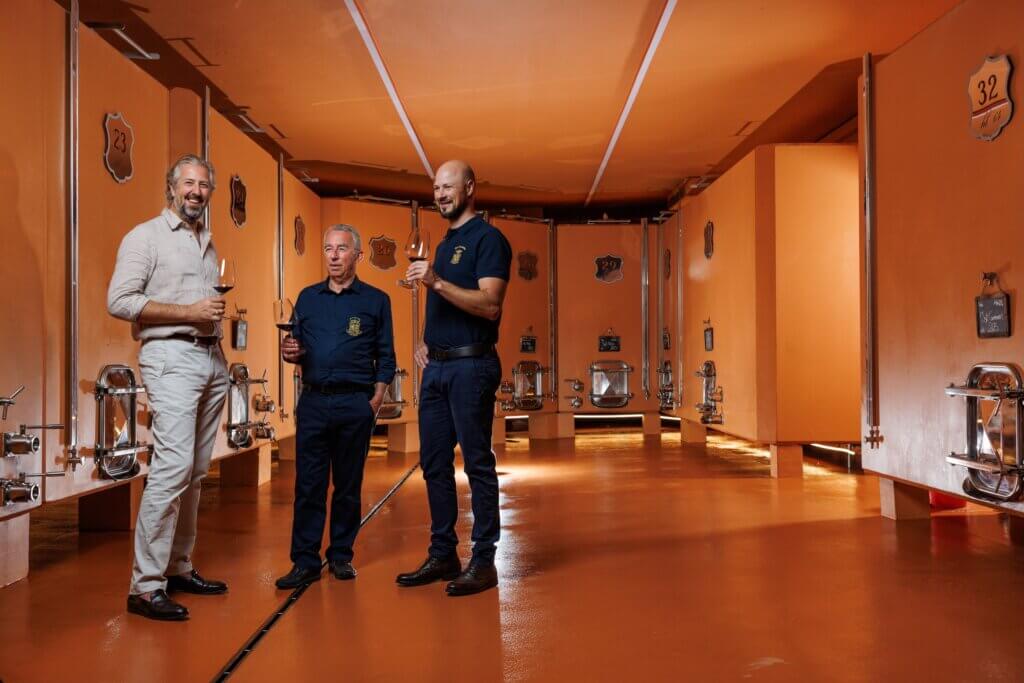
Susie: Okay, so we’ve been talking about San Leonardo as if it just makes one wine, the red of the same name, which is its iconic top Bordeaux blend, cuvee. But the estate makes more than that. for example, it’s Vette Sauvignon Blanc. And We’ve got the 2023 here, haven’t we? Yeah, I mean, they source these grapes from further up the valley off Pergolas, but with hard pruning to reduce yields and much the same as. As their own common air. Incidentally, Anselmo says that gives real freshness and drinkability, and it is. It’s very different from a Loire or New Zealand Sauvignon. It’s got flavours of, of mandarins and stone fruit with pithy, herby, bitter, sort of bitter herb characters that are very Italian. it’s also decent value at around £20 retail and apparently goes down really well in Italian restaurants.
Peter: Yeah, I can. I can totally see that. next up, I’ve got the Terre di San Leonardo 2021. this is like the second wine to San Leonardo. It’s made from the younger vines, but still aged for 12 months, half, in used barrels, with more Merlot and less Carmenere Air in the blend. and we would both really recommend this, wouldn’t we, because, you know, it’s similar in style to San Leonardo, the grander wine, but it’s only about 20 quid retail. and it’s a beautifully elegant classic Bordeaux blend with sort of. With an Italian twist. It’s kind of understated, midweight savoury, if you like that kind of thing, which we do, but it’s got that lovely sort, sour cherry tang on the finish. I think it works really well at this level.
Susie: Absolutely. And it’s hard to find a cultured Bordeaux blend with that kind of refinement and precision at that price level. It also comes out of itself over time in the glass and decanter, doesn’t it? Incidentally, we would definitely recommend giving these wines a bit of time and air before you drink them. And whether that’s in a decanter or saving half the bottle for the next day, if you possibly can. I don’t think we can, but it really brings them out of themselves.
Peter: So then we’ve got the San Leonardo Carmenere
00:45:00
Peter: 2018 here. this famous variety made in tiny quantities here. it’s also a big step up in the price, actually worth noting. This one’s about 70 pounds. 7 0. So, age 24 months in barrels, then another two years in the cellars. They like to age it because they say it sort of softens and tames it. Good wine. It doesn’t have the same sort of maybe price, quality, excitement as a terre, but it is a lovely, refreshing, elegant and sort of refined expression of Carmenere Air with. With really nice complexity. Maybe doesn’t have the wow factor of some of the Other wines for being really honest. But.
Susie: And I’m, afraid it’s also quite heavy bottle. It sends the wrong kind of message, doesn’t it? You know, it’s good. I think it could have more dimensions to it, a bit more flesh, but maybe climate change will help with that, I don’t know. And in the meantime, it works really well in the San Leonardo blend. Talking of which, we tried a number of different vintages of San Leonardo, that top wine, which is usually a blend of mainly Cabernet sauvignon with around 30% Carmenere and 10% Merlot. So which was our favourite?
Peter: Hard to say. Hard to say. You know, so before this, I did a big vertical tasting back in 2017. so eight years ago now, that was with Carlo and Anselmo and Luigino Tinelli, the estate manager, who’s lived there, his entire life. and my favourites then were the. I, don’t want to show off here, but the 1986-1997-2001-2004, 2007.
Susie: How many wines did you taste?
Peter: I’m with Alex on those, so those are just my favourites. And 2013, actually throw it as well. Anyway, I might put my tasting notes from that on the show notes, because that might be quite interesting. but then more recently, as you say, we’ve tried others. I’m going to flip it back to you. What would you pick?
Susie: Yeah, so I’d go for the 2018, which, I have to confess, we tasted blind against Sassicaia and it more than held its ground. You know, for a wine that’s about a third of the price, it’s so, so impressive. You know, I love the cedar, tobacco leather, dark fruit aromatics and then the wonderfully smooth but firm texture. Almost quite muscular. Definitely age worthy. We tried it also with a range of food, from smoked salmon to steak, and it paired beautifully with everything.
Peter: Yeah, it’s sign of a. Sign of a fine wine there, I think, and an elegant one. I think I would go for the 2017. I’ve had it a few times recently and it’s always delivered. apparently it was something of a calamitous vintage. Anselmo, I tried it with Anselmo. he called it the most unlucky harvest of all time. the vines were hit by hail three times and then a concrete vat cracked and they lost 15,000 bottles. so, you know, only around half the normal quantities were made. around 38,000 bottles. They do say how many bottles were made on the label, rather than the normal sort of 60, 70,000. But, the win is utterly glorious. And it’s drinking so well now, isn’t it? It’s hit a sweet spot, I think maybe the 2018 will come into, but this one’s right there. Now. It’s stunningly complex, remembers. I see. They leap out of the glass, don’t they? Sort of cigar box, warm earth, forest fern, all that sort of stuff. And then the palate is cool and classy and grippy and insistent. It’s, it’s, you know, it’s fundamentally medium bodied and refined, but also very complete and satisfactory, satisfying. A very hard balancing act to do. Well, it’s the perfect marriage of sort of engaging rusticity and utter refinement
Susie: The ideal note to finish on. As for a closing summary, San Leonardo has just celebrated its 300th anniversary. Its consistency and tenacious adherence to its unique style have seen it weather the storms of fashion and emerge triumphant. A beautiful beacon of refreshing understatement and drinkability in a world beset by narcissism and climate change. It hasn’t always been an easy path from family feuds to flirting with financial ruin. But war and peace are in the family motto. And wine, especially wine this good, is a tonic for many things.
Peter: Cheers to that. thanks to our interviewees, Anselmo Guerrieri Gonzaga. I mean, I’ve said it again, haven’t I? Which I promised I wouldn’t, but this time it’s after a few drinks, so it’s all right. Maybe it’s come out better. Anyway, thanks also to Alex Hunt, mw, of Berkmann Wine Cellars. And of course, thanks to you for listening. Until next time, Cheers!