- Season 7 Trailer
- The Jancis Robinson EXCLUSIVE Part 1
- The Jancis Robinson EXCLUSIVE Part 2
- Chile Wines of the Year 2025
- SAN LEONARDO – The insider’s Guide
- The Story of The Billionaire’s Vinegar – Part 1
- The Story of The Billionaire’s Vinegar – Part 2
- Blind Tasting Top 2021 Super Tuscans
- Top of the Pops: Classic Fizz Beyond Champagne
- Rock and Rhône
- Our WINES OF THE YEAR (2025)
- Our BOOKS OF THE YEAR (2025)
- Hugh Johnson UNCUT
- McLaren Vale – Boxer to Ballerina
- McLaren Vale – The Grenaissance
- Peter Fraser – A Tribute
- New Zealand Wines of the Year 2026
- Sam Neill UNCUT
- Giveaway EXTRAVAGANZA + Game-changer Coravin
- Greg Lambrecht UNCUT
- The Story of Stalin’s Wine Cellar PART ONE
- The Story of Stalin’s Wine Cellar PART TWO
- Drop Stop: Wine’s Big Water Issue
- Missing the Point?
- Keep Calm and Sauvignon
- Yeastie Boys: Wine’s Modern Microbial Solutions
- Adelaide Hills: Lofty Ambitions
- Natural Wine RELOADED
- The Judgement of Paris 50 Years On
- The Greatest Chardonnay Showdown
- Pays d’Oc Part 1 – Land of the Free
- Pays d’Oc Part 2 – Future Proofing
- News & GB Wine Update
- Wine Travel: The Inside Steer
Summary
Picture the scene.
Christie’s auction house, London, December 1985.
A dapper auctioneer is expertly tantalising the stellar audience with a bottle of 1787 Chateau Lafite engraved with the initials of US founding father Thomas Jefferson.
It duly becomes the most expensive bottle of wine ever sold, going for £105,000 ($156,000).
But it’s what happens next that is the really intriguing bit…
Welcome to a new kind of narrative Wine Blast episode, where we’re joined by best-selling author Benjamin Wallace, whose book The Billionaire’s Vinegar is the inspiration for this compelling story.
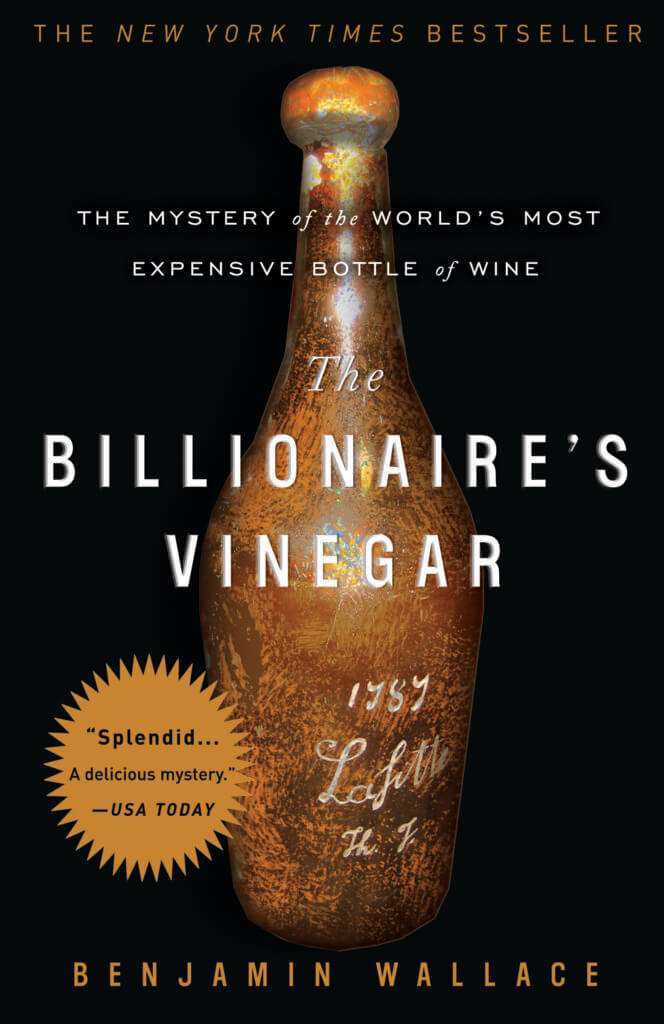
He brings to life the key protagonists, from Jefferson to Christie’s auctioneer Michael Broadbent, US billionaire Bill Koch and German wine collector Hardy Rodenstock.
All the while building the rich and eye-opening plot around what he calls, ‘the mystery of the world’s most expensive bottle of wine.’
And as for how the ‘vinegar’ comes into the story…you’ll just have to listen to find out.
And in the next and concluding part, we hear how the story ends – including what’s happened since the book was published.
Don’t miss it!
Starring
- Benjamin Wallace, author of The Billionaire’s Vinegar
- Susie & Peter
Subscribe
Sign up to Wine Blast PLUS to support the show, enjoy early access to all episodes and get full archive access as well as occasional subscriber-only content.
Just visit WineBlast.co.uk to sign up – it’s very easy, and we will HUGELY appreciate your support.

It takes a monumental amount of work to make Wine Blast happen. Your support will enable the show to continue and grow – and we have lots of fantastic ideas of things we’d like to develop as part of Wine Blast to maximise the wine fun. The more people who sign up, the more we’ll be able to do.
We currently have an 15% Early Bird discount on initial headline subscription prices – just use the Promo Code magnum25 when you pay. But it’s a limited time offer – so don’t hang around!
Links
- You can find our podcast on all major audio players: Apple Podcasts, Spotify, Google, Amazon and beyond. If you’re on a mobile, the button below will redirect you automatically to this episode on an audio platform on your device. (If you’re on a PC or desktop, it will just return you to this page – in which case, get your phone out! Or find one of the above platforms on your browser.)
Get in touch!
We love to hear from you.
You can send us an email. Or find us on social media (links on the footer below).
Or, better still, leave us a voice message via the magic of SpeakPipe:
Transcript
This transcript is AI generated. It’s not perfect.
Susie: Hello and welcome to Wine Blast! Where we’ve got something a little bit different lined up for you, which is also a lot of fun. it’s an intriguing story about the mystery of the world’s most expensive bottle of wine…
Peter: We’ve got high drama, we’ve got big money, we’ve got legal battles, we’ve got billionaires and wine royalty, America’s first wine connoisseur, Indiana Jones types… We’re talking fraud and history and scandal. We’ve even got novelty condoms. The mind boggles! Here’s a taster of what’s coming up:
Benjamin Wallace: It was a packed auction room in London. The star of the show was this bottle of 1787 Chateau Lafite, engraved with the initials of America’s third president, Thomas Jefferson. I mean, this world was full of outdoing: outdoing oneself, outdoing everyone else. It was sort of a self-reinforcing ecosystem of auctioneers and bottle hunters and collectors and all of it sort in this upward spiral of excess.
Susie: Breathless stuff! Benjamin Wallace there, author of The Billionaire’s Vinegar, a book that is very much the inspiration for this episode. In fact, not just one episode, but two. And a new kind of format we’re introducing into the wider Wine Blast repertoire which is more narrative based. Ah, telling stories from the world of wine across a range of subjects and across several episodes.
Peter: So we wanted to get stuck into some enthralling stories. and of course The Billionaire’s Vinegar is just that. It’s a great story featuring a host of intriguing protagonists from historic U.S. president and founding father Thomas Jefferson to Christie’s auctioneer Michael Broadbent, American billionaire Bill Koch and German wine collector Hardy Rodenstock. Not to mention a bottle of 1787 Chateau Lafite that became the most expensive bottle of wine in ever sold.
Susie: Now, regular listeners will remember we featured this book before, most notably in our season five episode The Six Best Wine Books. But here we wanted to immerse ourselves in the story itself. And who better to help us do that than Benjamin Wallace, who quite literally wrote the book on this subject.
Peter: So exciting. But before we start, just a word or two on how this is going to work. Wine Blast PLUS subscribers will get early access to both episodes of this two parter right away so you can listen to the whole story straight through. Non- subscribers will get part one after the early access ends and will then have to wait for part two.
Susie: When part two finally goes on free release. Subscribers will also get a bonus subscriber only episode. Our first, no doubt of many And that one is all about an intriguing blind tasting we did recently of 12 top super Tuscan wines. A ah, very rare opportunity to compare and contrast some wines that are kind of the rock stars of the Italian wine firmament. And subscribers will be able to hear our take as ah, some of which is fairly eye opening.
Peter: Yep. and we’ll be recommending some good value alternatives too. So if you’d like to get early access to episodes and enjoy bonus content as well as support the pod more generally, please do sign up to Wine Blast PLUS at wineblast.co.uk. the link is also in our show notes. the early bird rate is still valid as of the time of recording, so don’t hang about.
Susie: It’s a bargain. Anyway, coming back to the story in hand, a bit of prefacing is probably necessary before we chat with Benjamin Wallace. The Billionaire’s Vinegar was first published in 2008. there are many strands to the narrative but essentially the backdrop is the fine wine boom of the late 20th and early 21st century when a new breed of super collectors emerged and rare vintages started to fetch record price.
Peter: Taking centre stage in this fine wine resurgence with the red wines of Bordeaux top claret, particularly the so called first growths. Some of the most highly reputed chateaux including Chateaux Lafite Rothschild, Mouton Rothschild, Haut Brion, Margaux and Latour. another perennial favourite which also crops up in our narrative is the iconic Sauternes producer Chateau d’Yquem, maker of one of the most glorious sweet wines in the world.
Susie: Also involved in this story are the historic London auction houses and competitors Christie’s and Sotheby’s. The Wine Spectator magazine gets a mention, a wine publishing business and magazine based out of New York, owned by Marvin Shanken. And Riedel is of course the famous wine glass company based in Kufstein, Austria, which featured in our recent episode on wine glasses.
Peter: So let’s dive into the story and where better place to start
00:05:00
Peter: than by focusing on the moment of high drama that opens the Billionaires Vinegar book? the scene is Christie’s auction house In London, it’s the 5th of December, 1985. Dapper auctioneer Michael Broadbent is offering what he’s described as more than a little bit of history in the shape of a single bottle of Chateau Lafite from the 1787 vintage. So nearly 200 years old. not only that, this bottle is engraved with the initials Th. J. the initials of founding father and renowned wine lover Thomas Jefferson. I asked Benjamin Wallace what happened that day.
Benjamin Wallace: Well, that was a day that, you know, went down in, in wine history or wine auction history. Certainly Michael Broadbent was selling what he represented was the, I think, oldest authenticated red vintage red wine that Christie’s had ever sold. it was a packed auction room in London and the star of the show was this bottle of 1787 Chateau Lafite, engraved with the initials of America’s third president, Thomas Jefferson. Kip Forbes, the son of Malcolm Forbes, who is a famous billionaire collector, in New York, was there to bid for this bottle. Marvin Shanken, the editor in chief and publisher of Wine Spectator, you know, the leading American wine magazine, was there to bid for this bottle. And it was quite a scene.
Peter: And you know, don’t want to do too many spoilers, but what I think we can go in there right from the start. What price did this end up selling for?
Benjamin Wallace: Okay, so this bottle sold for. I mean, there was a bit of a bidding war between Kip Forbes and Marvin Shanken. And it ultimately went for, I don’t remember the pounds amount, but the dollar amount was $156,000, which was the most expensive bottle of wine that had ever been sold by a long shot at that time.
Peter: So we’ve got a few characters in our story already. let’s start with Christie’s auctioneer, Michael Broadbent. tell us a bit about him.
Benjamin Wallace: So Michael Broadbent was the, you know, the head of Christie’s wine department. He sat on Christie’s board of directors. He had created the wine department in the late 60s, I think, 1966, 67. Christie’s, I think, had been out of the wine sales business since like World War II. Broadbent revived it and took it to much higher new levels. And he was known for a number of things. One of those was he kind of became almost like an Indiana Jones of like rare wine. Like he was sort of driving around England and Scotland, you know, knocking on aristocrats doors and basically convincing them to unload their massive cellars of first growth Bordeaux that their, you know, Families had been buying en primeur for generations. They had much more wine than they could ever drink. A bunch of them were kind of getting on in years and were never going to finish their collections, their cellars. And their heirs were less interested in wine. And so it was sort of this wonderful opportunity, almost like an archaeological opportunity for Michael Broadbent, because he started to bring these cellars to auction. And it really put Christie’s on the map as a player in the wine business. And because Michael Broadbent was accessing all this incredible wine, he also was drinking a lot of, and sampling a lot of this wine and taking notes on all of this wine. And so over time, and by, you know, the mid-80s, he had assembled a vast kind of compendium of tasting notes and really had a more, you know, broadly travelled, deeply experienced palate than anyone else in the world. And he had, had written this encyclopaedia, that, I mean, these tasting notes eventually had been bound into one volume that was a, you know, a big book that had come out several years before. So he was like the authority on old wine, and the leading seller of old wine.
Peter: We’ve also got a historic figure in the narrative already. the third president of the U.S. served from 1801 to 1809. Thomas Jefferson. How come he’s involved in this story?
Benjamin Wallace: At a time when Americans were mostly whiskey drinkers, Thomas Jefferson had a more refined palate. And He, I think 1781, or no, 1784 to 1789, he served as a commissioner and then a minister in France, in Paris. And during that time he took a three and a half month trip by himself, incognito. He didn’t want anyone to know who he was and treat him with special deference. In every town he hired a different, you know, valet, so that no one really know who he was. And he went through all the M major wine regions. He went to Bordeaux, he went to the Rhone Valley, he went to Burgundy. And he really developed, you know, quite a taste for wine to the extent of going significantly into debt with his wine purchases, which I’m sure many wine lovers can relate to. And when he died, he died, you know, with an enormous amount of debt, a significant part
00:10:00
Benjamin Wallace: of which was related to, to his wine purchases, you know, but he took notes on his wine drinking and he really was America’s first wine connoisseur.
Peter: So, I mean, I’m interested in that side of his character. Obviously he was, you know, a great American and a founding father, co-author of through The Declaration, of Independence, if m. I’m not wrong. But he’s obviously a polymath. He was interested in many, many things, and in particular, wine was one of his great loves. Is that right?
Benjamin Wallace: That is right. I mean, I actually happened to revisit Monticello, this past summer, where I spent some time when I was working on this book, a while ago. And, Monticello is a building that he architected despite not being a trained architect. I mean, he had so many talents. He invented all these things. He had a machine that he had invented where he would write with a pen on one piece of paper, and an identical pen that was attached to it would be making a simultaneous copy of what he was writing, almost like the first mimeograph. I mean, he was just a remarkable person who, as you said, was a polymath. And it distinguished himself in all different areas, including, you know, wine collecting and, I mean, he founded the University of Virginia. he did so many things.
Peter: And Monticello is his home where he was based.
Benjamin Wallace: For a long time. Monticello was his home where he had, you know, lots of neat architectural features, including dumb waiters, so that he could have a bottle, brought up from the cellar without, you know, a servant coming in or a slave, as it would. Another part of his legacy, of course, is that he was a slave owner, and that’s a complicating part of his legacy.
Peter: But he had even had wine features built into the architecture of his house. What kind of wine did he buy, though?
Benjamin Wallace: Well, when he was in France, I mean, he visited Haut Brion, he ordered wine directly from Lafite, he ordered wine from Haut Brion, he ordered wine from, Ikem. I believe his order for Obrien was unilaterally replaced with an order of Margaux by the dealer, maybe because, you know, they were out of the vintage he wanted, but he was ordering, like, 1784 wine. and he drank, you know, he drank sweet wine. He drank all kinds of. All kinds of wines. But he definitely had a taste for the. The better wines.
Peter: So we’re going to fast forward back to the modern era, back to the era of this amazing auction sale you described, in the mid-80s. And I think perhaps it’s worth setting the context of this time a bit. You know, mid-80s. Very specific things were happening then in terms of fine wine auctions, and sort of collectors, particularly in the US And Europe. Can you. Can you give us a bit of a background in that sense? The context, the feel of the times?
Benjamin Wallace: In the 1980s there began to. There was sort of a sense of an American collecting, wine collecting class and particularly of a sort of super collector group. And these were people like, there was a neurosurgeon in Texas named Marvin Overton iii. There was a guy named Lloyd Flatt who was from Tennessee and had like an eye patch and was reputed to be an arms dealer. And Marvin Overton had 10,000 bottles of wine. Lloyd Flatt had 30,000 bottles of wine. There was a Palestinian shopping mall developer in San Tiago, California, Tafik Khouri, who had, 65,000 bottles of wine. So it was really a size matters competition between these people who are super into collecting, you know, as many bottles as they could and as many trophies as they could. So this became an important market for Christie’s because the Americans were willing to spend a lot of money.
Peter: And as far as I understand, these sort of m mega collectors also did mega tastings and events with these wines that they had.
Benjamin Wallace: That’s right. They kind of invented a new type of tasting which were these massive, they called them mega tastings. And there were two types of them. One was the vertical tasting, which was, you know, 30, 50, 60 vintages of a single wine. and a horizontal tasting, which was a single vintage but many types of wine. And they would then, you know, do these for comparison’s sake. But this also became an area of competition where each new mega tasting had to have more bottles, more vintages than the, the previous one. And so it was the small group of men basically trying to outdo each other.
Peter: Right. And there were also these groups in Europe as well, is that right?
Benjamin Wallace: There was in particular in Germany. There was a group of these sort of super collectors in Germany. I’m not sure they were quite as focused on sheer number of bottles as the Americans were, But these groups actually had cross pollination and hosted some tastings together. And this group in Germany, rather than being distinguished necessarily by the number of bottles they had, would be distinguished by the type of wine they collected. And so, you know, there were sort of specialists in collecting. And so there was a guy who was known for collecting Cheval Blanc and his name was like Mr. Cheval Blanc. There was a guy who collected only, you know, Petrus, who was called Herr Petrus. There was a guy named Magnum Uwe because he collected large format wines. And then there was
00:15:00
Benjamin Wallace: ah, a guy named Hardy Rodenstock, whose name in this group was Mr. Yquem, because he was particularly known for his Yquem collecting.
Susie: Okay, so we’re going to come back to Hardy Rodenstock in a moment, but we’ve got a sense of the context for this memorable auction there. It’s also intriguing to hear a bit about Thomas Jefferson, who sounds like a fascinating kind of Renaissance man, the primary author of the declaration of independence. U.S. President, founding father. And among his many accomplishments, he was also a true wine connoisseur. So he’d have been a friend of the pod.
Peter: Well, I’d like to think so, you.
Susie: Know, in another era.
Peter: But what a guy. What a man. I agree. I totally agree. And of course, you know, it’s all building up to this dramatic auction, as you say, you know, with a bottle that sold for a. Or $156,000, which is a record at the time. and then the auction proved to be the start of much more drama. Ah, but we’ll come on to that in a bit. First, a pause. By way of brief recaps so far. In December 1985, an auction took place that changed the world of wine, starring a bottle of 1787 Chateau Lafite bearing the initials of founding father Thomas Jefferson. Feverish bidding, final price end up at 105,000 pounds, after which the bottle was whisked off to the US in a private jet.
Susie: But what was the story behind this stellar bottle? That’s what we’re going to get into. Now. Benjamin Wallace mentioned the name Hardy Rodenstock, a key player in our narrative. So who was he and where did he fit in?
Benjamin Wallace: So I don’t remember what year it came out. It might have been in the late 80s, but there was a Wine Spectator cover story about Hardy Rodenstock that called him, I think, either like, the craziest wine collector or the wildest wine collector. But he was this guy who had kind of come out of nowhere in Germany in the early 80s. And he became known the way Broadbent was known for sort of his, you know, unearthing all these old wines. Hardy Rodenstock became known for a couple of things. And one was that, like Broadbent, he was in the old wine business, but he was a private dealer. And he was known for having an uncanny knack for unearthing just exquisitely rare things that no one else had access to, whether it meant, like, you know, he was getting wines that he said were being smuggled out of Russia to him that had belonged to the czars, or, 18th century vintages of wine that no one had ever drunk before. He just had this Uncanny knack. And so he and Broadbent developed a symbiotic relationship because Rodenstock became this supplier of bottles that no one else could get their hands on, including Sotheby’s, once they kind of got into the wine game, and became major competitors with Broadbent. So Rodenstock, you know, became this very reliable source for Broadbent of trophy bottles that could be sort of showstoppers at the Christie’s auctions. Rodenstock also, in addition to being a member of this German collecting group, became known for throwing an annual tasting where he would kind of showcase these remarkable finds of his. And he would invite to these tastings Michael Broadbent, but also, you know, all the leading wine writers, wine critics, who then would write about his tastings in glowing terms and spread his renown. He would. There would usually be celebrities there, often German celebrities, but like the former president of Germany, the, you know, Mercedes Benz heir, I think Andrea Bocelli, the blind Neapolitan tenor, sang at one of these things. and they were all comped. I mean, it was all gratis, courtesy of Rodenstock, which endeared him to many people who got to attend these events.
Peter: So you’ve described a time when Christie’s was just sort of starting to ramp up its fine wine sales. these sort of mega collectors were starting to, you know, amass these huge amounts of wine. And then these mega tasting events were going on as well. And it all sort of fueled each other. Is that right? And it got bigger and bigger and bigger.
Benjamin Wallace: Exactly. I mean, it was sort of a self reinforcing ecosystem of auctioneers and bottle hunters and collectors, and all of it sort of worked together in this upward spiral of excess.
Peter: And it was at a time when, as far as I remember, the dollar was quite strong. So Americans had a lot of buying power.
Benjamin Wallace: Exactly. The dollar was quite strong. For the bottle. At the 1985 auction in particular, you know, it seemed almost perfectly designed to appeal to this new breed of American collector. Right. Because if it was, had one of Thomas Jefferson’s bottles, supposedly, and it was, you know, rarer than anything that had been seen before in terms of its vintage, it was from one of the first growth chateau. And so it was clear that an American was gonna try to repatriate that bottle at that auction.
Peter: So let’s focus in on that auction
00:20:00
Peter: again then. how was Rodenstock involved in that auction? Can you just clarify exactly that for us? And where that bottle had supposedly come from?
Benjamin Wallace: Michael Broadbent had learned from Hardy Rodenstock that Hardy Rodenstock had had this miraculous, discovery, the latest in his sort of Indiana Jones esque escapades. I mean, they were both kind of Indiana Joneses in different ways. And Rodenstock said that the Marais district in Paris at that time was. There was a lot of stuff going on, a lot of buildings being torn down. And supposedly someone had broken through a bricked up cellar wall and discovered this cache of wine dating back to the French Revolution that was presumed perhaps to have been bricked up in order to protect it during the French Revolution. And there were at least two dozen bottles of these Jefferson bottles. He would eventually say at the time, I’m not sure how detailed he was. and at least 100 bottles total altogether, you know, not all of them being Jefferson bottles. But since it did date from the time when Thomas Jefferson had in fact lived in Paris, you know, it was very plausible that perhaps in the chaos of the revolution, when he had left France intending to return but never did, that he had left some of his wine there. So, you know, Broadbent really wanted to auction off one of these bottles because this would be like, again, like the oldest authenticated red vintage wine they’d ever sold. It had the Jefferson thing. The American market was big, the dollar was strong, like it was an incred. It would be like a great get for Christie’s. And so, Rodenstock consigned this bottle for auction.
Peter: Now, you mentioned a few details there. Do we know any more details about how exactly, you know, these bottles were found, how many of them there were? Any more details beyond the sort of vague outline that you’ve given?
Benjamin Wallace: The short answer is not really. I mean, Broadbent wasn’t sure Broadbent, you know, knew the story as Hardy Rodenstock told it. But Broadbent also speculated that perhaps it had been somehow connected to a Nazi collection and that that might explain Rodenstock’s reticence in, you know, providing more detail. And the other thing to know or, to recall is that, you know, people like Rodenstock and broadband too, to an extent, were protective of their sources like you. You know, they were in the same business, they were competitors like Rodenstock would not want to reveal exactly where he obtained his bottles for fear that Christie’s would, you know, approach that party directly.
Peter: So there’s an understandable reticence there perhaps in not giving too many details about the origin. but the timing of the find was quite propitious. Wasn’t it, given events in the US and the Jefferson connection.
Benjamin Wallace: It was exactly. And in fact, you know, Jefferson’s tour of the wine regions had been in 1787. So in 1985. That’s just two years away from the bicentennial of that which was already being planned to be celebrated in Bordeaux. The American consul in Bordeaux was arranging, you know, a sort of week of events around that. So that, yes, that added to the timing, propitiousness.
Peter: And there were. Within this mix, there were quite a few, Jefferson bottles, weren’t there?
Benjamin Wallace: I don’t remember exactly when this number came out, but at some point, Rodenstock said there had been two dozen Jefferson bottles in that cellar. At the time. I’m not sure how many he revealed that there were. He definitely said there were more. There was more than one from the beginning. But, yeah, I think it sort of came out in dribs and drabs. The details of how many bottles there might have been there.
Peter: And then just going back towards a more macro, focus on Hardy Rodenstock. He did become, through all of these activities, quite the sort of wine celebrity collector, didn’t he?
Benjamin Wallace: He did. I mean, he, you know, in addition to these tastings that were widely covered in the wine press, attended by celebrities, so sometimes covered outside of the wine press and just in, like, the, you know, German tabloids, you know, Der Bild or whatever, he became well known and really to the point. And also actually at these tastings, it wasn’t just the wine writers, it wasn’t just the celebrities. I mean, really, many of the important people in the high end of the wine business were there, like, you know, Georg Griedel of the glassware became a regular attendee, to the point where eventually Rodenstock told Riedel, like, he. I mean, Rodenstock had lots of sort of very specific ideas and theories about wine and sort of what wine was better than other wine and how wine should be drunk and how wine should be made. And one of his beliefs was that Sauternes deserved, you know, a specialty glass that was designed in a very particular way to capture very particular aspects of it. And so he prevailed upon Giorg Riedel to create an HR1 line of stemware, HR, of course, standing for Hardy Rodenstock, that included a satin glass, but eventually included a number of other glasses as well. So he had his own, you know, Riedel line. at some
00:25:00
Benjamin Wallace: point there was like a line of Cuban cigars that were like, Rodenstock cigars. He also sold other weirder like novelty items. Like at one point he was, he had a company that was selling condoms packaged inside of walnut shells that he would give out as sort of joke gifts at his tastings to these, eminences from the wine trade.
Peter: So we’ve got your own line of glasses, we’ve got the cigars and we’ve got the novelty condoms in walnut shelves. I’m not sure what else a wine lover would want in their life. Do you?
Benjamin Wallace: Exactly. And he also, I mean, Rodenstock, you know, as his name grew from these tastings, from these incredible bottle finds, he became a very successful and well remunerated dealer of wine to the point where he had multiple residences. I mean he had a home in Munich. He had a home in, the Austrian ski town of Kitsbuhl. He had a home in Monte Carlo. He had a home in Lacanau, outside of Bordeaux. He had a home in Marbella, in Spain. So he was kind of living large.
Peter: Yeah. And tell us, talking about living large, tell us about this, 1998 mega tasting that he hosted and ran.
Benjamin Wallace: So, you know, all of every year he would try to outdo himself. I mean this world was full of outdoing, outdoing oneself, outdoing everyone else. And so Rodenstock every year would need to one up his previous tasting. And so the 98 tasting was his biggest ever. I think he called it the Chateau d’Yquem Festival. I think he had 125 vintages of Chateau Yquem. It was maybe three days at Hotel Konigshaf in Munich. And it was just his biggest tasting yet. And with the most glittery assemblage of guests and kind of his coup de grace as a tasting host.
Peter: I mean, I’ve never been to a three day tasting and I don’t know what to make of how that would have been to experience it as a human trying to ingest all these monumental wines.
Benjamin Wallace: Well, as an aside, if I may, from my minute experience with this, because when I was working on this book, I did not have the benefit of going to one of these events. They were in the past. And I don’t know that I would have been invited anyway. But after the book came out, I worked on a magazine story about categorically the most expensive things in the world, but in a bunch of different categories. But one of those categories was wine. And sort of in each category I was looking for what’s the kind of ultimate, most coveted, you know, thing in that category. And in Wine, I decided it was the 1947 Cheval Blanc. And so I managed to get invited to a Cheval Blanc vertical. It was actually a cheval blanc and Yquem vertical, like double vertical. But, where the 47 cheval blanc was going to be served. And it was in California and Jancis Robinson was there. And, you know, a bunch of people who sort of overlapped with this book happened to be there. But so I actually did get to experience one of these events. And it was a three day tasting. You know, there were an enormous number of old vintages of these things. And my takeaway, which, you know, people I’d spoken to for the book had said similar things, was, you know, it sort of. It’s sort of lost on you. Like, the specialness is completely lost and diluted and, and you were numb to it by the end. And it’s sort of a weird, clinical, disembodied experience where the wine is, you know, has been uprooted from its natural context. And it was certainly like, anthropologically and sociologically fascinating for me to attend. But as a wine experience, it was kind of weirdly, you know, soul crushing or something. I think I’m actually unconsciously quoting someone else who described another event like that. But it was a good description because.
Peter: You tell us some wonderful stories in the book about these, these epic marathon tastings where people have to go off and have a nap halfway through, or.
Benjamin Wallace: You know, or, you know, I think Michael Broadbent, you know. Yeah. I mean, you know, they’d be sort of loosening their belts and I think at one point he went off into the vineyards and perhaps vomited.
Peter: It would be entirely natural. but just to, just to, to wrap this section up, as it were. Can you tell us what became of that famous 1787 Jefferson Lafite bottle sold to Kip Forbes, at Christie’s in 1985 for $156,000?
Benjamin Wallace: Well, so the Forbes family had a gallery in Manhattan on lower Fifth Avenue where they displayed their collections. They collected a lot of things, including eggs, including presidential memorabilia. They had letters from Jefferson, actually, about wine. They had Abraham Lincoln’s stove pipe hat that he was wearing when he was shot. You know, that. And maybe even the opera glasses. And they had this wine collection. And so. But so they specifically wanted this Jefferson Lafite for their collection of presidential memorabilia, more almost than for their wine collection. And they were gonna display it. They had, I think a new exhibit opening and they wanted to get it back in time for that. I think they Ended up not getting it back
00:30:00
Benjamin Wallace: in time for that. But they did put it on display in the gallery. And several months after they bought it, a curator, you know, who is just sort of walking through the exhibit, noticed something dark bobbing in the liquid of this bottle. And they had displayed it under a halogen gallery light. And apparently the cork had been dried out and shrunken and fell into the bottle. And thus the billionaire’s vinegar.
Susie: I mean, it is jaw dropping, isn’t it? the most expensive bottle of wine ever sold, $4,000 a sip, ends up becoming the most expensive vinegar because the cork has fallen into the wine. Which means if the wine wasn’t already oxidised due to being nearly 200 years old, it definitely would have been after the cork, fellas.
Peter: Yeah, yeah. Ah, I mean, that’s not exactly how you make vinegar, is it? But, but the point stands, you know, and I suppose, I suppose it begs the theoretical question, would the wine have been drinkable any, you know, even without the cork dropping in? I mean, you know, great claret can last for a long, long time. We all know that. But every wine dies at some point. You know, the longest lived wines are, tend to actually be the kind of sweet, high acid, high alcohol wines, aren’t they? Because all those elements act as kind of preservatives in the mix. But dry red wine, however grand, is going to have an expiry date, isn’t it?
Susie: But I, I think the point is that it wasn’t really bought to be drunk, and it was at least in part bought by the Forbes family to have and display as a piece of history. And a piece of history specifically tied to Thomas Jefferson. Not the most sensitive curating job, though. Displaying it under a warm light. Not ideal for wine.
Peter: No, no. Talking of lack of sensitivity there. You just said it there. Novelty condoms in walnut shells. I mean, what the wtf?
Susie: I know.
Peter: What the hell?
Susie: It wasn’t even in a cork. It should have been a cork, hadn’t it?
Peter: The hell. Yeah. And as for the mega tastings, you know, and that mega tasting featuring 125 vintages of Chateau d’Yquem lasting three days, you know, we’ve been some big tastings in our time, doesn’t it? But I’m not sure. Wow. I mean, you can see how some of the tasters would need lie down, or, you know, suffer the unseemly consequences of excess.
Susie: Yeah, I mean, it was, it was almost a culture of excess, wasn’t it? And I think that’s what probably laid the foundations for this drama to play out. which of course we are not done with yet. Because in the second episode of this two parter, we’re going to uncover how serious doubts emerged about these so called Jefferson bottles and others like them, and consequently about the man who claimed to have found them in a bricked up Parisian cellar, Hardy Rodenstock himself.
Peter: But to recap on the story so far, the 1985 sale of a bottle of 1787 Chateau Lafite engraved with the initials of Thomas Jefferson for £105,000 by Christie’s in London was a standout moment in an era when fine and rare wine was becoming hot property, mega tastings and super collectors were the order of the day. And in the gentlemanly, often romanticised wine world, forensic scrutiny of bottles was far from routine. Into this world came Hardy Rodenstock and things would never be the same.
Susie: Just a quick reminder that Wine Blast PLUS subscribers can access that concluding episode. non subscribers will have to wait a bit until it goes on free release. If you’d like to subscribe, just click on the link in our show notes and we still have our early bird offer that you can take advantage of.
Peter: Either way, you won’t want to miss it. Meantime, thanks to Benjamin Wallace and thanks to you for listening. Until next time, cheers!
00:34:41