- Season 7 Trailer
- The Jancis Robinson EXCLUSIVE Part 1
- The Jancis Robinson EXCLUSIVE Part 2
- Chile Wines of the Year 2025
- SAN LEONARDO – The insider’s Guide
- The Story of The Billionaire’s Vinegar – Part 1
- The Story of The Billionaire’s Vinegar – Part 2
- Blind Tasting Top 2021 Super Tuscans
- Top of the Pops: Classic Fizz Beyond Champagne
- Rock and Rhône
- Our WINES OF THE YEAR (2025)
- Our BOOKS OF THE YEAR (2025)
- Hugh Johnson UNCUT
- McLaren Vale – Boxer to Ballerina
- McLaren Vale – The Grenaissance
- Peter Fraser – A Tribute
- New Zealand Wines of the Year 2026
- Sam Neill UNCUT
- Giveaway EXTRAVAGANZA + Game-changer Coravin
- Greg Lambrecht UNCUT
- The Story of Stalin’s Wine Cellar PART ONE
- The Story of Stalin’s Wine Cellar PART TWO
- Drop Stop: Wine’s Big Water Issue
- Missing the Point?
- Keep Calm and Sauvignon
- Yeastie Boys: Wine’s Modern Microbial Solutions
- Adelaide Hills: Lofty Ambitions
- Natural Wine RELOADED
- The Judgement of Paris 50 Years On
- The Greatest Chardonnay Showdown
- Pays d’Oc Part 1 – Land of the Free
- Pays d’Oc Part 2 – Future Proofing
- News & GB Wine Update
- Wine Travel: The Inside Steer
Summary
August 2025, a torrid Bordeaux summer: cue thunderbolt.
Lafleur, one of Bordeaux’s most acclaimed wines, sensationally quits the Pomerol and Bordeaux appellations.
At the heart of the issue: water.
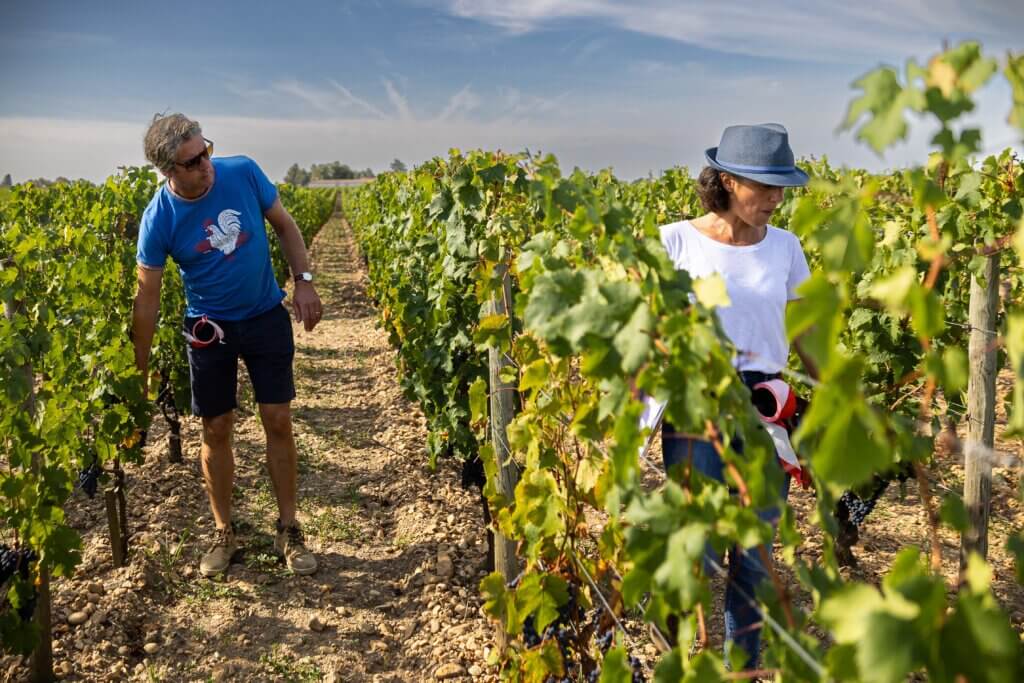
Truth is, vines need water to survive and produce good wine. Not too much, nor too little.
But climate change has thrown a giant spanner into the works – places that used to have just enough rain, now often aren’t getting enough.
And it’s a particular issue in more traditional areas, like Bordeaux, where local appellation rules often forbid irrigation (or other things like mulching, reducing vine density or changing vine varieties). Hence Lafleur’s decision.
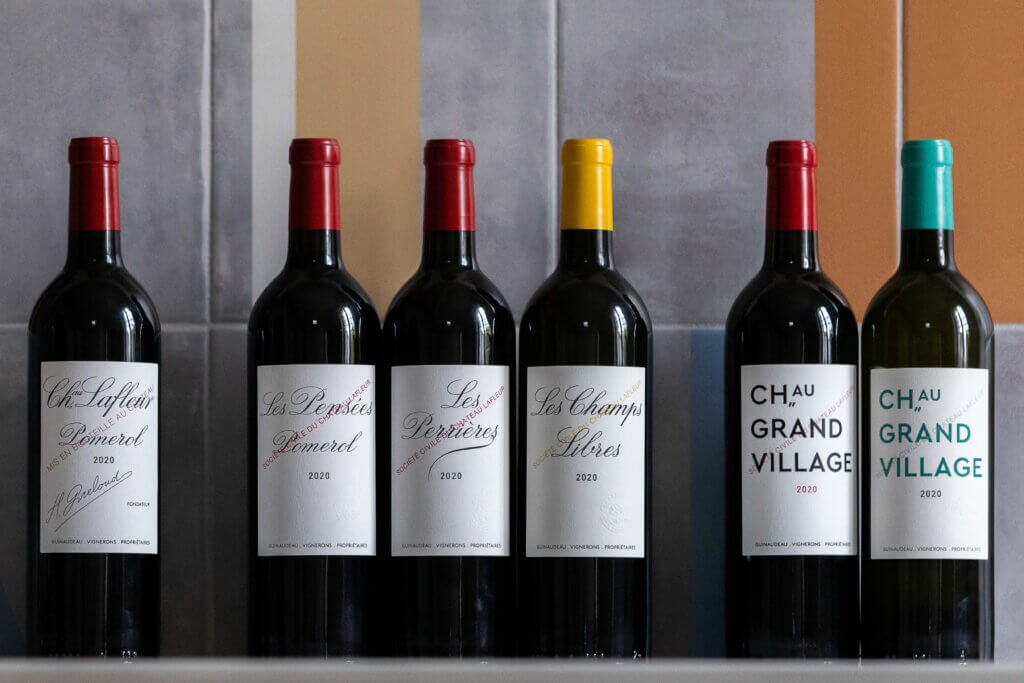
In this extended episode, we hear the full rationale from Lafleur as they release their 2025 wines, which benefitted from their unique ‘soil water recharge’ technique.
We discuss the reality of climate change, why Lafleur is, ‘changing to remain the same’, how exactly they’re irrigating, the key issue of where the water is coming from and the future of appellations.
The implications are manifold.
We also hear from Olivier Tregoat of Domaines Barons de Rothschild Lafite, and share input from Cornelis Van Leeuwen – both acknowledged soil and water experts, and respected Bordeaux insiders.
Finally, we get a different perspective from viticulturist Jaco Engelbrecht in South Africa, where severe drought recently saw Cape Town facing ‘Day Zero’ (when the water would run out).
Jaco works with a stellar client list across both dry-farmed and irrigated vineyards, and shares his expert insights and recommendations.
So what is the future of wine when it comes to water?
Are we looking at wine Armageddon, with great Bordeaux a thing of the past?
Or can human ingenuity and the vine’s famous resilience save the day?
Starring
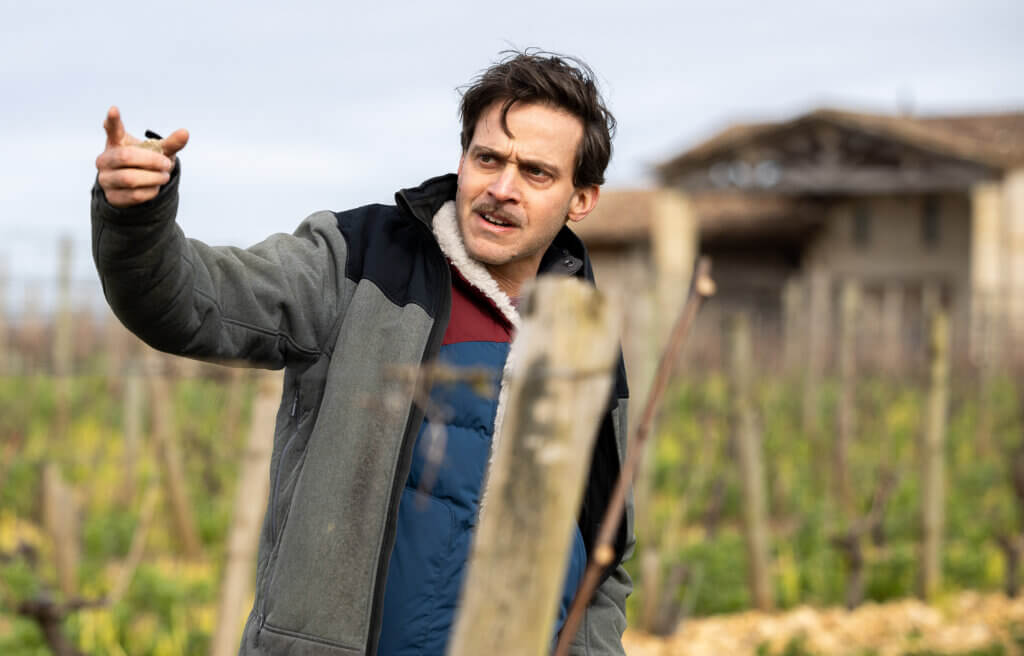
- Omri Ram, Lafleur
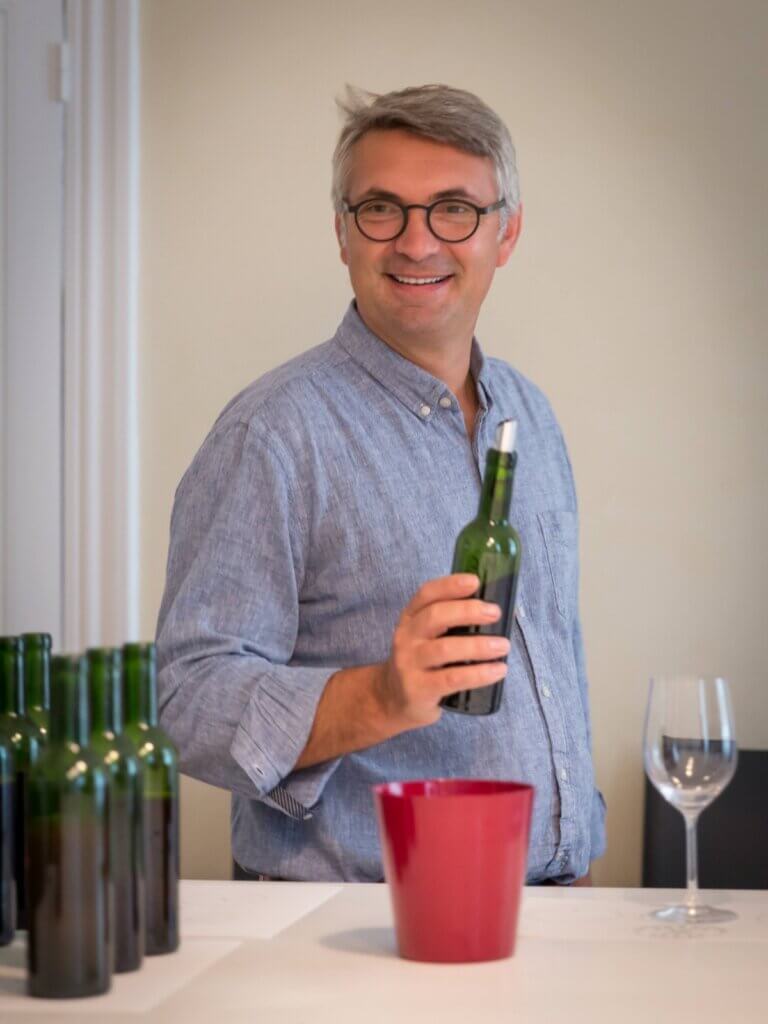
- Olivier Tregoat, Domaines Barons de Rothschild (DBR) Lafite
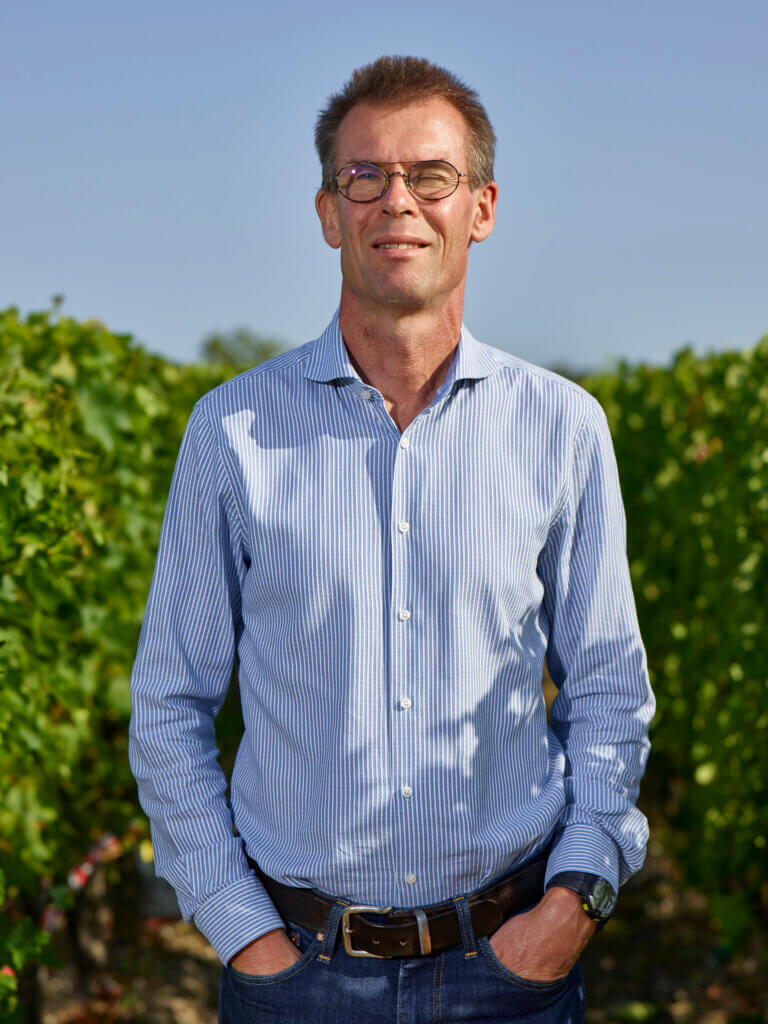
- Cornelis Van Leeuwen
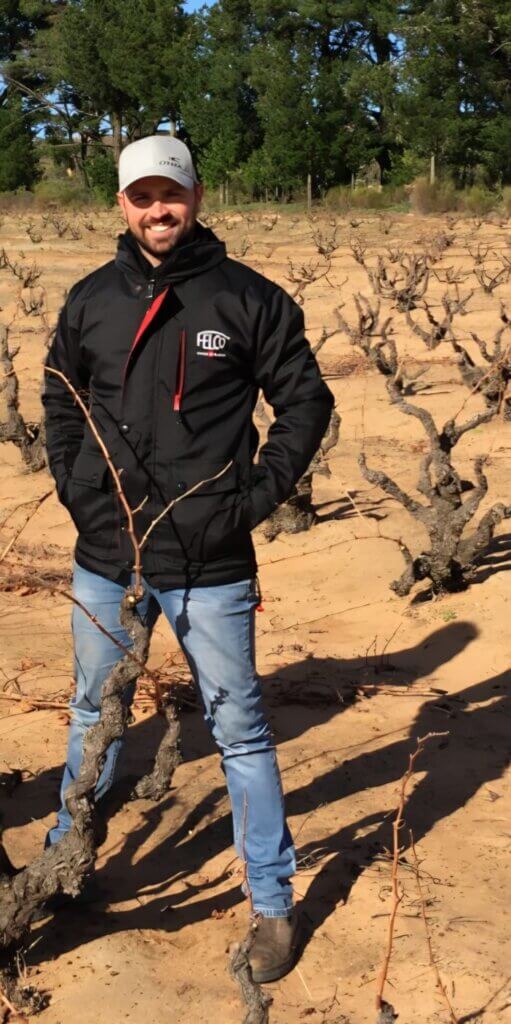
- Jaco Engelbrecht, Visual Viticulture
Subscribe
Sign up to Wine Blast PLUS for first-class subscriber-only content, to access our full archive, support the show and get every episode before it goes on free release.
You’ll also get subscriber-only discounts with the likes of Coravin, Jancis Robinson glassware and Academie du Vin Library.
Just visit WineBlast.co.uk to sign up – it’s very easy, and we will HUGELY appreciate your support.

It takes a monumental amount of work to make Wine Blast happen. Your support will enable the show to continue and grow – and we have lots of fantastic ideas of things we’d like to develop as part of Wine Blast to maximise the wine fun. The more people who sign up, the more we’ll be able to do.
Links
- We mentioned an article by Cornelis Van Leeuwen in Union Girondine – it’s behind a paywall and in French, but if neither of these things bother you, here’s the link: Retour Sur le Millésime 2025: Faut-il envisager l’irrigation dans the Bordelais? [Recap on the 2025 Vintage: Is Irrigation Coming to Bordeaux?]
- Cornelis also sent us a paper on the ‘ecological disaster’ regarding water usage in Spanish vineyards – The Blue Water Footprint of the Spanish Wine Industry: 1935-2015
- The recently published book Rooted in Change, The stories behind sustainable wine delves into the water issue, among other things (and Wine Blast PLUS subscribers get 15% off at Academie du Vin Library)
- Another good paper: An Update on the Impact of Climate Change in Viticulture and Potential Adaptations
- Ditto: Climate change impacts and adaptations of wine production
- Another take on this: Drought will not leave your glass empty: Low risk of hydraulic failure revealed by long-term drought observations in world’s top wine regions
- A good overview: The impact of climate change on viticulture and wine quality
- You can find our podcast on all major audio players: Apple Podcasts, Spotify, Google, Amazon and beyond. If you’re on a mobile, the button below will redirect you automatically to this episode on an audio platform on your device. (If you’re on a PC or desktop, it will just return you to this page – in which case, get your phone out! Or find one of the above platforms on your browser.)
Get in Touch!
We love to hear from you.
You can send us an email. Or find us on social media (links on the footer below).
Or, better still, leave us a voice message via the magic of SpeakPipe:
Transcript
This transcript was AI generated. It’s not perfect.
Susie Barrie MW: 00:06
Hello and a very warm welcome to Wine Blast! And in this one, we’re getting our feet wet, at least metaphorically, because we are talking wine and water.
Peter Richards MW: 00:18
Well, at least we’re not dry! That would be much worse, wouldn’t it?! Yes, in this episode we’re grappling with the tricky and contentious issue of water, the building block of life, vital for vines, but whose increasing scarcity due to climate change is causing existential level issues for wine producers. And this issue has come to a head lately, so an ideal time to dive in. Here’s a taster of what’s coming up:
Omri Ram: 00:43
People must start thinking today if they haven’t done it before, because tomorrow is going to be too late. Viticulture will get smaller. There will be some natural selection.
Jaco Engelbrecht: 00:53
South Africa has always been hardcore. 100% you can make phenomenal wine from irrigated vines. There’s so many things that you can do, but it starts with soil. That’s it.
Susie Barrie MW: 01:04
So there we heard from Omri Ram from Lafleur, formerly Chateau Lafleur in Pomerol, Bordeaux, and South African viticulturist Jaco Engelbrecht. Two people at the cutting edge of this issue. As are Olivier Tregoat of Domains Barons de Rothschild Lafite and Cornelis Van Leeuwen, who we’re also going to be featuring. Hard to cram more water expertise into a single show!
Peter Richards MW: 01:29
We are packing a huge amount into this episode. It’s a long one, so we need to get cracking.
Peter Richards MW: 01:33
First, a quick recap on the basics. Vines are pretty hardy plants, but even they need some water to survive and grow grapes. To make the best wine, though, they can’t have too much water. Moderate water stress means the vines focus their energies on the grapes, which in turn makes for better wine. Nor can they have too little water though, because severe water stress means the vines shut down, which slows ripening, reducing wine quality on the way. It can even, in extreme cases, lead to vines dying. So it’s a question of balance. Not too little, but neither too much. A Goldilocks measure, if you like.
Susie Barrie MW: 02:11
How much water is just right depends on the climate, the vine variety, the soil, and the way the vineyard is managed. The terroir, as the French would have it. For example, heavy clay soils tend to act like a sponge and hold on to water. Gravelly or sandy soils, on the other hand, have very low water holding capacity. A warmer climate means higher evapotranspiration. Some vine varieties, the so-called isohydric ones like Grenache, tolerate drought better than anisohydric ones like Merlot or Syrah. Widely spaced bush vines cope with water shortages better than densely planted, vertically trellised vines with a large canopy surface. Rootstocks also play a part.
Peter Richards MW: 02:55
Historically in Europe, vineyards thrived in places where there was just enough water from rainfall, but not too much. Bordeaux is a good example where soil studies back this up. Local wine appellations sprang up to protect these areas from malpractice and competition, instigating laws around things like which grape varieties could be grown, at what planting density, on what rootstocks, with what training method. And because there were fears about overproduction, irrigation was usually banned. So water for wine became taboo.
Susie Barrie MW: 03:30
But now climate change has lobbed a giant spanner into the works. Increasingly higher summer temperatures and lower summer rainfall mean what was just enough is now often not enough. Some European wine authorities have started to modify their regulations and allow irrigation, for example in Spain. But outside the Languedoc Roussillon, France has been notable in its reluctance to adopt any such measures.
Peter Richards MW: 03:58
Of course, irrigation has long been the norm in warm, arid regions. If you want a historic precedent, look no further than some of wine’s most ancient heartlands of the Middle East, where archaeological research shows evidence of irrigation systems dating back millennia. More recently, efficient modern systems like drip irrigation through a network of pipes trained along trellis wires has become the norm in places like Chile, Argentina, Australia, New Zealand, the US, South Africa, and beyond.
Susie Barrie MW: 04:26
But within French wine heartlands like Bordeaux, irrigation has remained a dirty word. That is, until recently.
Susie Barrie MW: 04:34
It was the torrid heat of 2003 that started the whispers. Then increasingly frequent warm, dry conditions in vintages like 2009, 2010, 2016, and 2022 dialled up the heat in the kitchen. Finally, in August 2025 came a thunderbolt. One of Bordeaux’s top producers, Chateau Lafleur in Pomerol, whose wine sells for up to four figures a bottle, neighbour to the likes of Petrus, announced it was quitting not only the prestigious Pomerol appellation, but also the Bordeaux appellation, to become a lowly Vin de France. Why exactly? Water.
Peter Richards MW: 05:19
Well, not just water, as we’ll come on to, but water or lack of it and the appellation’s reluctance to adapt, was one of the main reasons behind Lafleur’s move. In terms of impact, this was like Liverpool boycotting the Champions League, or don’t know, Donald Trump quitting social media. In other words, in other words, massive, massive. It sent shockwaves rippling through the wine firmament.
Susie Barrie MW: 05:45
And that’s where the idea for this programme began. Firstly, we wanted to hear Lafleur’s side of the story. Beyond a carefully worded statement, the world has heard little from them since this momentous declaration. So why did they do it? And what are the implications?
Peter Richards MW: 06:03
But we also wanted to go further and use this as a starting point to explore the issue of water in wine more widely at what is clearly a critical juncture. Some people maintain irrigation is not compatible with fine terroir-specific wine. Is that true? What are the options? If irrigation does become the norm, where will that water come from? And is this sustainable? In short, what is the future of wine when it comes to water?
Susie Barrie MW: 06:32
Yeah, so let’s start with La fleur. It’s owned by the Guinaudeau family, who are well respected vignerons. It’s important to note that Lafleur, which has become one of Bordeaux’s most celebrated and highly priced wines, is only a small part of the family’s production. There’s another acclaimed red Les Pensées, made from different parts of the La fleur vineyard. Les Perrières is sourced from a clay limestone vineyard near Meyney on the Fronsac borders. And finally, the family owner working farm on the Ambeau Plateau, northwest of Fronsac, which you visited actually, haven’t you? Where they make wines under the Grand Village and Champs Libres labels. They also have livestock, woodland, reservoirs, and some cereal crops on that property.
Peter Richards MW: 07:18
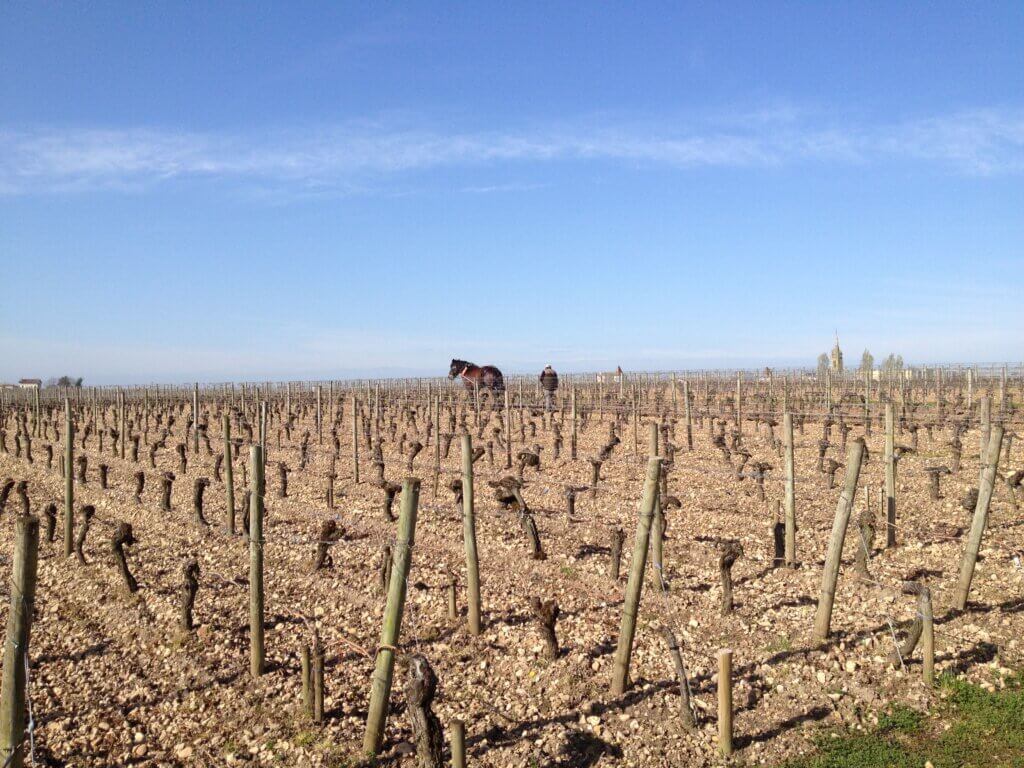
Yeah, now I spoke to Omri Ram from Lafleur in March 2026, having allowed time for them to formally extricate themselves from the appellations and put in place all the new working practices, which was quite a bit of faff as far as I understand. It was also ironically, after the heat and drought of 2025, a time when there’d been serious flooding in Bordeaux after a historically wet winter. It should be noted that some of the La fleur terroir is particularly gravelly and stony with very low water holding capacity. I sked Omri what Lafleur meant when they said they were withdrawing from appellations in order to, and I quote, ‘face the reality of climate change’.
Omri Ram: 08:02
I think the realities are very clear. If anybody’s still not on the program, you know, it’s very difficult to uh hide and and play play dead, as we say, uh, because everybody feels it on a daily basis these days. We feel it in summer, uh, we feel it more and more in winters, where winters are getting hotter. Um, we feel it more and more in the extreme events in our daily life. Weather is becoming more and more erratic, more uh fires during uh summer, even sometimes during spring, late spring, uh things that we haven’t seen in the past. So I think I think climate is you know changing in front of our face in a very intense way, and that’s clear. We used to count, for example, during during the season, the number of days that are above 32. That was 15 years ago. You know, 10 years ago we changed and we started counting days above 34. I can tell you that in the past four or five years we’ve been counting days that are about above 39, because having days above 32 is just very common uh during summer here at this date. And that’s just one element, you know, everything is changing in front of our face, and we either just close our eyes and you know do this and say, yeah, all good, it’s gonna come back to normal, or we we react, we analyze, we understand what’s happening, we try to adapt ourselves the best we can.
Peter Richards MW: 09:27
And you are clearly not afraid to make those changes. Your your announcement said uh you know, we change to remain the same. Um, but obviously withdrawing from Pomerol and Bordeaux is is a big step. What were you getting at there in in saying we change to remain the same?
Omri Ram: 09:43
We make the wines of La fleur. We make six wines, the wines of La fleur. We we have uh there’s a character, our wines have a character, they have a feel that we would love to preserve if possible. Yeah, uh our wines are always around that element that we call balance, a bit of elusive element, but it’s all about balance, and the way we work in the vineyard matches that uh element of balance. We try to work in a balanced way to create balanced fruit, ending up with balanced wines. Now, our terroirs are changing, you know, uh, but don’t forget that the soils are changing. Uh, if it’s a month and a half of non-stop rain, which bring the soil to oversaturation, and therefore, after that, immediately, quite in a very strong way, a flip into sunny rising temperatures, and suddenly this drying, very fast drying of the soils, which uh literally harm the structure of the soil, especially the clay soils. But more than that, we always forget to talk about the life in the soil. Yeah, we’re talking about terroir, a big part of terroir uh is are the microorganisms, or the not just the micro, the the macroorganisms also, but all the life in the soil. And um those populations of bacteria, of yeast, of fungi, of uh earthworms, etc., they they are getting the the bad end of the stick from all of these changes. We are trying to see how we can remain the same, meaning try to preserve our terroirs. Yeah? Uh and I think that’s the key. We’re trying to preserve our soils, preserve the environment of the vines, uh while they’re undergoing an very aggressive attack from these extreme climate uh changes, I would say.
Peter Richards MW: 11:33
So because climate change is fundamentally changing your terroir, you are trying to adapt to make sure that you can still make great wines in your style at the end of it.
Omri Ram: 11:43
I think you I think you nailed it in a nutshell. I don’t need to say anything more. It’s it’s exactly what we’re aiming for.
Peter Richards MW: 11:49
So the next question is obviously why now? Why why 2025? Because obviously you’ve had hot years before 2003, it was hot. 2022, there was uh a derogation for irrigation allowed in in Pomerol. Why 2025?
Omri Ram: 12:01
2025 for us is just it it could have been 2022. Uh our you know thought process about this subject yields all the way back to 2003, got its reinforcement massively in 2009-2010, and pretty much from 2015 and on. Every vintage is quite crazy. And basically, in Bordeaux, historically, most years you don’t need to irrigate. The historical problem of Bordeaux was usually too much water from the Atlantic. And we do have a lot of water in Bordeaux, meaning underground water, uh, big, big rivers, you know, the two famous ones, the Dordogne and the Garonne. Um, Bordeaux is a land of water, basically, it’s oceanic as a land of water. But um, as the climate is changing, things are changing, you know, and we need to think about it. Today, in a generally, you know, general manner, if you look at a year, the civil, civil year, water is still not a problem. In 2025, we had above 700 millimeters of rain in La fleur. In theory, you can say that’s enough. But as you clearly know where I’m heading to, uh the spread, the spread, you know, the spread is an issue. In countries where they already irrigate vineyards, and it’s something very normal. Uh, the spread of rainfall is mostly focused on winter, so about a month and a half to two months. Uh in Bordeaux was not the case, we used to get spring uh storms, spring rain, then summer storms, uh, the famous uh uh Pluie Salvatrice, which we used to say in French the rain that saved everything uh in July or usually more commonly in August, but we get systems from the Atlantic coming during summer, except that we see more and more summers and even springs uh where the amount of rain is just dropping drastically. And you can find yourself uh in 2025, we found ourselves with three months between 19th of May to 19th of August pretty much, and we had three months with about 40 millimeters of rain, uh, which is lower than 22. Uh, couple that with peaks of heat that we haven’t seen before, and when you couple the the water stress plus the thermic or the heat stress on the vines, and you find yourself in a new situation, which has been developing, and we’ve seen glimpses of that uh maybe uh for some moments in 2016, in 2018, in 2020, uh definitely in 22, but uh getting that length of three months of summer uh with extreme drought and coupled with extreme heat, and then you say, okay, something gotta give, oh, we gotta do something. And what gave, unfortunately, was vines. We’re not talking about an effect of negatively impacting uh quality of the of the fruit of the vines, uh, quantity of the yields. We are also adding another level to that. In 2025, we’ve seen vine mortality. Yeah, which which which kind of brings the message home because you can always argue, okay, if I’m making less wine, in La Fleur was never a problem. La Fleur is is naturally having the very poor terroir that we have, the very poor soils, very stony soils, uh, and the old vines that we have in La Fleur, producing low quantities was never an issue. We’re quite used to that. That’s that’s our nature, let’s call it. Um, but accepting vine mortality, accepting your vines dying from the conditions, that’s something, that’s a new challenge. Yeah, and we are not ready to accept that.
Peter Richards MW: 15:40
So you had vines dying in on the Lafleur vineyard?
Omri Ram: 15:43
In Lafleur vineyard, no, because we acted. Right. Uh, but we’ve seen in the vicinity and in general in Bordeaux, uh, depending on the driest parts of Bordeaux, uh, there were some parts of Bordeaux that were much more impacted by this this combination of drought and heat than other parts of Bordeaux. I think in those parts wherever there was no adequate reaction, it went to affect uh severely yields, quality, and in some cases, even vine mortality.
Peter Richards MW: 16:14
so so how did you act and specifically with regard to water?
Omri Ram: 16:17
So, again, as I said, we’ve been um thinking, analyzing, uh, experimenting uh for a number of years, and basically we’ve done, we have a very you know simple basic solution that with time, of course, we we we evolved, we made it better. Uh we took a harvesting machine that we never use because we harvest by hand, but we bought a second-hand one and we modified it so we can carry water, drive in the vineyard, and now comes the the most important thing because you’ve mentioned uh Peter the word irrigation. Well in in-house we don’t say irrigation, uh we correct soil water level, and I know that might seem like you know wanky and fancy, whatever you want to call it. Basically, we’re doing something simple. Instead of drip irrigation, which we pretty much uh you know think when we say drip irrigation, we think of uh drip IV, you know, intervenous uh drip for people. Uh that’s pretty much what you do with drip irrigation, and that’s never what we sought to do. So, what we decided to do is to adapt this you know harvesting machine into carry water to have uh a small tool in the front that open uh a small wedge in the soil down to 15 centimeters, and then automatically we give a dose of pretty much 10 liters per vine in the row. Uh and then behind there’s another tool that we close that little opening in the soil that we’ve done. Um, so a few a few things to consider. Um, when we do surface irrigation, most of the water are lost into evaporation because usually when we need to irrigate, these are times uh when there’s heat and drought, yeah? So the atmosphere is demanding a lot, we’re losing most of it. So we want to irrigate inside the soil and close immediately behind it. Of course, when we can do that at night, great, we are even better, and we did a lot of that at night. So I think this process is already eliminating one of the major problems. But the most important was we don’t want to make it available immediately for the vines. We want to give it to the soil, as it usually works uh in natural processes with a summer storm or just a normal rain, and the soil will you know negotiate with the vine and they do whatever they do usually between them. And we saw beautiful results with that. Um, our fear was that we’re gonna overdose the wine the vines, which could happen. You can make those vines uh fat and lazy, which is the last thing we want to do. We want to give them the minimum necessary so they can continue to cope uh with whatever the season, with whatever nature throws at them. And that’s our idea. So, again, we correct the soil, and and last thing about that, and I hope I’m not going too far, but we I’ve mentioned before climate change is impacting not just our vines and their cycle, it’s impacting the soils and the life of microorganisms in soil, so the health of the soil. Uh, by correcting soil water, not irrigating the vines, but correcting soil water, we are helping the soils uh go through these very, very tough moments and preserve uh the life in the soil, the population of the microorganisms and the insects. So I think I think that’s something that we’re definitely taking in consideration when we decided to go with this process.
Peter Richards MW: 19:49
But you have, it’s really interesting, you have been doing a fair amount of research, you’re interested in the data as well as the practical hands-on farming experience and the results of that, of course. Are there any other sort of insights you can you can share with us of what this is showing you in terms of the vines and then the wines?
Omri Ram: 20:06
I have to say, for the wines, it’s a very early days because 2025, you know, that’s what we applied. Those wines have been just uh blended in January, because we blend early, um, but it’s really, really, really early days to say they taste amazing. And our alcohol levels and the balance of the wine, because alcohol level on its own doesn’t, you know, doesn’t really we don’t care much about it. Numbers are very deceiving, as we said. Data could be deceiving with no context. Um, the balance that we have in those very, very baby, baby wines that are just now in barrels and coming from a very extreme year, very extreme season. Uh what we find in in those very young wines is beautiful balance, beautiful aromatics, uh, freshness, energy, without missing anybody to hold all of these things. So I think the result is exactly what we wanted, meaning we wanted those to maintain this style of wine, and we manage, and with the application of correcting the soil water level. Um, so I think we’re very happy about that.
Peter Richards MW: 21:20
How many times, for example, did you have to um do the soil correction in 2025?
Omri Ram: 21:26
We’ve only irrigated our most our poorest, most uh stony soils. That means that we only irrigated uh a proportion of Chateau La Fleur. We did not irrigate in Grand Village where we have a lot of clay that managed to retain more water during that difficult time. We did not irrigate in Les Perrieres when we have clay on very unique type of limestone that can actually send water by capillarity up when needed. Um, the only place we needed to irrigate or to correct uh soil water. Water level is some parts of La Fleur which are extremely abundant with big stones, and therefore there’s almost no soil there. And your retention or water retention capacity is just ridiculous. So, yeah, so so this actual surface that we had to intervene with uh correcting the soil uh is actually very small, and even inside that surface that we define in La Fleur, not you know, every 10 or 15 meters when you move to one direction, the soil composition changes. So, some places we had to pass uh five times during the season. We’re talking about end of May or early June uh and until some point in August, I would say mid-August. Um, that’s that’s the relevant season for uh water correction, and in that season we pass uh in the most needy, most poor soils, poor terroir area, uh five times. In the less needy, we pass one time.
Peter Richards MW: 22:60
The real question here is irrigation, water, soil recharge, as you put it, is that compatible with fine wine production?
Omri Ram: 23:10
I think I believe, we believe it’s totally compatible in in viticulture, anywhere on the planet, for from from base wine, from more mass production, all the way to the top, to top fine wine, farmers are correcting their soils when needed. The only thing that people in a very weird way for me, you know, in France, look at it, and frown upon is water, which is the most natural element you can you can have in your soil. For some reason, water uh is a taboo in France. Uh water in vineyard, by the way, not in anything else. So I think the question is not about you know, is it okay or not to irrigate? Case by case, of course. The real question is how, if we choose to irrigate, how we do it properly, how we do it with respect uh to the surroundings, to the soil, to the environment, to the people, to the plants. So that’s for me the only question.
Omri Ram: 24:12
Peter Richards MW: 24:13
Just a very quick question. You know, if Pomerol and Bordeaux changed the rules, uh would you go back in?
Omri Ram: 24:21
Maybe. I don’t have a good answer for you. For once, I don’t have a good answer. Um we we never shut the door behind. We’re in very good terms uh with the bodies of the appellation of Bordeaux and Pomerol, both these bodies. Uh we’re very good terms with everybody, we’re very good terms with our neighbours. I think that’s even more important for us because we are in Pomerol, doesn’t matter if we live in the appellation, if you won’t see the name Pomerol on our labels anymore. We are in Pomerol, we are in Fronsac in the Grand Village site, and that will never change. Um so if the regulation will change and will adapt and will become more reasonable to a level that we find that could be interesting to come back, maybe, but I’m not sure I see the point why to do that. I think I think I think that appellations are an amazing tool. I think it’s one of the main reasons why French wine uh succeeded so well, uh historically speaking, and today is still, I think, dominating uh the dome of fine wines. But like everything you know that is working well, and then you don’t touch it for uh 50 or 70 or 100 years, don’t expect it to continue working well. You know, one thing we can be sure of in life is change. Change is inevitable, and we can’t close our eyes. So I think the appellations will adapt. Some appellations, by the way, around France are extremely dynamic and are adapting as we speak and before, and I think there’s less issues over there. Some appellations are less reactive. I think in the end, appellations will adapt or will die, like everything on this planet.
Peter Richards MW: 26:08
Yeah, final question. How will the leading wine producers of the future manage the issue of water for vineyards?
Omri Ram: 26:19
That’s a good question. I think I think I think it will depend a lot on who you are and where you are. Um, I think um those uh why vine-growers wanna manage it well. They should start, if they haven’t started thinking already a few years ago, they must start today, you know, and not a minute later. They must start today thinking about their situation, where they are, where the vineyards are located, uh what’s available around them. Um so I think I think people need to must start you know thinking today if they haven’t done it before, because tomorrow is going to be too late. And I do believe that you know agriculture and let’s focus about viticulture. Viticulture will get smaller in surface. I’m sure of that. There will be some natural selection. Uh we know today that there is too much wine being produced. We’ve seen we’ve I’ve I’ve seen every day driving from Bordeaux to Fronsac to Pomerol uh a parcel, at least a day that was still standing yesterday and was uh you know uh uh a bunch of uh dead vines on each other after being uprooted, waiting to be burned. So the vineyard is being reduced as we speak, and I think it’s it’s a process going to continue. We don’t need so much wine. What we do need is good or better wine, uh, and I think that’s a process we’re going to. So the needs of the sector will be uh will be reduced because of that uh process. There will be less vineyard, uh, but I think those vineyards uh that will remain, the people who are managing them must be on top of the game, they must understand how to use water, where water should come from, what which water they should never touch, and how to anticipate. Meaning the fact that you found a good solution for today and for the next five years doesn’t mean that you have a good solution for the next 15, 20, or 50 years. So keep keep asking yourself questions, never be comfortable, never lay on the lords as we say. I think that’s the base uh assumption in La Fleur that you know nothing is stable, everything is moving, we can’t get comfortable.
Peter Richards MW: 28:34
Omri, thank you very much indeed.
Omri Ram: 28:36
My pleasure.
Susie Barrie MW: 28:41
Squeaky bum time then! uh no getting comfortable. Um wine producers need to adapt, need to plan for change, um, and some won’t make it.
Peter Richards MW: 28:49
Yeah, there’s a lot to ponder. Um, climate changing, terroirs changing. Uh Omri actually said to me, soils are dying, terroirs are dying, and people are oblivious. Um, so you know, serious stuff. And clearly, to their mind, the authorities are not adapting fast enough. And apparently, when they made their announcement, the first messages they received were from South Africa, Australia, and California saying, Bravo, but what took you so long?
Susie Barrie MW: 29:15
Yeah, but and clearly they’ve been thinking about it for a while, you know, since 2003, from what Omri said. Um you wonder how many others are thinking the same thing. Um, you’d imagine a fair few, no? Yeah, absolutely. Uh but then not everyone has soils with as low water holding capacity as those gravelly La Fleur plots. Um and not everyone has extra land they can use to gather and store water like the Guinaudeaus.
Peter Richards MW: 29:39
I think that’s a really key point. Really key point. Um, you know, I also talked to Omri about where their water’s coming from uh at some length, which is why we couldn’t get it in. Um he was adamant they wouldn’t use one millilitre of tap water because that, in his words, would be the demise of us all. Um that said, it’s important to say not everyone is as scrupulous as that. You know, it should be noted. Omri said, we have enough water in Bordeaux, it’s just about effective capture and storage, both from rainfall and from the occasional overflows from the Dordogne River, which is close to them. So they’ve got reservoirs in Grand Village. They’ve also dug a uh a well, 142-metre deep well. Um, but he said that will contribute a negligible amount. Plus, that kind of water extraction is monitored and inspected quite carefully by the authority.
Susie Barrie MW: 30:28
Yeah, I mean he was also at pains to stress their water usage is minimal, wasn’t he? Um just enough to allow the vines to continue their cycle. Um, for example, they apparently use on one vine during an entire season what an average tourist in southwest France consumes in three hours. But we should also add that water was only one factor in them leaving the appellations. Um they’re keen to try things like mulching and shadowing techniques and reducing plant density, none of which is currently allowed.
Peter Richards MW: 31:00
But which some of which we’re going to come back onto in a bit. So uh a lot to take on board there. Let’s take a breath before coming back for more.
Peter Richards MW: 31:07
To recap so far, climate change is forcing wine producers to adapt. Water and irrigation are key issues, but many European wine appellations forbid it. Lafleur recently opened a Pandora’s box when it sensationally quit the Pomerol and Bordeaux appellations, in part to be able to give their vines water during the hot, dry summer of 2025. The results for the wine appear to be positive, but as for the wider implications, that remains to be seen.
Peter Richards MW: 31:39
Susie Barrie MW: 31:40
So the question is: could this prove a turning point? What does the future hold? To answer these questions, we turned to Olivier Tregoat, winemaker and agronomist, expert with a PhD on the impact of soils on grapes and wine, who’s worked all around the world and is now with Domains Barons de Rothschild, or DBR, particularly overseeing Chateau L’Evangile in Pomerol and Rieussec in Sauternes.
Peter Richards MW: 32:08
Now Olivier is used to irrigation, having used it in Chile, Argentina, and also in the Languedoc, where DBR have Domaine D’Aussieères in Corbières. He talks about soil being essentially a reservoir. And for example, in the classic gravels of Lafite or L’Evangile, the water holding capacity is around 80 to 120 millimeters, but the vines will need a minimum of 300 to 350 millimeters during the growing season, hence around three rains per season will be needed to give normal yields. In this interview, we talk about appellations or AOP as he also refers to them. I asked Olivier how things are changing.
Olivier Tregoat: 32:48
In comparison with the 80s on the 90s, today we picked the grepes close to one month earlier than before. For example, today in Chateau-Rieussec we produce the R of Rieussec, a dry uh white wine, and uh the last vintages we picked uh like uh in 2020 or 22, we picked in August. It was not the case uh 20 or 30 years ago, we picked mid-mid-mid September or end September. If you have also a look on this on this data, uh we have to understand that according to the global warming in the world, the the speed of this global warming is twice uh in Europe in comparison with other parts of uh of uh of the world. Uh, for example, the global warming in Bordeaux is really uh faster in comparison with Argentina or Chile, for example. And that’s why today we have more temperature uh and less water during the season. I also can take another example. In Pomerol Appellation, uh the average rainfall between July to August on these two uh summer months. Between zero um 2005 to 2015, it was 100 to 120 millimeters. Between 2015 and 2025, it is 50 to 60. We have lost close to 50 of millimeters of rainfall during our summer today.
Peter Richards MW: 34:37
So, given these changes, should Bordeaux and Bordeaux appellations be considering allowing irrigation?
Olivier Tregoat: 34:46
Ah, it’s it’s uh it’s uh it’s a good question. I’m not sure I’ve got uh a good answer and I’ve got some depth to to to to to answer honestly. First of all, before to speak to irrigation, I think we have to to speak about the rules of our appellation. I mean before to use water, do we have to modify our way of to grow our vines in this location? I mean take the example of the the the density plant the density plantings. Today we have mainly in Pomerol 7,000 plants per hectare, maybe maybe a bit less or a bit more. Is if this density plantation plantation of plantation is still the right one. I’m not sure of that. Why? Because the density plantation means you have a competition between plants and so a competition of water, and especially on the soils with very low holding capacity, it’s it’s it’s a it’s an issue. And also we have we use some rootstocks very with very low vigour, but today probably the rootstock we use in Bordeaux are not the right wine. Uh, for example, in in Spain or in South of France, in Chateau d’Aussieres, in our property, we use some Gravezak or we use some uh 110-R or we use some uh 1103 Paulsen. So, I mean, before to go on this on this debate of the of the using of water, I think we have to also consider uh all the model, all the system. Uh and it it what we are on the we are on the way in Chateau l’Evangile, for example. For example, last year we have planted one hectare de Cabernet Sauvignon with with uh 110R on a very shallow gravely soil to prepare the future. Um, so we have many things to do, but it takes time, sure. And sometimes people are focusing on that, but that’s true also that on the gravely soil, if you have two months without any water, even you modify this system, you have some strain, it’s it’s difficult to for the vines to to reach and to feed the the the grapes. So probably I take the example of 2025. 2025 in Bordeaux area, this is probably one of the most dry, it’s less hot in comparison with Bordeaux, and there is less thermal stress rather than in 2022, but there is more water stress because we read we we add 38, if I remember well, millimeters during two months. But sure, if 2025 will be the norm tomorrow in terms of climate, in terms of vintage, probably step by step we have to really um thought about it. But the first step, as I mentioned, we have to reconsider the model of production. And after we can also, in the same time, I would say, we have to consider the the the in the future, probably it it was it would be necessary, I don’t know, in 10 years or in 20 years, I don’t know.
Peter Richards MW: 38:24
It would be necessary to allow irrigation.
Olivier Tregoat: 38:26
Probably we will see. I don’t I don’t know today. Uh I’m I’m I’m I’m not a dogmatic guy, I’m trying to be a pragmatic. First of all, we have to be honest. Um, we have to be clear about the situation. Do we have a water stress in Bordeaux? Do we have a problem of water stress? For me, the answer is yes. Yes, and probably more and more more and more if I have look on the on the data, on the climatic data, sure, we are a strong tendency of global warming, and it means the the higher temperature and less rainfall during the summer. That’s that’s pretty sure. After the second step is yes, we need to modify our way to manage the vineyard for tomorrow. That’s pretty sure. That’s why, for example, uh now for 10 years in the right bank of Bordeaux. Uh I’m pretty sure that properties are planted Cabernet Sauvignon or Cabernet Franc. Uh, this variety, especially the Cabernet Sauvignon, is really a good variety because uh the regulation of his transpiration is really better than in Merlot. We have some index, a scientist, uh scientific index. In in English, we we call this the water use efficiency. The water use efficiency of Cabernet Sauvignon is really high in comparison to the with the Merlot. So for sure, Cabernet Sauvignon is more uh uh adapted to water threats. That’s uh that’s why also we have we produce very good Cabernet Sauvignon in Chile, u in Napa for sure, and in Australia too, etc. etc. With Merlot it’s it’s it’s it’s it’s more complicated. The the water construction is higher, and the regulation of its transpiration by stomata is not so good. So in the Right Bank today, we saw many plantations of Cabernet Franc or Cabernet Sauvignon, but less and less Merlot. I can imagine Chateau l’Evangile in in for the next generation in 30 years. Today we have 80% of Merlot, 20% of Cabernet Sauvignon, tomorrow in 20 years, probably it it will reverse or 50-50 or something like that. So we have to we have to focus on that. We have to focus on the tracing system, we have to focus on the leaf area, and the last point do we need to bring some water. Which water, where and how? And I think we have to open that to open that discussion, it’s not to have the permission for tomorrow, it’s just to try to anticipate the future.
Peter Richards MW: 41:16
Now you’ve seen wine production all over the world. Um, I’m gonna ask you two questions now. Firstly, is irrigation compatible with fine wine production? And then, secondly, if so, how? How is it best to do it? Of course it will be locally. Maybe you could give us an example. Um, but how can irrigation be compatible with fine wine production?
Olivier Tregoat: 41:39
I think we can really produce fine wines with irrigation in Chile, in Napa, in Argentina for sure. If you really manage the way of irrigation, I mean to bring the right quantity at the right moment, you can really fine-tune your water status and create a halt of growth veraison, uh the the the perfect moderate water status to produce very good berry size with very high uh uh sugar content, anthocyanin content, tannin content, and you produce very good uh uh wine. So if you manage irrigation, for example, like we do in Chile, we use some tools to do it. With um we have different tools, we use some tools uh with um humidity soil probe to understand how we fill we refill the soil with water, but we’ll we also use directly physiology uh indicators like sap flow sensors or chamber pressure to measure very precisely the water status. With this kind of tools, we are more sure to bring the good quality, the good quantity on the right moments to bring some water.
Peter Richards MW: 43:08
Now, in terms of water use and irrigation, some experts say it’s very difficult once you have irrigation to remain at the right level of water deficit, and that you know, once producers have access to irrigation water, they’re tempted to take too much advantage of irrigation. What do you think of that?
Olivier Tregoat: 43:29
This is the human nature, yes, this is the human nature. Sure. I understand your question. I understood that’s why also the appellation has got a responsibility to explain that, uh, to be sure that the the we do not uh need to increase the yield. We are in a plainly problem we have many problems of too much uh wine on the market today. Uh there is uh the the the the our main issue today is the is the is the the world consumption that uh uh this this consumption is decreased uh uh uh uh to uh too much. So we we we need to have some control of that. Sure, definitely. We have to I am for the control, definitely. We need to control the water consumption of an estate. We need to have we have we have we have uh um uh water police in France or environmental water police in France. So we have to to to explain the tools we we have to um to to use to control the water, uh but also we have to be clear uh and we have to be able to give some penalties on the properties that uh tomorrow did not respect uh that the rules.
Peter Richards MW: 44:56
I mean you talk about the issues, the challenges around wine consumption, wine consumption is falling around the world. Do you think, given the problems around water, around climate change, and around consumption, do you think ultimately the the world vineyard will just have to shrink a bit and wine production will have to reduce a bit in order to adapt to all these things, including the challenge of of water?
Olivier Tregoat: 45:22
Well, not necessarily. I I think all the country all over the world today, all the country is now pulling pulling vines. Our main challenge today for the viticulture, this is the consumption, the the the worldwide consumption, especially the red. We know uh a very good example or very good sentence is that uh 50% of the red on the on the on the on the the world market are consumed by the people uh that are uh more than uh 55 years old. So naturally we will reduce our vineyard.
Peter Richards MW: 46:03
Olivier, how will the leading wine producers of the future manage the issue of water for wine?
Olivier Tregoat: 46:14
It’s it’s complicated. Honestly, it’s complicated. First of all, we have to we need a diagnostic, a serious scientific diagnostic about the water status where on the scale of the limited water status where where I am. I am in moderate water status, I’m uh I am in in in serious limited water status, or I’m in stress water status first so diagnostic. Secondly, how I can adapt my vineyard for tomorrow before to think about water. Okay, so this is also uh in relation by the rules of AOP in general, so density plantation, leaf area, rootstock, grape variety, etc etc. This is one of the uh the the for me the second step. And the third step, if do that, it’s not enough because uh finally even I try to to modify my layout uh the system, uh it’s not sufficient. Uh probably I have to open the discussion about water resources. And water resources means locally do I have opportunities to use water uh with no competition with human population, with other uh activities there, uh etc. So step by step we have to open this uh gradually, I would say. Uh not dogmatic, but uh but uh but with data, I would say.
Peter Richards MW: 48:01
Olivier, thank you very much indeed.
Olivier Tregoat: 48:04
Thank you so much.
Susie Barrie MW: 48:10
So first data-led diagnostic about soil water status, then looking to adjust things like planting density, rootstock, grape varieties. Interesting his prediction that Cabernet Sauvignon will start to colonize the right bank of Bordeaux, which is of course historically the heartland of Merlot.
Peter Richards MW: 48:29
Yeah, yeah, and before too long, yeah.
Susie Barrie MW: 48:31
Yeah. And then only as a final resort, looking to irrigate.
Peter Richards MW: 48:35
Yeah, yeah, yeah. But for him, you know, as a soil expert, as a highly experienced viticulturist and winemaker and a Bordeaux insider, he’s accepting the likelihood that this will happen in Bordeaux, which is, I think, a pretty big mindset shift from even 10, 20 years ago. He he drew the comparison with Languedoc uh when we talked. Obviously, you know, a warmer, more Mediterranean region where uh DBR have Domain D’Aussieres. And he said Languedoc used to be anti-irrigation, now it’s pro, and you could see Bordeaux going the same way, uh, especially given that climate change in France seems to be following the worst-case scenario.
Susie Barrie MW: 49:12
Worryingly, he did also note how not being able to irrigate in parts of the Languedoc and Roussillon might lead to desertification and forced population migration, given how important the wine sector is as an employer in the region, which is clearly a a worst-case scenario, but one I guess to bear in mind.
Peter Richards MW: 49:30
Yeah, but he said, you know, France, including Bordeaux, does have the water available. He gave us some stats that something like 70% of water use in France is for irrigating agriculture, but vines account for 0.3% of that 70%. Uh he said that only 5% of the Rhone River’s volume is currently extracted, and said the Dordogne River could easily be tapped in the context of Bordeaux. Rhone was more for sort of uh Languedoc and Roussillon, potentially, but Dordogne, you know, in Bordeaux is usable, they wouldn’t need huge amounts. He added that in his view, neither aquifers nor drinking water should be on the table for irrigation use, and every decision should be made locally.
Susie Barrie MW: 50:11
Now, one other expert we checked in with was Cornelis von Leeuwen, another leading light in soil and water, professor of viticulture at Bordeaux University, much cited researcher, consultant to Cheval Blanc, no less. Like Olivier, he’s not anti-irrigation, saying it can be compatible with fine wine production. But his key point was the following: that there’s a risk of over-irrigation once people have the ability to do it, because it becomes the default solution when other options should be considered first.
Peter Richards MW: 50:45
Yeah, he wrote a really interesting piece in a Bordeaux magazine, which we’ll uh link to in our show notes if we can, but essentially saying that irrigation should not be allowed in Bordeaux, simply to cater for the small amount of terroir that are now proving too dry in some seasons. He says growers instead should adapt by other means, for instance, changing rootstocks or planting density or grape variety or training methods.
Susie Barrie MW: 51:08
He also pointed to what he described as an ecological disaster taking place in La Mancha, Spain. According to uh a recent paper he sent us, and which we’ll put in the show notes as well, in recent years, aquifers have been tapped to the tune of something like a trillion litres to irrigate vines. And then what happens is that sometimes the wine can’t be sold in what is a saturated market, and the wine is subsidized to be distilled, which all seems like complete madness.
Peter Richards MW: 51:39
He concluded by saying that we need to produce less wine, but better quality, and sell this wine for higher prices. We just need to use the wisdom of the smart people in the Mediterranean from previous centuries. He specified he wasn’t talking crazy prices, just enough to be profitable, like you know, 10 euros rather than 2 euro 99 or something.
Susie Barrie MW: 52:01
Okay, so talking of wisdom and dry places, uh we wanted to finish up by getting an insight from somewhere completely different, South Africa. Water shortages have been so severe in the Western Cape lately that during the 2015 to 2018 drought, Cape Town faced the looming threat of Day Zero when the city would literally run out of water. And yet, uh, dry farmed vines continue to flourish in regions like Swartland. So what’s the story?
Peter Richards MW: 52:31
I talked to Jaco Engelbrecht, who works with a stellar client list from Eben Sadie to Duncan Savage, Adi Badenhorst, and more, who’s so dedicated to his metier that he describes himself as a ‘psycho’-viticulturist. Uh, he uses sensors and data and mapping to great effect, but never underestimates being in the vineyard. He works with both dry-farmed and irrigated vineyards in South Africa as well as abroad. And following a particularly dry 2026 vintage, I asked him what he’s been seeing lately.
Jaco Engelbrecht: 53:04
In South Africa specifically, um, it’s a strange thing. We we have this conversation quite often that South Australia and South Africa has always been hardcore. So we do see drought uh um spells. What we do uh realize uh see changing is we’re going to more erratic uh rainfall patterns. So water management, uh especially in the Swartland and Paarl regions where I also work is is absolutely crucial.
Peter Richards MW: 53:35
Yeah, so so talk us through that a little bit more in relation to South Africa. Things have been pretty gnarly recently in the last decade or so. Cape Town’s nearly run out of water. There’s there’s so many things going on. Tell us what the situation is like there, and and talk to us a little bit about what uh water management you’re doing to try to cope with it.
Jaco Engelbrecht: 53:53
Okay, so with Cape Town running out of water, we can’t get into politics um because I don’t see any in infrastructure uh enlargement, but the Western Cape is getting millions of people every every year more, uh especially in the in the Draakenstein area where I am. So let’s leave politics out of this. What we can do in in viticulture is the 2017-2018, when you have 18, we had a massive drought, like the worst I’ve seen. And um we the repercussion of that drought was still evident for like five, six years after that, still till today. These old vines died. That actually forced us to look at things seriously, to look like what how can we do this? I mean, in South Africa, um, cover cropping has been a big thing forever. It’s fascinating the research that’s been done on cover crops, and it’s regional, so it’s not just a broad-based thing, it’s actually regional. So, mulching, protecting soil moisture, protecting evaporate transpiration, and uh, especially in the swartland and pole, we’re very fortunate that we are in a predominantly wheat-growing area, so the resources are available. Um, so we mulch around the vines as much as we possibly can. It’s obviously very expensive, um, it’s labor-intensive, but I mean you can ask the guys in the Swartland, there’s just no replacement for that. I mean, because also while you just you’re not just protecting like surface evapotranspiration, uh surface temperature fluctuations, but you also that that breaks down into carbon, it breaks down into nutrients. So we have to you have to refill that every three years, you have to repack more straw, but it’s not something that just blows away in the uh in the air, it actually gets broken down and actually feeds the plant. So it’s a continual thing or a continuous thing that we’ll be doing, and we have been doing for for decades. I mean, I think we just really ramped it up after 2017-2018 strought. And then cover cropping. So we’ve been focusing on really building carbon. We are uh in a in a in a carbon scarce area in our soils. If I look at the the carbon percentages in the in the northern Rhone, for instance, I mean that’s it’s stuff that we can only dream about. But we we we were at the bottom, so with our soil carbon, and we know how important it is to build it. And I think that’s the one thing that Europe, especially France, needs to come and learn. Everybody goes to just Australia or or America. I see very, very little French companies come out to South Africa in wintertime to come and see how we do it. So um, yeah, I think we’ve really focused on managing our soil with cover crops and mulching. That’s been the main driver.
Peter Richards MW: 56:39
You know, we’re talking about you you uh work with both dry farmed vineyards and irrigated vineyards. So let’s focus on dry farmed uh initially, which you know, how what are you doing there beyond let’s say cover crops uh and mulching to ensure proper uh water management?
Jaco Engelbrecht: 56:56
Well, planting varieties that are isohydric, Grenache, Grenache Blanc, uh things that can take the punch. I mean, um I know I’ll be uh uh I’ll get hit over the fingers for saying it, but I mean I think Swartland is not a very, very popular place to grow Syrah in the future. There’s definitely pockets. I mean, look at Porseleinberg and the Mullineuxs as well, but that’s specific pockets. Syrah is an anisohydric variety, it struggles to to manage water. So, but if you look at the the plantings in in the Swartland, the biggest plantings, it’s mainly Chenin Blanc, Grenache Blanc, uh Grenache Noir, Cinsault. Uh it’s the varieties that has been that’s shown like we can take the punch. I mean, Palomino, I don’t know where that thing comes from, it must come from the moon, it’s not from Spain or wherever. Because in the 2017-18 droughts, it looked like they got irrigation water. Like I don’t know where they got it from, but Palomino is a freaking, it’s you’ll go to war with you. So we definitely have in the past 10 years have looked at at different varieties and testing them out as a realistic uh approach of of looking at it because beyond mulching and cover cropping and looking at varieties that can take the punch, it’s not a lot we can do. Obviously, planting bush vines, we we do uh like thin out the crop, etc. But that’s as far as you can go. I mean, if it doesn’t rain for three months and four months in the growing season, it doesn’t rain. So you have to protect with the little we what you have.
Peter Richards MW: 58:31
I mean, a simplistic question, I know. Please forgive it, but do you think dry farming makes for better wine?
Jaco Engelbrecht: 58:37
Um, no, not necessarily. I think um I’m not a I’m not a dogmatic guy when it comes to organics or watering, etc. I mean, there’s a lot of people that feel super strong about it. Um I think there’s balance. If you find the balance in in it, I think you can make phenomenal wines.
Peter Richards MW: 58:54
What other levers can you can you can you use to make sure that uh you’re using water in the you know responsibly and and minimally but but adequately?
Jaco Engelbrecht: 59:03
Don’t overcrop, um don’t grow too big a canopies. Um uh trellised vineyards tend to have larger canopies. Um so you don’t you don’t find a lot of dry farm trellised vineyards in in South Africa regulating crop. I mean, uh we’d love to have more crops. Um it’s not like uh we I think we think it’s fancy to have lower crops or lower yields um because uh low yields means less income. So um, so yeah, it’s smaller canopies and soil management, that’s the game.
Peter Richards MW: 59:37
You’ve touched on profitability there, which I think is vital. Um obviously reducing yield means you can reduce your water inputs and manage water responsibly, but uh you know wine still needs to be sustainable economically, and there’s the challenge because presumably, therefore, you if you’re reducing your yield, you need to raise your price to make it work. Is that sustainable? Is it manageable?
Jaco Engelbrecht: 59:58
I think we’re constantly looking for ways to to be more sustainable. Um, so how do we how do we do that? In older vineyards, we are constantly looking at vines that underproduce or underdeliver, and we will replace them with younger, stronger vines. Rootstocks play a massive role in um in soil water management in South Africa. The Richters, Richters, Richter 99 is the king of drought resistance, uh richter 110 is good. Um so we’re very blessed with with with good root stocks that can take the punch, like richter’s or that’s that’s unmatched.
Peter Richards MW: 01:00:37
Switching to irrigation now, a very bald question to kick off with. But you know, is irrigation compatible with terroir-specific fine wine production? You know, can you irrigate and make fine wine, I suppose, is the question.
Jaco Engelbrecht: 01:00:51
100%. I believe so. 100%. I think there’s more than enough examples in the world that uh where people irrigate. I mean, 100% you can make phenomenal wine from irrigated vines. It’s how you manage it. It’s a management system like anything in the world. It’s balance, and if you go too much, it’s gonna be bad. That’s it.
Peter Richards MW: 01:01:12
So then the question to you as the viticulturist is is how you get it right in any particular site. How how do you know uh or how do you work out how to uh manage that irrigation uh correctly to maximize quality?
Jaco Engelbrecht: 01:01:27
I think if I think if you think there’s a single like silver bullet, then you’re a fool. Uh there’s we have so many tools. I mean, I use NDVIs, we use um continuous loggers, um we dig a hole and and see what’s going on. Uh you have to be there. You look at the tendrils, you look at you have to know the soil, so you have to do proper profiling. Like, what is the permeability of the soil? What is the water holding capacity? What’s your carbon? Because carbon is a small molecule but a huge reactive surface, so it holds onto water and nutrients uh a lot better. So, what’s your carbon content? That’s why we focus so much on building carbon with cover crops in the soil. Because if we can raise our cut our carbon, we will we will also raise the adsorption of water. So there’s various things that we use. I mean, ultimately you have to know your site, that’s the thing. I mean, you have to know what the capability of your soils are, weather stations, monitoring rainfall. Because looking at rainfall for a year is a senseless exercise. It’s about the spreading of rain, like when did we get rain? How much did we get? And then that’s where the the probes work very, very well because you think oh, we had 30 mils of rain, it was great. And then when you look at the probe, you’re like, oh my word, it didn’t even penetrate to like 50 centimeters. So so then when there’s heat after that, that like evapotranspirates within a week. So you have to use the tools, um, and there’s so many tools you you that that’s available that you can use.
Peter Richards MW: 01:03:06
And how is climate change affecting this the the water issue in in South Africa, particularly?
Jaco Engelbrecht: 01:03:11
A lot of farmers around here um are reliant on water schemes, um, being pumped from water schemes, and um, unfortunately, in a drought, uh, farmers get cut off first. Um, so it’s like I said, I mean, I can’t go into politics, I don’t want to go into politics, but I mean, if we don’t increase the the amount of dams, like proper dams or the the collection surfaces, I don’t see it getting better in future. Um, hence why we are planting when we’re doing new plantings, especially if we have a little bit of a curvature, we plant on contours in order to harvest any rain that we can into dams. I mean, even if we don’t irrigate, it doesn’t matter. Like, we try to to get as much as possible um first into the soil and then uh properly uh transferred into dams. So I don’t know, I can’t answer. I mean, it’s some years are good and some years aren’t. I mean, uh there’s um it was dry in the 70s as well, so um we see these cycles, they’re maybe a bit more erratic now, but I mean we try and mitigate them with like I said, I mean, managing soil is that’s that’s number one.
Peter Richards MW: 01:04:22
Yeah, final question, Jaco. How will the leading wine producers of the future manage the issue of water for wine? What’s the future for for wine when it comes to water?
Jaco Engelbrecht: 01:04:34
Definitely you have to plant the varieties that is at home in that place. Like, I mean, it’s no use you go to an area where you know that there’s no water, it’s there’s low rainfall during the summer months, and you go and plant Syrah there, like on trellis. I mean, it’s it’s stupid. Like, so I think um regionality with regards to varieties is gonna become a big thing. Um, I mean Grenaches are amazing in South Africa. Chenin Blanc’s, Chenin has just always been, I don’t know where that guy comes from. Maybe even uh Palomino like grew up in the same hood because they’re both super tough. So um I see a lot of guys planting that, and then I don’t think it’s gonna be a massively commercial, but field blends, I think field blends mitigate uh variation, seasonal variation fantastically. If you can plant a white field blend with a bit of Grenache Blanc, or a bit of Macabeo, majority of chenin blanc, maybe a little bit of Petit Manseng for acidity, a bit of Colombard for acidity, a bit of production, and in some seasons one variety will do better than another. But I mean, as a as a group, they’ll always do well. I mean, work in Spain for decades. Um, and um there’s a lot of old field plants in South Africa, and we’re planting a lot more these days. Mulching, cover cropping, uh rotating the cover crops instead of mulching uh chopping it up to mitigate the surface evapotranspiration. Like maybe again like the old guys did plant some windbreaks around it. I don’t know. Maybe try and try and help it that way. I mean so there’s so many things that you can do but the it it starts with soil. Well that’s it. If if you do not protect the moisture in that soil you you’re you’re on the back foot.
Peter Richards MW: 01:06:27
Jaco, thank you very much indeed.
Jaco Engelbrecht: 01:06:29
Big pleasure
Susie Barrie MW: 01:06:35
really interesting his emphasis on mulching and cover cropping essentially focusing on building the carbon content in the soil which then has the power to sequester and retain moisture through adsorption. Because I think he said at one point that it’s much easier to retain water underground particularly in South Africa which is not only warm and dry but also often very windy which isn’t always recognized.
Peter Richards MW: 01:06:59
Yeah yeah and he also made a big point that in South Africa they’ve done huge amounts of work and analysis and research and have so much data on the water issue particularly both from dry farming and irrigation you know they’ve had it tough but they still make great wine and and he said he’s surprised that other winemakers including the French uh don’t travel more and build knowledge that way about how to overcome their their challenges or what are increasingly their challenges.
Susie Barrie MW: 01:07:26
So we all need to head out to South Africa. I’m up for that! Right this episode has been a very long one. Time to wrap things up would you like to do us a final quick summary?
Peter Richards MW: 01:07:39
Let’s do it! To make wine, we need water. But water is an increasingly precious commodity in today’s changing world. And change is the key word here: make no mistake, the climate is changing, soils are changing, and we have to change with it. ‘We change to remain the same,’ say Lafleur: the question is, how exactly? Is irrigation the way to go – if so, where will the water come from, in a world where humans and food production will always take priority? What are the alternatives? And how should more traditional appellations, like Bordeaux, adapt in the face of such change?
Susie Barrie MW:
We’ve covered a lot of ground in this programme, but this is a complex issue, and you get the sense this debate is only just beginning in earnest. What is the future of wine when it comes to water? As Olivier Tregoat says, ‘we need to open the discussion’ because, as Omri Ram notes, ‘tomorrow it’s going to be too late.’
Peter Richards MW:
There’s clearly a lot that wine can do – from adapting things like planting density, rootstocks, training, yields, canopy management, even vine varieties – to mulching, using cover crops and improving soils. Rules and guidelines will need to be modified to allow responsible adaptations; supervision and controls introduced to police things like water use. Beyond that, doing and sharing research, implementing efficient irrigation systems and installing or upgrading infrastructure to capture and retain rainwater or flood water – all these are things that clearly are in play. But more needs to be done.
Susie Barrie MW:
What seems certain is that the global vineyard will inevitably shrink in a world that’s drinking less wine and has ever-growing pressures on its fresh water resources. Will this end in wine Armageddon, a vinous doomsday scenario, where great Bordeaux, for example, is a thing of the past?
Peter Richards MW:
We have to think positively. After all, the vine, like the human race, is a survivor, able to turn adversity into something comforting and reviving. There is an opportunity here for wine to take a lead in responsible water and soil management, combining human ingenuity and the vine’s famous resilience. There may not be one ‘silver bullet’, as Jaco Engelbrecht points out, but perhaps through collaboration, innovation and persistence, wine can get ahead of the game and prove a model of sustainability in a changing world – an inspiration and comfort in troubled times.
Susie Barrie MW:
Cheers to that! Thanks to our interviewees Omri Ram, Olivier Tregoat, Cornelis Van Leeuwen and Jaco Engelbrecht. And thanks to you for listening. Until next time – cheers!