- Season 7 Trailer
- The Jancis Robinson EXCLUSIVE Part 1
- The Jancis Robinson EXCLUSIVE Part 2
- Chile Wines of the Year 2025
- SAN LEONARDO – The insider’s Guide
- The Story of The Billionaire’s Vinegar – Part 1
- The Story of The Billionaire’s Vinegar – Part 2
- Blind Tasting Top 2021 Super Tuscans
- Top of the Pops: Classic Fizz Beyond Champagne
- Rock and Rhône
- Our WINES OF THE YEAR (2025)
- Our BOOKS OF THE YEAR (2025)
- Hugh Johnson UNCUT
- McLaren Vale – Boxer to Ballerina
- McLaren Vale – The Grenaissance
- Peter Fraser – A Tribute
- New Zealand Wines of the Year 2026
- Sam Neill UNCUT
- Giveaway EXTRAVAGANZA + Game-changer Coravin
- Greg Lambrecht UNCUT
- The Story of Stalin’s Wine Cellar PART ONE
- The Story of Stalin’s Wine Cellar PART TWO
- Drop Stop: Wine’s Big Water Issue
- Missing the Point?
- Keep Calm and Sauvignon
- Yeastie Boys: Wine’s Modern Microbial Solutions
- Adelaide Hills: Lofty Ambitions
- Natural Wine RELOADED
- The Judgement of Paris 50 Years On
- The Greatest Chardonnay Showdown
- Pays d’Oc Part 1 – Land of the Free
- Pays d’Oc Part 2 – Future Proofing
- News & GB Wine Update
- Wine Travel: The Inside Steer
Summary
Sauvignon Blanc is one of the wine world’s most divisive grape varieties.
On the one hand, it’s hugely popular for its aromatic charm and upbeat appeal.
And yet some people can’t stand it, sommeliers actively steer their customers away from it and connoisseurs turn their noses up at, ‘the gin and tonic of wine’.
But is it possible that this is all just a bit, well, premature?
That we’re judging a grape variety that is only just starting to show us what its true potential really is?
And that Sauvignon Blanc really is a grape variety capable of greatness?!
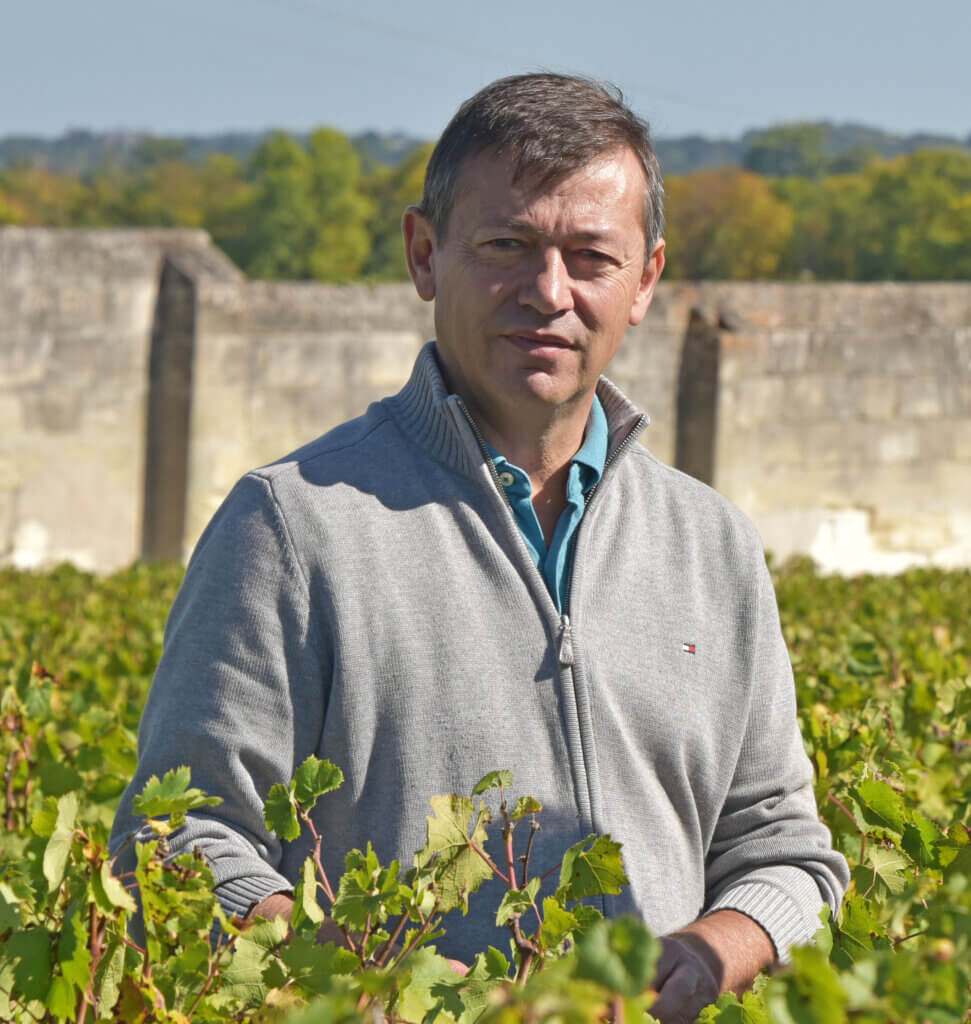
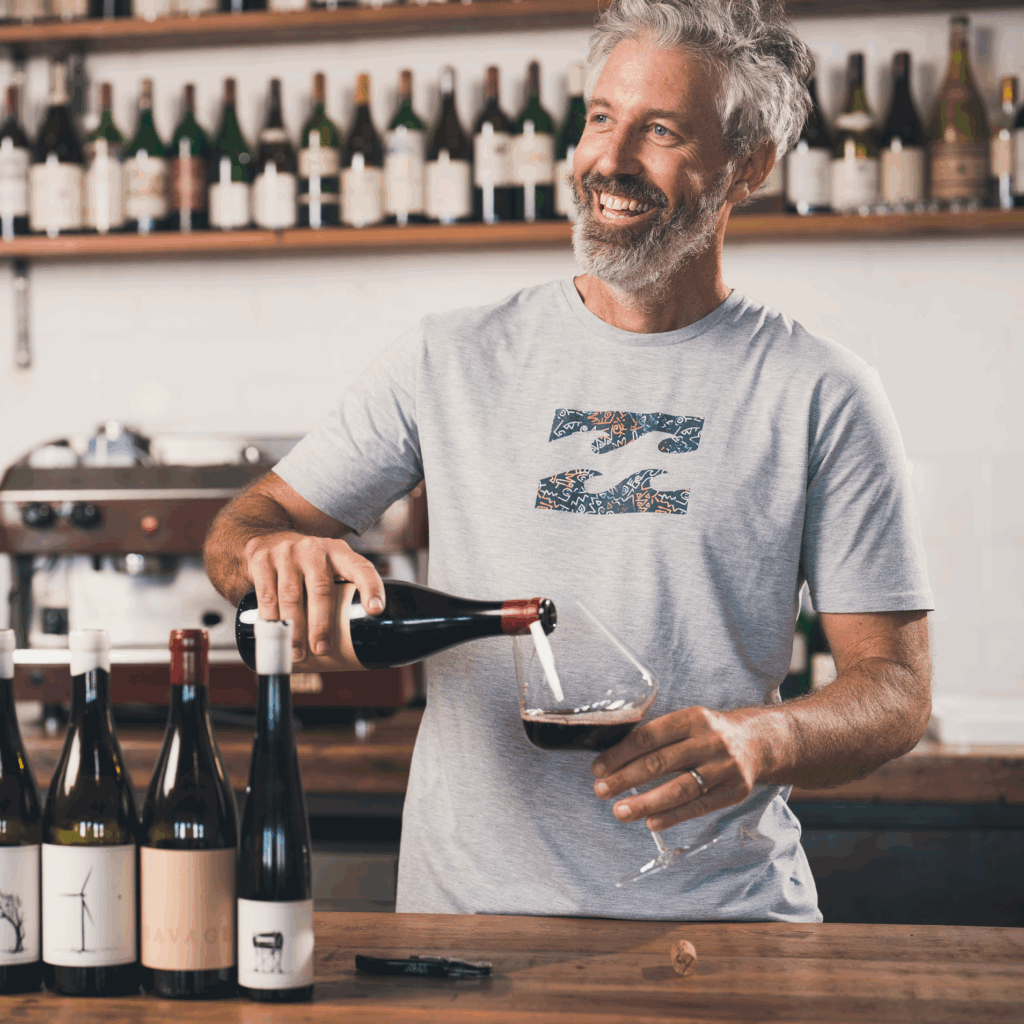
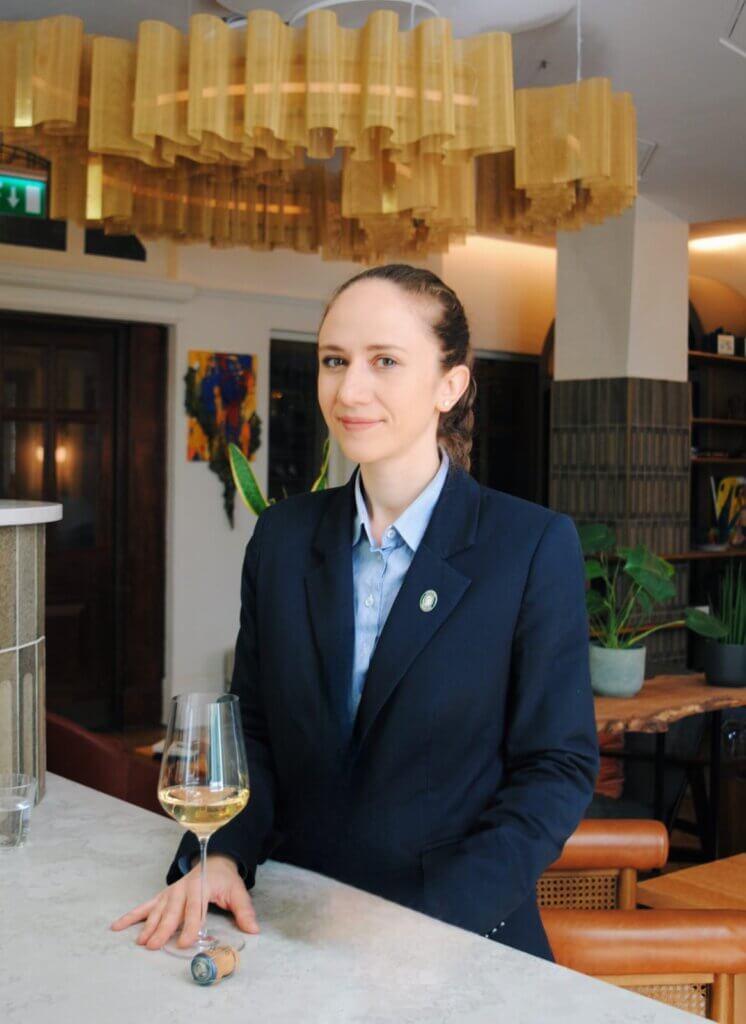
To check the global temperature, we’re privileged to be granted an audience with Château Margaux’s Philippe Bascaules, South Africa’s Duncan Savage, and UK Best Sommelier Maria Boumpa.
What they have to say will raise more than a few eyebrows. (Including an unexpected scoop about top South African producer Eben Sadie…)
We firmly believe it’s time to rip up the established rule book when it comes to Sauvignon Blanc, and open our minds to a new reality.
Tune in to find out why.
Starring
- Philippe Bascaules, Château Margaux
- Duncan Savage, Savage Wines
- Maria Boumpa, Da Terra
- Susie & Peter
Subscribe
Sign up to Wine Blast PLUS for first-class subscriber-only content, to access our full archive, support the show and get every episode before it goes on free release.
You’ll also get subscriber-only discounts with the likes of Coravin, Jancis Robinson glassware and Academie du Vin Library.
Just visit WineBlast.co.uk to sign up – it’s very easy, and we will HUGELY appreciate your support.

It takes a monumental amount of work to make Wine Blast happen. Your support will enable the show to continue and grow – and we have lots of fantastic ideas of things we’d like to develop as part of Wine Blast to maximise the wine fun. The more people who sign up, the more we’ll be able to do.
Links
- Here’s a link to the previous Wine Blast episode (from Season 2) that we cite in this show: New Zealand Sauvignon Blanc
- In early 2027, Marlborough is hosting Sauvignon Blanc New Zealand 2027, ‘A celebration of collaboration, creativity and iconic global reputation of New Zealand Sauvignon Blanc.’ Check it out!
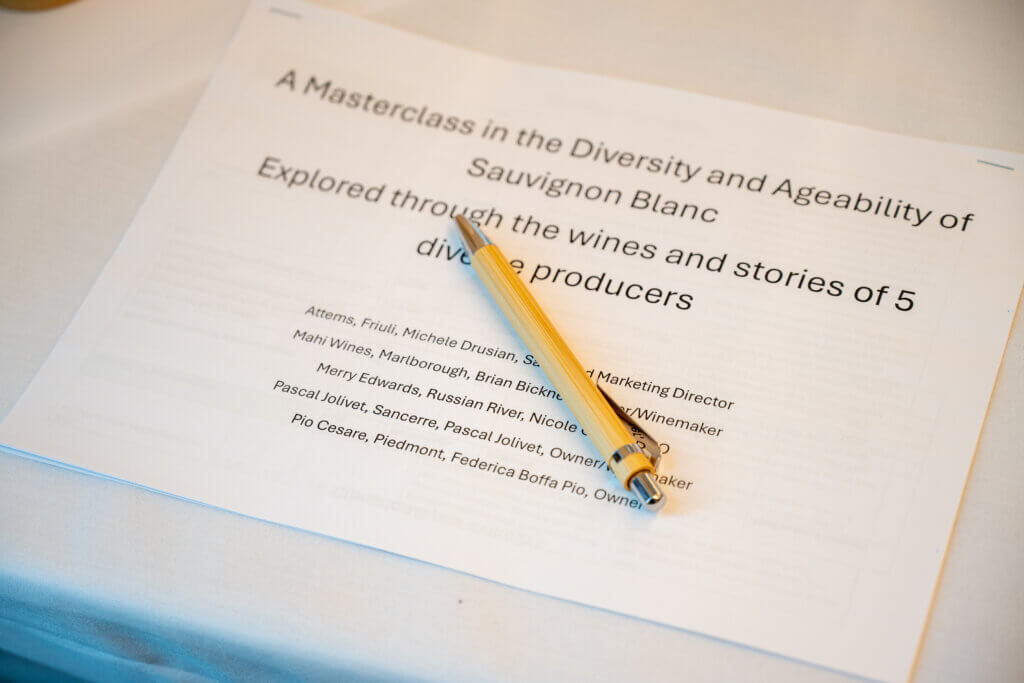
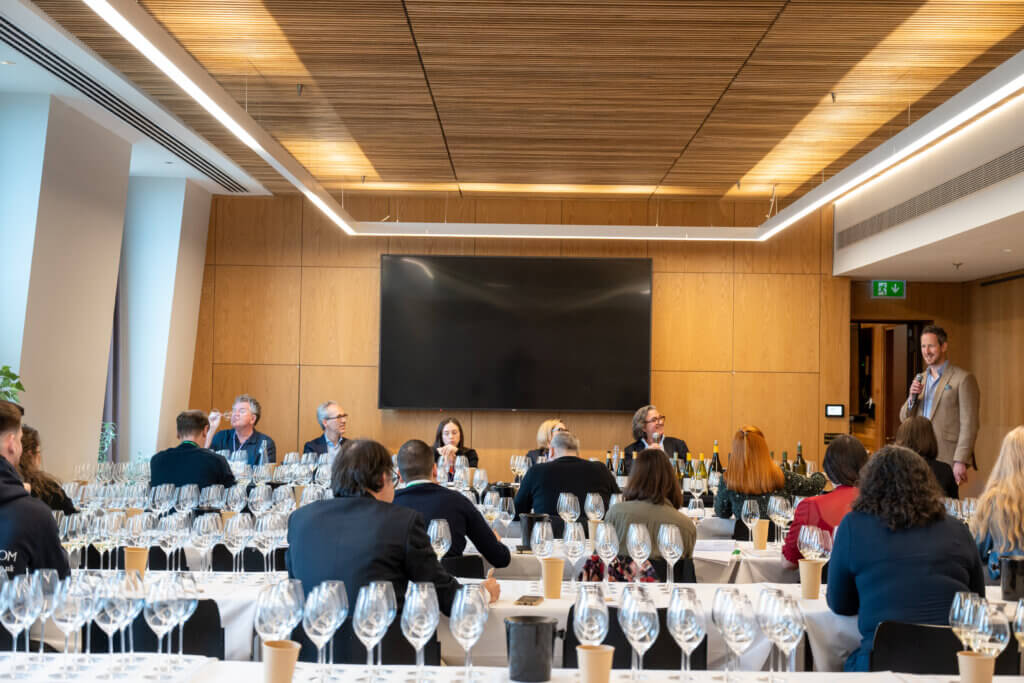
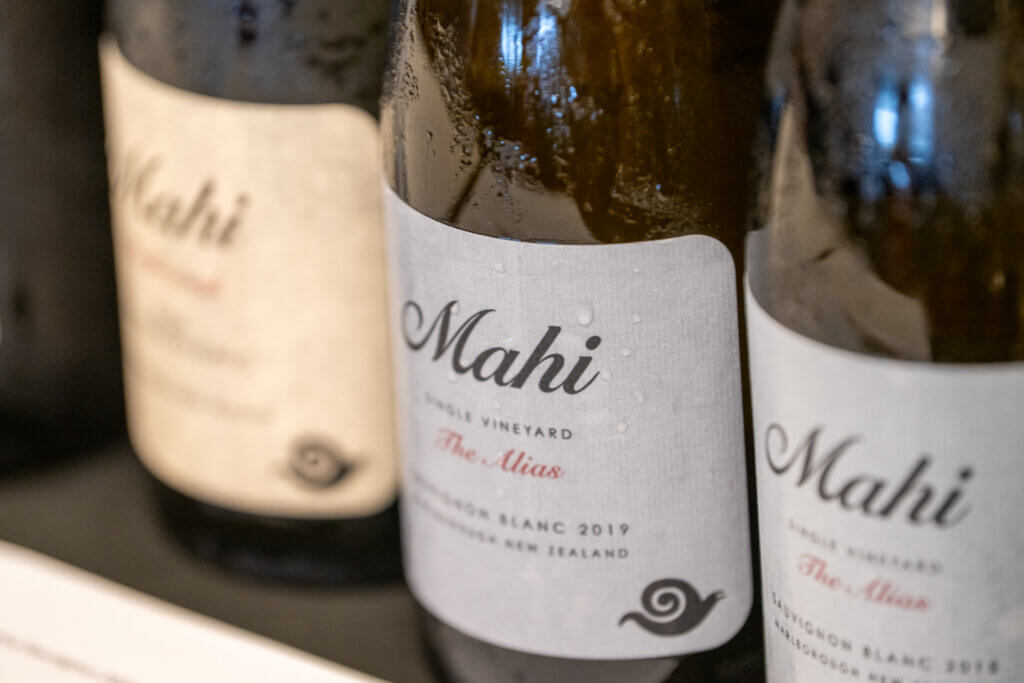
- The main photos in these show notes were taken at the MMD portfolio tasting on 10th March 2026 in London, at a session entitled: A Masterclass in the Diversity and Ageability of Sauvignon Blanc. Credit: MMD/Different Perspective.
- You can find our podcast on all major audio players: Apple Podcasts, Spotify, Google, Amazon and beyond. If you’re on a mobile, the button below will redirect you automatically to this episode on an audio platform on your device. (If you’re on a PC or desktop, it will just return you to this page – in which case, get your phone out! Or find one of the above platforms on your browser.)
Recommended Sauvignon Blanc producers
BORDEAUX: Château Margaux, Domaine de Chevalier, Château Doisy-Daëne, Château Carbonnieux, Clos Floridène, Château d’Yquem, Château de Fieuzal, Château Haut-Brion, Château Brown, Château Smith-Haut-Lafitte, Château Talbot, Château Latour-Martillac, Château Lagrange
NEW ZEALAND: Dog Point, Greywacke, Astrolabe, Pegasus Bay, Mahi, Rapaura Springs ROHE, Blank Canvas, Catalina Sounds, Jules Taylor, te Pā, Zephyr, Yealands, Cloudy Bay, Auntsfield, Villa Maria, Kim Crawford, Saint Clair, Tohu, Isabel Estate, Loveblock, Matawhero, Misty Cove, Tiki, The Supernatural Wine Co, Whitehaven, Jackson Estate, Giesen, Brancott Estate, Huia, Man O’War
SOUTH AFRICA: Savage Wines, Cape Point Vineyards, Jordan, Chamonix, Reyneke, Tokara, Sterhuis, Elgin Ridge, Ataraxia, Carmen Stevens, Paul Cluver, Iona, Springfield, De Morgenzon, Vergelegen, Waterkloof, Black Oystercatcher, Ghost Corner, Thelema, Neil Ellis, Klein Constantia, Lismore
LOIRE: Didier Dagueneau, Henri Bourgeois, François Cotat, Alphonse Mellot, Vincent Pinard, Domaine Vacheron, Pascal Jolivet, Tinel-Blondelet, Michel Redde & Fils, Alexandre Bain, Florian Roblin, Valéry Renaudat, Jacques Rouzé, Jean Pabiot & Fils, Domaine Gérard Millet, Paul Prieur & Fils, Hubert Brochard, Pierre Martin, Andre Dezat
CHILE: Casa Marin, Viña Leyda, Garcés Silva, Trapi del Bueno, Errázuriz, Matetic, Laberinto, Aquitania, Casa Silva, Echeverría No Es Pituko, Miguel Torres Chile, Santa Rita, Marty, Montes, Cono Sur, Ventisquero, Tabalí
AUSTRALIA: Shaw & Smith, Singlefile, Domaine A, Vasse Felix, Cape Mentelle, Larry Cherubino, Cullen, Terre a Terre, Bay of Fires, Leeuwin, Domaine Naturaliste, Stella Bella
OTHERS: Attems (Italy), Pio Cesare (Italy), Lis Neris (Italy), Marco Felluga (Italy), Missing Gate (UK), Balfour (UK), Benziger (USA), Araujo (USA), Merry Edwards (USA), Robert Mondavi (USA), Sbragia (USA), Chalk Hill (USA), Duckhorn (USA)
Get in Touch!
We love to hear from you.
You can send us an email. Or find us on social media (links on the footer below).
Or, better still, leave us a voice message via the magic of SpeakPipe:
Transcript
This transcript is AI generated. It’s not perfect.
Susie Barrie MW 0:05
Hello, you’re listening to Wine Blast. Welcome! In this show, we’re whizzing you from Chateau Margaux to South Africa, then back to London via Greece, because we are talking Sauvignon Blanc. It may not be everyone’s cup of tea, but for us that makes it all the more fascinating.
Peter Richards MW 0:22
Yes, hello. Thanks for joining us as we keep on Sauvignon. There’s a stadium anthem in there…Sorry, just waiting to be made. I’ve got my hands in the air right now. And there’s a no-brainer refreshments policy that goes with that. Anyway, anyway, let’s get back on track. Here’s a taster of what’s coming up.
Philippe Bascaules 0:38
So great Sauvignon Blanc exists. It can be as good as Chardonnay, the same level of complexity, of texture, of lengths, of ageability. So I am, I am very positive with the future of Sauvignon Blanc.
Duncan Savage 0:53
I quite like the fact that it’s popular because you know, if it wasn’t popular, then I wouldn’t have a business! And then we can take that same variety, where we’ve got a wine which is far more complex. And I hope that people one day open their eyes more to, you know, how versatile and how great it can be.
Susie Barrie MW 1:11
The terms ‘great’ and ‘Sauvignon Blanc’ aren’t often heard together. So it’s refreshing to hear those strong words from Chateau Margaux’s Philippe Bascaules and South Africa’s Duncan Savage, both winemakers at the top of their game who do a fine line in Sauvignon. We’ll be hearing more from them and from Champion Sommelier Maria Boumpa. Plus, we’ll be reporting on some eye-opening tastings we’ve been doing and adding our two cents into what can be a pretty heated debate.
Why some people love to do Sauvignon down
Peter Richards MW 1:41
Yeah, to cut to the chase, Sauvignon Blanc is one of the wine world’s most divisive grape varieties. Some people say they just don’t like the taste. Um, others, particularly experts and professionals, go further. They dismiss it as a one-trick pony, making simplistic, aromatic wine that’s obvious and boring. It’s one of the few grape varieties to have a pretty familiar roster of slurs linked to it. Uh, ‘the fruit salad variety’, ‘the gin and tonic of wine’.
Susie Barrie MW 2:10
If you’re of a more sensitive disposition, you might not want to hear the likes of ‘cougar juice’ or ‘bitch diesel’. Indeed, disparaging Sauvignon seems to be popular sport amongst a certain segment of the wine elite. These days, the trend is much more for obscure indigenous varieties that are hand-sold rather than international headliners that are familiar names and make pretty popular styles.
Peter Richards MW 2:34
At the Sauvignon Blanc Conference in New Zealand a few years ago, I remember an Australian Sommelier criticising Sauvignon for, and I quote, ‘cannibalising space on restaurant wine lists’ where other more esoteric great varieties could have enabled, you know, presumably insatiably curious uh customers and drinkers to experiment more widely. She said, ‘when you have to start apologizing for wines, it’s not a good sign.’
Susie Barrie MW 2:58
Now, beyond the more partisan positions, established wine wisdom also casts doubt on Sauvignon’s ability to do things like express the nuance of terroir or age and mature over time in bottle. In short, questioning its ability to produce truly fine wine. The following quote is taken from the current, fifth edition of the Oxford Companion to Wine. ‘The direct, obvious, easy to appreciate nature of varietal Sauvignon Blanc seems to answer a need in modern wine consumers who are perhaps more interested in immediate fruit than in subtlety and aging ability.’ It goes on to add, ‘almost all dry, unblended Sauvignon is designed to be drunk young. Although there are both Loire and Bordeaux examples that can demonstrate durability, if rarely evolution with up to 15 years in bottle.’ Do we agree?!
Peter Richards MW 3:53
So we thought it was high time to push back against all of this. Uh, regular listeners will be aware we’re not disinterested in this debate. We’re big fans of Sauvignon and have no shame in saying that. It gets relatively regular mentions on the pod. Uh, it definitely cropped up in our recent New Zealand Wines of the Year show. Uh and we also dedicated a whole programme to New Zealand Sauvignon Blanc back in season two. So we thought the best plan was to seek out sort of expert opinion from a range of respected sources, just to check we weren’t living in our own Sauvignon Tower, as it were, uh, and to sample the global temperature on this matter.
Susie Barrie MW 4:32
Now, Chateau Margaux may not be the first producer you think of in terms of Sauvignon Blanc. It’s famous, of course, for being a Bordeaux first growth and for its supremely elegant, complex red wine, one of our favourites. Uh not that we get to drink it very often, do we?
Peter Richards MW 4:48
Not as often as we as we’d like. It is glorious. But one of Chateau Margaux’s lesser known productions, partly because it makes very little of it, is indeed Sauvignon Blanc. Uh they have an 11 hectare Sauvignon vineyard in Margaux, and the variety has a long history on this site, as we’ll hear. Um, they make two white wines, both 100% Sauvignon Blanc. Uh, Pavillon Blanc is the top white, sold under that label since 1920, and Second Vin is the um second wine, second white, uh, introduced in 2022.
Susie Barrie MW 5:20
Does what it says on the tin! Now, Philippe Bascaules is the managing director of Chateau Margaux, and just before we hear from him, we should explain his predecessor at Margaux was Paul Pontallier, and Emile Peynaud was historic consultant to the estate as well as professor of wine making at Bordeaux University. Philippe says his model for fine Sauvignon Blanc is Sancerre, where the best wines show ripeness and complexity, but also freshness and tension.
Peter Richards MW 5:48
Philippe also reminded me that, you know, far from white wine being an anomaly in Bordeaux, in the early 20th century the region produced more white than red. Um that changed obviously by the mid-20th century, but it’s interesting to note how white wines now seem to be making a bit of a comeback in Bordeaux and places like the Medoc as well, for reasons we’ll come on to. I asked Philippe how Sauvignon Blanc performs in the Medoc in general and Chateau Margaux in particular.
Philippe Bascaules 6:15
Yeah, you know, the style of our Sauvignon Blanc, that is uh the name is Pavillon Blanc, has changed. I think you know it’s the tradition of a red wine is probably more you know robust and strong. And so for the white, I think we have changed. So we have different eras of the production of white wine, and just to show that, for example, I tasted some Pavillon Blanc in the 40s, and some bottles were sweet, uh a little bit, not like a Sauternes, but with some residual sugar that doesn’t happen today, never. Okay, and even when I was here at Chateau Margaux in the 90s and beginning of 2000 years, the Pavillon Blanc was very concentrated, very ripe, a lot of alcohol. And then we changed that again for today to have a Pavillon blanc much fresher, and maybe it can change again maybe in the in the next 10 years. You know, pavillon blanc was considered as a secondary product in the past, and so it’s the reason we didn’t focus so much to the to the white wine, honestly.
Peter Richards MW 7:34
But obviously it can be versatile, as you’ve described, many different styles. Um but why have you changed the wine then more recently?
Philippe Bascaules 7:43
First, it was to try to make the white wine better. I think better. I mean with more attention because again, Chateau Margaux is famous for the red wine, of course. And so making a white wine, okay, we had the feeling that the Pavillon Blanc was not at the level of the red wine of Chateau Margaux. And so we wanted to elevate the image of the Pavillon Blanc, and so we started to change and to lower the yield. At the same time, of course, the vines became older and older, that’s also good for the quality. But with the lower yield, so the pavillon blanc has changed with more concentration and a level of ripeness also higher. Uh and so the pavillon blanc became very powerful with more alcohol and riper aromas. And then we decided to go back a little bit to a balance that is more on the acidity and less on the alcohol. So it changed again. I would say that today we have found what is the style of Pavillon Blanc. I probably expect that it will stay like that for for many years. And I think people, you know, all our consumers are I think are very happy with this this style of Pavillon Blanc.
Peter Richards MW 9:15
I mean how would you define the style of Pavillon Blanc as it is today? And how do you find that people respond to that?
Philippe Bascaules 9:22
Yeah, the style we have found now is challenging to make because we want to have ripe flavours, means we don’t like the varietal aroma of Sauvignon Blanc that we can describe like boxwood. So we have to wait a little bit t before picking just to be sure that the flavors are complex and are not varietal. So but if when we do that, so we lose acidity and then the sugar can increase too much, and so then the wine can be very heavy and too concentrated, depending on the vintage. So the challenge is to have a very quick ripening process for the flavours so that we are able to pick early, and so we can preserve the balance between sugar and acidity. And so the result in the pavillon blanc is complex, is not at all varietal. I can assure you that it’s very difficult to in a blind testing to recognize the Sauvignon Blanc, and which is a quality for us, and then on the palate it’s tense, you know, we like tension in the wine, so the finish is always very fresh, acidic, but still with some also roundness, just because the level of ripeness also is good enough to give some fat to the wine.
Peter Richards MW 10:54
Now lots of producers in Bordeaux blend their Sauvignon Blanc, for example with Semillon, but you don’t. Um what difference does that make?
Philippe Bascaules 11:05
I would say first that is for historical reasons, you know, that probably and we are sure to have started to make wine at the beginning of the 18th century, you know, when we have a report explaining how Berlon, so Berlon was the winemaker at Chateau Margaux at the beginning of the 18th century, and he explained that to make red wine he preferred not using the white grapes. So he started to make white wine with the white grapes, and so he explained that the best white wine he has made was made with Sauvignon Blanc at the time, and then it seems that it has continued all the time because in the 19th century we have found bottles of Chateau Margaux Vin blanc de Sauvignon. So it seems that the wine was made only with Sauvignon again at the end of the 19th century, and we continue to do that. You know that Emile Peynaud was a famous consultant and so was consultant at Chateau Margaux at the end of the 70s, and he said that the semillon was for sauternes, but it wasn’t good to make dry white wine. And so he pushed us only to continue to plant some Sauvignon Blanc only. And so today we decided, and when you know I discussed a lot with Paul Pontallier 15 years ago about that, and so we we decided that today Sauvignon Blanc is really the identity of Pavillon Blanc, and so even if we would would be able to make a great semillon, we think it’s not our identity. So so we prefer to keep and just to try to improve our Sauvignon Blanc, but not to change that.
Peter Richards MW 13:06
In your view, Philippe, does Sauvignon Blanc have the capacity to reflect and express terroir?
Philippe Bascaules 13:14
Okay. You know, everything is part of the terroir. So the terroir is defined first and created by the vintner. And so the choice of the variety is part of the terroir, of course. But everything is a piece to express the terroir. And for me, human beings, everything is part of the terroir. So then of course Sauvignon Blanc is an expression of the terroir. What is difficult with Sauvignon Blanc compared to some other maybe varieties is that the Sauvignon Blanc has a very strong varietal flavour, and this is this can be a disadvantage because if you don’t make it disappear, then the wine will be mainly the expression of the variety of Sauvignon Blanc. And so this is to me a defect of a wine made with Sauvignon Blanc. That is again, if this aroma is too strong, then yeah, you don’t taste the other pieces of the terroir.
Peter Richards MW 14:28
So what you’re saying is that is that Sauvignon Blanc absolutely, it can be part of the terroir, it can express terroir if you make it in a certain way. If you choose to make it in another way, because the great varietal character is naturally so strong, then it just becomes Sauvignon Blanc rather than a terroir wine.
Philippe Bascaules 14:44
Yes, so the winemaker, absolutely, and the winemaker can decide anyway, all the pieces exist. So but the winemaker decides to push on one, you know, can be the I don’t know, the rootstock or the in the winemaking, you know, you can push on the the pressing or something, you know, that is very technical, just to have a different expression. So anyway, it will be an expression of the terroir. Anyway, but yes, in a different way.
Peter Richards MW 15:14
Yes. Now in your experience, Philippe, is Sauvignon Blanc an age-worthy grape variety? Uh I know you bottle a fair amount of your production under magnums, for example. So talk to us about that side of the of the grape variety.
Philippe Bascaules 15:27
Yeah, I told you, you know, I tasted some pavillon blanc in the 40s, and the ones were still good. Uh, even if today we don’t make uh the pavillon blanc in the same way, but uh we still today open some bottles of uh the oldest. I have tasted made in the new era, I would say it’s 78. And some bottles, of course, each bottle is different after after 50 years, but some bottles are still very, very good. So there is no problem to age a very long time with Sauvignon Blanc. Um so yes, it is it is yeah, it’s a very good variety.
Peter Richards MW 16:11
Just just describe to us uh the flavours that you found in those in those older Sauvignons, the 1978, for example.
Philippe Bascaules 16:18
To try to answer, it’s about the softness. The one is much more, the freshness is more mineral than given by the acidity. So it’s something that is very relaxed. I don’t know to express that. But when the wine is young it is very lively and very going in so many directions and so but when the pavillon blanc is older, you know, it becomes poised, you know, elegant, very wise, but with some with a lot a lot of minerality. So we have a lot of freshness, but the expression is different. And on the on the nose also it’s yeah, of course, it’s more like something more complex, more like a perfume, which is very difficult to analyse.
Peter Richards MW 17:11
That’s a lovely tasting note, Philippe. But I suppose the important point is that you know, in your view, Sauvignon Blanc is a grape variety that can age well.
Philippe Bascaules 17:19
Yes, yes, absolutely, no doubt.
Peter Richards MW 17:22
Because some some people, you know, including experts, can be quite critical of Sauvignon Blanc, suggesting it’s limited and can be a bit too obvious in the styles we’ve discussed. What’s your response to that?
Philippe Bascaules 17:36
Yeah, because many wines of Sauvignon Blanc are maybe picked too early, and so then you cannot reach the level of ripeness when the Sauvignon Blanc stops to be Sauvignon Blanc and becomes something else. And in many places, in I would say in Bordeaux or even in the world, cannot reach this level of really when the wine, the grapes and then the wine can become something complex and more an expression of the place. So I understand the critic. Of course, I think Chardonnay is much easier to make, you know, because well Chardonnay, a little bit unripe, too ripe, okay, still have a some complexity and it’s never obvious, you know. Yes, I agree that a green Sauvignon Blanc is obvious, you recognise immediately. And then so um if you like it okay, it’s fine. But if you don’t like this flavour, okay, and it’s never very complex. So I understand I totally understand the critique. At the same time, I think we have a solution. So great Sauvignon Blanc exists, but it it may be more difficult to make it, yes, than some other varieties.
Peter Richards MW 18:58
Yeah. So just to pick you up on what you said there, is Sauvignon Blanc or can Sauvignon Blanc be a great grape variety in your opinion?
Philippe Bascaules 19:08
Yes, absolutely. We have to know how to work with it and to want to make a great wine. Also, you know, many many winemakers want just to make, many companies want just to make a cheap wine just to give some pleasure and are not looking for complexity or greatness. And it’s fine, you know. I like also to very much to drink easy and more simple wine. It’s fine. And so Sauvignon Blanc can be good for that as well. But but it’s possible also to go in the direction of greatness, and to me to have the same level of complexity, of texture, of length, of ageibility than Chardonnay. Yes, so to me it it can be as good as Chardonnay, even if it’s uh more uh scarce, I would say. Yes, it’s more difficult.
Peter Richards MW 20:04
Interesting. Philippe, what’s the future for Sauvignon Blanc?
Philippe Bascaules 20:08
So great because I think the white wines will increase in Bordeaux, I’m sure. And so I think we will continue and we’ll develop the white vineyard even in the great places. I mean, not only to make you know cheap Bordeaux white wine. No, I’m sure that you know the now the Medoc is creating has created an appellation for the white, and and I think it will continue to have this type of evolution. So I am very positive with this yes, the future of Sauvignon Blanc.
Peter Richards MW 20:48
Philippe, thank you very much indeed.
Philippe Bascaules 20:50
You’re welcome.
Our thoughts on Philippe Bascaules’ interview
Susie Barrie MW 20:56
So Sauvignon Blanc can be as great as Chardonnay! The view from Chateau Margaux. That might make a few people sputter into their sherry, I think. Um and I know you ended on the future of Sauvignon there, but sometimes we forget about its long history, don’t we? Uh the fact it’s a parent of Cabernet Sauvignon, it’s a sibling to Chenin Blanc…
Peter Richards MW 21:16
Yeah, yeah, yeah. And I think the first recorded mention of Sauvignon in Bordeaux was actually in Margaux in the 18th century, funnily enough. Um, though it does seem to have originated in the Loire, of course. Um but fascinating to hear the old Chateau Margaux winemaker making that call to separate the white from the red wine and make a you know a white of its own. That was back in the 18th century.
Susie Barrie MW 21:36
Yeah, and an intriguing, that slightly sweeter style from the nineteen forties. Absolutely. It does make you consider, doesn’t it, how it’s evolved over the years. Um but interesting what Philippe was saying about the change in style in more recent years and how they’re now looking for a really fine balance between freshness and ripeness without tipping too far either way, in order to take the wine to the next level.
Peter Richards MW 21:58
Yeah, yeah, yeah, yeah. So we did talk a little bit about winemaking actually. So briefly to paraphrase that, he said they now aim to pick early in mid-August compared to mid-September, which is what they did before, and ended up getting very powerful sort of alcoholic styles. But to do that, they prune in early December. So the vine gets going earlier in the season and they keep yields really low. So it’s very, very detailed strategy. This then in the winery, they only use the first part of the press juice. So they only make sort of half a litre of wine from a kilo of grapes. Um, and then they keep it on the lees for eight months with regular battonage or stirring to give complexity and weight. And it’s all fermented in oak at Pavillon Blanc, but they’ve reduced the new oak to 20% and also use sort of larger 500 litre puncheons because Sauvignon is quite sensitive to new oak.
Susie Barrie MW 22:48
And what was interesting, wasn’t it, I was how he agreed that perfecting the art of Sauvignon is a process that’s still very much ongoing at Chateau Margaux. Um he said making great red wine might seem a fait accompli these days, but it didn’t happen overnight. You know, they’ve been at it for centuries, and and their white just hasn’t had the same kind of focus and investment historically, but it is now. You know, he says they want the white to be at the same level as the Chateau Margaux Grand Van Red, and that’s a very high bar.
MID-EPISODE RECAP
Peter Richards MW 23:19
The highest, the highest! Uh so there we can clearly see ambition for Sauvignon Blanc and belief in Sauvignon Blanc in the very highest echelons of French wine. Uh and the key thing, which we’ll come back to, he agreed that the best is yet to come. Let’s have a moment to take that in. To recap so far, Sauvignon Blanc is a grape variety that polarises people. Popular for its often distinctive styles, but disparaged by experts who view it as simplistic or limited in scope. But is this criticism potentially premature and possibly unfair? Chateau Margaux’s Philippe Bascaules is a fan, as are we.
Duncan Savage interview
Susie Barrie MW 24:02
And one more sucker for Sauvignon is acclaimed South African winemaker Duncan Savage, who fell in love with variety at Cape Point Vineyards in blustery coastal territory just west of Cape Town. Having worked briefly with Loire legend Didier Dagueneau, a master craftsman of Sauvignon Blanc with Pouilly Fumée, Savage made a name for himself by crafting complex, invigorating Sauvignons at Cape Point before setting up his own operation.
Peter Richards MW 24:30
Yeah, Duncan makes a range of beautiful wines under his Savage label, from Cinsault to Syrah, Grenache, and beyond. But the wines of relevance to us here are his acclaimed Savage White, which is a blend of mainly Sauvignon Blanc with Semillon, uh, and Salt River, a 100% Sauvignon from bush vines in Stellenbosch, where Duncan says the aim is, and I quote, ‘to make a Sauvignon Blanc that feels like Sauvignon, but without the fruit, focusing on minerality, salinity, and making you want to have another glass.’
Susie Barrie MW 25:00
Duncan talks about his ‘awesome little journey’ in wine with Sauvignon, having essentially fallen into that first job at Cape Point after graduating. And in this chat, he also references some of his contemporaries in the Swartland region, which is where some of South Africa’s top wines are being made, including those of Eben Sadie. And there’s even a bit of a scoop on that front, so pay attention right to the end. Anyway, to challenge this notion that uh Sauvignon is a one-trick pony, I asked Duncan if he thought there’s a Sauvignon out there for everyone.
Duncan Savage 25:34
Yeah, I do. You know, I’ve only ever worked one vintage overseas in my life, and that was with uh the late uh Didier Dagueneau. And um that was in 2004. I just started at Cape Point Vineyards, and I had this mindset, you know, South African Sauvignon at the time was all about that sort of grassy, green, peppery kind of dynamic, which, you know, I believe was, I mean, that was never sustainable. Because I mean, if you think what the variety can do, that’s just unripe grapes. And then I went off to go and work for Didier, and that was pretty amazing because I had a week there and I looked at how linear and focused and precise those wines were, you know, from different sites, you know, sites on their own roots. Um, you know, he was meticulous with his, with his, obviously his canopy work and the way he worked his vineyards. And I learned a lot and came back to South Africa and we tried to, you know, change our approach completely to how we did it. So exposing fruit to the sun, working more oxidatively, working more whole a whole bunch. Um obviously Bordeaux has done the whole thing with semillon over the years, you know, bringing in texture. But that kind of opened my eyes to what’s possible more from a textural point of view. So I to answer your question, I think yes, Sauvignon can cater to everybody because of that versatility. You know, you you you have a grape that can be ultra aromatic as a supermarket wine. I have a um another business that we supply um uh the likes of Aldi and one or two other suppliers with, where we do Sauvignons which are much more aromatic and very easily to very easy to consume and very consumer friendly in that way. You know, if I had to put Savage White or Salt River into that sort of dynamic, it probably wouldn’t work, you know? So out of the same grape picked in different areas, different canopies management, different ways of producing in the cellar, you can have such a level of versatility across a whole selection of wines from the same vintage, essentially from the same place. And I do believe there’s a there’s an opportunity for everybody to try something.
Susie Barrie MW 27:28
And in your experience, does Sauvignon have the capacity to age and mature?
Duncan Savage 27:34
So I 100% think so. What I really like about Sauvignons is when they are leaner, tighter, a little bit more mineral, you know, quite grippy in terms of acidity, and they’re not so nice to drink when they’re young because you know those wines, 10 years on, are going to be amazing. And we had, I was very lucky to have obviously worked at Cape Point Vineyards because you know the terroir is is incredible. We had great acidities, a lot of wind. So these thick skins, and we had wines that had sort of like a phenolic presence. And those wines, 10, 15 years on, I mean, the 2005s are still glorious from Cape Point. Um, you know, I had an 09 the other day that was still beautiful. If you’re drinking wines from the likes of Didier and people like that, those wines with a few years on and they’ve when they shed that primary fruit, they become so much more interesting, I believe.
Susie Barrie MW 28:22
In in what way describe those wines to me?
Duncan Savage 28:25
So I think they become less upfront on the nose. Um, they become a little bit more textural on the mouthfeel. So breaking away from, you know, in a commercial style would be that sort of fruit salad dynamic. Um the wines we bottle these days have uh more of a black currant leaf, a little bit of salinity to them. I think that that just becomes more textural than nose after a few years in in in in bottle. And I think that’s the thing with Sauvignon is the perception that it is just nose and not really about a palate. I think that’s wrong. I think that if made correctly from the right sites, um the wine can be not just nose, but also palate. And obviously with time, that’s when the palate starts to shine. And interestingly, again, the longevity of those wines. You know, time and time again I sit with my mates and they’re all like old Chenins or old, and I mean, I love Chenin, I mean like Chenin too, or old, you know, whether it’s white burgundy or a Chardonnay from Australia or whatever, and then you haul a little bottle of Sauvignon out that’s 20 years old, and a lot of the time it actually shows up a lot of those wines, you know? Or uh a white Bordeaux of some description. So it’s it’s really cool.
Susie Barrie MW 29:30
Very satisfying. Um there seems to be uh a slight snobbishness towards Sauvignon in the wine trade. Um, some people suggest it’s just a one-trick pony, a bit too obvious, perhaps just a bit too popular. What would your response to that be?
Duncan Savage 29:46
So you know what is um I f I quite like the fact that it’s popular because you know, if it wasn’t popular, then I wouldn’t have a business. It’s like you know, and we’ve actively marketed a lot of different grapes. Um, you know, we I’m a very big Chenin Blanc fan. I I think Chenin in South Africa is amazing. Um but if I look at the commercial appeal of Sauvignon, you know, Sauvignon’s also been very good to me as a grape. It’s it’s given me an opportunity to start a business where we didn’t need to have investors. We were able to work with a grape that was commercially viable. A lot of people want to romance about the wine industry as purely you have to be ultra-purist and all of that. But at the end of the day, you also have to run a business. You know, we’re not a 20-generation setup that’s built up, you know, generational wealth and and assets. We’ve been in this now. Savage Wines moved into this winery in 2017. We have a very short history, and I don’t want to wait till I’m dead before I can, you know, or almost dead before I can buy new fudre, or I want, I bought six beautiful Tar Amphora the other day that I want to, you know, because not to have an Amphora wine, because it’s got a much tighter porosity. And and I think that’s what Sauvignon’s enabled to me to do is it’s opened doors for me because it has commercial appeal. And then we can take that same variety and I can and I can do what I do, you know, with Savage White, where we’ve got a wine which is far more complex. And yes, people still have their opinion on it because they see 76% Sauvignon, but I always say to them, just taste the wine and see what you think and draw your own opinion. And once they taste it, they realise that actually there’s something pretty amazing there. And I see it as a challenge. Like I want to convince people, like if they’re not sure, then I’ll pour them something blind. It’s lekker to see what people’s perceptions are, you know?
Susie Barrie MW 31:34
I totally agree. And just how well do we really know Sauvignon as a variety? Do you think there’s more to learn and explore and make when it comes to Sauvignon Blanc?
Duncan Savage 31:46
Yeah, look, I think so. I mean, I think that you’re always learning. I think, you know, we if I look at South Africa, there’s so many places where we could still plant Sauvignon that we haven’t before. We we can throw a little bit of caution to the wind and we can we can come up with things and sometimes it works and sometimes it doesn’t. And I think that’s what we’ve tried to do with Sauvignon is just take a different approach and try and learn. And I I think that it will continue to be a very good commercial proposition. And I hope that people one day open their eyes more to you know how versatile and how great it can be.
Susie Barrie MW 32:22
Neck on the line moment. Is Sauvignon Blanc a great or potentially great, grape variety?
Duncan Savage 32:29
Yes, it is.
Susie Barrie MW 32:32
That was a very short answer. And what’s the future for Sauvignon Blanc?
Duncan Savage 32:36
Um, I’m very good friends with all the guys in the Swartland, and they’re very vocal about how much they hate Sauvignon. And uh and I’m forever giving them giving them a lot of um you know flak about that. And uh so much so, I’ve been talking to my good friend Eben Sadie, who’s my real surf buddy, and he’s quite a well-known chap in the South African wine landscape. And um, you know, obviously Eben’s done some incredible stuff, and uh he’ll probably kill me for saying this, but Eben has made a barrel of Sauvignon Blanc this year! Can you believe it? So slowly but surely the Swartland guys are having a look at this grape in a different context and in a different environment. And I think that was the thing is people pigeonholed the grape for too long, where that versatility we spoke about earlier is intriguing. I was at a uh a braai the other day, and uh Calle Louw from Porseleinberg fame that you guys all know, Callie. Callie’s another legend, and um, he rocked up with a blind bottle and it was 2005 Cape Point Eisleidh. And the wine was absolutely singing, you know. So so that kind of those kind of styles I think intrigue people who are maybe not so keen on Savuginon. But I think that the beauty of the wine game is that you need to approach it with an open mind. Because imagine someone said that, you know, 20, 30 years ago, white burgundy sucked and people shouldn’t drink it, you know. Imagine how many great wines people would have missed out on over time just because they’ve said anything but Chardonnay. Top, you know, they remember that mindset from way back. So that’s the thing, is that open mind. And I think Chardonnay is actually a very good example because of that sort of anti-chardonnay sentiment at a time. And it just shows if you look at how people tightened up, you know, it went through that flabby, buttery sort of style. And when they do tighten up, how beautiful they be can become. It’s the same with Sauvignon. So maybe Sauvignon follows a similar trajectory to in terms of perception of the wine trade, because in terms of perception of the public, I think people already love the grape. I mean, we can see that in the in the sales of the variety, you know, in terms of white, it’s fantastic.
Susie Barrie MW 34:37
Duncan, thank you so much.
Our thoughts on Duncan Savage’s interview
Peter Richards MW 34:44
Love that scoop about Eben Sadie!! I know. You heard it here first, people. Um Wine Blast breaking the wine news as ever. Um can’t wait to try the wine. But but just to pick up on what Duncan said, I think this is a key point. You know, people have had this stereotypical idea of what Sauvignon Blanc is, as if it’s just one thing. And that’s just not the case anymore. You know, Sauvignon has moved on. There’s no such thing as just Sauvignon these days. So saying you don’t like Sauvignon is a bit of a nonsense, to be honest. You know, there are lots of, of course, simple, varietal Sauvignons out there, but there are also some really complex, savoury, serious, age-worthy, terroir-expressive Sauvignons out there now, from New Zealand to South Africa to France and Chile and beyond, and that’s a really exciting reality.
Susie Barrie MW 35:34
And it’s just really a perception thing, isn’t it? As Duncan said, it was the same with Chardonnay and ABC, anything but Chardonnay. Of course, there was a point to it. There was a lot of cheap, crap, sickly Chardonnay around back in the day, but equally there was a lot that wasn’t, and you’d really be missing out if you threw the baby out with the bathwater and decided just not to drink any Chardonnay. And it’s the same with Sauvignon.
Peter Richards MW 35:58
Yeah, it’s interesting too that he does make both kinds of Sauvignon, doesn’t he? Uh the fruit salad kind for easy drinking, which fuels his business commercially, and then the more complex, age-worthy styles too. And I don’t see the problem with that. There’s a demand for both, you know. Um, Sauvignon can clearly do both. Um I just think everyone needs to get their heads around that and sort of embrace it and just run with it.
Susie Barrie MW 36:20
I loved his comment about not wanting to die being a purist. Um but it’s interesting to hear, isn’t it, how he’s evolved as well. He describes how South African Sauvignon used to be basically unripe, very green. I mean, he said at one point no one wants to eat lawn clippings. Uh, but now he’s looking for texture, salinity, minerality in his wines. Um have you noticed how often the word texture crops up when people are talking about serious Sauvignon? Yeah, exactly. And to do that, Duncan says the site is key and understanding the site takes time. I mean, he basically echoed Philippe when he said it’s all about getting the fruit ripe but retaining freshness and tension. And then his winemaking is also about building complexity through oxidative handling, doing lees contact, basically the opposite of squeaky clean wine making.
Peter Richards MW 37:12
Yeah, incidentally, with the Savage White, his blend with Semillon, he says he makes that blend because Semillon’s sugar accumulation is really slow. So he can harvest that semillon at lower potential alcohol, which then allows him to let his Sauvignon ripen a bit more, uh, get that extra complexity, but still end up at the end with a balanced wine.
Susie Barrie MW 37:31
So that search for ripeness in Sauvignon again. Um just as a final point, we touched on this with Philippe and we wanted to come back to it. Duncan also agrees that there’s more to learn and explore when it comes to Sauvignon. So you could say we don’t yet know Sauvignon’s true potential, and that’s something really important to bear in mind.
Peter Richards MW 37:51
That’s a great point. You know, in Kim Anderson and Signe Nelson’s Which Wine Grapes Are Planted Where publication, the 2020 edition, the stats show that Sauvignon went from the 25th most planted wine grape back in 1990 with 65,000 hectares, to the eighth most popular by 2016 with 124,000 hectares, nearly 125,000. After Tempranillo Cabernet Sauvignon Syrah, all red, it was the fourth fastest growing wine grape between 2000 and 2016, and the fastest growing white. And this tells us two things. Firstly, Sauvignon is popular, but secondly, there are a lot of young Sauvignon vines, probably in new places, whose potential has far from been realised yet.
Susie Barrie MW 38:37
I think it’s also worth pointing out that for a long time the Loire and Bordeaux dominated quality Sauvignon production. I mean, it’s only really been since the 1980s and 90s that quality Sauvignon from the likes of New Zealand, Western Australia, Chile, South Africa, and the US has really started to come on stream in a meaningful way. But that’s very little time for these wines to become established and indeed to sort of age and develop in bottle, or for winemakers to refine their craft. So again, it’ll take time before the full potential or longer-term impact of these fine global Sauvignons becomes clear.
Our tastings and two cents, including a memorable Sauvignon vertical
Peter Richards MW 39:17
Yeah, the best is yet to come. As we’ve said, this could yet be Sauvignon’s second coming! Then I’ll go with whatever you want to go with. Uh now we mentioned some tastings we’ve done which tie into this theme. Uh, one of which was a fascinating Sauvignon vertical that I co-hosted uh a few weeks ago, along with five top global producers: Pascal Jolivet from Sancerre, Attems from Friuli, Mahi from Marlborough, Pio Cesare from Piedmont, and Merry Edwards from Russian River.
Susie Barrie MW 39:44
So this was with their UK importers MMD, and you tasted three wines from each producer, yeah. Um in each case the current vintage and then a couple of back vintages. That’s right, which I th with I think the the oldest being 2013. Um so what were the conclusions?
Peter Richards MW 40:01
Yeah, so we went back um 13 years effectively. It was a total privilege and an education tasting those wines. Um in every single case, the youngest vintage was outclassed by an older souvenir. Uh the Pascal Jolivet Sauvage 2013 was just sensational. It was on the one hand, sort of rich and creamy and truffly and patisserie, uh, with incredible sort of tension and energy too, and mineral grounding on the other hand. So just wonderful wine, a true object less. And then the Attems Cicinis 2018 in Magnum was just so complex and harmonious. Shades of kind of mature semillon or Riesling. It kind of made me think how little we know what mature Sauvignon should taste like or does taste like. Uh, and then the Mahi Alias 2015 was also fabulously energetic and complex and still young. Not to mention excellent value, which New Zealand can’t so often deliver. Those wines often aren’t cheap, but they’re often really good value in the context, especially of fine wines. There was terroir expression on show. There was ageability, there was complexity and nuance. It was really eye-opening tasting.
Susie Barrie MW 41:10
I think we need to rewrite the rule book slightly when it comes to Sauvignon. I think we do. I mean, I remember visiting Sancerre back in 2014 where I tasted wines like uh a 1982 from Francois Cotat, a 1988 Henri Bourgeois Sancerre Côte des Monts Damnés, and then a stunning 1983 Domain Vacheron Sancerre. So going back 30 plus years, all delicious. I mean, I remember being a bit shocked at the time how this aspect of really good Sauvignon was so under-appreciated.
Peter Richards MW 41:42
Yeah, I mean, we tasted delicious Fumés Blancs back to the late 1990s when we were in California in 2011, didn’t we? Yeah. Then when I was in New Zealand in 2016, there was a dedicated old and young tasting where older Sauvignons like Dog Point, Cloudy Bay, Mahi, Giesen, Huia, Greywacke, Jackson Estate, Astrolabe all show beautifully at sort of eight to twelve years old.
Susie Barrie MW 42:03
Yeah, and we’ve we’ve also enjoyed things like Domaine de Chevalier Blanc back to 1978, more recent New Zealand verticals, for example Dog Point Sauvignon back 18 years, and then some fascinating Sauvignon-specific tastings hosted by our colleague Richard Bampfield MW, where things like Didier Dagueneau’s Pouilly Fumé Pur Sang at 11 years old, Man’o’War Gravestone at six years old, and Greywacke’s Wild at eight years old were all drinking beautifully.
Peter Richards MW 42:31
Yeah, it’s it’s so rewarding, but also now I think about it, you know, quite rare to be able to try top Sauvignons from around the world to see the diversity of style and also ageworthiness of the wines. It’s it’s great to see Sauvignons from I don’t know, Bordeaux to Chile to South Africa to Sancerre to Friuli shining in their own way, um, including iconic producers like Didier Dagueneau or Chateau D’Yquem or beyond, you know. I think what we’ll do is we’ll put a bunch of recommended producers together on our show notes.
Susie Barrie MW 43:01
We’ve also sought the opinion of quite a few experts on this topic over the years, and perhaps proof of our minor obsession. Um for example, the late great Denis Dubourdieu was a big fan of Sauvignon. He wrote to us in 2016 saying, and I quote, ‘Sauvignon is a variety that can make age-worthy wines, depending on the terroir and vintage. In fact, the aging capacity of some Sauvignons is astonishing. Some of my oldest Clos Floridene whites from 1993 or 1996 are still alive with remarkable bouquets. Most of these wines are drunk too young.’
Peter Richards MW 43:39
Interesting. Um one of my favourite quotes is from Sancerre producer Alphonse Mellot, uh, who told me, again in French, so the translation is mine. ‘Sauvignon is the greatest white grape, along with its cousin Riesling. Those who think otherwise are fools. For a great Sauvignon to be made, though, it needs Someone who has understood Sauvignon, their terroir and vineyard. It needs lots of love.’ And he said, when it ages well, in his view, you know, ‘Sancerre can develop delightful hints of truffles and petrol, both savoury and mouthwatering.’
Chatting with sommelier Maria Boumpa
Susie Barrie MW 44:16
Okay, so one of my other favourite quotes was from Jules Taylor in Marlborough, who said she could ‘wear Sauvignon as a perfume.’ Now there’s a thought. So before we wrap things up, we wanted to hear a somellier’s perspective, seeing as that community has perhaps been the source of some of Sauvignon’s fiercest criticism. So we chatted to Maria Boumpa.
Peter Richards MW 44:38
Now Maria is originally from Greece and is wine director at the Da Terra restaurant in London. She’s also the reigning UK best sommelier, currently prepping to compete at the world’s best sommelier. So she’s a sommelier superstar, in short.
Susie Barrie MW 44:53
Interestingly, Maria said when she was prepping for her studies and competitions, Sauvignon Blanc gave her issues because these days the diversity of styles means it isn’t always easy to identify blind.
Maria Boumpa 45:06
The more you taste, the more you understand the complexity of a grape, I guess, and how versatile it can be. So it’s changed my perspective as well of how I was seeing the grape. But I think it’s probably not the sommelier’s favourite grape. Uh and I think many people would agree on this, but it’s definitely the most intellectually interesting in a way.
Peter Richards MW 45:28
Yeah, so maybe not the sommelier’s favourite grape. Um we’ve heard from more than one sommelier about actively discouraging their guests from drinking it in the past. But I do wonder if this isn’t changing. Um, you know, given the way the wines are evolving and the fact Maria describes it there as intellectually interesting.
Susie Barrie MW 45:44
And we touched on that with both Duncan and Philippe, how Sauvignon is developing and progressing as a variety in terms of complexity and age-worthiness and diversity. Um Maria says they have various Sauvignons on the Da Terra list from Loire to New Zealand.
Maria Boumpa 45:58
But then, of course, uh white Bordeaux is very popular, or I’m trying to make it a bit more popular because I think it has a good affinity to food as well. And then you can have other expressions like uh skin contact wines, for example, from uh Italy Radikon is making some very interesting expressions. And let’s not forget uh Chateau d’Yquem, right? Big part of it is Sauvignon Blanc, but we keep forgetting that as well, right?
Peter Richards MW 46:22
Because of course Yquem makes not just its famous sweet wine in Sauternes, which includes Sauvignon, but also its dry white, Ygrec, which majors on Sauvignon Blanc. Uh Maria says it all depends on what people like. Um, some like a straightforward fruity fresh Sauvignon, which you can find in New Zealand, for example. Some people like a more restrained mineral style like those from the Loire, she said, and that’s all valid uh in her world. Not every wine has to be intellectual and hard to understand, was her comment.
Susie Barrie MW 46:51
But either way, she pointed out how people are increasingly looking for freshness in their wines, and Sauvignon Blanc delivers just that. Plus, it does seem like white wines are becoming more popular these days, especially compared to things like heavy reds. Add on to this climate change, which means it’s often harder to ripen reds without them getting too alcoholic, whereas whites you can harvest earlier. So there’s a production incentive there, something Philippe mentioned in the context of Bordeaux. And it does seem like the scene is potentially set for Sauvignon to grow.
Peter Richards MW 47:24
As for why people love to knock Sauvignon, Maria suggested it could be that it’s often one of the first wines you try when you’re getting into wine. So therefore, possibly something you’re then keen to move beyond quite quickly. But one wine that changed her mind was the Dog Point Section 94 from Marlborough.
Maria Boumpa 47:41
It changed my perspective totally because it had a bit of a age as well. When I tried it, it was I think six years or eight years in the bottle under screw cap. It didn’t taste like a Sauvignon Blanc. For me, it was so interesting that something I had a perception about can be a totally different wine with a very different texture, different profile. So it made me think as so many how to better understand, first of all, and then better explain and better comment to people please like. That’s why we’ve been pouring this specific wine by the glass for some time as well. And the thing is, it’s not what people explain. When you serve it to them, they’re like, oh, this tastes like a Chardonnay. Uh it’s not though. So it opens a different conversation, I think.
Susie Barrie MW 48:29
Two things there. First of all, the sign of a really good sommelier is that their first thought is always the customer, how to give them the best options. And secondly, this ties right back into our point about how Sauvignon is evolving, how we’re only just starting to get our heads around its potential and diversity, and that word texture again.
Peter Richards MW 48:49
Yeah, yeah. And if we go back to our episode on New Zealand Sauvignon Blanc from season two, James Healy was actually talking about how that very wine, Dog Point Section 94, was inspired by his love of great Chardonnay, including Domaine Leflaive’s Puligny Folatieres. So that makes perfect sense. Um, and just reinforces how this evolution is relatively recent. Because I think the first Section 94 was made in 2002, around then, anyway, uh, which is not that long ago, isn’t it? Um, but I also tried the 2007 in 2025 and it was amazing.
Susie Barrie MW 49:22
And as Maria says, it opens a different conversation, which is exactly our aim with this episode: to reframe the debate around Sauvignon, to encourage a bit more positivity and a little less denigration. Um, there’s enough hating in the world right now. Let’s seek out the light. And boy, can Sauvignon, in all its various manifestations, light up our lives.
Peter Richards MW 49:45
For example, just a final point on our conversation with Maria. We asked her why, with her proud heritage, and given Greece has a wealth of indigenous white varieties, she’s a champion of Sauvignon Blanc. And she said it’s easy to grow and sell, so that helps Greek winemakers get on the map. And just as much as displacing local varieties, it can be blended with them, uh, which helps the lesser-known varieties then get recognition.
Susie Barrie MW 50:07
The power of positivity right there.
FINAL SUMMARY
Peter Richards MW 50:08
There we go.
Susie Barrie MW 50:09
Right, I think it’s time to sum up. Sauvignon Blanc cops a lot of flak. Some of it justified, but much of it increasingly misses the mark as forward-thinking producers prove just how diverse, complex, nuanced, and age-worthy this underrated grape variety can be. From New Zealand to Bordeaux via Austria, South Africa and Sancerre, Sauvignons are emerging to challenge the one-trick pony stereotype, lending increasing weight to the argument that Sauvignon Blanc really is a great variety that deserves to be considered among the pantheon of greats. The fact it can also do the simple stuff well shouldn’t be grounds for dismissal, nor does it mean there isn’t a Sauvignon out there for everyone. Sauvignon can be both popular and prized. Just give it time.
Peter Richards MW 50:59
Very well said. Thanks to our interviewees Philippe Bascaules, Duncan Savage, and Maria Boumpa, and thanks to you for listening. Until next time, cheers!