- Season 7 Trailer
- The Jancis Robinson EXCLUSIVE Part 1
- The Jancis Robinson EXCLUSIVE Part 2
- Chile Wines of the Year 2025
- SAN LEONARDO – The insider’s Guide
- The Story of The Billionaire’s Vinegar – Part 1
- The Story of The Billionaire’s Vinegar – Part 2
- Blind Tasting Top 2021 Super Tuscans
- Top of the Pops: Classic Fizz Beyond Champagne
- Rock and Rhône
- Our WINES OF THE YEAR (2025)
- Our BOOKS OF THE YEAR (2025)
- Hugh Johnson UNCUT
- McLaren Vale – Boxer to Ballerina
- McLaren Vale – The Grenaissance
- Peter Fraser – A Tribute
- New Zealand Wines of the Year 2026
- Sam Neill UNCUT
- Giveaway EXTRAVAGANZA + Game-changer Coravin
- Greg Lambrecht UNCUT
- The Story of Stalin’s Wine Cellar PART ONE
- The Story of Stalin’s Wine Cellar PART TWO
- Drop Stop: Wine’s Big Water Issue
- Missing the Point?
- Keep Calm and Sauvignon
- Yeastie Boys: Wine’s Modern Microbial Solutions
- Adelaide Hills: Lofty Ambitions
- Natural Wine RELOADED
- The Judgement of Paris 50 Years On
- The Greatest Chardonnay Showdown
- Pays d’Oc Part 1 – Land of the Free
- Pays d’Oc Part 2 – Future Proofing
- News & GB Wine Update
- Wine Travel: The Inside Steer
Summary
In which we get over-excited by not only announcing the winners (and sharing the best entries) from our epic Wine Blast One Million Giveaway – but also by exploring the world of Coravin: a potential game-changer for wine.
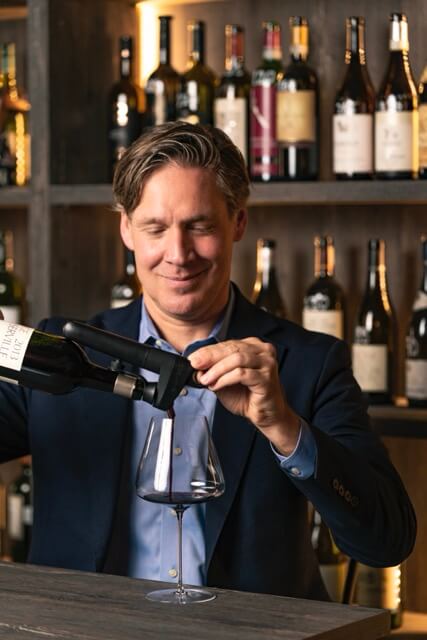
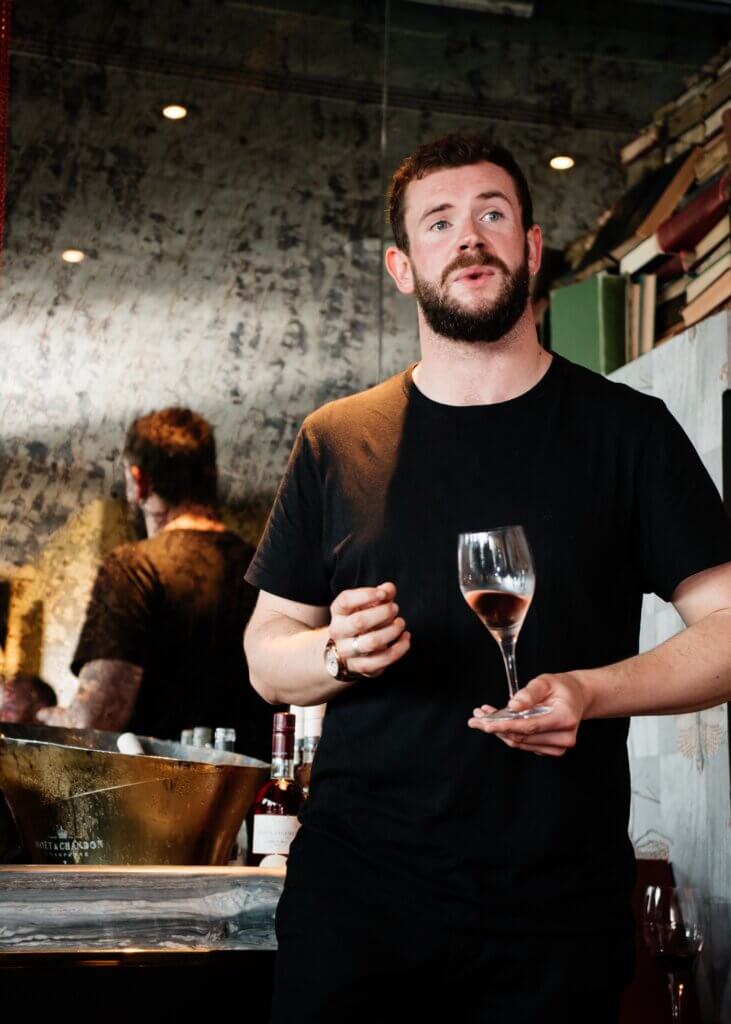
To understand just how Coravin is changing the world of wine, we’re joined by Coravin inventor Greg Lambrecht and Tiny Wine co-founder Harry Crowther.
The implications – are far-reaching.
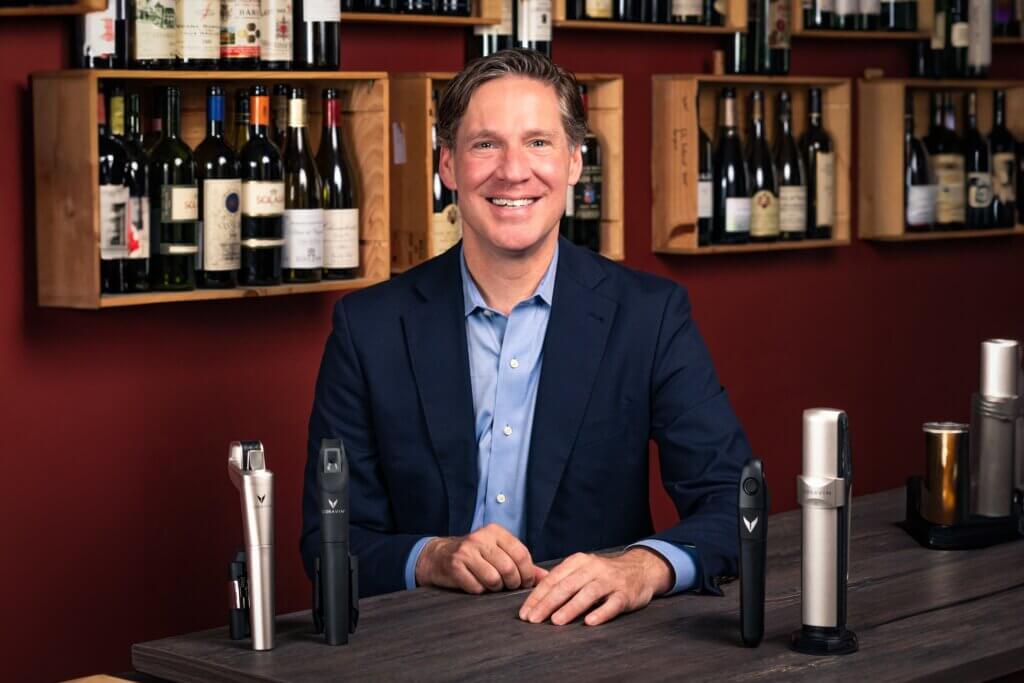
This leads neatly onto our big giveaway to celebrate topping one million unique downloads in 2025 – and for which the prizes include a Coravin Timeless 6+ (£400), a set of Jancis Robinson/Richard Brendon glasses and decanter (£408), an Academie du Vin Library book bundle (£270+), a case of grower champagnes from iDealwine (€400) and a year’s subscription to Decanter (£183) plus VIP tickets to the Decanter Fine Wine Encounter in London (£310) or New York ($450).
As well as announcing our five lucky winners drawn at random, we’re also sharing the best entries we received – which range from the intriguing to the fascinating via the hilarious and touching.

Starring
Links
- Here’s a link to our Wine Blast One Million Giveaway page for more information
- Coravin recently published The Coravin Guide, a free digital publication to flag up venues with the best by-the-glass offerings, initially focused on London, Sydney, Melbourne, Milan, the Netherlands and California (though with more locations to be added in due course).
- Do check out Tiny Wine, a new company using Coravin Vinitas technology to sell fine wine in smaller formats with no loss of quality, enabling access to pricey wines at more accessible prices, as well as the chance to try before you buy. Radical!
- By way of reminder, Wine Blast PLUS subscribers currently get 15% off Coravin, Jancis Robinson/Richard Brendon glassware and Academie du Vin Library books. Just check your subscriber dashboard for the discount codes.
- You can find our podcast on all major audio players: Apple Podcasts, Spotify, Google, Amazon and beyond. If you’re on a mobile, the button below will redirect you automatically to this episode on an audio platform on your device. (If you’re on a PC or desktop, it will just return you to this page – in which case, get your phone out! Or find one of the above platforms on your browser.)
Subscribe
Sign up to Wine Blast PLUS to support the show, enjoy subscriber-only bonus content as well as early access to all episodes plus full archive access, not to mention subscriber benefits and giveaways.
Just visit WineBlast.co.uk to sign up – it’s very easy, and we will HUGELY appreciate your support.

It takes a monumental amount of work to make Wine Blast happen. Your support will enable the show to continue and grow – and we have lots of fantastic ideas of things we’d like to develop as part of Wine Blast to maximise the wine fun. The more people who sign up, the more we’ll be able to do.
Video
A short clip to bring one small part of the episode to life.
In this case, Coravin inventor Greg relates how his first attempt to use a needle to pour a glass of wine without opening the bottle…ended with unexpectedly explosive results.
Get in Touch!
We love to hear from you.
You can send us an email. Or find us on social media (links on the footer below).
Or, better still, leave us a voice message via the magic of SpeakPipe:
Transcript
This transcript was AI generated. It’s not perfect.
Susie: Hello, you’re listening to Wine Blast. Welcome! This is a different kind of episode, a hybrid programme, if you like, because we’re covering two complementary things in one neat Wine Blast package, like bangers and mash or a delicious gin and tonic…
Peter: Cocktails?! Bangers and mash?! On Wine Blast?!
Susie: Why not?
Peter: Perish the thought… But yes, in this show, we’re going to be revealing our Wine Blast One Million Giveaway winners, making five people very happy as we draw names from a hat. And to be clear, everyone who entered is in that hat. Up for grabs are some amazing prizes. A set of Jancis Robinson Wine Glasses and Mature Wine Decanter, a case of Grower champagne from iDealwine, a book bundle from Academie du Vin Library, a year’s subscription to Decanter and VIP tickets to the Decanter Fine Wine Encounter and a Coravin Timeless 6 plus Hermitage Limited Edition. Wow.
Susie: Now, this is our big giveaway to celebrate topping 1 million unique downloads last year, for which huge thanks to you, our lovely listeners. We asked you to tell us what your favourite Wine Blast episodes are, or give us suggestions for things to cover. And you didn’t disappoint. So we’ll be sharing some of the quite hilarious and intriguing entries you sent, later in the show. But let’s have a quick taster now…
Aled: I listened to this episode and it’s no exaggeration, it changed my life. I’ve learned so much more about the world of wine and I’ve had many a fine wine hangover, all because of Wine Blast and you two.
Peter: listener Aled there. And we’ll be hearing from more of you later on in the show. Putting this programme together, we also thought in terms of our five big giveaways. We’ve explored chances glasses on the pod before. We’ve also covered iDealwine and Academie du Vin Library Books and Decanter. But the one thing we haven’t done is get into what Coravin is, how it works, why it’s so useful and the intriguing story behind it. because it’s quite a story isn’t it?
Susie: Indeed it is. and not just that, because Coravin does seem to be quietly revolutionising the world of wine and changing the way many of us interact with wine, be, it in a bar or restaurant or at a winery or at home. You know, it’s very rare in wine that a gadget or new invention becomes a potential game changer. Wine isn’t known for its radical, groundbreaking innovations, but Coravin could be precisely that. So it’s a subject well worth exploring.
Peter: Yeah. So in the first half of this programme we’re going to be hearing from Coravin inventor Greg Lambrecht as well as from Tiny Wine co founder Harry Crowther. A business founded on Coravin technology. And one tangible sign of this change we’re talking about. Here’s a preview of those chats.
Greg Lambrecht: It’s a democratisation of this incredible beverage of which there is almost too much to explore.
Harry Crowther: absolutely game changing. What I see is a world where the best wines in the world are just put within people’s reach in an easier way.
Susie: Respectively. Greg Lambrecht and Harry Crowther there. Right, so let’s dive straight in. What is Coravin? We’ve got a couple of the gadgets or systems here, but I think we need to, I think we need to start right at the beginning.
Peter: Good idea. So it does help to start with Coravin inventor Greg Lambrecht’s Story. Greg has a background in physics. I would say don’t we all, but, we don’t really. He then ended up making a living inventing medical equipment like a needle based chemotherapy system. he still works in medicine. He has a company called Intrinsic Therapeutics and these days he specialises in spine surgery. at the same time, Greg is also a wine lover. Aren’t we all? That bit I can say, aren’t we all about that? And he was very excited to explore the dizzying diversity of wine wine, but could only drink so much, especially given he had to be sharp for his day job. And particularly sharp given this is serious stuff. But if he opened a standard bottle, he found it would go off if he didn’t finish it, which was a waste of both wine and money. Cue frustration.
Susie: And then his wife got pregnant so couldn’t join in. The wine drinking. push was definitely coming to shove, but Greg thought, hang on, I’m an inventor, I work with cutting edge needle technology. Surely I can out a way to use a needle to get wine out of a bottle and preserve what’s left so it doesn’t just go off. And if I can do that, I can transform the way I drink because then I can have just A glass of wine, any glass of wine at any time.
Peter: That was the dream. but Greg’s early experiments weren’t entirely successful.
Greg Lambrecht: One prototype, just take a needle from my chemotherapy system, stick it through the cork and use a syringe and try to suck wine out. So that was the first thing I did. And other doctors have tried this. And so I, you know, I tried to pull wine out and of course it makes a vacuum and it sucks the wine back in. And so I was like, okay, I have to push it out. I’m a physicist,
00:05:00
Greg Lambrecht: so I’ll push it out with an inert gas. And so I got a hold of some helium and some argon and some nitrogen and I was okay, I’m going to attach this to the, I have a machine shop in my house. This was actually an apartment, it was a rental apartment, which is important, due to the deposit that was involved. And so I attached the needle to a trigger, the trigger to the capsule, gas. And I stuck the needle through and my three year old, older son, who’s very blonde, was standing next to me and I had a little rack and I put the needle through the cork and a glass was underneath the bottle and I, I pushed the trigger and three things happened, very, very quickly. my chest hurt, which is a result of Newton. So, equal and opposite forces. When you put 200 atmospheres or 100 and something atmospheres into a wine bottle, a lot happens. The cork came out, obviously and was moving so fast that it hit me in the chest along with my needle. And then the bottle, or good portions of the bottle went away from me in this rented kitchen. And I heard a deafening shatter as the, as parts of the bottle hit and broke the tile in the kitchen across the way. And then it was this massive purple cloud because it was a red wine. And so, it was a vaporised, in the kitchen. And I thought, oh my God, my son. And so I looked down and he was there covered in red wine. He had purple hair. He looks up at me and he goes, do it again, do it again!! And I’m looking at him going, don’t tell Mom!!
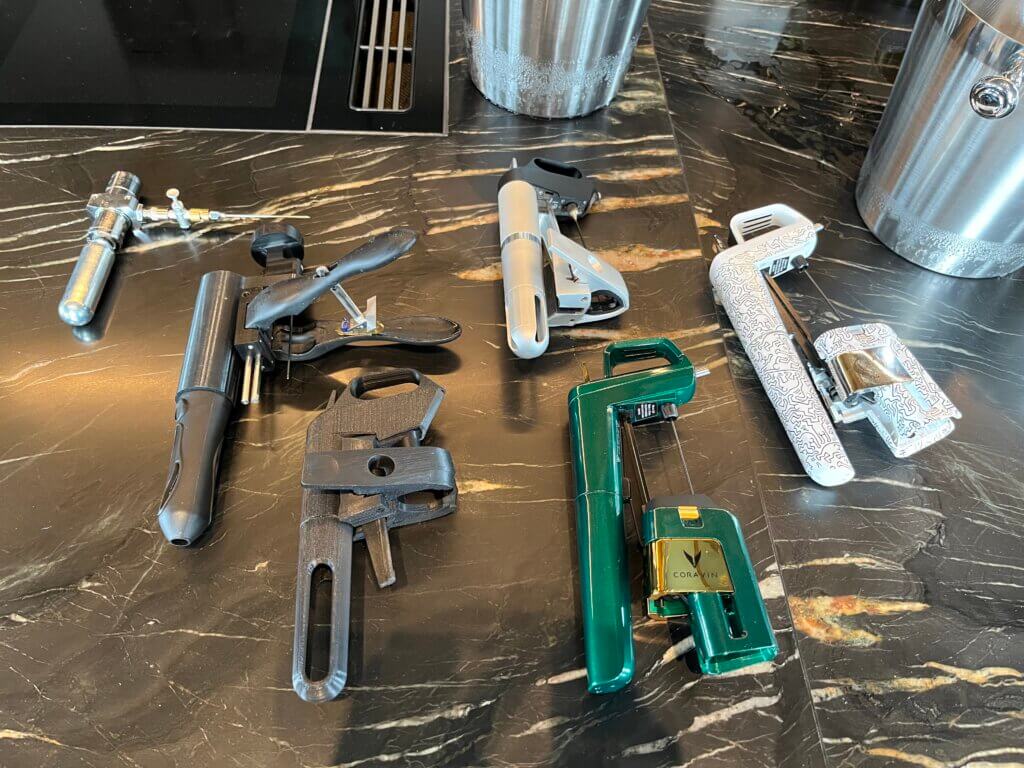
Peter: Now, while Greg doesn’t reveal what shampoo he used to hide the evidence of this little hiccup, he does admit to overlooking the importance of something called a regulator, of course, which he then added, and I’ve seen his first prototypes, which are cool. And of course all his devices now have regulators to avoid vaporising your wine bottle and any loitering children nearby.
Susie: and the first bottle he coravined was a cheap Spanish red: proof of concept. And he says the way he drank wine did indeed change completely from that moment on. The inert gas he settled on was argon, heavier than air, so it protected the wine from oxidation. he soon had 800 wines available by the glass at home. He did trials and tests with controls as any good scientist would. It took him more than a decade to perfect the Mosquito, as it was initially nicknamed. But eventually the first Coravin Timeless system was ready to be released as a commercial product, which happened in 2013.
Peter: Since then, Coravin has evolved. It’s not just about sticking needles through corks anymore. It can also work with screw caps. And more recently, a different kind of system, not involving any needles, was created for sparkling wine. Here’s how Greg describes Coravin today when I asked him to define it.
Greg Lambrecht: Coravin is, now a series of systems that allow you to enjoy any wine, still or sparkling, independent of the closure, by the glass. and so, you know, I fell in love with wine and wanted to be able to explore it by the glass in my home, and so invented the system that can pour literally any wine, in any amount, whenever you want, without having to think about when you’re going to drink from the bottle again.
Peter: What are you aiming to do with Coravin? Really?
Greg Lambrecht: To bring it out of my house in the way that I used it and give that to everybody else, whether it’s a restaurant, a winery or at home, the freedom to be able to drink, serve or sell wine, without hesitation, in whatever quantity you want. It’s, ah, a democratisation of this incredible beverage of which there is almost too much to explore.
Peter: Yeah. In what way? Democratise it? Go a bit further with that.
Greg Lambrecht: Yeah, I mean, the reality is that the prices of wine have only skyrocketed since I was first falling in love with it when I was 16. I mean, it’s got to be way beyond inflation. And so many of these wines that are absolutely extraordinary to enjoy are available only in restaurants or in other places where their prices can be quite high by the bottle and you don’t even know whether or not you like them. And so to commit to the full cost of a bottle, is a serious commitment. My goal was to be able to allow people to try things in a fractionalized way so that there wasn’t so much of a financial commitment, but they still had the ability to taste from the basic wines to the great wines and decide really, truly what they enjoy.
Peter: So really what I’m hearing here is you’re aiming to sort of change behaviour, change the way that people are engaging and can access wine.
Greg Lambrecht: Yeah, and actually that’s the greatest challenge of Coravin is that there’s an enormous amount of behaviour around this beverage that’s been in a glass bottle with a cork for 400 years. And, people to shift their mindset has, been the big challenge of the last 12 years that Coravin’s been on the market.
Peter: Yeah, go on, carry on. Change. What kind of. Where do
00:10:00
Peter: you meet the resistance and why?
Greg Lambrecht: Well, the biggest competitor. Everyone always says, do you have a competitor? And I say yes. And it’s this phrase, it’s oh, well, I finish the bottle, why do I need this? And, the reality is there is so much joy to be had by exploring wine by the glass. And to show people that is the biggest challenge of core of it. It’s not how it works or the, cost of entry by purchasing a device or the cost of gas, etc. It’s really getting people to understand what life can be like when you break your consumption behaviour from the bottle and it becomes by the glass, I m mean, there are all these way, these places and times when a glass makes much more sense than a bottle. You know, there are all these behaviours that have to change.
Peter: Now the Coravin journey has been a pretty rapid, and intriguing one. How big are you these days? You know, what’s your reach? What’s your impact?
Greg Lambrecht: Yeah, it’s shocking, ah, even to me. You know, it took friends 12 years to convince me to start a company. I didn’t think anybody wanted it. and now we’re in 80 countries. I think we just surpassed 80. And then one of the metrics that I use for our success is the number of glasses poured. And so we pour about 1.3 glasses per second, second every second of every day. so about a million, about a hundred thousand every day, about a million every 10. And so, you know, I like, I like to think as an inventor, you know, I like to think about how many moments we’re touching, with Coravin.
Susie: That’s quite something, isn’t it? They’ve sold more than 2 million Coravin systems. To Coravin, a wine has become a verb, just like Hoover did. but this is fascinating because Greg is talking about a fundamental change in attitude to wine. A mindset shift from we have to finish the bottle to we can enjoy pretty much any bottle we want. We’re not constrained in the way we used to be. So you can have white and I can have red with supper or I can have a glass if you’re not drinking.
Peter: Yeah.
Susie: For whatever reason. Which is quite unlikely.
Peter: Would be, but you know, or you know, we can try that really expensive bottle we otherwise wanted to keep, you know, or we can afford to try this wine in a restaurant when the full bottle was just too pricey. You know, it’s just a different way of coming to wine, of sort of experiencing wine, different expectations around wine. I think that’s what he’s getting at, isn’t it? Which you know, does also fit in with the way the world is going right now. You know, understanding that people have different tastes, people wanting to moderate that kind of thing. here’s what Greg said when I put it to him that Coravin is changing the way we interact with wine.
Greg Lambrecht: I hope so. I hope for the better. Right. It’s not, I try to calm the purists because we do get a lot of cultural resistance and oh, you pull the cork, you finish the bottle. I finish the bottle. I still believe there are lots of reasons to open and finish a bottle. Right. You’ve got friends that love the same wine you’ve got. Right. So people are still drinking wine by the bottle. But Coravin doesn’t eliminate the way that we’re currently drinking. It adds another way. It’s a, it’s an addition, not a, there’s not a zero sum game. This is a, you know, the still wines drunk by the bottle. But now there’s this freedom to drink any wine, whatever you find good. It doesn’t have to be expensive. but whatever you love, you can now drink by the glass and that’s that. That freedom was so liberating for me during its development. I want everyone else to experience it.
Susie: Now we’re going to come on to Tiny Wine in a bit. A very specific way that Coravin technology is changing. But to summarise Coravin’s evolution, it’s been popular for at home use, but it was also widely adopted in restaurants and bars for pouring wines by the glass. the split is roughly 2/3 private customers and one third trade. they’re in more than 28,000 bars and restaurants and also a thousand plus wineries apparently. And it’s probably rare these days not to have had a Coravind wine at some point.
Peter: Yeah, yeah, of course, you know, given this is wine which can be a pretty traditional world as we know there was pushback. Greg says early on some wine producers, especially those in Bordeaux, apparently were horrified at the idea people might be encouraged not to finish bottles. and of course, there were reservations about whether quality and freshness could definitely be retained in the accessed wines, especially over longer periods of time when bottles had had a lot of wine taken out.
Susie: And I think it’s fair to say that Coravin has done and continues used to do lots of taste tests all around the world, and they’ve been very active on that front. And Greg says their ultimate aim is for the winemaker not to be able to tell the difference between a newly opened bottle and a bottle that’s been Coravined.
Peter: Yeah, I mean, we’ve done tests too. sometimes we have been able to tell the difference.
Susie: Yeah, to be fair, we have.
Peter: But I think the systems have improved as well. For example, there’s also now a thinner needle you can use for wines that might be more sensitive or which you, you know, might want to keep for longer. The flip side is, though, they pour slower, pour slower. So you might not want
00:15:00
Peter: always use it, whatever is more important. And what’s also improved, I think this is really, really important, is the understanding about how to use the various Coravin systems, and what to do with the wines afterwards, that kind of thing.
Susie: Yeah. And I think this is key. So we did want to recap on this, didn’t we? Because it’s not always clear. And we personally found this really helpful when we were playing around with our Coravin systems. And so get ready for some top Coravin user tips. Now, Greg calls it the four Cs of Coravin: closure, clean, clearing, cellar. Do you want to kick us off?
Peter: Oh, I do love a good tip. Go on then. so closure. it was the first one, wasn’t it? It’s just a reminder that the classic, timeless Coravin system, the first one with the needle, works on natural corks, including diam, but doesn’t work on plastic corks, because plastic doesn’t reseal afterwards. Plastic isn’t elastic, nor can it pierce screw caps, of course. Instead, they’ve come up with workarounds. So for screw cap bottles, you replace the screw cap with a special Coravin screwcap which allows the needle to go through it. And plastic cork, you have to remove and use the Coravin pivot system. but there aren’t that many plastic hooks around, I don’t think.
Susie: No, I don’t think so. But anyway, next up, clean. And this is key. We got this seriously wrong. So listen up. Your Coravin needs cleaning. Ah. Wine stays in the needle and spout after you use it. And you don’t want rancid Barolo infecting your magnificent Montrachet, do you? So what you need to do is run hot water through the spout after you’ve used it, and that will clean out the valve and the needle. Simple.
Peter: When you know, yes, brilliant. and that’s simple, but, you know, really important. This ties into the third C as well. Clearing. so we know the valve and needle hold a bit of wine after it’s been used. And the risk is that, you know, if you then use that same system on the next bottle, a tiny bit of that previous wine will go into the new wine you’re accessing. And that’s particularly bad if the previous wine has gone off, you know, been left for a while, or if this is being done repeatedly to the same win. So to prevent this happening, just give the trigger a quick press before you use your Coravin Timeless, which just sort of injects the gas and clears things, clears the needle, fills it with argon. Again, Simple.
Susie: And finally, cellar. Greg advises that once you’ve coravined a bottle, you then store the bottles on their side in a coolish dark cellar. Good storage is important. Bottles on their side means the wine is in contact with the cork so it doesn’t dry out and it can swell back to close the hole. Interestingly, he sometimes ends up storing bottles vertically upside down with, the cork at the bottom to keep the wine fresh and the cork in good shape. But do leave the bottle upright for a little bit after withdrawing the needle so the cork can reform, especially if it’s dam or it’s cold or both.
Peter: Now, when I asked Greg, he said bottles that have been accessed with the Coravin Timeless system, so the one with the needle and then stored properly should remain unchanged for at least five years. And he says he’s gone up to 19 years in blind tastings with professionals. And then they guarantee the sparkling system where you do take the cork off, but replace it with a bespoke sort of clamp closure that then allows carbon dioxide to be injected back into the bottle and keep it fizzy and fresh. With that, they say the wines remain unaffected for at least four weeks for things like pet nat, but then at least three months with traditional method fizz like Champagne.
Susie: Yeah, I mean, we’ve been testing out these different systems. They are pretty ingenious and maybe not total straightforward initially, especially for a Luddite like me, but with, with a bit of regular Practise regular. you get the hang of them, I think, quite quickly and they seem to work well. There’s even actually an aerator that comes with the timeless, that you just stick it on the spout and it apparently increases the surface area of the wine being poured by a thousand times. So if you’re into that kind of thing, it’s fun and it’s easy to use.
Peter: Yeah, a bit of theatre as well. I mean, I’m still not sure I’d want to keep an accessed bottle for too long, ideally. You know what I mean?
Susie: It still feels like a risk to me.
Peter: Yeah. The idea of kind of years, especially with top bottles and particularly, you know, we all know those wine styles that are more sensitive to oxidation or general interference. I don’t know. I don’t know. But, you know, maybe more applied research is needed for me.
Susie: Yeah, yeah, of course it is. Of course it is. But, on that note, we need to move on. I. I reckon that we could put the full interview with Greg out as a bonus. Yeah, good idea, because it’s so fascinating. as well as just a brilliant story Ah. And he also goes into some of the fun ways Coravin systems have been used and abused, plus how it’s changing wine in so many ways. But we wanted to focus on one particular aspect of this change. Tiny Wine.
Peter: Yeah. Tiny Wine is a new company set up by Harry Crowther and Rob Ingram, uses, a new prototype system from Coravin called Vinitas, which Greg describes as the world’s smallest bottling
00:20:00
Peter: line. So you can take any receptacle. It could be a barrel or a tank, but in Tiny Wine’s case, it’s a bottle of wine. And, Vinitas transfers that wine from the bottle into small 100 millilitre glass tubes sealed with a screw cap under protective conditions, so no contact with oxygen.
Susie: Now, Greg says this is his tilt at the retail sector of the wine trade. his dream is you can shop for a wine and come away with seven different Rieslings in mini tubes for the same price as one bottle of Riesling, but with quality and integrity guaranteed. So, fine wine, buy the glass from your wine shop and you experience this, didn’t you?
Peter: Yeah, yeah. Really nifty tubes. you know,
Susie: that they were as good as they would have been.
Peter: Yeah, yeah, really impressive. you know, especially given it can make expensive wines more. More affordable and accessible. I think that’s.
Susie: Yeah. And that’s exactly what Tiny Wine does, isn’t it? You can buy smaller samples of expensive, expensive wines, things like Sassicaia or Clos Rougeard, giving you a slice of the action, but at an affordable price. And it’s all online mail order. You can mix and match, try several different things and there’s less wastage and shipping emissions. But anyway, here’s Harry to explain more effectively.
Harry Crowther: What we do is we make great wine a lot more accessible to consumers using Coravin’s new Vinitas technology. So it’s all done under that sort of Coravin promise which as we know is world leading in terms of preservation.
Susie: How would you say this technology is changing the world of wine?
Harry Crowther: Well I think that what it does is I try to describe it as the same concept of what Coravin does by the glass in restaurants. So, you know, by allowing restaurants to serve world class wines, first growths, whatever to buy the glass. because of that preservation tech, we see vinitas as a way to allow people to do that from home. so it removes the risk of buying that extremely expensive bottle, and it gives people access to it at a much more accessible price point. Certainly having worked in the fine wine sector, and seeing the prices that wines go for, I want to break down those walls as much as possible and make those wines as accessible to people as possible and just to remove the risk. You know, there’s so many people that it’s not even about making wine accessible to people that necessarily can’t afford say 100 pound bottle. There are plenty of people that could afford a hundred pound bottle but just aren’t willing to take the risk on £100 pound bottle because it is a lot of money. And I think that tiny wine is allowing that is removing that risk. and actually part of our strategy in the next. We’ve already started testing it with a couple of SKUs, but we’re sort of selling our full bottles as well. And we kind of try and shift our messaging towards try before you buy. so if people want to, it naturally creates a nice pathway to follow up with customers as well. But if someone buys a tube of something, we will follow up with a full bottle or even a case offering. And you know, if they say wet bought the case, we would refund them on that tube. So it really, it really sort of, we really want to support and back that try before you buy sort of economy really because it does help people remove that, that risk. And I don’t really know anyone else in the market that’s able to do that. And I think that’s That’s a really nice thing to do for people.
Susie: And the wine market is evolving rapidly at the moment. How do you see the future for wine?
Harry Crowther: The hardest thing of what we are doing here is being trying to change behaviour a little bit and that is one of the hardest things to do, particularly in an industry that is rooted in tradition. We’re not going to, I don’t think we’re going to move the dial massively in terms of people. In 10 years time everyone’s going to be drinking wine from tube. The bottles are never going to go away. I think what, what I see is a world where the best wines in the world are just made put within people’s reach in an easier way and some sense of fractional ownership and access to them I think is a good place to start. And if we can just pull down those silos a little bit, I think it would know we’ve done our job, I suppose.
Susie: And how would you sum up the impact that Coravin is having, has had on the world of wine?
Harry Crowther: absolutely game changing. It’s really symbiotic. But obviously we wouldn’t be here without them. We wouldn’t have, I wouldn’t have launched Tiny Wine if it was anyone else other than Coravin. There are other businesses that do do these tubes but for me it was, it was an absolute no brainer to, to work with Coravin because they’re the last word on preservation.
Peter: So this is really interesting. So this system, this tech is allowing a kind of try before you buy model for the great wines of the world potentially, you know, which has never really existed before. It takes away the risk, you
00:25:00
Peter: know, and you can find what you like. And clearly Tiny Wine are moving into that space, which I think is really exciting.
Susie: Yeah. And I like the way Harry’s not trying to, to, to overstate the implications of what they’re doing. But equally he does say it ties in with the way people are drinking less but better. And they also have links to a, charity promoting inclusivity in wine and they’re reducing waste and carbon emissions. In addition, he, he says they helped people to do damp January as opposed to dry January, which has got to be a good thing
Peter: It’s definitely on trend, isn’t it? And he was quite honest that you know, given the fixed costs, it’s not the most cost effective to buy cheaper wines off them. But then, you know, I suppose we all accept that by the glass in a restaurant is more expensive than buying a bottle. It just enables you to try more wines.
Susie: Right. To finish off on Coravin, just a reminder that Wine Blast plus subscribers get 15% off all Coravin systems online. Quite a saving. So visit wineblast.co.uk if you’re not already signed up and this has piqued your interest. By way of brief recap so far, Coravin is an invention changing the way we drink wine, with Tiny Wine being an excellent example of exactly how it’s changing the vinous landscape. It’s all about the joy of exploration, just like Wine Blast. and this is apt because we’ve now got a Coravin Timeless 6 Plus Limited Edition to give away to a lucky winner, among many other glorious prizes.
Peter: Okay, so what we’re going to do is share some of the best entries we received and then, then we’re going to do the big draw to see who wins those amazing prizes. It’s so exciting.
Susie: So the first thing to say is a huge thank you. Ah, thank you for tuning in and being part of the big Wine Blast family. And then thank you for taking the time to enter. We really appreciate all your entries.
Peter: Yeah. Apart from anything else, it’s just really helpful to know what your favourite episodes are so we can, you know, feed that into our future schedule. though there did seem to be, I guess, a, I think a fairly big spread of favourites in there, to be honest, which is probably a good thing.
Susie: Yeah, I think so. And thanks also for the inspired suggestions for future shows. There were some brilliant ideas in there. We will definitely make some of these happen. We won’t be able to do everything, so please don’t feel disappointed, but rest assured we are giving all your ideas due consideration. and keep listening because maybe your shout will become a Wine Blast reality in the very near future.
Peter: Now, we can’t feature all your entries, given there were, so many of them, but by by way of taster quotes from those, we can’t air in full. Ashwin described the pod as a wealth of knowledge and serious chuckles. thank you, Ashwin. While Marcus said Wine Blast PLUS was worth subscribing to. Thanks, Marcus. Meanwhile, Magda’s pithy summary of our Light Strike episode was as educational, practical, slightly alarming, generating media headlines. That’s peak Wine Blast.
Susie: Finally, Paul E rattled through a fairly long list of favourite episodes. Thanks, Paul. Before settling on the Wine Glasses episode from season six, after which he said he’d felt compelled to go out and buy several boxes of the Jancis Robinson glasses. As for Paul’s final word on all of this. Yet more money you’ve cost me.
Peter: Sorry, Paul. though, of course, it’s worth remembering that WineBlastPlus subscribers do get 15% off the Jancis glasses, as well as the Coravin stuff. just saying. And yes, Wine Blast last can prove costly. We will hold our hands up there. But, you know, I hope it’s some kind of comfort to say it isn’t just you guys. We. We end up buying so many wines that we adore when we feature them as samples on the show that it’s proving positively ruinous, both for our wallets and our livers.
Susie: So true. But we need to crack on. So let’s kick off with a message from Aled.
Aled: Hey, guys. A huge congratulations for hitting the platinum mark for unique downloads. You were the soundtrack to my state sanctioned daily walks in the COVID lockdown. And I binged every episode. The standout episode for me was episode three of season one entitled. Wait. Wine can be a Career. Having jumped from desk job to desk job for years since leaving university, I found myself in a bit of a career rut. But then I listened to this episode, and, it’s no exaggeration, it changed my life. I looked online for any jobs in the wine industry, found an assistant manager’s role in Majestic Wine. Wine went for it, and I got the job. So, since then, I’ve had my WSET Level 2 with distinction. I’ve learned so much more about the world of wine, and I’ve had many fine wine hangover, all because of wine. Blast. And, you two, So thank you for that and keep up the good work.
Peter: So, hang on. We’re getting blamed for costing people money, and now we’re getting blamed for hangovers, too?
Susie: I think it’s fair enough, don’t you? Well, we can own that. Sorry, Aled. And everyone else, too. But no, I think there was one thing that touched us more than anything else. It was people saying that the POD had changed their lives. for some people, it was getting the wine bug in the first place or
00:30:00
Susie: developing that interest. For others, it was taking the bold leap into working in wine or developing that professional interest. But all of them are incredibly touching.
Peter: Yeah. Here’s raising a glass to you bold, brilliant people. next is Rachel in Norfolk, someone else who took the bold step into wine, with the perspective of. Of a young generation.
Rachel: Hello. I could speak about this topic for hours, but I will quickly say that I would love for you to do an episode on the relationship between wine and the younger generation. we know that consumption with the younger demographic is decreasing as well as interest. And I think that there’s not enough understanding of how much a career in wine can facilitate travel and social life and how many opportunities there are to enter, even from a young age. I’m a 25 year old winemaker in Norfolk and I really believe that wine is so much more diverse than its stereotypes allow. It’s got every topic inside art and history and music, and there is something for everyone. And in the increasingly online world, I think young people really are passionate about sitting around the dinner table and we are kind of finding our way back to that. So I think it would be very special. Thank you.
Susie: Really interesting. Thanks, Rachel. I think this shift in wine consumption is way more complex and nuanced than is often portrayed, especially when it comes to young people.
Peter: Yeah, yeah. And it’s worth remembering, you know, wine can offer a fantastic career and good to have some positivity about younger people getting into it. I think that would be a really interesting topic to explore. Next up, a video from the Global North.
Char: Hi there. Susie and Peter.
Martin: Hello. I’m Martin.
Char: we love your show. We listen here in Denmark. And what we would love a show on is on weird wines from specific regions. So when we went to Priorat, a little while ago, we really enjoyed when we found out about the Ranci. Do you know about the Ranci? The weird rancid wine that they make? It’s like they just mix it together in like old boots or something.
Martin: Yes. And every family has their own and when you visit, they give it to you and have to pretend to like it, but you won’t.
Char: But we bought a bottle anyway and now we kind of love it, so that kind of thing. Ranci. Weird wines from strange places. Anyway, thanks so much for the show. Bye.
Martin: Bye.
Peter: I absolutely love this idea. we’ve all been there, haven’t we? it’s a great show. And yes, we do know the Ranci wines from Priorat. we remember them well from researching your book, on wine tourism in northern Spain and many other visits.
Susie: Yeah, I remember sipping on sweet, oxidative wines with a plate of nuts and raisins, a little aperitif, and it’s such a lovely place. but there is certainly no shortage of weird and wonderful wines out there. I mean, your wild side of wine. The TV series went into this kind of territory, didn’t it? But talking of weird and wonderful places, here’s Paul from Wimbledon.
Paul: My favourite Wine Blast episode, without question, was the deep dive into Light Strike. It, brilliantly explained to me why I’ve so often felt disappointed drinking in the past. And it genuinely changed the way I think about the issue. And you were also, I think, the first high profile wine journalist to really shine a light on this topic. Something reflected in how it’s now getting much wider attention now. looking ahead, a subject I’d love to hear covered in a future episode, is the wines of the Canary Islands. Long been a fan, especially of the whites. but a recent trip to Tenerife completely blew me away. The quality, diversity and sheer character of the wines producing such challenging landscapes felt to me like a story just begging to be told. I’d love to hear more about the people behind them. Keep up the fantastic work with the pod. definitely the highlight of my, my listening week.
Susie: We did get a lot of love for the Light Strike episode, didn’t we? And I really, really like the idea of an episode on the wines of the Canary Islands. Sounds like quite a fun trip to me.
Peter: Yeah, some seriously good wines. I quite agree with Paul So good, in fact, they inspired Stuart from Inverness to share the following idea.
Stuart: Can I suggest an explosive episode on volcanic wines? I can’t help but be seduced by the idea of heroic wines grown on the steep slopes of Mount Etna, with the constant risk of hot lava, or by those, old vines you see crawling through black sand in the craters of the Canaries. and I don’t seem to be alone. There seem to be more volcanic wines on wine lists and on shelves. So why is that? are people like me just getting sucked into the marketing, or is there really something special about the taste of those wines? Can you taste volcano? I’d love to hear you do an episode on it. What is volcanic wine? What of anything do they have in common? What are some great volcanic wines to try? And you’d get the chance to crack open everything from Assyrtiko to hipster Lanzarote reds to some big classics. Maybe we don’t think of as volcanic. From Soave or Priora or even Tokai. Wonderful.
Susie: Can you taste volcano? I have to say, it’s not a tasting note I’ve ever written, Stuart, and I’m not sure that geologist and friend of the pod, Alex Maltman, who we had the on
00:35:00
Susie: on the no Shist Sherlock episode, would agree. You can. So, yes, there may be a bit of marketing romance seeping in there.
Peter: Maybe, maybe. But I have to say that, Volcanic Wines By John Szabo MS, is a lovely Book. I recently met John and he mentioned they now do the Volcanic Wine Awards, so who knows, Maybe there is something to it. the winemakers certainly seem to say so. and if we get to drink a cietico and hipster Lanzarote reds on Santorini or the Canaries on it, I’m in. We’d be up for that, wouldn’t we?
Susie: Yeah. 100.
Peter: Yeah. Yeah.
Susie: So next up is, Maggie from Canada to move us from geology to chemistry.
Maggie: Hard to choose, but one of my favourite episodes was Lessons in Wine Chemistry with Gus Zhu. And I bought the book, found the science of tasting fascinating. There’s so much to learn about why I love the wines I do and how to m improve on picking up all those lovely, aromas and tastes in the glass. Most importantly, have learned to drink what you love. Enjoy the moments when you share a glass or don’t. And I’ve been listening since the beginning and love the new Wine Blast PLUS subscription. I learn something new every episode. Keep them coming. I so look forward to listening. The best place to learn more about the wonderful world of wine.
Susie: Thanks, Maggie. you have such a lovely voice. I think you should be making podcasts if you aren’t already. We would definitely tune in.
Peter: And that was a fascinating episode to make, wasn’t it? We learned so much from Gus about why wine tastes the way it does. Such an intriguing subject. Now, it’s Adelaide calling.
Cleanthes: Hi, Susie and Peter. This is Cleanthus from Cyprus half the year, the other half, like now. Adelaide, South Australia. So, of course, my favourite Wine Blast episode was Australian Pinot Noir Comes of Age. Although I must say, the current series on McLaren Vale is fantastic. Love you guys. Bye.
Peter: Short and sweet. Love that. Thanks, Cleanthus. And the accents too. next up is Adam from Columbia, Missouri.
Adam: My favourite episode of Yours is Season 6, Episode 3, Life or Death on wine and Health. I remember I was visiting New York City, listening on the subway, and honestly feeling pretty anxious about all the new health guidelines put out by governments, especially in Canada. And by the end of your episode, I felt so relieved. You turned something really scary into a thoughtful and personal conversation that was more nuanced and humane than almost anything else out there I’ve heard. So thank you so much for the incredible work you do. I never miss an episode.
Susie: That Life or Death episode was another one that clearly caught people’s attention, wasn’t it? And so glad we were able to help. Adam. I know what you mean about these being disconcerting times.
Peter: The great Sam Neill had something to say about that in our most recent, recent episode, didn’t he? and here’s another message that touches on this topic too. perhaps with a cheeky smile.
Juriaan: Hi Susie and Peter Juriaan from the Netherlands. Huge fan of your show. So choosing one favourite episode, it’s quite a big task, but, I tried anyways. a few sprang to mind like the Rias Baixas episodes, but also the going gaga for Garnacha, Both because they introduced me to great wine. But recently I, endured a life altering event, namely my 30th birthday. and as you can imagine, with that the hangovers got a m lot worse. So, I think the best episode so far might be Life or Death on Wine and Health because as a result I’ve started to drink less but better, which improved both my health, health and my drinking experience. but if I might make a suggestion on sequel, it might be interested in the positive effects of wine on, on a man’s hairline. This, this will be of great help, but I fear that time is of the essence. So thank you in advance for sharing all your knowledge and enthusiasm.
Susie: Is that a thing, I wonder? Wine and hairline retention,
Peter: I don’t know where to start. I’d love to think so, but we definitely don’t have any knowledge to share on this front. Juriaan, sorry. we’ll ask around is the best thing. Meantime, good to know your drinking experience has improved as a result of the pod.
Susie: Right, Anyone feeling hungry?
Shruti: Hi, Susie and Peter, this is Shruti. I’m a huge fan of the pod. I was thinking about my favourite Wine Blast episode and I’ll have to go with the Season 5 episode on the Southern French Feast. I lived in Toulouse for six years, so that episode was a real wave of nostalgia and I just loved it. It was completely salivating. That six course menu said by you guys with all the wine pairings is still pinned in my notes and I still scroll through it, for meal, or I should say rather feast inspiration. but I still think about that seafood stew with fouger rose and the dark shepherd’s pie with a courbet red. Literally making me hungry and thirsty as I recall.
Peter: Same here, Shruti. I have to say I wasn’t hungry when we were making that
00:40:00
Peter: episode or for a month or so afterwards, but it was pretty damn tasty to do at the time.
Susie: And yes, yeah, we’re very aware we promised recipes as a subscriber benefit. Shruti. We will get onto that as soon as we can. Meantime, from food to travel with Ian,
Ian: I’d love to hear an episode focused on wine travel. We all listen to Wine Blast because we love hearing about regions, producers and great bottles. A mix of wine education and market intelligence, if you will. But actually turning up at the cellar door and getting the most out of the experience is not always as easy as it seems. How do you plan a great wine trip? What are the practical do’s and don’ts? When are the best seasons to go? What’s the best way to meet producers respectfully, taste well well and travel sustainably? You’ve travelled the wine world more than most. So an episode that gives Wine Blast listeners practical guidance, insider tips and, inspiring ideas for their next wine adventure would be pure gold.
Peter: Ian, can you come and help us develop all our programme ideas, please? we could use that kind of clarity of thought and definite purpose you’ve got in that message. But, yeah, great idea, isn’t it?
Susie: Totally, totally. I mean, full disclosure, we have been planning an episode along these lines because wine travel is such a fantastic thing, but this gives us extra impetus now. Thanks, Ian. right, from travelling to gardening with Matthew.
Matthew: Hi, Susie. Peter. As a gardener and wine lover, I’ve got a bit of a fantasy of tending my own vines and making my own wine. And a lot of the discourse in wine at, the moment seems to see the vineyard as either the most important, important factor or at least the first step in the winemaking process. So I thought it would be great to hear an episode focusing specifically on vine growing and maybe tips on how to start a vineyard. Potentially talking to people who manage a vineyard at, a range of scales from a small holder making wine for themselves to larger scale operations and how they go about it. For instance, my favourite grape variety is Albarino, but if I wanted to buy a vine, where would I even start?
Peter: Interesting. How to start a vineyard. It sounds like a great episode, doesn’t it?
Susie: Yeah, I suppose it would depend where you are, of course. Now, assuming you’re in the uk, Matthew, you could get in touch with Fergus at Balfour, who’s a very friendly winemaker, and they’ve certainly got Albarino planted. just an idea, but, yeah, lovely suggestion. Now, moving on, we couldn’t resist this segue from gardening to ladybird poo, which indeed did feature, in our Wine Faults show.
Anna: Hello, I’m Anna from Naseborough, UK. My favourite Wine Blast episode, Tainted Love. I’ll be honest, before this episode I thought I experienced the full spectrum of wine disasters, but Lady Bird poo?! This episode was an absolute masterclass in turning wine education into comedy. Remaining very informal, the Lady Bird poo fault is now permanently seared into my brain. Every time I taste a wine with aggressive notes, I think, oh, yes, the Lady Bird toilet aroma.
Peter: sorry for searing your brain, Anna, with that. as for delivering a masterclass turning wine education into comedy, we’ll take that, won’t we?
Susie: Of course we will. Yeah.
Peter: And actually, Keira wrote on Instagram to say she loved the wine faults. Episode too, she said said, because despite it being on audio, you really brought alive the faults. And I felt them, smelt them and felt disgusted by some of them. that’s an art, bringing in all the other senses via the airwaves. we’ll take that as a compliment too.
Susie: Yeah. It’s not often being disgusting is something to be proud of, is it? To be honest, I blame Sietze for searing this stuff into all our brains and taste memories. And if you have no idea why we’re talking about Ladybird poo on a wine pod, you need to listen to that episode from season six. Right, let’s head to Canada in a quest to keep things on the straight and narrow.
Messine: Hi, Susie and Peter. This is Messine from Toronto, Canada, and I’m a longtime listener of wine blast, often listening to your show with a glass in hand. My favourite episode is wine and war: Palestine, Israel and Lebanon. I really loved how you let winemakers from the region really speak for themselves, tell their stories and really show how wine can still be about connection, identity and resilience, even in incredibly difficult times. That episode’s really stayed with me over the year. I do have an idea for a future episode, though. I’d love to hear you dive into the wines of Scandinavia. It’s an emerging region and I’ve even heard that Swedish wines have beaten some much more famous European bottles at the Swedish wine table tasting. This feels like a very on brand topic for wine. Blast for curiosity and discovery.
00:45:00
Peter: Thanks, Massine. and I do like that idea about Scandinavian wine. like English wine, it’s having a bit of a moment, isn’t it? So we’ll definitely look into that.
Susie: Yeah. And. And that wine and war episode has really stayed with us too. Now, over to Mexico.
Noemi: Hello, I’m Noemi, a Mexican wine lover. Thanks for this amazing podcast. I love, love it. A topic I love you to explore is terroir doesn’t stop at the vineyard. We talk about soil, climate and altitude. As if wine’s story ends in the vineyard. But I think terroir continues in the person drinking it across Mexico and Latin America. European grapes like nebbiolo, tempranillo and cabernet express themselves very differently from their Old World origins. And maybe they are not supposed to taste the same same, because taste is cultural. Our food, our climate, our memories, share what balance even means. So I love you to compare how the same grape expresses itself across regions and ask, are, these poor copies or new wines that truly belong to their own table.
Peter: I think that is an absolutely fascinating concept and question. Noemi. I absolutely agree that terroir doesn’t stop at the vineyard. You know, it’s intimately connected to the person or people making the wine. For one thing, there may even be an argument for the terroir of the. Of the cellar or winery. And then as for the drinker, that’s a crucial part of it, too. Absolutely, yes. In, the same way that I don’t know that the power of a story is just as much about the reader as the writer. and we don’t talk about this enough.
Susie: You’ve got him going. Noemi. Struck a nerve. Thanks for that. Right, we need to start wrapping things up, but before we. Before we come on to the big prize draw, we just had to share the following moment of comedy brilliance from longtime Wine Blast supporter, Bevis Sydney, sent in via the Power of Speak Pipe. Just a word of warning. You may want to slow this bit right down and perhaps adjust the volume.
Bevis: Susie, Peter. Legends. Bevis here, piping up like an 11th day Piper to congrats you on your 1 million and also 10,000 downloads. Legend’s gonna legend best ever EP. No contest. 614 wine in a can. Sacre bleu! Mixing up Climate Salvage all format pants with risque wordplay from a Gallic comedy genius, and all the while seeing off no fewer than 77 cans of the good stuff. Take that, David Boone. And as ever, all of this in the name of scientific research. Platinum medals all round. Speak Pipe out.
Peter: Ah. Bevis, what would we do without you? I’m not sure I got much of that. Did you?
Susie: No.
Peter: There seemed to be some French in there. And some Australian. and then a vote for win in a can.
Susie: Yeah. And just to add to my, to my warning, I’m not sure slowing it down actually helps. Does it? We did give it a go. Anyway, thank you, Bevis. And thank you, everyone, for your entry.
Peter: Indeed, indeed. Right, the big moment has arrived. I’m just going to grab the Grab the bag. now, to be totally transparent, we have a bag with the names of everyone. It’s not a hat. Sorry, that’s,
Susie: You did say it was going to be a hat. You promised a hat.
Peter: I did, sorry. Bag. Substitution hat. Hope you’ll forgive me. the names in there of everyone who submitted an entry. and now we’re going to pull five names out of the hat at random for the following prizes. Do you want to go first?
Susie: I feel quite. I feel.
Peter: Yeah.
Susie: Emotional.
Peter: Butterflies. Butterflies. Here you go. Here’s the bag of destiny. Okay. Okay.
Susie: Okay. Okay. So, first up for grabs, let’s see what we’ve got. We’ve got five bottles of grower champagne worth around €300, together with a further €100, a voucher to top up the case, courtesy of Ideal Wine. Who is it going to be? Okay, I’ve got one. I hope. Here we go. It is Sean, husband from Canada.
Peter: Well, Sean. There we go. Right, I’ll have the bag, please.
Susie: Here we go. Bag, bag, bag to you.
Peter: Yeah. So I’m. I’m giving away a set of six Jancis Robinson original wine glasses and a mature wine decanter courtesy of Richard Brendon Studio with, was worth about 408 pounds all told. And this wonderful prize goes to Shruti, from the UK. Wow.
Susie: Right back to you, number three. So this is the third. Our third giveaway is a limited edition Coravin Timeless 6 Plus in Hermitage red, worth around 400. £400?
Peter: Yeah.
Susie: It’s a good one.
Peter: Come on. It is a good one.
Susie: And it goes to Feyi Awofala from London.
Peter: There we go. Oh, two London in a row. Going one UK, one Canada, two London’s, two to UKs. Okay,
Susie: what have we got?
Peter: Prize number four, Bespoke Academie du Vin Library book bundle, including a signed copy of Hugh Johnson’s the story of wine. This is worth about £270. Some amazing books in there. And this one goes to Glad I got my glasses on. Maggie from Canada, the lovely Maggie. There you go, Maggie. Well done.
Susie: And finally, finally, last but definitely
00:50:00
Susie: not least, we have a year’s subscription to Decanter magazine. Plus premium online worth around. I think it’s worth exactly £183. Together with two VIP grand tasting tickets to either the London fine wine encounter 7 November 2026, worth 310 pounds, or the New York fine wine encounter on 6 June 2026 worth $450. Who is the lucky winner? It’s Arturo from Michigan. In the usa.
Peter: Well done, Arturo. There we go. Those are our five people.
Susie: Well done.
Peter: The bag’s done its job. Thanks, everyone.
Susie: Wow.
Peter: Well done to you lucky winners. We’ll be in touch in due course. I’m so sorry if you didn’t win, but thank you again for taking the time to enter. We really loved hearing from you and we really appreciate you being part of the big, beautiful Wine Blast family.
Susie: Yeah, I mean, thanks to everyone. And thank you also to our incredibly generous prize donors. if only we could have entered ourselves. and don’t forget, if you’re a Wine Blast plus subscriber, you can get 15% off Jansen’s Robinson Glasses, Academie du Vin Books and all things Coravin. Just check the book benefits on your subscriber dashboard.
Peter: Thanks to our interviewees, Greg Lambrecht and Harry Crowther. And of course, thanks to you for listening. Until next time. Cheers.
00:51:21