- Season 7 Trailer
- The Jancis Robinson EXCLUSIVE Part 1
- The Jancis Robinson EXCLUSIVE Part 2
- Chile Wines of the Year 2025
- SAN LEONARDO – The insider’s Guide
- The Story of The Billionaire’s Vinegar – Part 1
- The Story of The Billionaire’s Vinegar – Part 2
- Blind Tasting Top 2021 Super Tuscans
- Top of the Pops: Classic Fizz Beyond Champagne
- Rock and Rhône
- Our WINES OF THE YEAR (2025)
- Our BOOKS OF THE YEAR (2025)
- Hugh Johnson UNCUT
- McLaren Vale – Boxer to Ballerina
- McLaren Vale – The Grenaissance
- Peter Fraser – A Tribute
- New Zealand Wines of the Year 2026
- Sam Neill UNCUT
- Giveaway EXTRAVAGANZA + Game-changer Coravin
- Greg Lambrecht UNCUT
- The Story of Stalin’s Wine Cellar PART ONE
- The Story of Stalin’s Wine Cellar PART TWO
Summary
Australia’s McLaren Vale is a wine region undergoing a thrilling reinvention based largely around new-wave old-vine Grenache and a motley crew of eclectic grape varieties like Fiano, Falanghina, Mencia and even Saperavi.
If you want to find out why these wines, ‘play with your mind’, ‘suit the way we live’ and should be considered, ‘great wines of the world,’ tune into this eye-opening second part of our McLaren Vale mini-series.
You may even discover why these are wines with ‘rizz’…
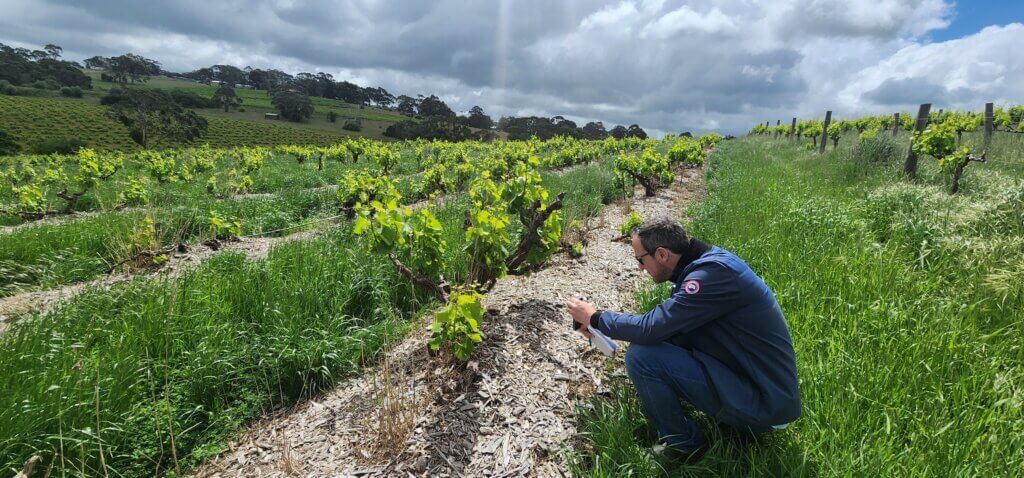
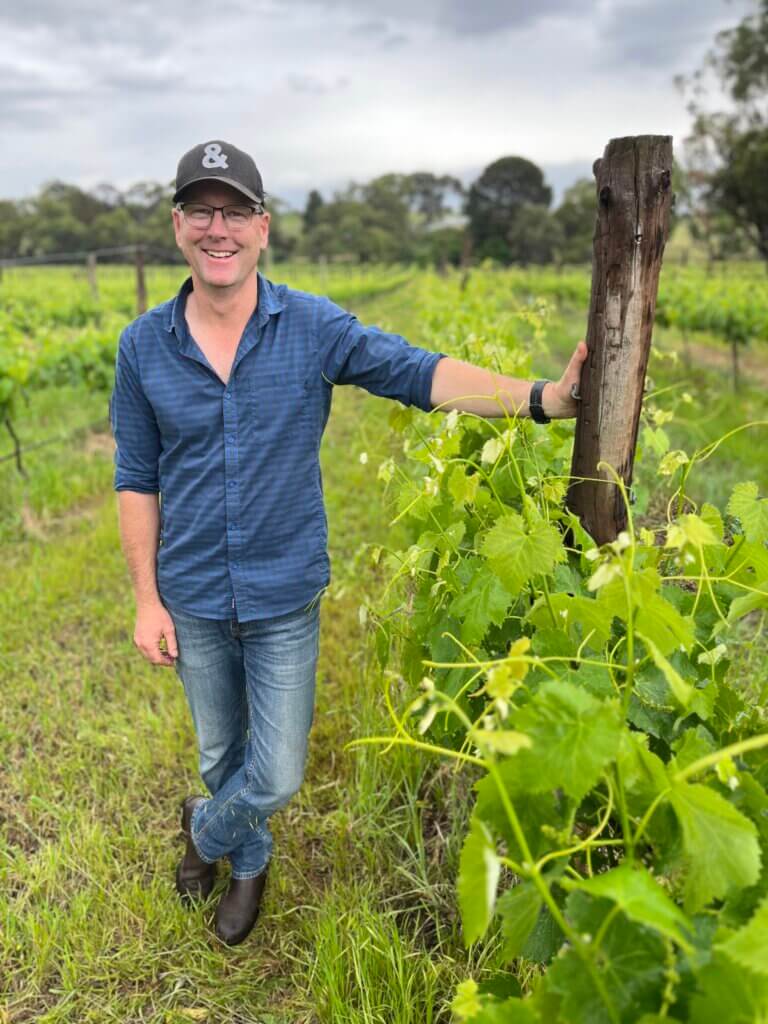
Our informative and engaging guides to The Vale are Toby Bekkers, Stephen Pannell, Richard Leask, Andrew ‘Ox’ Hardy, Matthew Deller MW, Mary Hamilton, Giles Cooke MW, Elena Brooks, Drew Noon MW, David Gleave MW and Chester Osborn.
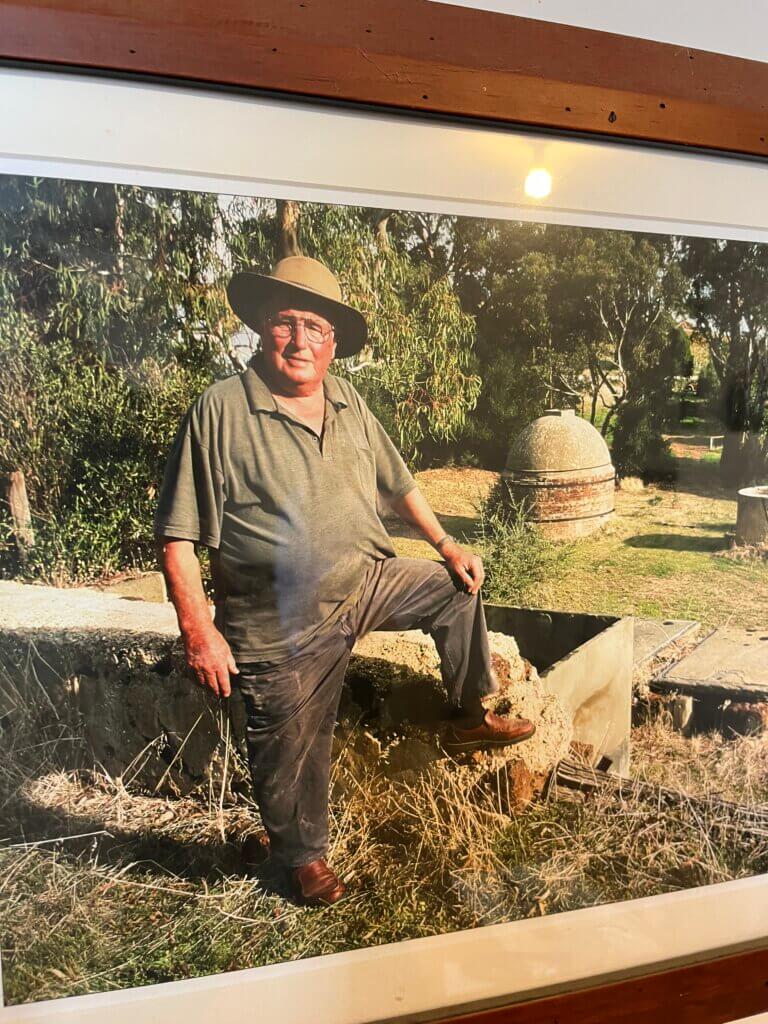
Thanks to the McLaren Vale Wine Region for sponsoring this mini-series, which is dedicated to the memory of Peter Fraser.
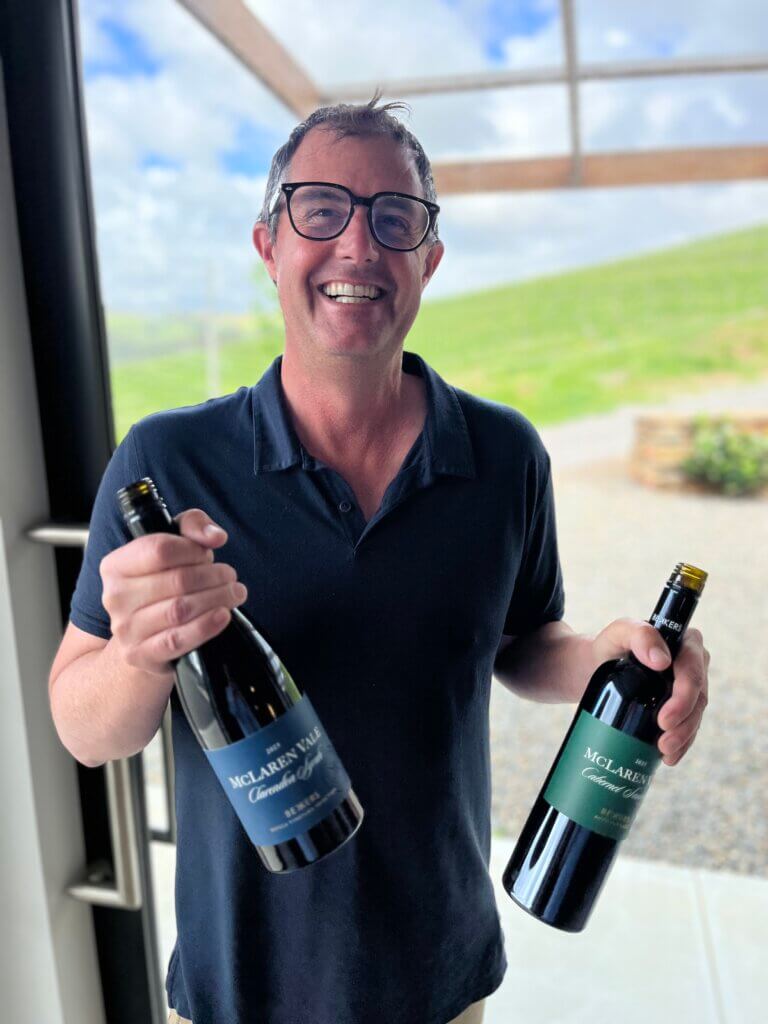
Starring
- Toby Bekkers, Bekkers Wine
- Stephen Pannell, SC Pannell
- Richard Leask, Hither & Yon
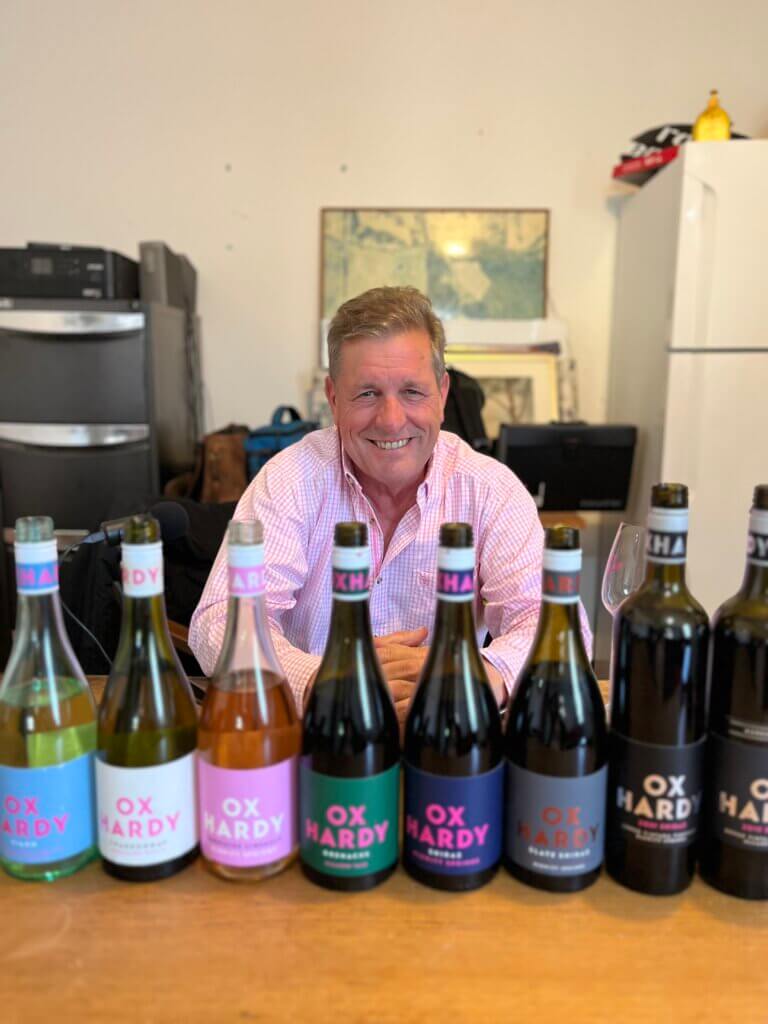
- Andrew ‘Ox’ Hardy, Ox Hardy Wines
- Matthew Deller MW, Wirra Wirra
- Mary Hamilton, Hugh Hamilton Wines
- Giles Cooke MW, Thistledown Wine Company
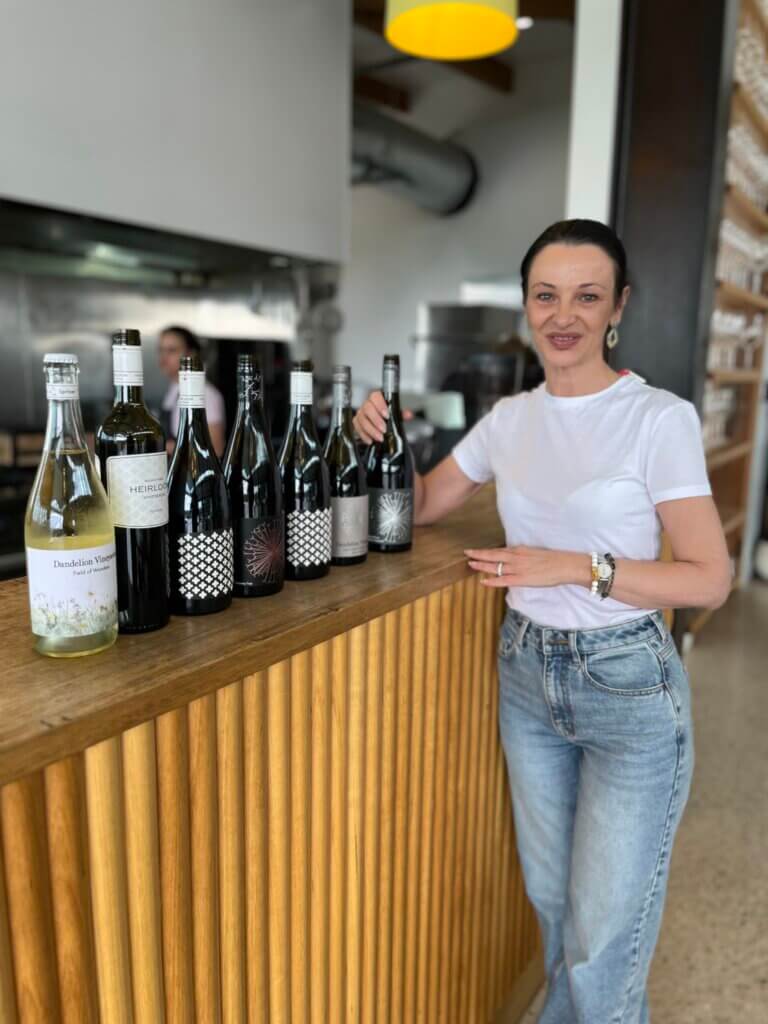
- Elena Brooks, Dandelion Vineyards
- Drew Noon MW, Noon Winery
- David Gleave MW, Willunga 100
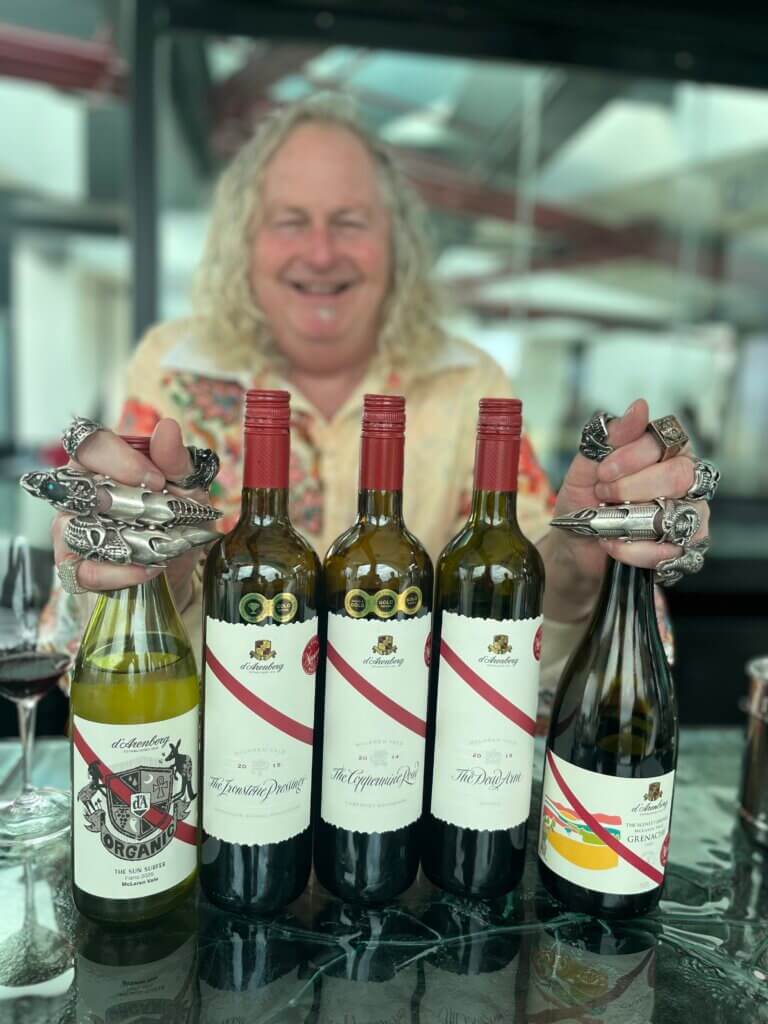
- Chester Osborn, d’Arenberg






Subscribe!
Sign up to Wine Blast PLUS to support the show, enjoy subscriber-only bonus content as well as early access to all episodes plus full archive access, not to mention subscriber benefits and giveaways.
Just visit WineBlast.co.uk to sign up – it’s very easy, and we will HUGELY appreciate your support.

It takes a monumental amount of work to make Wine Blast happen. Your support will enable the show to continue and grow – and we have lots of fantastic ideas of things we’d like to develop as part of Wine Blast to maximise the wine fun. The more people who sign up, the more we’ll be able to do.
Links
- Here’s a link to the previous episode: McLaren Vale – Boxer to Ballerina (via Burlesque)
- Use this link if you’re keen to enter our Wine Blast One Million Giveaway
- Here’s a link to the McLaren Vale Wine Show results including Peter’s International Judge’s Trophy
- In this episode we mention the Spanish research looking into the impact old vines of the ageability and terroir expression of Grenache, here’s the PDF: Groundbreaking Research Proves the Value of Old Vine Garnacha
- And here’s a link if you’d just like to explore a bit more about McLaren Vale
- Sincere thanks to Erin Leggat and Shaughn Jenkins for their help making this mini-series happen
- You can find our podcast on all major audio players: Apple Podcasts, Spotify, Google, Amazon and beyond. If you’re on a mobile, the button below will redirect you automatically to this episode on an audio platform on your device. (If you’re on a PC or desktop, it will just return you to this page – in which case, get your phone out! Or find one of the above platforms on your browser.)
Maps
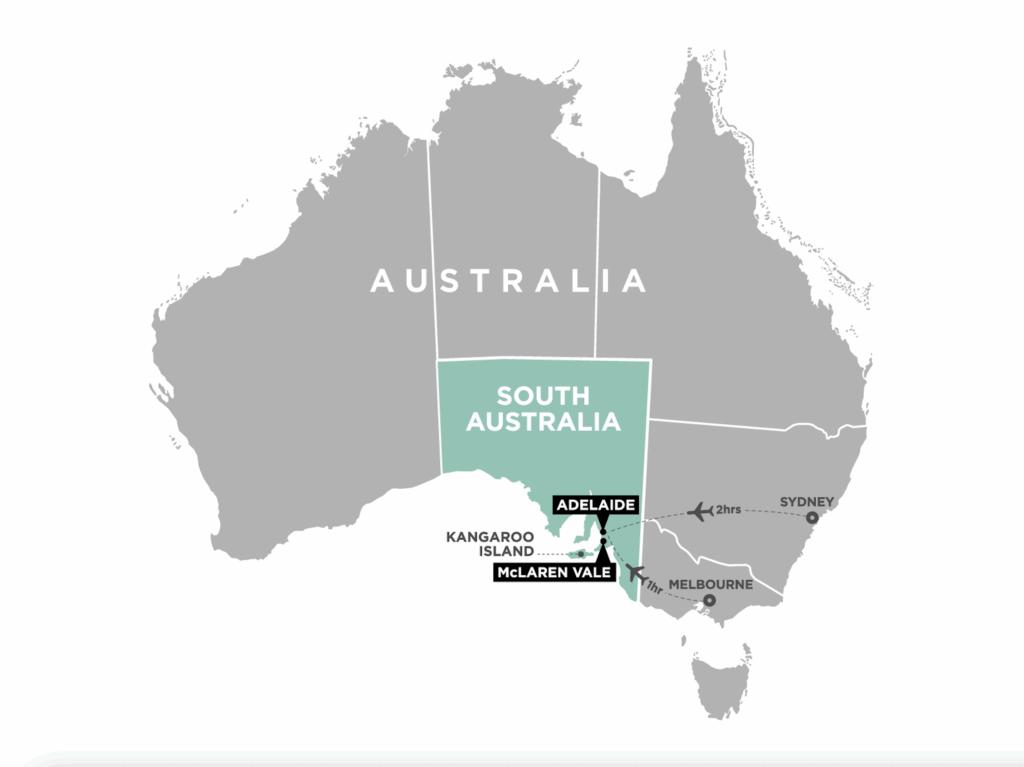
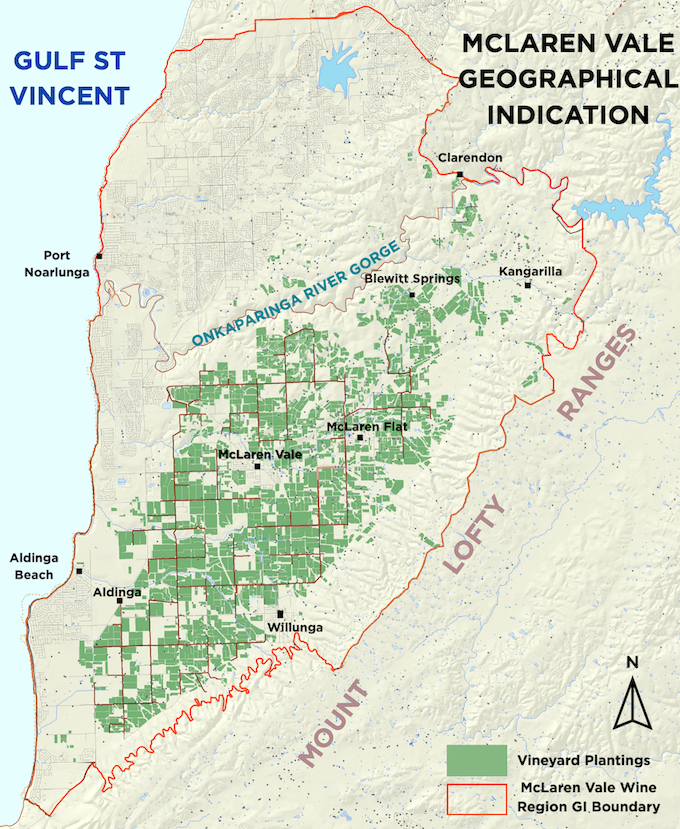
Recommendations
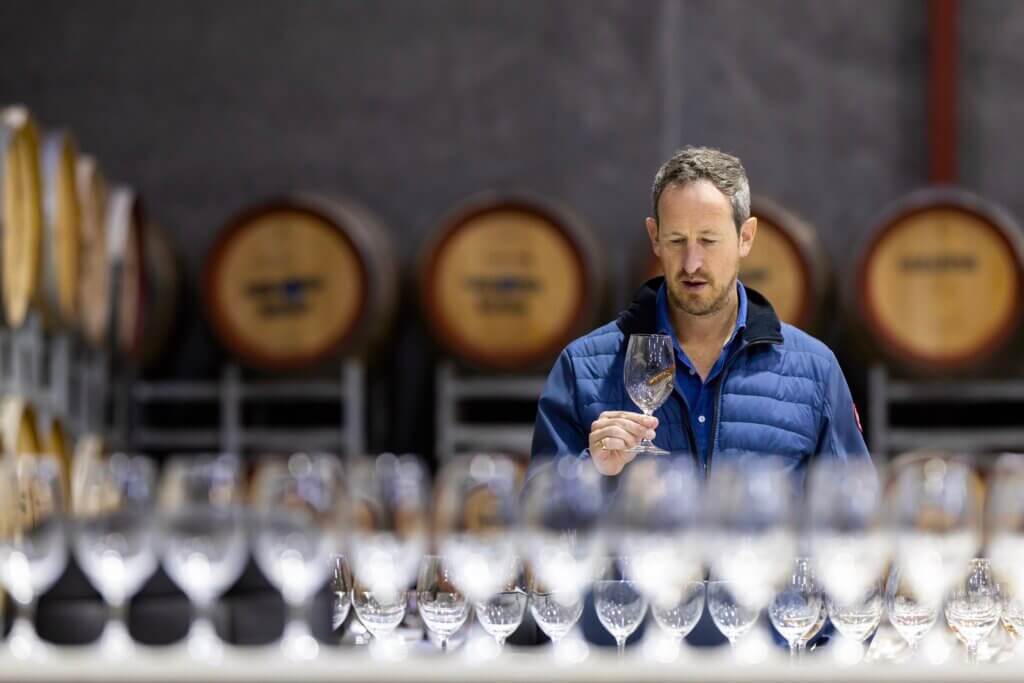
The below listing is compiled from a number of tastings, both in the UK and McLaren Vale, including Peter’s stint as International Judge at the McLaren Vale Wine Show in October 2025.
Aphelion
- Callow Grenache Blanc 2024
- Brini Single Site Blewitt Springs Chenin Blanc 2024
- Egg Grenache Noir Blewitt Springs 2023
- Old Vine Grenache Noir Rapture McLaren Vale 2024
Bekkers Wines
- Clarendon Syrah Single Vineyard Selection 2023
- McLaren Vale Cabernet Sauvignon 2023
Coriole
- Rubato Fiano Reserve 2023
- Dancing Fig Grenache Mataro Shiraz 2024
d’Arenberg
- Dry Dam Riesling 2024 (£13)
- The High Trellis Cabernet Sauvignon 2021 (£15)
Dandelion Vineyards
- Faraway Tree of McLaren Vale Grenache 2024
- Lion’s Tooth McLaren Vale Shiraz Riesling
- Heirloom Vineyard Touriga 2024
Hugh Hamilton
- The Disrupter Grenache 2024
- The Oddball Saperavi 2023
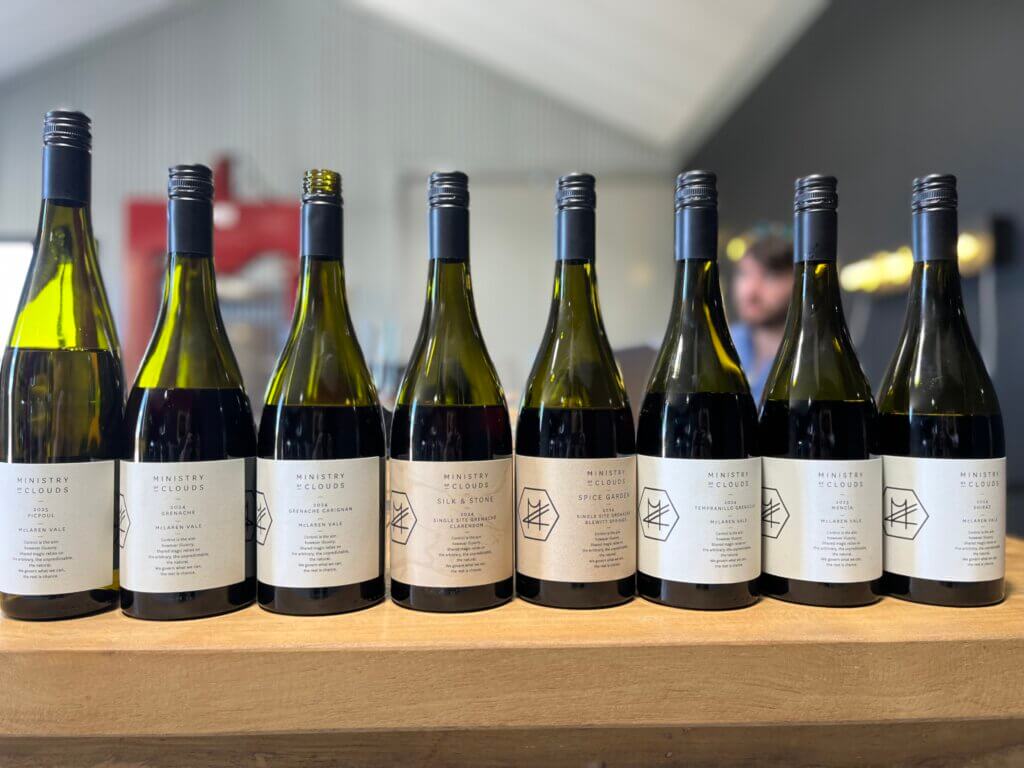
Ministry of Clouds
- Grenache 2023 and 2024 (£45)
- Kintsugi Grenache 2022 (£63)
- Spice Garden Single Site Grenache Blewitt Springs 2024
- Shiraz 2024
- Mencia 2023
MMAD Vineyard
- McLaren Vale Grenache 2021 (£38-41)
- Blewitt Springs Grenache 2022 (£45)
Ox Hardy
- Upper Tintara Vineyard Blewitt Springs Fiano
- McLaren Vale Grenache 2023
- Slate Shiraz Blewitt Springs 2022
SC Pannell + Koomilya
- Basso McLaren Vale Garnacha 2023 (£21)
- Smart Vineyard Clarendon Vineyard Grenache 2021 (£40-48)
- Little Branch Blewitt Springs Grenache 2022 (£45)
- Koomilya JC Block Shiraz 2022
- Old McDonald Blewitt Springs McLaren Vale Grenache 2022 (£50)
- Sunrise 99 McLaren Vale Grenache 2022 (£100)
Thistledown
- This Charming Man Grenache 2021 (£45)
- She’s Electric Old Vine Grenache 2024 (£25-27)
- Sands of Time Old Vine Blewitt Springs Grenache 2024 (£50)
- Vagabond Old Vine Blewitt Springs Grenache 2024
- Walking with Kings Roussanne Grenache Blanc 2024
Willunga 100
- McLaren Vale Grenache 2022
- McLaren Vale Tempranillo 2024
- Trott Vineyard Blewitt Springs Grenache 2022, 2023 and 2024 (£24)
- Smart Vineyard Clarendon Grenache 2022 and 2023 (29)
- Blind Spot Vineyard Blewitt Springs Grenache 2024 (£29)
Wirra Wirra
- Church Block 2022 (Cabernet / Shiraz / Merlot)
- The Absconder Grenache 2016 (£49)
- Hickinbotham Single Vineyard Cabernet Sauvignon 2024
Other recommended producers
- Battle of Bosworth (Fiano 2025)
- Bec Hardy (Garden Series Grenache Rosé 2025)
- By Fabiano (Rosato 2024 + Primitivo 2022)
- Hither & Yon (Falaghina 2025)
- In Praise of Shadows (Nera Nero d’Avola 2025)
- Mitolo (Cinquecento Sangiovese 2024)
- Oliver’s Taranga (Chica Mencia Rosé 2025)
- Orbis (Grenache Blanc 2025 + Trousseau 2025)
- Paralian (esp Springs Hill Vineyard Shiraz)
- Paxton Wines (Sangiovese 2024)
- Primo (Fiano 2025)
- Zerella (La Gita Arneis)
Images
You can find plenty of images on the show notes from Part One of this mini-series: McLaren Vale – Boxer to Ballerina.
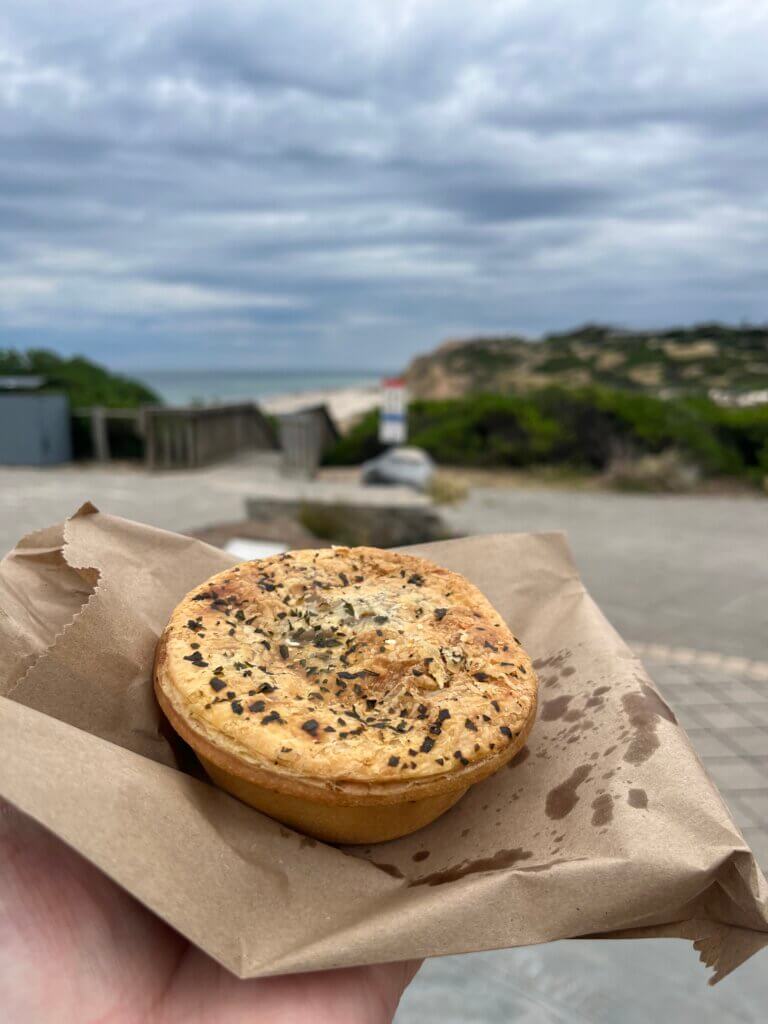
So the only one that’s really necessary to add here – is the meat pie. You’ll have to listen to find out why…
Get in Touch!
We love to hear from you.
You can send us an email. Or find us on social media (links on the footer below).
Or, better still, leave us a voice message via the magic of SpeakPipe:
Transcript
This transcript was AI generated. It’s not perfect.
Susie: Hello, you’re listening to Wine Blast. Welcome! This is the second part of our mini-series on the intriguing McLaren Vale wine region in South Australia. And to judge by the soundscape, we’ve headed to the beach…
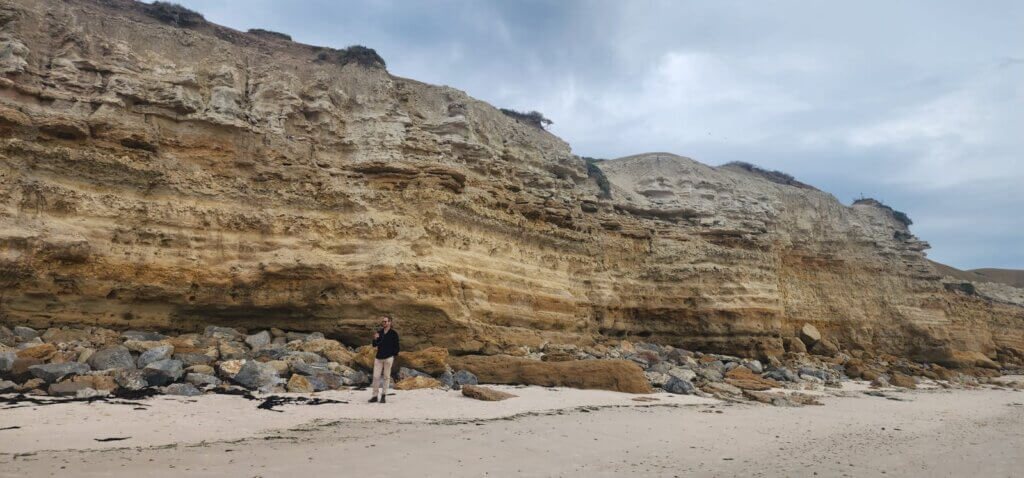
Peter: I figured we could all do with a bit of a break, you know, an escape from the hurly burly of life! So, yes, in the spirit of doing something completely different, I am officially transporting us all to Port Willunga Beach in McLaren Vale. Looking out over the sea, Gulf St. Vincent…. It’s quite a dramatic scene today because it’s not wall to wall sunshine, it’s a brooding, bruised skyline. There is a thunderstorm rolling in. You might just catch the odd bass rumble of thunder. I can see lightning forking down into the sea in the distance. And as I turn around, you can see this beautiful white sand beach stretching away into the distance. And then behind that you have these quite dramatic sandy coloured cliffs rising out of the beach. Someone said to me, here we come to the beach in McLaren Vale to keep ourselves sane. And I understand at vintage time you can’t move for winemakers coming down here to get away from it all. I can quite understand it because it’s, it’s such a beautiful, serene place.
Susie: Are you just setting yourself up to start a meditation app or something? It’ll be whale music next, won’t it? But, no, it does actually sound a pretty beautiful place. and this is, of course, the western limit of McLaren Vale, where that maritime influence is quite important in moderating the warm climate as well as giving winemakers a bit of a playground.
Peter: Yeah, yeah. Actually, there weren’t too many people there when I visited because of the, the thunderstorm. which, of course I did get caught in later. as we heard in part one of this miniseries. Do check that out, if you haven’t already. but you’ll be glad to hear, I Did find time for one other absolutely vital piece of applied research while I was on site, as it were. So I’m at Port Willunga beach in McLaren Vale, and the scenery is stunning. But what’s also stunning is this meat pie. Proud Aussie tradition meat pies. This one was a smoked pork brisket meat pie. And, it’s a showstopper. Everything you need in one savoury package. And, suddenly I’m feeling very contented.
Susie: And will you be featuring a regular pie appreciation segment in your new meditation app?!
Peter: Obvs!!
Susie: You and pies. Anyway, I’m not exactly sure where this is leading.
Peter: No, fair enough, fair enough. I suppose it’s just making the general point that this is a very special, beautiful place where you not only live well, but you also eat well. I ate probably a bit too well, in my case. anyway. and of course, you drink. Drink well, which is what we’re getting into in this mini series, why McLaren Vale is interesting and exciting for us wine lovers. Here’s a taster of what’s coming up.
Matthew Deller MW: I love great Barolo, I love great Burgundy. I love great McLaren Vale Grenache. I see them as part of the same landscape.
Stephen Pannell: We’re making wines that come from McLaren Vale, that taste like they come from McLaren Vale and can’t come from anywhere. Else in the world.
Elena Brooks: For me to make a, great McLaren Vale Shiraz, it takes a lot of Burgundy.
Susie: So, yes, in this episode, we’re going to be getting to grips with Grenache and Shiraz and all sorts of interesting things, even Saparavi and Sagrantino. To explore what makes McLaren Vale exciting, We just heard from Matthew Deller MW, Stephen Pannell and Elena Brooks. And we’ll be Hearing from more McLaren Vale wine luminaries in this episode, too, recommending some favourite wines along the way.
Peter: Yeah, so thanks again to the McLaren Vale wine region for having me out and for sponsoring miniseries. in the first episode, we got a feel for the place through the history, soils and climate and people before we went on to explore key aspects like terroir, old vines, water and sustainability. In this programme, we’re going to come on to what might be termed the Renaissance or reinvention of McLaren Vale. The, reinvaletion, maybe, or Mc Renaissance. What do you think? Grenaissance is, of course, the other one. But you know what? I’m going to stop there, look in your face.
Susie: I think, whatever. It’s a thrilling evolution, shall we say. and the kind of thing that rarely happens in wine but when it does, it’s worth taking time to consider and understand. And what we’re really talking about is McLaren Vale’s move from primarily making glossy, plush, fleshy reds to leveraging old vines, special sites and a new kind of wine vision to produce more elegant, complex, food friendly terroir, specific, fundamentally fine and distinctive red and white wines.
Peter: Yeah, I mean, partly, but not wholly based around Grenache and more
00:05:00
Peter: alternative or eclectic grape varieties like Fiano or Nero d’ Avola or Mencia and Sangiovese or ‘Sanjo’ as they call it in Australia. Delightfully. I love that Sanjo. It sounds like something you play. I got a fascinating insight into all of this course and more when I judged at, the McLaren Vale Wine show, blind tasting and rating hundreds of wines of all styles from across the region.
Susie: Yeah, I mean, you mentioned that in the last episode, but what were your, what were your headline conclusions from that? Because I think it was nearly four days of tasting, wasn’t it, with some great tasters.
Peter: Yeah, it was absolutely fascinating. I mean, you know, I’ve tasted a Fair amount of McLaren Vale wines over the last few years, but, you know, this was a pretty steep learning curve and brilliant because of it. You know, total immersion. not physically, but, you know, metaphorically jumping into wine, you know, from Fiano to fortifieds. And my brief takeaways, I suppose let’s start with, Shiraz, why don’t we? It’s the most widely planted grape variety in the Vale with 56% of plantings. And, you do get a lot of very satisfying fuller bodied styles, which McLaren Vale can do really well. But, you know, I found quality, to be honest, to be a bit mixed sometimes. The fruit was heavy and drying, just sort of lacking elegance and persistence. And the alcohol was sometimes quite marked in the wines.
Susie: But I think maybe that’s not so surprising given it’s the biggest production.
Peter: Yeah, yeah, maybe. And possibly it’s a sort of historic style as well. And then, you know, Cabernet Sauvignon was, to be honest, you know, kind of a similar picture with some wines just a bit too heavy and lacking varietal character and refreshment value, fundamentally. and that’s obviously the second biggest production in the Vale with 18% of production being Cabernet But then again, I tasted some absolutely kick ass Cabernet and Syraz too. You know, perhaps wines that took a leaf out of the new wave Grenache book. You know, fundamentally more midweight, perfumed, savoury, refined, like The Bekkers’ ones I mentioned in the last episode. And it’ll also throw producers like Ox Hardy, Ministry of Clouds, Paralian and Dandelion into that mix as well. Some truly joyous wines.
Susie: So maybe a sign of sort of things to come then.
Peter: Yes, I would hope so.
Susie: Now you’ve mentioned Grenache there, but before we come on to that, what about the more left field alternative varieties? Because that’s really interesting.
Peter: It’s really interesting and it certainly keeps you entertained when you’re judging hundreds of wines, I have to say. I mean, in general terms, this search for less mainstream grape varieties that are suited to the local conditions, that need less water, that retain freshness and acidity despite the warm conditions, what might loosely be termed, I guess, Mediterranean varieties, this makes total sense. and I think it’s absolutely the right thing to do. I mean, I was really impressed by some of the. Just thinking about sort of Fiano, Sangiovese, Mencia Touriga, you know, Primitivo, Falangina and Nero d’ Avola that I tasted, with Grenache Blanc, really standing out as a white variety with huge potential.
Susie: So we’re gonna come back to this subject later on in the episode. But I agree it sounds like the right approach to take rather than just planting more Chardonnay or Merlot or whatever. And if you are going to experiment, it makes sense to spread the net wide and just get going. Because it takes time, doesn’t it, to find out what really works. But coming back to McLaren Vale, Grenache, what was your take on that from the, from the show judging?
Peter: Yeah, loved it, Absolutely loved it. I mean, it was really, yeah, the standout, grape variety in the whole show, you know, Grenache. And let’s not forget Grenache based blends as well, which work really well. This despite the fact that Grenache and when I say Grenache, I sort of mean Grenache Noir. Of course, the red grape varieties, lots of variants of Grenache, but I’m talking about the red one here. It only accounts for 6% of plantings in McLaren Vale at, 530 hectares. That’s partly because of a government sponsored vine pool in the 1980s which saw over 300 hectares of Grenache pulled out, which is a crying shame.
Susie: So, so why though was it so good? What makes it so exciting, specifically in this show context?
Peter: Yeah, you know, I’ve thought about this and, if I had to use one word to sum up the appeal of great McLaren Vale Grenache. I’m going to use the Oxford Dictionary word of the year. Ah. From 2023, which is, of course, as everyone will know, Rizz Rizz R I double Z. For those of you who don’t know, this is a youth term. It’s short for, you know, I’m getting down with the kids here. It’s short. It suits me so well, doesn’t it? It’s short for charisma, meaning style or charm or attractiveness. And it captures for me the sense of energy and zeitgeist that these wines have. You know, the best ones are relatively pale in colour, medium, not full bodied. They have wonderful sort of leaping perfumes of red fruits, of blood orange, of Campari, of herbs like rosemary and thyme, and then this crunchy, grippy palate profile with insistent, often quite tacky tannins and a really spicy kind of energetic finish.
Susie: Now, obviously that will vary, won’t it, from site to
00:10:00
Susie: site and producer to producer. But this is quite a different style from what you, might call the traditional South Australian Grenache, which is more rich, raisined, fleshy, heartwarming and almost with a, with a sweet edge.
Peter: Yeah, well, I suppose a lot of historic Australian Grenache is probably fortified, you know, tawny port style. So, sweetness there. Yeah, but, yeah, I mean, it’s a fundamental gear change in Australian Grenache production. I think with much more of a mind to what you might I guess call an Italian paradigm majoring on tannin and tension and savoury appeal rather than, as you say, sort of rich voluptuousness. and we’ll get on to how and why this is. But just to finish on the show judging, I think it says it all that the top wine of the show was an old vine Grenache. The thistledown sands of time Blewitt springs. Grenache 2024. And then my international judges trophy. I was allowed a trophy of my own that was really thrilling. I’m going to insist in everything I judged my own trophy. it was also an old vine Grenache, of course, the Ministry of clouds Grenache 2024. Both, you know, very much in the idiom I’ve described, both absolutely stunning wine.
Susie: Okay, so let’s move on from the show to the wider region. So you’ve mentioned there how Grenache was historically planted in Australia, partly because it suited fortified wines, but also because the vine could tolerate dry, warm conditions very well in the days before irrigation. David Gleave MW is Canadian by origin, but UK based founder of distributor Liberty Wines and also now co owner of Willunga 100. Now Willunga 100 specialises in single site McLaren Vale Grenache and caused quite a stir when it won the Prime Minister’s trophy for the champion wine of the show at the National Wine show in Canberra in July 2025. So you asked him about the grape.
David Gleave MW: And the place, you know, Grenache was. Even in the 1860s, someone called Ebenezer Ward was saying how well suited Grenache was to the area of McLaren Vale, South Australia. Of all the varieties is it. It’s the one that has adapted the best to our climate here. So Ganache has been around a long time. it was, as you know, the most widely planted grape variety in Australia in the 1960s because it was used to make fortified wines. And most of the Australian industry at that time was based on, on port. Don’t forget Max Schubert, when he was experimenting with Grange, back in the 50s, was told by the Penfolds board to stop mucking about with these table wines. They’re never going to work. fortunately he ignored their command and went on to make an iconic wine. So I think as the fortified sector declined, so did Grenache’s fortunes. And I think it’s thanks to a few brave families that kept Grenache on the ground that we’ve got some old vines these days. And it’s on that base of old vines that the sort of the Renaissance, if you like, of Grenache has taken place. Because Grenache does need old vines. Young fruit gives you this lovely tutti frutti character. I think, you know, if we had started Talking about this 25 years ago and we said we’re going to make single vineyard Grenaches from three vineyards that are really only, you know, six to eight minutes apart, because we want to show the difference between them. I think, you know, we would have been laughed out of town. I don’t think we would have presumed to think that at the time either. so I think what we want is a wine that’s going to express the sense of place and I think Grenache does that really well. This is something we’ve learned over the last 10 to 15 years. It’s like Pinot Noir, like Nebbiolo, like Riesling. It does it, and it’s so sensitive to site. And I think, you know, some people have always said about Grenache in Australia that it’s, it’s warm climate Pinot. I think it’s closer to a variety like Nebbiolo, with those lovely, crunchy, grainy tannins. and the comb and the way those tannins interact with the acidity you get from Grenache. So that gives you liveliness on the palate. It gives you lovely fresh raspberry sort of currency, fruit, with those aromatic characters. And you just need to make sure you. Somehow the blend of those three works the right way.
Susie: So more Nebbiolo than Pinot. I can see that in the wines, particularly in the tannins. And it does tally with the Italian influence in the veil that we mentioned in the last episode. Also, doesn’t David have a great word for this style because he’s also an Italian wine specialist?
Peter: Yeah, the word is croquantezza. CR in Italian. it sums up that kind of mix of tannin and fresh fruit. That’s just so sort of yummy, isn’t it? And it’s almost sort of onomatopoeic, isn’t it?
Susie: Yeah, I mean, it’s a. It is a great term. I mean, it’s a bit like. Makes me think of those Pringle ads. You know, what was it when you. What was it? Once you pop, you
00:15:00
Susie: just can’t stop. And those ads just featured sounds, you know, one of them, like biting into crisps. Anyway, good. Grenache is way more wholesome than Pringles. I think we could probably. But we wanted to move on to another take on the history as well as the modern reality of McLaren Vale Grenache, didn’t we?
Peter: Yeah.
Peter: So. So Ox Hardy comes from a long line of winemakers. but as David kind of touched on back in the day, Grenache was seen more as a workhorse grape than a particularly noble variety. And Ox’s dad, in particular had it in for Grenache. here’s what Ox’s dad told him before he died.
Andrew Hardy: He said to me, if you ever plant Grenache on my farm, I’ll rise up out of the grave and kill you. Anyway, we buried him here, so he’s under a big rock up in the paddock. and I’ve now planted Grenache, and I’ve actually made Grenache. So if I die a sudden, unexplained death, you know, it’s Bob coming to get me.
Peter: But obviously you’re working with Grenache now a bit, amongst other things. You know, how does it feel to be working on it now and doing the things you’re doing with it?
Andrew Hardy: I love Grenache. It’s one of those things that I think, again, the old winemakers didn’t really like it because it was tawny port. it wasn’t really until the Pinot thing really boomed in Australia that winemakers and also consumers got their head around the fact that red wine doesn’t have to be big, black, dense, so a lighter style, even if it’s not lighter and alcohol, but a lighter style. really. So the Pinot thing really made it happen. And I think Grenache is one of those lovely things. It’s so, it’s really, it is really versatile. You can do rose, you can do dry red, you can do heavy dry red, you can do fortified. So I think the Grenache that’s been left that didn’t get grubbed either in the vine pool scheme or the fact that the vineyards were uneconomic. The Grenache that still exists is really, really good. It makes very good, very good red wine. So in a delicate, lighter style.
Susie: So this is really important. The old winemakers didn’t like Grenache because when it wasn’t making fortified, it gave pale wines that weren’t the kind of dark, intense dry reds they were after. And it took Pinot Noir to become successful in Australia, which it unquestionably has. check out our Australian Pinot Noir Comes of Age episode to help people understand that great red wine doesn’t have to be dark and r and full bodied. And it was only once that happened relatively recently, you’d have to say only in the last few decades that a more restrained, elegant style of Grenache has been able to emerge successfully on the Australian wine stage.
Peter: Yeah, it’s intriguing that. And also, let’s hope Ox doesn’t meet a sticky end because he’s a big fan of Grenache. I’m just going to slip that in there. he also mentioned the old vines and he just as David, touched on the brave families that kept Grenache in the ground. So, you know, we should mention, families like the Trotts and the Smarts, whose contribution in this regard has been immense. and you’ll often see those names on labels where the fruit is sourced from old family owned vineyards.
Susie: And talking of old vines and terroir, we should probably at this point bring in Stephen Pannell of SC Pannell, one of the region’s most respected producers. Here’s what he had to say about Grenache.
Stephen Pannell: I mean, the early days of making Grenaches, people were making faux shirazas. In a way, rather than embracing what its true strength is, and that is medium bodied nature. And so now people aren’t scared of making medium bodied wine. The thing they’re scared of a little bit is tannin. And medium bodied wine, that’s, there’s a fracture in that side of it. But for me, the tannin is the other beautiful thing about Grenache. It has these gritty, sandy tannins. So I think I’d love people to start to think about. We think about varietal characteristics in terms of fruit and aromas, but we don’t think about them in terms of phenolics, the way they feel. And once you start drinking Nebbiolo, you understand very quickly that this is a varietal tannin, a tannin that has flavour. And Grenache is like that. Shiraz is a different tannin. They’re actually quite soft. The tannins in Shiraz, they’re not as pronounced as Grenache is a more tannic. Grape variety than Shiraz. And I don’t think any great wine in the world, you’re not looking, you’re not looking for quickness of consumption and low tannin and ease with which you can use it with dinner. That’s not what great wine is. And I think the aspirations in Australia we have to go, where do we sit in the world of wine and what great wines can we possibly make? And for me, this variety ticks both those boxes. The hardest thing to make in a wine is a wine of tension. And it’s the thing that I’ve thought about for a long time. It’s easy to over exaggerate the characters, make it too ripe, make it too sweet, make it round and rich and soft and flavour packed and all that. Pulling all those things back in and controlling them is the difficulty. So I think I’m trying to make a wine and how do I achieve that tension? It’s a contradiction in terms. It’s. I’m looking for intensity, power, concentration, depth, and complexity. And yet I’m also wanting elegance, refinement, delicacy and finesse. And so I’m trying to have both my cake and eat it too, in a way. And I think the most important thing thinking about it with wine
00:20:00
Stephen Pannell: is that wine tastes like it comes from somewhere. The only unique element I have in my wines is that they taste like they came from this particular vineyard and I’ve got to protect that. And so if a wine tastes like I made it, I’ve fucked that up basically. I want the Wine to taste like it comes from somewhere. So Grenache has an ability in McLaren Vale to work like a, magnifying glass for terroir. And I think that’s what’s really exciting about Grenache. Now we’re making wines that come from McLaren Vale that tastes like they come from McLaren Vale and can’t come from anywhere. Else in the world.
Susie: A magnifying glass for terroir. I love that. And he should know. I mean, he’s travelled and tasted and worked all around the wine world, including Burgundy. And he quoted Gerard Potel in saying, if you think Pinot Noir’s ripe, you’ve missed it. And that’s influenced how he picks his Grenache.
Peter: Yeah, it’s really interesting, that. Is it. Apparently one eminent winemaker from the previous wine generation in Australia who shall remain unnamed. Before you ask, he. He was, let’s say a keen proponent of the classic French varieties. he said to Stephen, Pannell, why are you making Grenache when it’s not a noble variety? And I think Stephen’s wines, like so many other top draw old vine Grenaches from McLaren Vale, are proving that to be a fundamental misconception of what a variety like Grenache can do. Stephen’s also obsessive about tannin, which he says some people are slightly scared of. But there he says, you know, a brilliant antidote to fruit sweetness. And they give tension, which is exactly what he’s after.
Susie: Right, we’re gonna have a very brief pause and then come back for more.
Peter: Hello again, Just us, letting you know we’ve published a new subscriber only bonus episode and it’s top drawer.
Susie: Yep. This is Hugh Johnson Uncut, the first in a series where we give centre stage to the very finest interviews we’ve done for the show over the years, free of the editing shears we normally have apply. And this one’s an absolute peach.
Peter: Yes, the legendary Hugh Johnson. The shorter version originally went out back in September 2020 as part of season one, which is now subscriber only access. So to listen to this stellar interview, sign up to wineblastplus. Just head to wineblast.co.uk or click the link in our show notes. Here are a couple of brief snippets from the show to whet your appetite.
Hugh JOhnson: If you look at the evidence, this. Country in the 18th century was drunk all the time. No wine is natural. I mean, it would be vinegar. Natural wine is vinegar, I suppose. I mean, we literally swallowed something that had been alive since before Shakespeare was born Bottled history. Wow.
Susie: By way of brief recap so far, McLaren Vale is a historic wine region in South Australia whose exciting evolution, based around old vine Grenache, is capturing the attention of wine lovers around the world, even if it may give Ox Hardy the odd sleepless night.
Peter: You mentioned how McLaren Vale Grenache is capturing the attention of wine lovers. and I asked Matt Deller MW, CEO of historic Vale producer Wirra Wirra, about Grenache’s place in the wine market.
Matthew Deller MW: The emergence of, the new wave style of Grenache, I think, is really exciting. So, you know, we’ve got this sort of combination of, you know, beautiful old vines of Grenache, but, a winemaking style that’s very much focused on Grenache’s freshness and aromatics and, those beautiful chalky tannins. And we’re seeing, you know, I mean, you can’t go wrong buying McLaren Vale Grenache. It is so good. It is a great wine of the world, and I am very particular about using that term. I love great Barolo. I love great Burgundy. I love great McLaren Vale Grenache. I see them as part of the same landscape.
Peter: Now, you mentioned Grenache there. You talk about Barolo, you know, and other great wines of the world, and you see McLaren Vale Grenache very much in that context. That’s fighting talk, you know, that’s, you know, for someone like yourself, a master of wine who knows his world wine inside out, that’s quite a bold claim, though.
Matthew Deller MW: It’s a very carefully considered claim that has emerged from drinking and tasting a lot of McLaren Vale Grenache and a lot of Barolo and a lot of Burgundy. so I don’t use those words lightly, but I do see, and I encourage everyone to try these wines because they are great wines of the world.
Peter: And just to push you again on that. Well, what is it exactly about the McLaren Vale Grenache that really, means it deserves its place, in your view, right at the top table of wine.
Matthew Deller MW: There’s an incredible beauty, aromatically and texturally to the wines. and, you know, if you think about why we love Barolo, why we love great Burgundy, it’s the beauty of the aromatics and the beauty of the texture. and McLaren Vale Grenache has that. Ah, I think, you know, they’re old vines. They’re growing on sand. They’re elevated. they’re aspected away from the sun. The, you know, the fruit is beautiful. And then now in the last 15 years, the winemaking has really been informed a lot by Pinot Noir. So, now, you know, we’re picking earlier, we’re using a bit of a whole bunch, very gentle extraction, no new oak. the vineyards are just singing in the wines and so we’re just getting these beautiful sort of floral red fruited wines with this kind of cranberry crunch on the palate and these lovely chalky tannins. They’re just delicious wines.
Peter: And as far as I understand, your son’s middle name is Barolo, is that right?
Matthew Deller MW: I might have to change it to Grenache.
Susie: Grenache Barolo. What other wine related middle names are out there, I wonder?
Peter: Who knows? I think we missed a trick there with our kids, obviously. someone else who’s an expert on global Grenache, though whose middle name isn’t Grenache, at least, not yet, is Giles Cooke MW who’s worked extensively in Spain. and Giles is also unapologetic about the place of old vine McLaren Vale Grenache in the global wine hierarchy.
Giles Cooke MW: I think McLaren Vale, old vine Grenache, and I will qualify it as Old Vine. You do need age on Grenache to make truly great wines and you need them to be planted in the right place. But if you get all of Those things right, McLarenville Grenache is world class. and I would put it up there with the very best Grenaches in the world. there’s certainly no kind of bowing down at the altar of any other region as far as, the best, that we make. I think one of the remarkable things that Grenache does so well is that it elicits that sense of place. and because it’s transparent, it’s a thin skinned variety. when it’s well looked after, it’s when it’s picked at the right time. It has this incredible ability to really give you insights into where it came from. What I’m looking for in any of the wines, which is what I never found in the wines previously is energy. and energy to me means, it’s about freshness, it’s about liveliness, it’s about that kind of, the ability to convey power but with real delicacy around it. And I think with the Old vine Grenache from McLaren Vale and particularly Blewitt Springs and Clarendon, which is where we kind of really focus on, you’ve got real intense, you’ve got all of these layers of flavour and then the Flavours that you’re finding. there’s lots of red fruit, there’s lots of red currant, pomegranate and, warm spices. I love cooking and I can’t taste McLaren Vale Grenache without kind of thinking of Middle Eastern, North African styles of foods, because they’re exotic, they’re generous. There’s nothing kind of out of place, there’s kind of seamless, that ability, to, marry up spice, fruit sweetness, but all in a very kind of savoury way. And then I think when you’ve got Grenache off sand as well, it conveys that through the finesse of the tannins. Highly integrated tannins, very polished, tannins. Just beautifully elegant, balanced, floral, aromatic styles of wines that are quite beguiling because you can drink them quite young, and they appeal. They appear sort of relatively kind of transparent and pretty, but then have real intensity and focus in a way that many varieties don’t do. And I think when everybody kind of started making a modern style of Grenache, the easy thing to do was to talk about Pinot, and everybody talked about it as being poor man’s peanut. Well, it’s far from that now because, the fruit’s pretty expensive. But that was about just trying to make it an attractive wine, an attractive medium weight wine. whereas now I think everybody’s kind of moved away from that. We talk about Grenache, but when you look at those
00:30:00
Giles Cooke MW: kind of more savoury floral rose petal, dried citrus notes that you get with, grape Grenache, it doesn’t have necessarily the same kind of tannin acid structure as Nebbiolo, but it has some of those, characteristics that are, so appealing to people that kind of find the beauty in Nebbio. But if you, if you love food and you’ve previously been kind of slightly put off some Australian wines because they seem to overpower it, you really need to have a look at McLaren Vale Grenache.
Susie: Energy that kind of picks up on lightning in the glass from the last episode, doesn’t it?
Peter: Yes, it does.
Susie: And North African, Middle Eastern food. I totally see that, that comparison, those aromatics, aromatic spices and vivid flavours.
Peter: No wonder Giles saw a huge opportunity to do something with old vine Grenache when he came to McLaren Vale. And, you know, he’s been something of a pioneer, including, you know, how he makes his wines in concrete pyramids with stems. his team thought he was mad. he added these thoughts.
Giles Cooke MW: I think it was largely Forgotten about that. The best adapted variety in Australia for its climate is Grenache. you walk into, a Grenache vineyard that’s got Shiraz planted alongside it after three days at, ah, 40 degrees, and the Shiraz has kind of given up ghost. It’s drops all its basil leaves, it’s really flagging. And the Grenache is upright, it’s green and it’s kind of. Yeah, bring it on. We love the sun. and that ability for Grenache to deal with hot weather through closing up the stoma on its leaves and, controlling its respiration rates, is one of the reasons why Grenache does so well around the world in these hot environments. And it’s also why a lot of Grenache’s siblings like Grenache Blanc, Grenache Gris, I think, have a great future in Australia because they’re able to not only adapt, adapt, to kind of the climate, but they’re also able to adapt to the weather.
Susie: Just one thought that’s occurred to me, talking about Giles and thinking about his Spanish connections. There was a recent study into old vine Grenache in Spain, and I’ll put it on our show notes. But in essence it suggested that wines made from old vine Garnacha have both greater ageing capacity and, expression of site specific aromas compared with wines made from younger vines. Apparently it’s to do with old vines delivering higher levels of aromas from Shikimic acid, no less, and not just more intense phenolic structure, but also more complex characters that vary from site to site compared to younger vines making similar wines.
Peter: Yeah, I saw that, I saw that. Really interesting research. We’ll definitely put that link, on. But, one final voice we wanted to feature on Grenache was Toby Bekkers from Becker’s Wines with, an intriguing final thought.
Toby Bekkers: What I love about Those wines from McLaren Vale is they play with your mind. They’re a real challenge to grow and to make much more than Shiraz. And I think of them a little bit like some of those wonderful, lighter framed red wines from northern Italy. So you look at them in the glass and they’re light in colour. So your brain kind of forms an impression of what you expect. Maybe not that serious. You smell them and they’re beautiful and. Pretty and again, you think this is all going to be pretty easy going. And then you taste them and suddenly there’s a real structure and food, friendly tannin hiding in those wines. And that’s what I think. Great. McLaren Vale Grenache delivers to.
Peter: So let me get this right for you. Great. McLaren Vale Grenache plays with your mind
Toby Bekkers: It does. Yeah. And I think there’s a lot of regions in the world that do great Shiraz. We’re one of them. There’s not many do great Grenache as a single variety. So I think that’s where we’ve got something quite unique to tell a story about. It’s only 6% of the planted area, but it’s probably 90% of the buzz in the media and the trade. So, I think those things are something that are, you know, they’re naturally going to get more attention.
Peter: McLaren Vale Grenache plays with your mind. I mean, there’s your advertising strap line right there. I mean, who needs hallucinogenics, you know? Bring it on.
Susie: I know what he means, though. You know, the wines can often look like they might just be a bit inconsequential or light, and then suddenly there’s so much in the glass and in your mouth. Toby also mentioned a, quot that the great wines of the world have some sort of controversy about them. I quite like that thought too, that these wines should stimulate debate.
Peter: Well, hence the show, you know. Now, you know, we should move on from Grenache. and Toby also mentioned Shiraz, by far the most widely planted variety in the Vale, as we’ve said, including some historic 19th century vineyards. So it’s a well suited, well adapted variety to the region. And as I’ve said, said, you know, the better ones are now taking a leaf out of Grenache’s book and delivering perfume and
00:35:00
Peter: drinkability as much as power and ripeness. Darenberg winemaker Chester Osborn is a fan.
Chester Osborn: McLaren Vale Shiraz is a little different to some of the other regions in that there are a few people who are pushing the ripeness boundary, do make that bigger, thicker thing, but not many. Most people are making a really bright style of Shiraz and it can be quite, quite structured as well and have a lot of earth. But it’s. They always have a beautiful, fragrant length and life and brightness and freshness in them, which, which is, what wine should be in my mind,
Susie: Life and brightness and freshness. Couldn’t agree more. Someone else keen to stick up for Shiraz is Drew Noon M.W. of Noon Winery.
Drew Noon MW: I want to stand up here for Shiraz because when it’s hard to sell and there’s so much of it, it people love to bash. We make great Shirazi like It suits. There’s a reason why there’s so much of it here.
Peter: And there’s something to be said for that, isn’t there? You know, varieties that have proved their worth in a place deserve respect. I also asked Ox Hardy about Shiraz place in McLaren Vale.
Andrew Hardy: I think the place Shiraz has in McLaren Vale is pretty epic. So soil type is really important. The climate is important. I think Shiraz has shown great suitability. And we don’t. We don’t have to grow great, big, thumping, dry reds. There’s some elegance that you get in McLaren Vale. and it’s, you know, we’re not saying it’s a cool climate region, but we’re getting some of those more delicate, ethereal Shiraz characters, not. Not just the big hit you over the head thumpers. So I think it’s a really, you know, it’s a vital variety for the region.
Susie: Quite a few winemakers talk about, and I quote, the. The feminine style of McLaren Vale Shiraz versus, for example, the more muscular versions from Barossa. Now, I’m not sure if it’s still appropriate to use this kind of terminology, but it does speak of this. This brightness and nuance you can get in the wines.
Peter: Yeah. and Toby Bekker talked of the fine detail and fragrance, which he said was achieved by, and I quote, not wringing out the teabag to try to get everything in the wines. I thought that was quite a nice sort of turn of phrase.
Susie: Now, we should also mention Cabernet shouldn’t we? we touched on it earlier and in the last. Last episode. But just while we’re here. Cabernet is the second most widely planted variety in McLaren Vale, covering 1,280 hectares. And it makes some excellent wines.
Peter: Yeah, I mean, in the show judging, we gave the Wine of Provenance Award to the Reynella Basket Pressed Cabernet and to get that award, you have to show the same wine, same site, from three different vintages. One current vintage, one three to five years old, One’s sort of over six years old. And they were very impressive classic Cabernets.
Susie: So someone else who spoke about this was Matt Deller. Here’s how he described McLaren Vale Cabernet
Matthew Deller MW: Yeah, I think, particularly Cabernet you know, Cabernet in the cooler higher sites, around Clarendon, Blewet Springs and Onkaparinga Hills is really exciting. They just have splendid perfume. They have wonderful, freshness. They have great drive, great energy. they’re just Cabernets for Cabernet Lovers, and I’m a Cabernet lover. I lived and worked in California for eight years. I made, wines in Napa Valley. And these remind me of the greatest mountain, wines of Napa Valley. The great wines of Howell Mountain or Mount Veeder or Spring Mountain. they’re wines of great perfume, great elegance, great, structure, and great longevity.
Peter: Now, one thing Stephen Pannell says is that it feels like we’ve been stuck on four varieties and all we’ve done is help sell French wine, referring to sort of classic French varieties like Cabernet Merlot Chardonnay, that kind of thing. Pannell is one of those leading the charge to alternative varieties. He says our biggest task is to make wine that’s uniquely Australian, so we need to find varieties that are responsive to that.
Susie: Now, he’s a fan of Greek and Mediterranean varieties more widely, isn’t he? But he admits it does take time to figure out which do actually work best. He likes Fiano, Nero, Davila, Alianico and Falangina in the Vale. Chester Osborn of Daremberg works with around 48 different varieties, and he flags up the likes of Fiano, Montepulciano and Mencia as good performers.
Peter: Now, I spoke to Richard Leask of Hither, and Yon, who, after extensive replanting, now works with more than 20 different grape varieties. Here’s his take on alternative varieties.
Richard Leask: Well, we started with Aglianico, and then we went to Nero, d’Avola Mensia, Carignan, Malbec, White Fronte Greco, Tempranillo, Sangiovese, Felangina, Touriga, Grenache, Mataro, Lambrusco. And then we’ve got Fiano, Vermentino and Chenin Blanc.
Peter: So just a few to keep you busy.
Richard Leask: I think we covered a lot off. Yeah, I mean, it’s been fun. We started with reds, but because the region was red dominant,
00:40:00
Richard Leask: the exciting bit is the last four or five years. Well, the last six years have been about whites. You know, looking at whites that, will thrive here. And, you know, we found a couple. I think Greco is a stunning wine for McLaren Vale. Again, it’s late. You know, we’re picking that after Shirah quite often, you know, waiting for it to get ripe, which is a fantastic problem to have, you know, Here we are, we’ve got a variety that’s happy in its place. It takes its time to ripen, and we’re picking it when we want it on flavour, and style, which is Fantastic. And I think Falangina is another one that will look really good. And Fiano definitely has found a place in McLaren Vale.
Peter: And what about in reds? What’s worked best for the reds?
Richard Leask: I think reds are a good spread. Nero Dabola definitely, makes a style that, you know, is really approachable and, and, you know, right in a nice band where it’s got some seriousness to us with some of the older plantings that have been here for, you know, 10 or 15 years now here, to some really playful, easy drinking, crunchy reds that you could potentially chill and do that. So I think Alanico at the other end, which is a bit more structural and, you know, if you’re, you know, it’s a cabernet drinkers red in a lot of ways. It’s got some power and some savoriness to it and works really well as well. Mencia will be an interesting one. I think it’s got some similarities to Grenache and it’s delicious on the vine. It’s most. It’s the best tasting grape variety I’ve ever had. And, you know, sort of 20 odd varieties later, you know, we’ve sort of got some chaos. But, the premise around water use, efficiency and the ability to get through hot weather close to harvest, where they don’t go backwards and they don’t jump in sugar, they retain natural acid, which is important in what we were trying to do with wines and, and the drinkability of wine down the track. all of those, they tick all of those boxes. So they’re here for a number of reasons. Reasons. And I think they just happen to now sit in a, you know, a nice easy drinking style that matches where we live. You know, close to the ocean, Mediterranean, obviously. and sort of casual and laid back. You know, they’re wines of, you know, significant effort, but they’re fun and playful as well. And I think they’ve certainly found their feet here.
Susie: So I think this sums things up quite nicely. They’re not just suited viticulturally, they’re also suited to the modern lifestyle. And some interesting names in there.
Peter: Yeah, I mean, McLaren Vale has made a bit of a name for itself in Australia for going a bit left field on the grape variety front. apparently they had the first commercial plantings of Fiano and Sangiovese in Australia, the latter in 1985, which now covers 55 hectares in the region. And, the Vale has the largest plantings of Fiano in South Australia, with around 76 hectares. And it’s the second most widely planted white in the region. So, you know, Fiano has become a real focus.
Susie: Didn’t you go to a masterclass on Fiano?
Peter: Yeah, I did. Of the many things, you know, and it was fascinating, comparing sort of Fianos from McLaren Vale with others from around Australia and, of course, Italy. Brendan, Carter, who was leading the session, at one point said, fiano in Australia can become like Malbec in Argentina, so quite bullish. Ox Hardy’s family had Chardonnay planted from the 1970s until 2010, when they pulled it out and replanted with Fiano. this is why.
Andrew Hardy: And that was result of a search for what white will work in the McLaren Vale. And we sort of looked around the world and thought, what varieties do we like drinking and what might suit the changing climate? And Fiano, again, a versatile variety, but it also holds its acid really well. So in a warming, if you like, in a climate change scenario, we can still have really great acid and not. Not have to add any. So I love it for that and I love it. I love it for its fresh. And I always think of it, you know, when people haven’t tried it before, I say, you know, it’s kind of a cross between Riesling and Chardonnay. You’ve got some of the body of Chardonnay and some of the freshness of Riesling, the citrus freshness of Riesling, which I really like.
Susie: Chester Osborn is also a fan, and I know he describes Fiano as really happening in McLaren Vale right now, saying it’s really coming into its own.
Chester Osborn: And it fits so well in McLaren. It makes such an expressive, fruity wine with lovely complexity, plenty of flavour. Doesn’t need to have much oak. You know, it can be used in there, but hidden, very, long. Great acidity, amazing acidity. You never need to add acid to it in McLaren, Vale So really long wines, really beautiful wines. So for the drinker who drinks Sauvignon Blanc, they love it. The drinker drinks Chardonnay, they love it. So when you’ve got, you know, group of people going out for a lunch and they can’t decide Sauvignon or Chardonnay, they go fiano, and everyone’s happy.
Peter: Darenberg has gone big on, Fiano. Chester says he reckons they’re one of the largest growers of Fiano in the Southern hemisphere. and it sells well, apparently. I have to say, I liked lots of the Fiano I tasted, but not all. some are quite sort of one dimensional. But, the best had an energy and intensity and that extra texture and complexity to them, which both foods very well, so, you know, a work in progress, but tonnes of potential.
Susie: Now there are lots of other alternative varieties planted from Touriga Nacional to Barbera, Cinsault,
00:45:00
Susie: Sagrantino, Roussanne and many more. So we won’t have time to explore them all. But one we just wanted to touch on was Saparavi, the famous Georgian grape from the Caucasus Mountains. Perhaps one of the last varieties you’d expect to turn up here. But in the great, inclusive, welcoming, diverse, serendipitous spirit of Maclaren Vale, it has, and Hugh Hamilton Wines has made it something of a speciality. Here’s what Marie Hamilton has to say about Saperavi.
Mary Hamilton: Fascinating. It’s like a wild vine, so to observe it in the vineyard, you know that it’s almost like asking a wolf to come and sit by the fire in your home where, you know, you’d usually have a dog. It never turns, like it never becomes a domesticated pet. So that’s very fascinating. But it makes a really interesting, unusual wine that, you know, I think our Seperavis are now, getting to be world class. We have them back in Georgia against the Georgian Saparavis and they look spectacular.
Peter: And I, can confirm, from having visited Georgia and having tasted Marie’s oddball Saperavi, that is its name, that they make a very impressive Saperavi at Hugh Hamilton Wines. And I would also, just before we move on, reiterate my plug for Grenache Blanc, and also Grenache Gris actually in, in the Vale, of perhaps all the whites I tasted, this was the variety that seemed most at home, most sort of self assured here. I absolutely adored many of the white Grenaches I tried, so keep an eye out for those as well. there are only a few hectares planted, but I reckon it will, it will grow.
Susie: Okay, so before we look to the future, could we just touch on the changing approach to making wines in McLaren Vale? Because it’s one thing having these amazing dry farmed old vine plantings, it’s another making world class wine from them. And to pick up a term from the previous episode, a lot of that is down to human intention.
Peter: Yeah, quite right. So here’s Stephen Pannell on his approach.
Stephen Pannell: Honestly, for the 30 years that I’ve been making Grenaches and wine wines, I, think there was a problem in the past where we didn’t make Wine that suited how we lived. I live, in McLaren Vale. I live next to an ocean full of seafood, and I was making 16% alcohol Shiraz. Well, that was a tad logical, I don’t think. We saw wine as a food, and that’s what wine was like. Everybody was like, how big can I get it? How rich can I get it? and we forgot that you have to actually drink it. So I’m, more interested in making wine that suits the way we live.
Susie: Stephen says, and I quote, I don’t grow oak. Why would I sell oak? I grow grapes. And here’s Chester, Osborn.
Chester Osborn: So I’ve been obsessive about making wines that have picked, earlier, so they’re not too fat and oily. And, you know, I hate that style that is quite thick and gloopy, and after five years, it’s turned into sump oil with real short palate. And it’s just disgusting. And often filled up with toasted oak as well. It’s like it’s not even wine. I don’t even call. I don’t know what it’s called. Shouldn’t be called wine. I’m making wines that are structured, fragrant, fragrant lift, fragrant length. The oak is hidden in them completely and they speak of the place and are very ageable. So that’s really what I’m doing.
Peter: And one technique that people are increasingly using, particularly with Grenache, is including grape bunch stems in the ferments. Now, we’ve touched on this before on the pod, but what it can do when the stems are ripe is add tannin and ascent, sense of crunch, that croquantezza we talked about before, and sort of freshness. So, you know, it can also add a bit of water, bringing the alcohol down a bit, and extra aromatic complexity. Think rosemary, lavender, dried citrus peel, that kind of thing. Here’s Elena Brooks of Dandelion and Heirloom Vineyards on why she uses stems.
Elena Brooks: I get excited over the organa, thyme, oregano, thyme, marjoram or whatever, or summer savoury, which is the Bulgarian signature spice. I get excited when I see that in wine, because in a wine region that is full of fruit, the exciting things are, what else can be done? It’s the herbs that come with it. like a great dish, a great chef would use not only colour and smells, they’ll use texture, they’ll use flavours. I see a wine, a great wine being put together exactly that way. Way. It’s about the smell, the look, the Texture, the character of it. Stems would allow me the crunch almost into the wine. Just like a, chef might use, pomegranate seeds to flavour a salad or a dish or Moroccan dish, lamb dish. They’ll use pomegranates there. That’s exactly what stems do for me. They’ll bring in that exact tannin profile that pomegranates do in a wine. I think it’s so important. It, it’s part of the spice and the flavouring. McLaren Valle is easy because, as I said, it’s warm region. It is one of the regions, I think,
00:50:00
Elena Brooks: that can really benefit from the use properly. It, adds almost a third dimension to it.
Peter: Where did you get your inspiration for that?
Mary Hamilton: Yes. So as winemakers, we’re really spoiled because we can tap into the tapestry of wine of around the world. And we’re very highly troubled winemakers as such. We work around the world. I’ve worked in Italy, I still work in Spain. We have a vineyard there, too. We can truly understand because we can afford to drink the greatest wines of the world with that knowledge that inspires us to bring our wines and compare our wines to the great wines of the world. and the greatest wines of the world is what inspire me as winemaker. And I really hope they do the same with, with my colleagues as well. But for me to make a great McLaren Vale Shiraz, it takes a lot of Burgundy, I drink a lot of Burgundy to make a great McLaren Vale Shiraz.
Susie: And apparently that Burgundy includes the likes of Domaine Dujac, who are also notable advocates of using stems in their winemaking. Sounds like a delicious.
Peter: They’re not bad wines, are they? there’s a lot we could get into on the innovative winemaking front, but this episode is already long, so I think we should move on to the subject of the future for McLaren Vale. I asked a couple of people for their thoughts on the Vale’s future. First up, Matt Deller.
Matthew Deller MW: The opportunity for McLaren Vale is with its Grenache globally. I do strongly believe that McLaren Vale Grenache is the great Australian red wine that we can bring to the world. And I think once there’s a lot more awareness in the world of how good McLaren Vale Grenache is, I think that will, that will bring a lot More attention to McLaren Vale.
Susie: And here’s Richard Leask.
Richard Leask: But in the last, you know, really the last 25 to 30 years, the, you know, the focus on producing high quality wines of place I, think is a real focus for the region now, and that. That’s taken a little while for it to understand what that looks like. So we’ve morphed into a really nice, medium, elegant style of winemaking that covers across reds. And now some really interesting Mediterranean wines, I think, which will be quite strong in the future.
Peter: Finally, ox Hardy on McLaren Vale’s future.
Andrew Hardy: I think it’s really bright. I think, notwithstanding the world problems, the market problems in the world and climate change, I think it’s really bright. I think where the market’s meant, we’ve had to focus and we’ve had to sharpen it, sharpen the pencils and say, what works, what doesn’t work? so I think, you know, I really do think that we’ll shrink back to success, so that there’ll be vineyards that are pulled out that make wine that. Does anybody really want it? and you can say this, with every region in the world, Bordeaux is doing this, going through the same problem. California is going through the same problem. The world is so. Information is so prevalent. Excellent. You know, people know whether they’re in Shanghai or doesn’t matter where they are in the world, they can get the information and hopefully their, curiosity is peaked and they say, well, let’s buy that. So it should be fun. I think it’s got a future. Just, we have to be. We have to be razor sharp on what that future is.
Susie: There’s no denying that this is a tough time for the wine industry. Globally, people are drinking less, people have less disposable income. Governments aren’t helping. Plus you have the spectre of climate change looming large in everyone’s daily reality. But despite all that, you do get this sense of optimism about McLaren Vale’s future.
Peter: Yeah. Partly the people, partly the place, partly the grapes like Grenache and the alternative varieties, which, as we’ve said, you know, are not only a great hedge against climate change, they also make a fantastic story So, you know, going to Ox’s point about piquing people’s curiosity and of course, the wines themselves, you know, look well suited to the modern lifestyle and modern tastes.
Susie: And I think. I think most. Most of the producers are also very aware of the challenges, which is the first step in overcoming them. And lots of them talk about needing to raise awareness about McLaren Vale. It’s not the best known region out there currently, but there’s no reason why that shouldn’t change, as we’ve discussed.
Peter: Yeah. And, most of them recognise that McLaren Vale is probably going to have to shrink a bit to become A size that’s fit for purpose. And do you know, the right thing in the right place, as David Gleaves says? And also, Drew Noone said when I asked him about the future, that it’s about making less wine but higher quality. It was almost too easy in the past, he said. but now, looking at the stats, in 2025, McLaren Vale accounted for 5% of the South Australian great crush by volume, but 11% by value. So, 5 versus 11. And apparently it’s now Australia’s second largest premium region by crush value and export value. So it’s going in the right direction now.
Susie: One person who spoke eloquently about the future in the light of current challenges was
00:55:00
Susie: Mary Hamilton of Hugh Hamilton Wines.
Mary Hamilton: It’s one of the worst times globally for wine. I find, though, these are the stimulating times. When things hit rock bottom, it sorts the, wheat from the chaff, because some people go to ground and become depressed about the whole thing and, and shut down. Other people see it as a challenge to really Sharpen the saw. McLaren Vale is very well set up for the future because it has this maritime climate, which really helps it. but the mentality down here also helps it because we’re not stuck, we’re not so sitting in the past where we don’t feel as though we can invent ourselves again, because that sense of more ephemeral spirit lives here. Wine is probably the most cluttered product category on earth. So if you want to stand out and have something to say, you can’t be doing exactly the same thing as your neighbour who’s doing exactly the same thing as their neighbour. You have to find your own voice. And the best businesses are ones where they do something uniquely themselves. But it’s coming from an authentic place.
Peter: And I think, I hope we’ve very much got a sense of McLaren Vale’s unique voice over the course of this miniseries, one final word, from Giles Cook. Mw.
Giles Cooke MW: I think what’s exciting is that, probably the best wines haven’t been made yet.
Susie: So it’s a story still in the telling, with wines you definitely want to keep your eye on. On time to wrap up. Ah. So do you want to do a quick summary?
Peter: Yeah, why not? so to recap on the miniseries, McLaren Vale is a region with plenty of history, but also plenty of future in front of it. This is a region that’s been notably proactive in studying its terroir, maximising the potential of its historic dry farmed old vine vineyards, implementing sustainable practises and experimenting with alternative grapes varieties. Call it a grenaissance, call it a reinvention, call it an exciting evolution. McLaren Vale is well worth checking out. The wines can even mess with your m mind.
Susie: We’ll put maps, links, recommendations and more on our website. Show Notes in the meantime, thanks to our fabulous interviewees and the McLaren Vale wine region for sponsoring this mini series. We pay our respects to the Kaurna people and we’re going to leave you on the beach at Port Willunga.
Peter: Yeah, just. Just make sure to get yourself a meat pie while you’re there….