- Season 7 Trailer
- The Jancis Robinson EXCLUSIVE Part 1
- The Jancis Robinson EXCLUSIVE Part 2
- Chile Wines of the Year 2025
- SAN LEONARDO – The insider’s Guide
- The Story of The Billionaire’s Vinegar – Part 1
- The Story of The Billionaire’s Vinegar – Part 2
- Blind Tasting Top 2021 Super Tuscans
- Top of the Pops: Classic Fizz Beyond Champagne
- Rock and Rhône
- Our WINES OF THE YEAR (2025)
- Our BOOKS OF THE YEAR (2025)
- Hugh Johnson UNCUT
- McLaren Vale – Boxer to Ballerina
- McLaren Vale – The Grenaissance
- Peter Fraser – A Tribute
- New Zealand Wines of the Year 2026
- Sam Neill UNCUT
- Giveaway EXTRAVAGANZA + Game-changer Coravin
- Greg Lambrecht UNCUT
- The Story of Stalin’s Wine Cellar PART ONE
- The Story of Stalin’s Wine Cellar PART TWO
- Drop Stop: Wine’s Big Water Issue
- Missing the Point?
- Keep Calm and Sauvignon
- Yeastie Boys: Wine’s Modern Microbial Solutions
- Adelaide Hills: Lofty Ambitions
- Natural Wine RELOADED
- The Judgement of Paris 50 Years On
- The Greatest Chardonnay Showdown
Summary
New Zealand wine stands at a fork in the road.
One path leads towards corporate behemoths churning out industrial quantities of mass-market Sauvignon Blanc; the other features increasingly refined, site-specific wines across a range of styles that compete with the world’s very best.
Which will it be?
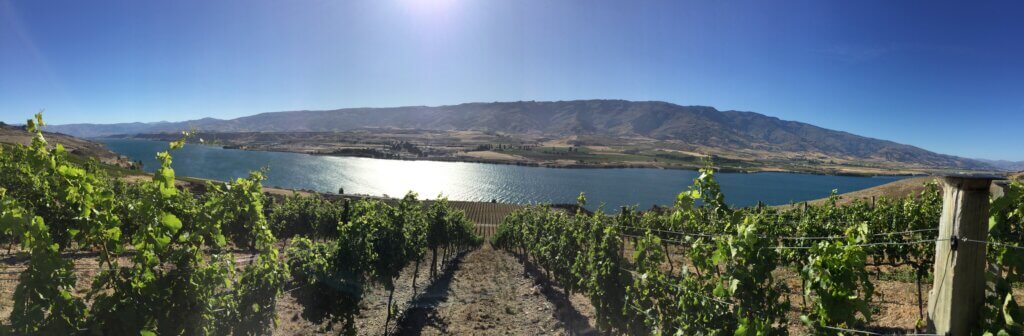
In this New Zealand Wines of the Year feature, we take you behind the scenes after tasting hundreds of wines to get to grips with what’s really going on in Kiwi wine.
We highlight the best producers, what they’re doing and why.
And we throw more than a few big calls out there – for example, why New Zealand Chardonnay and Pinot Noir is currently getting our vote over Burgundy…and why serious fizz should be part of New Zealand’s wine future.
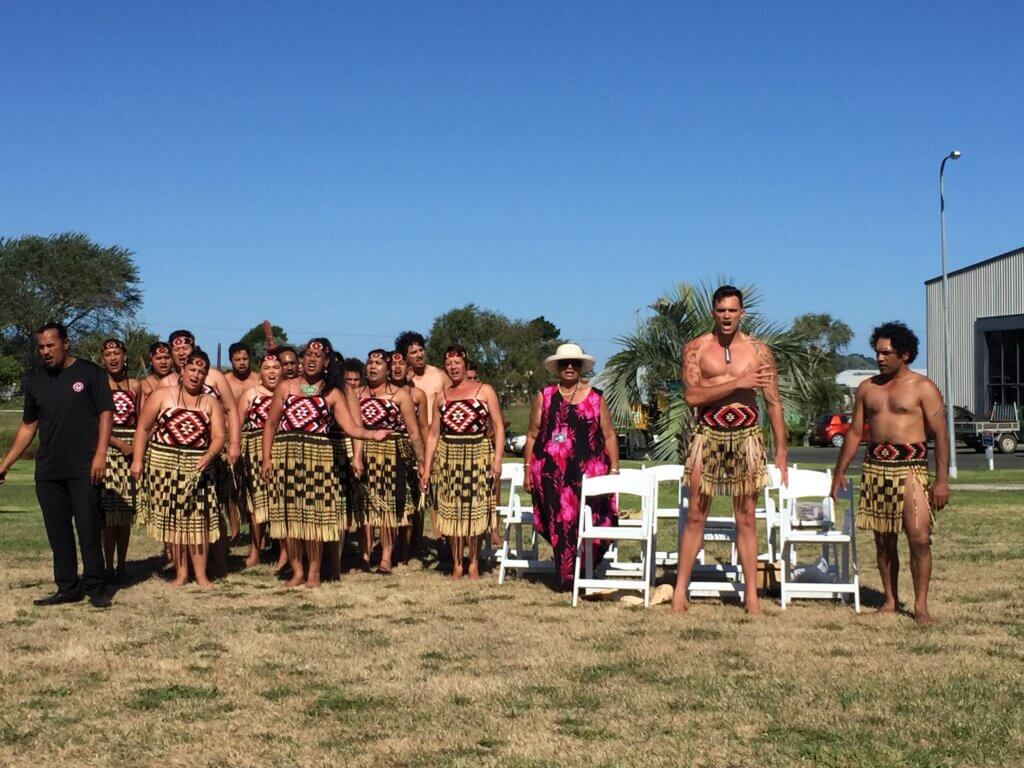
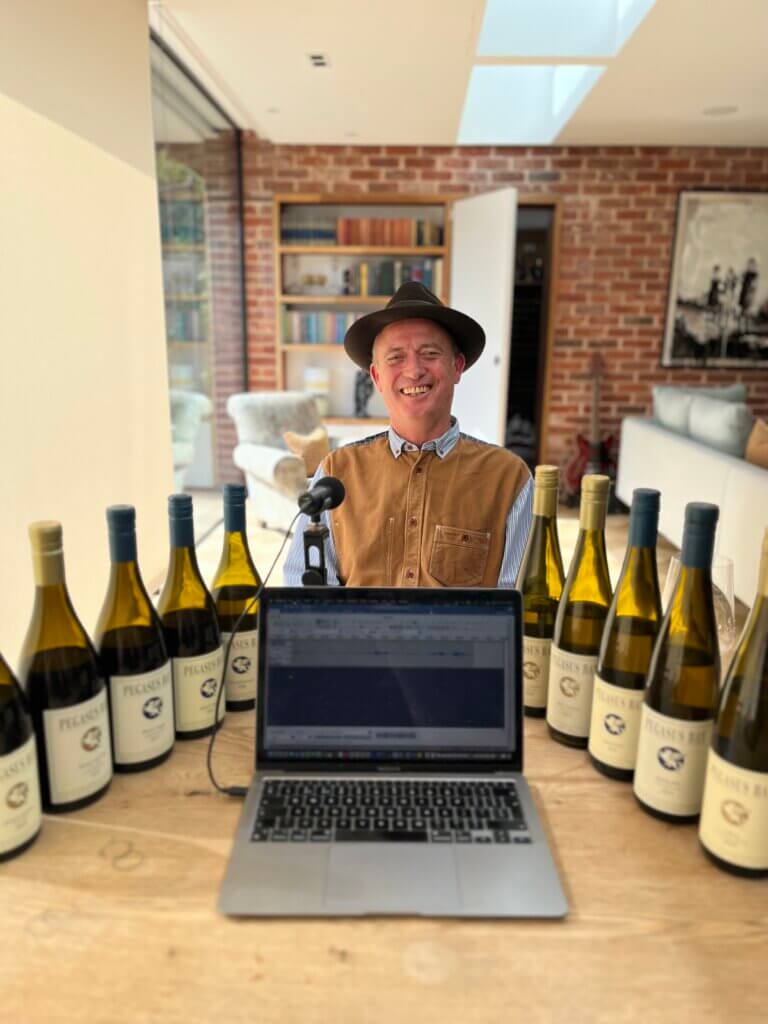
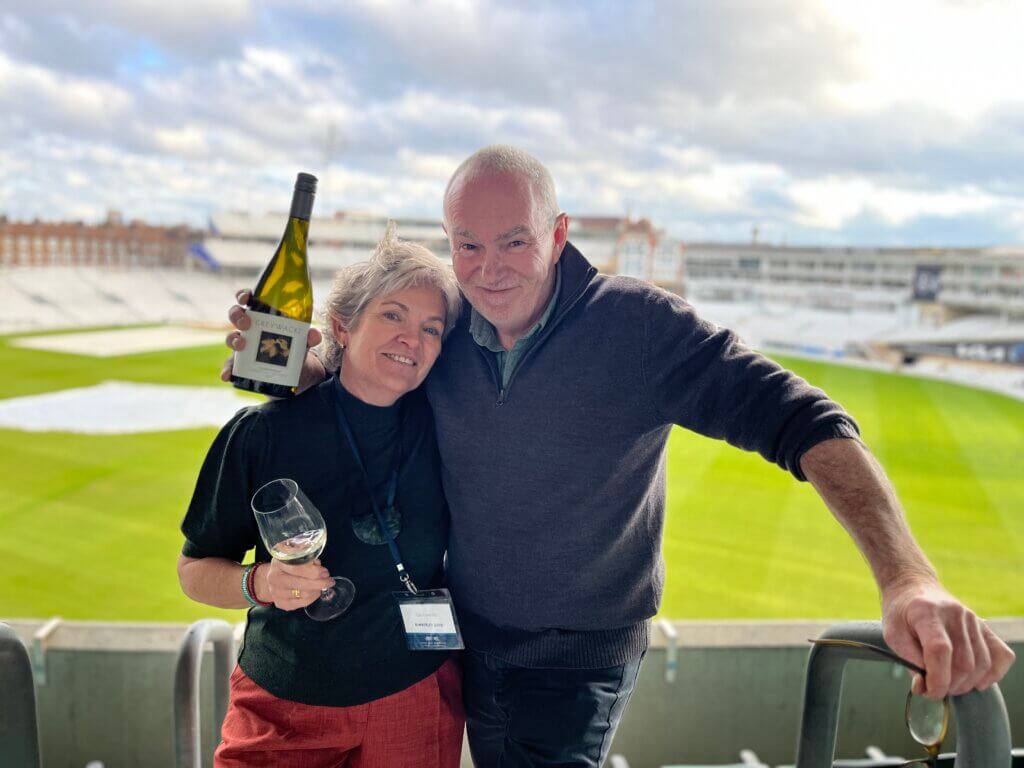
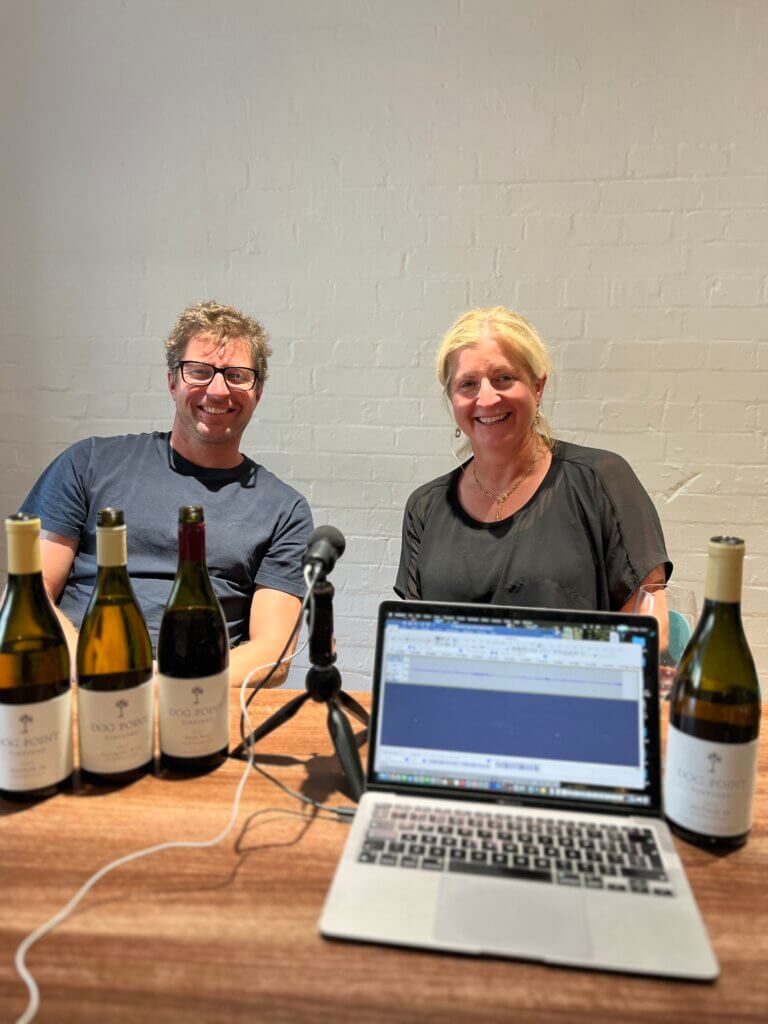
On this very special Wine Blast episode, we’re privileged to be joined by New Zealand wine royalty in the shape of Helen Masters (Ata Rangi), Matt Thomson (Blank Canvas), Matt Sutherland (Dog Point), Kevin Judd (Greywacke), Ed Donaldson (Pegasus Bay)…and part-time actor, full-time wine superstar Sam Neill (Two Paddocks).
This programme is published in tandem with a full report (as below), which is free to download and comes with tons of information and opinion, from vintage summaries to planting stats, plus the odd map.
Thanks to New Zealand Winegrowers for facilitating this Wines of the Year initiative, and to the wineries for supporting. And THANK YOU for taking an interest.
Starring
- Sam Neill (Two Paddocks)
- Ed Donaldson (Pegasus Bay)
- Kevin Judd (Greywacke)
- Matt Sutherland (Dog Point)
- Matt Thomson (Blank Canvas)
- Helen Masters (Ata Rangi)



Report
What we don’t have time or space for in the podcast is to include all our glorious New Zealand Wines of the Year. That’s where this report comes in.
It’s a full listing of all these spectacular wines, together with tasting notes and scores.
But if that sounds boring, we’ve also made sure to pack in loads of opinion, facts and insights. And we’ve tried to keep the wine jargon to a minimum…
The PDF also includes vintage reports running from 2019-2025 plus a map.
The report also explains how our New Zealand Wines of the Year initiative works.
Essentially, on the basis of a pretty elite hit-list, we lined up more than 200 bottles in November 2025 before embarking on an epic three-day tasting.
On the basis of an extremely rigorous tasting, we chose our favourites (sometimes after quite heated discussions). Only wines scoring 93/100 and above made the grade, so this is a high bar. These wines are really special.
Based on these results we then chose our top awards. From Best Winemaker to Best Value, Best Producer to Innovation and Discovery. There are some great stories in there.
But enough chatter. Click on the link below to access our New Zealand Wines of the Year 2026 report. The link will take you to a short form to fill in your name and email, then it’s free to download.
Links
- Here’s a link to New Zealand Winegrowers, a treasure trove of information, inspiration (and stats, for those of a nerdy disposition like Peter…)
- You can find our podcast on all major audio players: Apple Podcasts, Spotify, Google, Amazon and beyond. If you’re on a mobile, the button below will redirect you automatically to this episode on an audio platform on your device. (If you’re on a PC or desktop, it will just return you to this page – in which case, get your phone out! Or find one of the above platforms on your browser.)
Teaser video
Subscribe
Sign up to Wine Blast PLUS to support the show, enjoy subscriber-only bonus content as well as early access to all episodes plus full archive access, not to mention subscriber benefits and giveaways.
Just visit WineBlast.co.uk to sign up – it’s very easy, and we will HUGELY appreciate your support.

It takes a monumental amount of work to make Wine Blast happen. Your support will enable the show to continue and grow – and we have lots of fantastic ideas of things we’d like to develop as part of Wine Blast to maximise the wine fun. The more people who sign up, the more we’ll be able to do.
Get in Touch!
We love to hear from you.
You can send us an email. Or find us on social media (links on the footer below).
Or, better still, leave us a voice message via the magic of SpeakPipe:
Transcript
This transcript was AI generated. It’s not perfect.
Susie: Hello, this is Wine Blast. Whether you’re a new listener, a regular listener, or a Wine Blast PLUS subscriber, you are very welcome! And boy, do we have a tasty show for you today because this is our New Zealand Wines of the Year. And it is stuffed full of treats.
Peter: Yes, hello, welcome! We’re diving back into the glorious world of Kiwi wine, which is a relatively regular topic on the pod, but this time round as a Wines of the Year feature, to allow us to really get down and dirty with what’s going on in New Zealand wine right now. Here’s a taster of what’s coming up:
Matt Sutherland: People often say, you know, Marlborough is too reliant on Sauvignon Blanc. And I’m like, well, if that’s the case then Champagne’s too reliant on champagne.
Sam Neill: We want to leave our little corner of the planet a better place than we found it.
Susie: So there we heard from Matt Sutherland of Dog Point, and some chap called Sam Neill…who’s actually very famous, of course, partly because of his absolute outstanding work at Two Paddocks Wine, but also because of a bit of acting. So, yes, we’re not only featuring some stellar Kiwi wines on the show, we’re also privileged to be hearing from some of the finest wine minds in the South Pacific.
Peter: Yeah, yeah. We’ve also got Matt Thomson of Blank Canvas, Ed Donaldson of Pegasus Bay, Helen Masters of Ata Rangi and Kevin Judd of Greywacke. I mean, how’s that for an all-star cast? I can’t stop smiling. What a privilege. We should also, at this stage, say thank you to New Zealand Winegrowers for facilitating this initiative. Also to the wineries for supporting. As ever though our views and opinions and scores are entirely independent and unfiltered, as regular listeners will know very well by now. And as you’ll find out in due course, too.
Susie: Yep, no beating around the bush here. So I think we should probably recap on why we’re focusing on New Zealand in this Wines of the Year format, and for two main reasons. One, we adore the wines because they’re fresh. They’re ridiculously Drinkable and increasingly refined. But the other reason is perhaps the more interesting one, and it comes down to a certain concern about the future of New Zealand wine.
Peter: exactly. it seems as if New Zealand is at a fork in the road in terms of its wine evolution. It’s come so far in such a short space of time. It’s unbelievable to think that the modern wine scene in New Zealand only really kicked into gear in what, the 70s, 1970s, 1980s?
Susie: Yeah. I mean, when was the first Cloudy Bay Sauvignon Blanc? I think it was in 1985, wasn’t it?
Peter: Exactly. And the first vines of the modern era were only planted in Marlborough in 1973, you know, as we explored in our Marlborough 50 episode back in season five. So it’s come a long way in a very short time, barely 50 vintages. but it’s almost as if that commercial success risks becoming an Achilles heel. Ah, you know, winemakers are really concerned that New Zealand wine is becoming dominated by a handful of big corporations flogging a pastiche of Kiwi Sauvignon Blanc with little regard to quality or integrity or indeed responsible land stewardship. And as a result, the really exciting, progressive, modern reality of New Zealand wine is in danger of being overshadowed or sort of, you know, lost in the mix.
Susie: Yeah, and this situation is exacerbated by the evident headwinds affecting wine producers the world over right now. And the cost of living crisis, changing demographics, shifting trends around wellness and alcohol consumption, the, ah, impact of tech and governance issues like tariffs and taxes, all of which we’ve explored on the pod lately. But this is not the whole story. So what we want to do with this New Zealand Wines of the Year initiative is to get behind the headlines and the stereotypes and find out what’s really going on.
Peter: Now, all you regular listeners will be familiar with our regional, Wines of the Year format. We’ve done it with Chile the last couple of years. essentially, after drawing up a pretty elite hit list, we call in a whole load of wines. About 215 bottles for this one. I think it was so a pretty average Tuesday night for Susie, if we’re really honest. so with these New Zealand wines, we then tasted them over an epic three day session. not just tasting, but retasting and retasting, discussing, arguing, debating, making up, tasting again, generally working things through.
Susie: And when the dust settled, we ended up with, I think it was just over a hundred wines selected to be our Wines of the Year. Now, just a point of detail. We mark each wine out of 100. And the minimum score to qualify as a WOTY was 93, which is pretty high. It’s a pretty high standard. And what’s more, the top scoring wines and producers received special awards, which will be revealed as we go along.
Peter: So just quickly here, we did give the top award winners who we interviewed for this programme a, tightly embargoed
00:05:00
Peter: advance notification of these gongs. here are a couple of those reactions from Sam Neill and Helen Masters.
Sam Neill: I’m completely gobsmacked and, delighted. That’s really knocked my socks off and I cannot tell you how, how pleased I am with that.
Helen Masters: Wow. They’re the best results I’ve had for, like, for a while. When you said, I’ve got some results for you, I felt like I was at the doctor’s there for a second. But these are amazing. Thank you.
Susie: Maybe we should give people their doctors results at the same time. That would certainly make our awards even more exciting by comparison, wouldn’t it?
Peter: It would be a whole new light
Susie: but actually, Matt Thomson made a serious point here that whereas wine shows tend to showcase what’s mainstream wine critics like us, I guess, though we wouldn’t necessarily use that term, tend to recognise individuality in the wines, which was absolutely our aim.
Peter: Yeah, it was, wasn’t it? now, of course, 100 plus wines are way more than we can mention in this programme. so we’ve compiled a full listing of our wines of the year in a report which we’re publishing on our website, Show Notes in tandem with this show. It’s actually a 50 odd page PDF you can download directly from our site for free with full tasting notes on every wine.
Susie: Not only that, but the report also includes recent vintage summaries, key stats and data map. You would not put your name, Peter Richards, to anything without a map, would you? Ah, plus, lots of opinion and talking points to keep it all as interesting and insightful and useful as possible. And yes, it’s free to download and we’ll put a link in our show notes.
Peter: Talking of stats, a, favourite topic with maps, maps and stats, that is me. 29% of our wines of the year were Pinot Noirs, 25% were Sauvignon Blanc and 18 were Chardonnay. and on a regional basis, 53% of our wines of the year were from Marlborough. but for example, 41% of our Pinot Noir WOTYs or Wines of the Year were from Central Otago.
Susie: Okay, so hang on, I’m going to stop you there before we disappear down a stat rabbit hole.
Peter: No, I’m sad you stopped me there. I had so many stats up my sleeve.
Susie: I’m sure you did. Anyway, I think we should start by setting the scene and then maybe taking one talking point at a time, which will give a bit more colour to our results from the report, which we’ll cover as we go along.
Peter: Okay. I’ll put my spreadsheets away temporarily. They’re here if we. Excellent.
Susie: Feel better.
Peter: I don’t think we need to say too much by way of context, given we’ve covered this ground before on the pod, but why not start, at the beginning or a beginning? New Zealand is an island country in the southwestern Pacific Ocean. Split into two main islands, north and South. It’s known as Aotearoa, among other names, by its Maori population, descendants of Polynesians who settled the islands from the 13th century. Europeans then arrived from the 17th century onwards. Its population today is a little over 5 million.
Susie: Now, most of New Zealand’s wine regions are on the eastern side of the islands, given the winds and weather tend to come in from the west. And wine makes up a significant part of New Zealand’s international trade, along with the likes of dairy, meat, wood and fruit. With wine exports representing 90% of kiwi wine sales at, a value of over 2 billion New Zealand dollars. And, the growth of that wine industry, as we said, has been fast. It’s gone from 388 hectares of vines in 1960 to more than 42,000 hectares today.
Peter: Mind you, it still only makes about 1% of global wine, which you may find somewhat surprising given that New Zealand wine is pretty well known around the world. So why is it so well known? Well, right from the start of its modern era in the 70s and 80s, New Zealand has gamely set out its stall for making characterful, recognisable wines that have captured the zeitgeist. A punchy Sauvignon Blanc tick. elegant Pinot Noir? Yes, please. It’s, a formula that has caught the attention of wine lovers and enabled New Zealand to punch well above its weight.
Susie: But that, in a way, is where we’d like to dive in deeper. Because this broad brush, characterisation, as helpful as it is on a superficial level, also does New Zealand a disservice. So let’s take a step back and let Kevin Judd set the scene. Kevin is co owner with his wife, Kimberley of Greywacke, an outstanding producer in Marlborough. Before that, he was head winemaker at Cloudy Bay for 25 years. the greywacke wines achieved stellar results in our tasting, including the top white award. Here’s how Kevin introduces New Zealand.
Kevin Judd: We just have this amazing climate in New Zealand where we get this intense, intense sunlight because we’re at latitude 41.5 degrees south, which in the Northern hemisphere is through the middle of Italy and Spain. So we get intense sunlight, but we don’t get heat because we’re on two little islands in the middle of the South Pacific and there is no landmass.
00:10:00
Kevin Judd: So a hot day. These days we talk about 32, perhaps being a very hot day, but pretty much every time we get a hot day, we get cool nights. It gets down to 15 degrees usually on a 30 degree day. So we just don’t get heat. We have no landmass to collect heat.
Peter: So that intense sunlight coupled with the maritime climate naturally gives wines that are full of flavour but also fresh in feel. and it’s a winning combination, perhaps I guess, most vividly expressed in the classic extrovert, in your face style of Marlborough Sauvignon Blanc that’s become, you know, globally famous.
Susie: Well, so let’s home in on Sauvignon Blanc as a starting point then. this was a wine that naturally made a big splash when it first emerged onto the scene, simply because there was nothing else like it. With its explosion of exotic fruit, punchy flavours and lip smacking acidity, it was kind of wine and entertainment all rolled up into one tasty, uplifting bundle. And it proved so successful that Sauvignon Blanc now accounts for more than two thirds of New Zealand’s wine vineyard and nearly 90% of New Zealand’s wine exports by volume.
Peter: Astonishing figures, those. You should take a moment just to just sink in. At the same time though, New Zealand Sauvignon has matured in style back to Greywacke’s Kevin Judd.
Kevin Judd: So we’ve got this amazing climate that gives us this incredible fruit. So we got the raw material to make great wine and intense wine, intensely fruity, very powerful wine. I mean, I guess the challenge for us at Greywacke is to manage that and to make. We actually try and turn the volume down a little bit with the Sauvignon Blanc because you can sort of dial up how much intensity you want with how you grow the fruit and, what you do in the winemaking process. But we’re trying to make some Sauvignon Blanc is really at the riper end of the spectrum. We don’t chase thiols, and we’re using very neutral yeast. We don’t try and add anything with the actual fermentation. So we’re just working to maximise what the vineyard can give us in terms of ripeness and just beautiful texture.
Peter: Turning the volume down with Sauvignon Blanc, it’s an interesting concept, isn’t it? and that’s definitely been a trend within Kiwi Sauvignon, hasn’t it? Making deliberately less extrovert styles, still with the character in sort of classic New Zealand brightness, but majoring less on the obvious stuff and more on things like texture, elegance, minerality or sort of flintiness, that kind of thing.
Susie: And Kevin was at pains to stress that much of that is to do with careful viticulture, getting things right in the vineyard. he harvests on the riper side, as he says, and isn’t so keen on thiols, which are essentially aromatic compounds that smell like passion fruit, box hedge or even cat’s pee, which often come from the. The grape skins. Someone else I asked about Sauvignon was Matt Thomson, our Winemaker of the Year, a veteran of 66 vintages across two hemispheres, whose own brand is Blank Canvas, with his wife and business, Sophie Parker Thomson MW. So what’s his secret for making great Sauvignon Blanc?
Matt Thomson: I think one of the keys is not to cut corners. So you need to harvest sensitively your site when it’s at optimum ripeness. there are some who harvest by geography, which I think is a crime. you’ve got to get them ripe, you’ve got to get the yield right to do that. Not necessarily uber low yields, but you need to have the autumn yield. And the other thing which is crucial is don’t have skin contact in Marlborough, you don’t need it. and if you do use skin contact, either intentionally or because you cut corners, you end up with a wine that loses the life. It becomes phenolic, and it ages fast, it loses freshness. So it’s actually quite simple, gentle and, careful site selection.
Susie: So careful site selection, appropriate yields, optimum ripeness and minimal skin contact. And what this allows, Matt went on to say, is the sight to express itself. In short, we’re talking serious wines. Kiwi savvy 2.0. Now, some people say that Sauvignon Blanc is not a noble grape, that it’s incapable of expressing terroir, but that’s simply not true, as this tasting, definitely. I asked Matt how important site expression is in Marlborough Sauvignon Blanc.
Matt Thomson: These days, for me, it’s huge. And I guess being a winemaking consultant, I’ve worked for multiple companies in Marlborough, very carefully managing conflict of interest, of course, but it’s shown me so many different subversions.
00:15:00
Matt Thomson: And some companies will have a hundred plus tanks at the end of fermentation, all from different vineyards and subreg. Now, that gives you an incredible detailed insight into each harvest in the whole region. And it’s frustrating me that we have this detail, but we’ve been so poor at transmitting that to the trade at large. So I see sommeliers think they need one Marlborough Sauvignon on their list. And I look at it and go, well, no wonder you’re bored with the category, because I think you should have several. And I think if someone comes in and they sound like a Marlborough Sauvignon Blanc, you then say, well, would you like a tropical style? That would be Dillons point. Do you want a crunchy herbal style? That’d be coastal, Awatere. Do you want to look on elderflower, white currant? That’d be Condors Bend or Rapaura. So that diversity is huge. But we haven’t told the story And it’s frustrating because I think the trade soms, they love to have those insights because then they can help their consumers have better experiences. And we haven’t given them that knowledge up until more recently. So it’s a fantastic time. I’m, enjoying telling the story as well.
Peter: It’s true. There are so many different styles of Marlborough Sauvignon Blanc these days, aren’t there? so much so it’s kind of hard to talk about the overall category without feeling you’re generalising. part of that is different terroirs emerging, like Awatere or Dillons Point or Wairau. But it’s also about the winemaking intent, isn’t it?
Susie: Yeah. And there are an increasing number of what we might term new wave Sauvignon styles. I mean, producers often use the term alternative styles. And Matt talks about adopting practises like Whole Bunch pressing ambient yeast ferments with cloudy juice, lees ageing often in oak, all that kind of stuff. And that’s making for not only much more diversity in the New Zealand Sauvignon scene, it’s also making for some really delicious wines.
Peter: Yeah, I want to bring in Matt Sutherland of Dog Point here, which carried off our top Sauvignon award, for their straight Sauvignon Blanc. now, Dog Point also make a wine called Section 94, which is a really complex, okayed style of Sauvignon. And I asked him to talk us through the wine.
Matt Sutherland: well, Section is, I guess a single vineyard in the site, and it was planted in 1992. So that. That’s going off on a completely different, tangent, that wine, and it’s very much driven by that vineyard. So aromatically, it’s probably not the greatest site. But structurally, it’s like, right up there getting that kind of balance through the berries. so when we do bring that in, it’s fermenting in old French barrels. And so, you know, in a way, it’s a little bit like un-pasteurised cheese. You know, we don’t get. We don’t do anything to protect the freshness on. So, it’s kind of about as natural as you can get. So, yeah, it was definitely, a different expression, and I think it’s got a real following. and we don’t put Sauvignon Blanc on the front of the label because we don’t want people buying that and expecting that gets the more fruitful style. So, we did identify that earlier as that could be an issue. And actually, still, I still get the. I got an email once saying it was the worst Sauvignon Blanc I’ve ever had. And I said, oh, maybe go and try this one one. You know, But I think a lot of people now look at it as more of, like, a white wine rather than Sauvignon Blanc. But I think that’s a great thing because there’s a lot of barrel fermented styles out of Marlborough doing great stuff. And so we, we’re just showing another way that we can be using that variety, you know, and to say, you know, people often say, you know, Marlborough is too reliant on. On Sauvignon Blanc. And I’m like, well, if that’s the case then Champagne’s too reliant on champagne, you know, so for me, you just have to do it better, and you have to grow as a region and make better wine. And whether that’s pushing boundaries or doing new things or just taking what you’re doing now and just getting better at it. And that’s right from the viticulture right through to the market. I think that’s the way forward. We don’t need to be making everything for everyone. So, stiction was very much a, you know, he’s taken a punt, but people seem to like it, so that’s good. Yeah.
Susie: Unpasteurized cheese. I love that. And as for champagne being too reliant on champagne, he’s got a point. I mean, if you do something well and you can make it in different styles, then there’s an argument. You shouldn’t be afraid to major on that. And on the basis of this tasting, it is clear that New Zealand Sauvignon Blanc has never been as exciting and diverse as it is now. So don’t believe the wine snobs saying Sauvignon can’t make proper wine. And ignore the paint by numbers cheapo wines out there. Check out the good stuff. It is seriously rewarding.
Peter: Yeah. Okay. I think we should move on now to another white grape we love, and that’s Chardonnay. and we should throw our tuppence into the pond here straight away by stating very clearly that Chardonnay is the most exciting
00:20:00
Peter: grape variety in New Zealand right now. we love Kiwi Sauvignon. Look at your face. We love their Pinots. We love lots of grape varieties. But on current form, on the evidence of this tasting, the best New Zealand Chardonnays are, world beaters. so much better value and more consistent than Burgundy right now.
Susie: Fighting talk, fighting talk. But, yeah, this is such an exciting moment for Kiwi Chardonnay. Unbelievable quality and diversity starting to emerge, too. Now. We touched on this in our Ahead of the Curve with New Zealand Chardonnay episode back in 2023. But this tasting was just further proof of how exciting these wines have become as a catego category. And we’ve just tasted the burgundy 2024 vintage, which is good for whites, but they’re so expensive and hard to get hold of because quantities are consistently tiny. So the argument can rage, but I know which wines we’re buying.
Peter: Indeed. and we’re not the only ones saying this either. Greywacke won our, top White award, as you said, with their stunning 2023 Chardonnay. Here’s what Kevin Judd had to say.
Kevin Judd: I mean, the world of New Zealand Chardonnay is evolving still. And, Hawke’s Bay, I guess, is probably the most famous region for Chardonnay. They tend to make more of a sort of stone fruit style of Chardonnay. In Marlborough, we tend to make a more citrus driven style of Chardonnay. We think Chardonnay in Marlborough is the sort of unsung hero, really. everyone talks about Marlborough Sauvignon Blanc, and it has become like a household thing around the world, really. And Chardonnay, frustratingly lives in this sort of humungous shadow that is cast by Sauvignon Blanc. I mean, we’re very proud to have, Marlborough Sauvignon Blanc be so famous. But we do make other wines and we personally think that Chardonnay in Marlborough has some fantastic potential.
Susie: And Matt Thomson’s also a big fan of Chardonnay.
Matt Thomson: Chardonnay is exciting. I think there are some great examples. I think it’s come so far. So the clones we have and the winemaking have totally changed. We now have some fantastic clones from Burgundy. They’re more elegant. and I think winemaking, we’re doing less and we’re making it like Chardonnay rather than like Sauvignon. look, it’s an exciting time. I think potentially Chardonnay is New Zealand’s most promising grape right now.
Peter: And Matt says there’s real diversity, too. for example, his blank canvas Tano is more of a Chablis style because it’s a cooler sight, so it gives a tenser, leaner style. Whereas his Reed Chardonnay is richer, more generous and flinty. Struck match more in the kind of Meursault Puligny style, as he described it. Lots of snap, crackle and pop hop, as well as structural oomph. as I would say it. And yeah, you know, for someone as experienced as Matt to call Chardonnay the country’s most promising grape, it’s quite the vote of confidence.
Susie: One final opinion on this from Ed Donaldson of the brilliant Pegasus Bay, based in North Canterbury, which won our Producer of the Year award.
Ed Donaldson: New Zealand Chardonnay, I personally think is one of the best value white wine bargains of the world. currently, you know, to get cool climate Chardonnay made of the. The kind of the. The level that some of the top producers are making it for, for the price. there’s just nowhere else that. That comes close to that, in my opinion.
Peter: Strong words, but I think by and large we’d agree, you know, certainly. Pegasus Bays Chardonnays are things of beauty and absolutely, they stack up in the global context. there’s a reason there’s so much of it in our cellar, isn’t there?
Susie: Right, time for a brief pause before we come back for more.
Susie: By way of brief recap, so far New Zealand has moved beyond one trick Sauvignon Blanc, to crafting increasingly complex site specific wines including World beating Chardonnay. And there’s more on the menu too.
Peter: Indeed. So let’s dive in with Pinot Noir, another Burgundian grape variety where New Zealand is excelling. Maybe the evolution hasn’t been as frantic, in recent years as with Chardonnay, but that’s Pinot. it rewards slow, incremental, painstaking progress.
Susie: One of the New Zealand regions that’s really set the pace with Pinot is Wairarapa and particularly Martinborough. In the north island is where Ata Rangi is based, one of the most celebrated Pinot producers in the country. So we asked long term winemaker Helen Masters what the secret is to making great Pinot in her neck of the woods.
Helen Masters: It’s really understanding that Pinot Noir is really, something that has to be micromanaged in a way. So, so
00:25:00
Helen Masters: we have about 80 small blocks of Pinot Noir we think of as really different entities, different parcels, different, and really try to coax the best out of each small block. So very, you know, we have a lot of staff, we spend a lot of time in the vineyard and to try to get the best out of each small block, I think, I think Pinot, you know, you can bring it all in and stick it all together and it starts to look all very similar. it can, you know, so in terms of really trying to tease out the, what a certain site wants to express, I think you have to stand, back a little bit and spend enough time on the ground too. I’ve been at Ata Rangi for a long time, so I’ve seen a few vintages. So, I think that helps and I think just always Being open to the idea that a site will change. You know, things do change with vine age. Do. Things do change with how the weather systems come into Martinborough. So it’s looking for those changes and where they want to go, I think in the winemaking.
Peter: How has your approach to Pinot Noir changed or evolved maybe over the years.
Helen Masters: Yeah, it has evolved a lot. Some of that came out of, you know, like natural winemaking. The whole idea of, of, of letting the wines be a little bit more expressive. But I think the idea that, that a wine doesn’t have to be big and powerful. I think that move away from trying to pack everything into a bottle. Bottle. You know, if you wanted to, if you thought your site was a really good site and you wanted to put a big price tag on it, you almost felt like you had to throw oak at it. You had to, had to have this powerful sort of presence, for its value to be recognised. And I think that that has changed subtly. There’s still folk who love those big wines, but I think people are taking the time to, to understand the white. The wines that are a little bit more, more you know, detailed and elegant and I don’t think in its excuse for having thin wines, but there’s a, a level of detail that can exist without it being necessarily driven by oak or really extracted tannins. And I think that’s the exciting bit. It’s making wines that probably dance a little bit more and a little bit more fun. Yeah.
Susie: Helen also defined the Martinborough style that she aims for as Pinot’s with a twist that keep you interested and guessing and coming back for another sip as the wine keeps revealing itself.
Peter: Yeah, I love that. Love that. Now something we flagged at the start, or I did with my very important stats, was. I’m just gonna get the spreadsheet.
Susie: Oh, here we go. Here we go.
Peter: How exciting the Central Otago region is for Pinot Noir. I’m not going to throw figures at you. I just wanted to thank you. And the winery that won our two top red award was. I, don’t know what that noise was. Sorry, just excitement, banging the drum. It was Two Paddocks with their 2023 pinot noir. Two Paddocks is owned by part time actor, full time wine man, Sam Neill. I say that slightly tongue in cheek, but this is what he said when I asked him what’s been the secret to his success with Pinot Noir.
Sam Neill: Just Learning what works. Where the major changes We’ve made, I suppose, are, taking out the clones that we not terribly happy with, replacing them with ones that we are excited about. There’s that just knowledge of what works where. Ah, and every square metre of land is different from the last. We’ve also, The major thing was turning to organics and I realised 20 years ago that I didn’t want to be using all these vile chemicals around my vines. So that’s been quite a process. It also means a lot more work. that’s the catch with, organic farm. It meant war work, but it meant wine that we could also wasn’t just very good, but also we could sleep at night. Sleep is always a good thing. We want to leave the planet, a better place, our little corner of the planet a better place than we found it.
Susie: Now, Two Paddocks is based in Alexandra, a sub region of Central Otago, with some of the most southerly vineyards in New Zealand. And they make a, typically elegant style of Pinot, which is what we love about them, but still very complex. But it’s interesting Sam mentions going organic as an important part of their success with Pinot Noir. Because
00:30:00
Susie: that emphasis on caring for the environment is a very common theme in Kiwi wine, isn’t it?
Peter: Definitely. Certainly among the best producers. Time and again you hear people talk about this, you know, for context, sustainable wine growing. New Zealand is one of the most successful schemes of its type in the world. It launched 30 years ago in 1995 and now 98% of the country’s vineyards are, ah, certified. Now, sure, it might not be the most demanding certification in the world, but I think we both agree that New Zealand producers really do seem to be ahead of the curve, the global curve in this regard.
Susie: Yeah, I mean, it’s true. It really is a theme that keeps coming up when you talk to producers. And of course, sustainability is so much more than organics. And just thinking about it still, you know, some tastings you do, there are so many wines in heavy bottles and of course bottles and packaging are, ah, usually the biggest contributors to a winery’s carbon footprint. Now, in our tasting, we were of course looking out for this and, there were actually only a couple of really heavy bottles, which is a good sign.
Peter: Yeah, it’s a good sign. You know, it’s not so good for those people who do have the heavy bottles. but, you know, absolutely, as, as a general comment and, you know, there’s so many storeys we could get into here. For example, you know, Dog point with its 25,000 native plants and increasing, being the largest organic vineyard in New Zealand, now reducing bottle weights, planning to be carbon zero on the wine front without offsets by 2032, that kind of thing. But we’re going to keep moving, because we need to finish off on Pinot Noir. we’ve talked Wairarapa and Central Otago, Waipara and North Canterbury more generally are also great areas for Pinot. But here’s Kevin Judd on his pitch for Marlborough.
Kevin Judd: So Marlborough Pinot Noir has really gone through a huge evolution. In the very early days, of Marlborough, the clones that were planted were more suitable for sparkling wine production than for red wine production. And in the Cloudy Bay days, when we first started experimenting with Pinot Noir, we were using, Swiss clothes that were quite, quite light in colour, light in structure. And it was a little bit hit and miss for a while. But once, once we realised that we really needed better clonal material, we really needed a better place to grow it. And ultimately we found we discovered we did get the better clones. And I’m not just talking about Cloudy Bay, I’m talking about Marlborough in general. We’ve got the better clones into Marlborough. The Dijon clones we found found we discovered that the southern valleys, the clay hillsides around the southern valleys, gave us a much better terroir, much better soil to grow Pinot Noir. Once we started heading in that direction, there really was a, huge improvement in, Marlboro Pinot. And then now that we’ve got some vine age, I think Marlborough Pinot Noir is really stand up to anything else in New Zealand. Marlboro Pinot Noir is really coming of age.
Susie: Southern valleys and actually Awatere too are looking particularly good in that regard. Totally agree. And of course, it’s not just about Pinot or Chardonnay or Sauvignon. There are a fair few other varieties looking promising in New Zealand. You know, the likes of Albarino, Pinot, Gris, Gruner Veltliner, Chenin Blanc, Syrah and of course, Riesling can be superb across a range of styles. And we definitely point to Pegasus Bay as making a range of brilliant Rieslings.
Peter: Yeah, yeah. Ah, yeah, these are, bravura Rieslings. Ed Donaldson explains that the cool conditions and low yields in their Waipara vineyards give naturally intense styles that are left to hang on the vine for a long, slow build up of flavour. And it’s a style that’s evolved over time, as he says.
Ed Donaldson: I mean, I would say our Pegasus Bay house style is probably just everything is kind of dominant. Dialled up a bit.
Peter: And what do you mean by dialled up?
Ed Donaldson: Dialled up, I guess, you know, we, we have a lot of flavour, ah in our wines and a lot of that has to do with that, that longer hang time for the Rieslings. you know, the flavours really dialled up again through that long hang time. And we pick our raisins much later than most people, so they’re packed full of flavour. they are dialled up in terms of, you know, that they’re balanced with, with, with really good levels of acidity. There’s a phenolic component to our, to our, to our Rieslings as well, which add a little bit of, you know, structure there and, you know, and the alcohols are, you know, they’re not shy either. we think that they’re all very much in balance. but, but, yeah, as. I think everything is kind of, yeah, dialled up to some extent.
Peter: How have your wines evolved over the years?
Ed Donaldson: So, I mean, yes, stylistically we’ve, we. I think we’ve changed quite considerably. You know, when we first started making, wine, we were probably like most people in New Zealand modelling them on the old World. You know, the Rieslings were modelled on the Mosel, the Pinots and the Chardonnays are modelled on Burgundy red Bordeaux. Varietals were of course modelled on Bordeaux, etc. and as time’s gone on, we’ve seen the, Well, the vines have got older, we’ve seen the wines age. We’ve
00:35:00
Ed Donaldson: done a huge amount of experimentation because, you know, we don’t really, really have, any kind of strict appellation system. So we do have a lot of free run for experimenting, which we do still today. A lot of, And so, yeah, I think we’ve become much more confident in, making the sorts of wines that we really believe in now that we, you know, we’ve come to the conclusion that we’re not in Europe, we’re actually on the other side of the world. And there’s a lot that’s different about our particular vineyard site. so why not celebrate that? there’s only one place in the world that’s white for a North Canterbury. And so why not make the wines that really speak of that? so, you know, example might be for the Riesling. You know, we started making these, you know, sort of cabinets, bat laser kind of, versions of, Riesling. But as we found, over time, the longer we leave the fruit to hang out, the more of this really orange peely character which we really love. and so we’ve sort of pushed those harvest dates out and then we’ve been actually fermenting them a bit drier because our tastes have changed and we, we just think they make better wines that way. So the Rieslings have become much bigger, richer, fuller wines, as a result of doing that, you know, we got into wine for making good wine that we believe in. We didn’t get into wine for any other reason. So, yeah, sort of sticking standing true to kind of what you what, what we believe in is something that we, we, we, it’s important to us.
Susie: Sounds almost like a religious crusade, but definitely one I’d enthusiastically join in on. And Ed touches on a key theme as to why Kiwi wine is so exciting right now. They’ve looked around the world, they’re not scared to experiment and now they’re working out how their wines can be unique and they’re championing that. You know, we love Pegasus Bayes Rieslings across a range of styles. Two of them feature in our Wines of the Year do out, they also do library releases, which can be glorious too. But one other variety that Ed flagged up as working well in New Zealand was Chenin Blanc, wasn’t it?
Peter: Yeah. Just quickly on this one before we move on, we’ve been really pleasantly surprised by a couple of Kiwi Chenins lately. and then in our tasting we tried one from Ata Rangi that absolutely knocked our socks off. Stunning. It won our, Discovery White award. incredibly, it’s the first one that Helen Might Masters has made. she describes Chenin as an amazing grape variety that’s hugely underrepresented in New Zealand, overshadowed perhaps by Sauvignon. And here’s what she said about its potential there.
Helen Masters: I think that the possibility with it is endless. You know, who doesn’t like, you know, what South Africa’s doing with Chenin?! I, just think, you know, they’ve really owned it and it’s great to see it. And I think though, with our cool it’s climate here, we’ve got the ability to, so much acidity that it can go through Malo and still have amazing vibrancy of acidity. And for me that’s exciting. When there’s a variety that you can basically leave in a barrel for a year, it does what it wants and you’re not trying to direct the style in any way. And it makes an amazing wine. I think that’s, that tells you that it’s a good match, I think, think. so hopefully more people will, will plant it.
Susie: Now we could carry on looking at cool grape varieties till the cows come home, but time is marching on. And we did want to talk about a couple of bigger picture themes, didn’t we? Particularly one of the elephants in the room, which is price.
Peter: You can take the girl out of Yorkshire. no, yeah, this is, this is a key issue, because New Zealand wine doesn’t come cheap. I think we can all agree on that. You know, just by way of, evidence of that in the, We’ve got a stat here.
Susie: Stat alert, stat alert, stat alert.
Peter: Spreadsheet back out. In 2025, the average retail price for a bottle of New Zealand wine was £8.05, versus the figure for the wider wine category, which is £6.80. So New Zealand wine has a, nearly 20% price premium. So yeah, it often gets flak for being pricey. And that’s fair enough, you know, especially if you’re struggling with the cost of living living or, you know, you’re based in a high tax or high tariff country. But there are reasons for this, aren’t there?
Susie: Yeah, I mean, as we’ve said, New Zealand’s production is tiny in global terms, so they don’t generally have the economies of scale of bigger producers. Plus, as Helen Masters reminded us, New Zealand is an expensive place to live being, able to buy things and do business. The wages there are some of the highest in the world. In comparative terms. It can also be pretty work intensive viticulture given the weather they have. And they also put a value on being sustainable both environmentally and commercially. So with all that, it’s just not easy being profitable.
Peter: Yeah, yeah. Sam Neill jokes, he’s glad he’s got a second job.
Susie: Probably quite a well paid second job.
Peter: Ah, yeah. And if he wanted to make money, he’d have gone into tequila or gin, you know, do a George Clooney, that kind of thing. But you know, it’s, it’s not exactly as if Kiwi producers are rolling in
00:40:00
Peter: it, is it? you know, the upshot is that yes, Kiwi wine isn’t cheap, that’s true. But what we’d argue is that New Zealand wine can and does offer excellent value in a global context.
Susie: I mean, when you start comparing it to for example Burgundy or Oregon, suddenly Kiwi Pinot Noir, and Chardonnay have a real Price advantage, you know, or Sauvignon Blanc versus Sancerre and Pouilly fume or, or the best Syrahs versus Northern Rhône. And you can expand this comparison further. So it’s not actually about being the cheapest. It’s about delivering value and satisfaction for the price in a global wine context. And I’d say Kiwi wine absolutely does that.
Peter: Yeah. Which is, you know, why we also give some best value awards in our report, you know, check those out. Helen Masters of Ata Rangi talked about the fact that good New Zealand wine has integrity. one other person who talked about integrity and authenticity was Dogpoint’s Matt Sutherland.
Matt Sutherland: Ever since we started, the key messages I got was we want to be reasonably distinctive with a, with a point of difference. Don’t stuff it up, be reachable for people. You know, we want to make quality wines but we want people to be able to buy them. So we don’t actually have a huge interest in making wine that is going to be very hard for people to purchase. You know, we have to make wine that’s relevant to the viticulture that we’re applying and the costs of doing business. But we still want people to be able to grab their glass and enjoy it. And so you talk about integrity, it’s the whole thing.
Peter: So we’re not talking about producers trying to be greedy with crazy prices, but equally we’re not talking bargain basement levels. You know, here’s what Ed Donaldson had to say about this.
Ed Donaldson: Well, I guess I would challenge you to grab some of the best examples of New Zealand wine, make it, whether it be Riesling, Pinot Noir, Chardonnay, and just compare it against something similar from the old world, similar cost wise from the old world. And have a look and see what you think.
Peter: So you think value for money, pound, you know, hitting weight pound for pound. New Zealand, Zealand really can out compete some maybe more famous regions in the old world, when it comes to.
Ed Donaldson: In the fine wine context, without hopefully sounding arrogant. Yes, I definitely do. Yeah, yeah. I still think the very best examples, largely do come from those regions. but I think, I think New Zealand’s not far away and I think when you, yeah, when you put yeah, when you put the money next to the bottles then you know, you’ll, you might be surprised at the level of quality you’ll get in the glass.
Susie: And of course one other thing you notice about all these fine wines from New Zealand, especially when you do a big tasting of them reds and whites, is that they’re almost all sealed with screw cap. We would absolutely endorse this. In our experience, it just works well for the wines. They’re more consistent, they age better and they’re easier to get into.
Peter: Yeah, yeah. For that reason and many that we’re big fans, of screw caps. Obviously, mining aluminium comes with an environmental impact and there’s still a place for cork. But screw caps, in theory, can also be endlessly recycled, and they bring spoilage rates right down, which in itself has an environmental impact. One, interesting case study here is Dogpoint. they started bottling their straight Sauvignon in screw cap in 2004, but had their other wines. So, Section 94, Chardonnay and Pinot under cork. when they’d been going 10 years, they opened up every single wine they’d ever made and tasted them. Here’s Matt Sutherland.
Matt Sutherland: We went back, tried everything and the most consistent was the Sauvignon and what was happening. And we didn’t necessarily. It wasn’t actually cork tape, but the wines were getting a little bit scalped from, you know, sometimes a bit dull. And I think if you weren’t having them side by side or you didn’t have them all the time, you may not pick it up. But we picked it up and it’s just quite frustrating when you’re doing all this work and you’re getting it to the market and that little thing just lets you down. So for us, that was a bit of an eye opener. And so from that point we started to look at, look at that change. I mean, we still love a cork, everyone loves pulling out a cork, but, the wine quality, has got to come first. And the style of wines that we’re making, screw cap, absolutely suits it. And I think the ageing potential is going to be better, it’s going to be more consistent, and going. We can only go back to what we’ve done, but, already you can see the signs of, of the evolution and retaining that freshness across. You know, I’m not getting that discrepancy between bottles, but, we’ve never really looked back.
Susie: Matt also tells a funny story where he and his sister Anna, the younger generation at Dog Point, as it were, have to wait until their parents had gone away, at which point they quickly changed to screw cap. And then it was all done and too late to change back. A winery coup, as it were.
Peter: A coup. A coup. Brilliant. Love that. And, you know, given they now offer late releases of the wines with bottle age, which I can attest make for delicious drinking.
00:45:00
Peter: that was a fun tasting. The screw caps should come even more into their own. Right. We should start to, wrap things up. Any final points before we head into conclusions?
Susie: Oh, God. There are so many things that bubble around in your head after doing a tasting like this, immersing yourself in quality New Zealand wine. But I guess on that note, I actually would just like, very briefly to put in a plea for fizz. I’d love to see more quality traditional method sparkling wine from New Zealand. It can be delicious. All the raw ingredients are there, and it would make a very solid piece basis for a profitable industry moving forwards. It just needs more momentum.
Peter: M. Yeah, we had some delicious fizz in our tasting, didn’t we? I mean, the Number 1 family estate, took off the top sparkling award, and there were a couple of other lovely wines. And, I guess the challenge is that Sauvignon Blanc you can sell quickly and profitably, whereas traditional method fizz, you have to age and it ties up capital and stock and, you know, it isn’t as immediately profitable. But, you know, I totally agree. You know, looking to the long term term, this could be a really strong way of broadening New Zealand’s appeal.
Susie: Okay, so let’s start to wrap things up properly. here’s Matt Thomson with some final words.
Matt Thomson: Look, it’s. It’s tough times for not, not just New Zealand wine, but the whole, whole industry. But I think, I think we’re seeing a, a change occurring now. I think, there’s been almost a rush to commoditize New Zealand wine and to sell it on price. And there’s been a thought that it’s very similar, which for us is incredibly frustrating because the diversity is huge. And, Appellation Marlborough Wine, I think, is championing that diversity, and we’re very proud members of that. So I think we’re seeing, a growing up phase, I think.
Peter: New Zealand growing up. Absolutely. We’d agree with that. I mentioned Kiwi wine being at a crossroads, but it’s exciting to see that process up close of a country maturing, hitting its wine straps and to taste the results.
Susie: And just to pick up on what Matt mentioned about Appellation Marlborough wine, we did do an episode on this a short while back. But just briefly, this is a voluntary association where producers get to use a logo on their bottles if they follow certain quality criteria, like only using 100% Marlborough grown grapes from sustainable, certified vineyards. Bottling in New Zealand, achieving minimum ripeness levels and wines being tasted and certified by a panel of independent experts.
Peter: Obviously this has echoes of Europe’s, appellation controlee system or equivalence. but we’re starting to see this kind of voluntary producer association outside Europe, too, in an attempt to sort of guarantee authenticity and integrity, but without stifling innovation. Here’s Sam Neill.
Sam Neill: I think we’ve made such extraordinary progress in the last 30, 40 years. And I put that down to two things. One is that we’re sensible enough to learn from the best. So young people are always going to great places in the world to learn how everyone else does it. But the other thing, of course, is that it’s one thing growing it in front of France. And I’m an enormous fan of Burgundy. Obviously, this is where this enthusiasm started for me. they’re also very restricted because they have a appellation controlee everywhere you go. Rather sinister phrase as far as I’m concerned. We don’t have any appellation controlee A. So we, are able to innovate at the same time. So that combination, combination of history, of tradition, along with let’s try something. That idea, I think, has burdened in New Zealand. So people, particularly in the uk, are very familiar with Marlborough wines. What’s it called again? Sauvignon Blanc. Sauvignon Blanc, which has been a great calling card for New Zealand, you know, because it’s widely drunk and easily drunk and all that sort of thing. But now, the world is discovering what else we do. And Pinot Noir, I think, is probably number two. Exports from New Zealand. It’s number two. And again, it’s freakish because, as I say, it’s very hard to find places where you can grow this great, great wine, successfully. So we’re very lucky in that respect.
Susie: I think it’s in that fine balance of not being scared to be innovative and ambitious, but then also learn from the best and then chart your own way. That’s what’s interesting about New Zealand wine right now, and that’s why it’s exciting.
Peter: here are some final thoughts from Matt Sutherland.
Matt Sutherland: We don’t have a world domination plan. You know, we’re just making. We want to keep making four wines and doing that better, if anything. I don’t have much plans to be much bigger than we are now, you know.
00:50:00
Matt Sutherland: So I think we also want to keep getting better at what we’re doing and how we communicate that, we’re not trying to reinvent the wheel. We’re just trying to be true to what our, place and show that through the wines.
Susie: And to finish off some words from our producer of the year, Ed Donaldson, on behalf of Pegasus Bay,
Ed Donaldson: New Zealand’s time is kind of, it’s matured a lot, you know, in the last 10, 15 plus years, you know. And I think New Zealand’s really found its feet and with the premium producers, and really found a, a, ah, place that that, that you know, that those producers have a level of confidence to make the sorts of wines that they really believe in. and I think for that you’re getting really authentic, you know, you’re getting authenticity that you might not have otherwise. thought of when you thought of New Zealand.
Peter: Do you think there’s still quite a way to go? Do you think there’s still more things to discover, in New Zealand that will make it even more diverse and even more exciting?
Ed Donaldson: Of. Absolutely, yeah. 100%. you know, there’s, there’s different varieties, being, you know, there’s some, great examples of Chenin Blanc starting to come out of New Zealand. Of Cabernet Franc, Albarino. there’s no doubt regions in New Zealand that have yet to be discovered, you know, as well.
Peter: So more to come in the future as well. There’s a thought. right. Time to bring things to a close. Do you fancy summing up for us?
Susie: Absolutely. okay. New Zealand is a wine country that’s grown up at breakneck speed and is now at a critical stage in its vinous evolution. There are understandable concerns over the way Sauvignon Blanc dominates production and exports. In short, how the narrative around Kiwi wine is faltering. But look closer and you see a, vibrant, dynamic wine scene where Chardonnay is emerging as a potential world beater. Sauvignon Blanc is becoming ever more complex and rewarding. Pinot Noir continues to thrill, and more stars are emerging from the wings. While the wines don’t come cheap, they can and do offer, real value in a global context based on sustainable, authentic winemaking values. And there’s more to come.
Peter: Yeah. Thanks to New Zealand wine growers and all the producers for supporting our, Wines of the Year, initiative. Thanks also to our fabulous interviewees, Helen Masters, Matt Thomson, Kevin Judd, Ed Donaldson, Matt Sutherland and Sam Neill. We’ll be airing the Sam Neill interview in full for our, lucky Wine Blast PLUS subscribers. So do look out for that Remember, you can find the full Wines of the Year report free to download on our website with loads more content. Thank you for listening and until next time, cheers!
00:52:41