- Season 7 Trailer
- The Jancis Robinson EXCLUSIVE Part 1
- The Jancis Robinson EXCLUSIVE Part 2
- Chile Wines of the Year 2025
- SAN LEONARDO – The insider’s Guide
- The Story of The Billionaire’s Vinegar – Part 1
- The Story of The Billionaire’s Vinegar – Part 2
- Blind Tasting Top 2021 Super Tuscans
- Top of the Pops: Classic Fizz Beyond Champagne
- Rock and Rhône
- Our WINES OF THE YEAR (2025)
- Our BOOKS OF THE YEAR (2025)
- Hugh Johnson UNCUT
- McLaren Vale – Boxer to Ballerina
- McLaren Vale – The Grenaissance
- Peter Fraser – A Tribute
- New Zealand Wines of the Year 2026
- Sam Neill UNCUT
- Giveaway EXTRAVAGANZA + Game-changer Coravin
- Greg Lambrecht UNCUT
- The Story of Stalin’s Wine Cellar PART ONE
- The Story of Stalin’s Wine Cellar PART TWO
Summary
Peter Fraser, head winemaker and general manager at Yangarra Estate Vineyard in McLaren Vale, Australia, died in a house fire on 27th November 2025, aged 51.
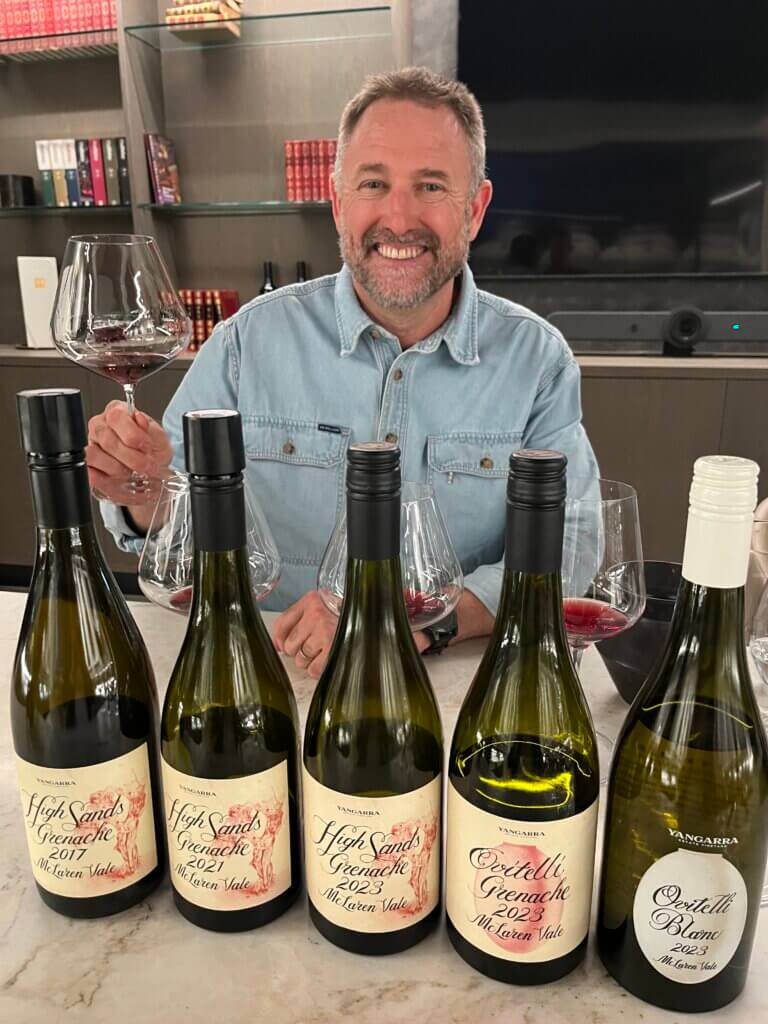
Peter was not only tremendously well respected, he was also tremendously well liked.
As a person, he was affable, gentle, modest, genuine, ready with a laugh. As a professional, he was dedicated, conscientious and hugely talented.
A champion of biodynamics and sensitive winemaking, Peter made wines of elegance, nuance and gravitas. They won a litany of awards and many fans.
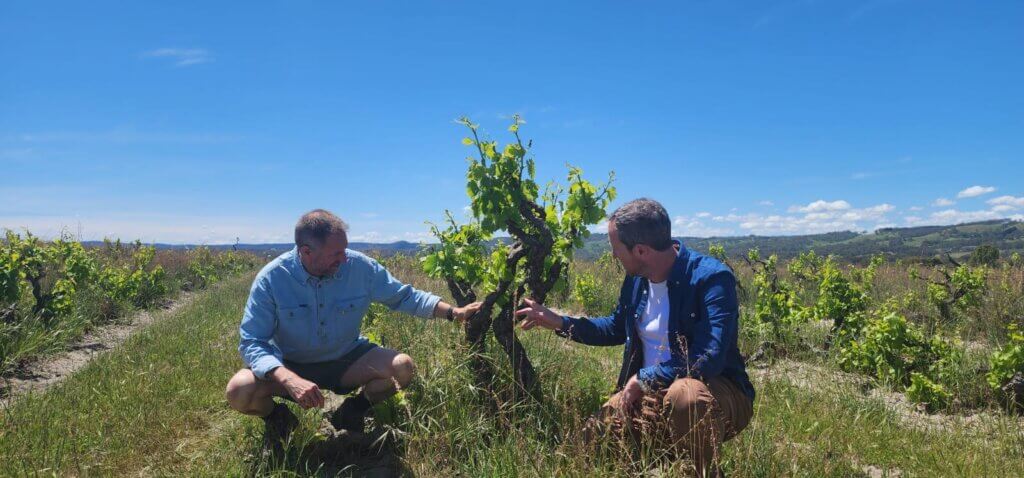
These bottles not only conveyed the brilliance and beauty of, for example, old-vine Blewitt Springs Grenache – they also brought joy, and a smile to the lips of countless wine lovers around the world.
Through this personal and professional legacy, Peter was, and will remain, a pillar of the McLaren Vale community and landscape.
He will be sorely missed.
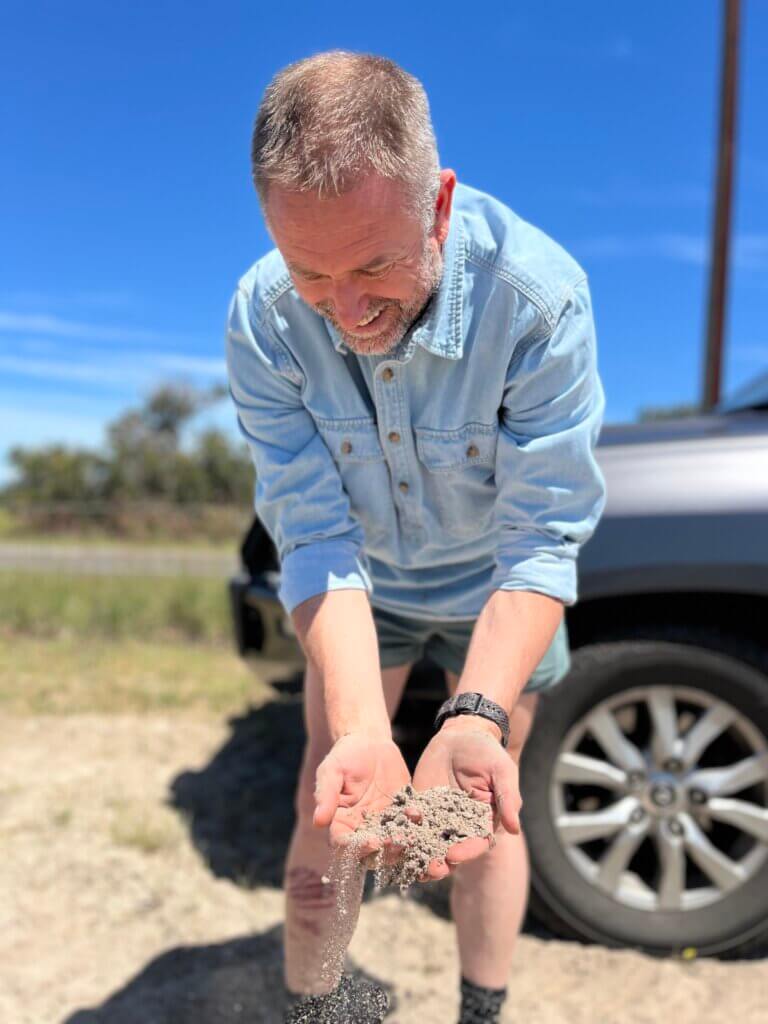
This is our tribute to Peter, which features an interview recorded with him on 24th October 2025. His words and his legacy speak for themselves. To adapt a phrase Peter uses in this interview – he left the place in a better way than it was before he started.
Peter Fraser, 1974-2025.
Links
- Peter Fraser dies at 51 (Decanter)
- A tribute by Campbell Mattinson
- A Tribute to Pete Fraser (Wine Enthusiast)
- You can find our podcast on all major audio players: Apple Podcasts, Spotify, Google, Amazon and beyond. If you’re on a mobile, the button below will redirect you automatically to this episode on an audio platform on your device. (If you’re on a PC or desktop, it will just return you to this page – in which case, get your phone out! Or find one of the above platforms on your browser.)
Wines
The following are wines of Peter’s that we’ve enjoyed at various tastings in the UK and McLaren Vale:
- Yangarra Circle Field Blend 2024
- Yangarra Estate Old Vine Grenache 2022
- Yangarra Ovitelli Blanc 2023
- Yangarra Ovitelli Grenache 2023
- Yangarra Hickinbotham Clarendon Grenache 2020
- Yangarra High Sands Grenache 2023
Transcript
This transcript was AI generated. It’s not perfect.
Peter: Hello and welcome to a special edition of Wine Blast – a tribute to Peter Fraser.
Susie: You may have noticed that in the show notes to our recent miniseries on McLaren Vale, we dedicated the episodes to Peter Fraser, one of the leading lights in the region and in Australian wine more widely.
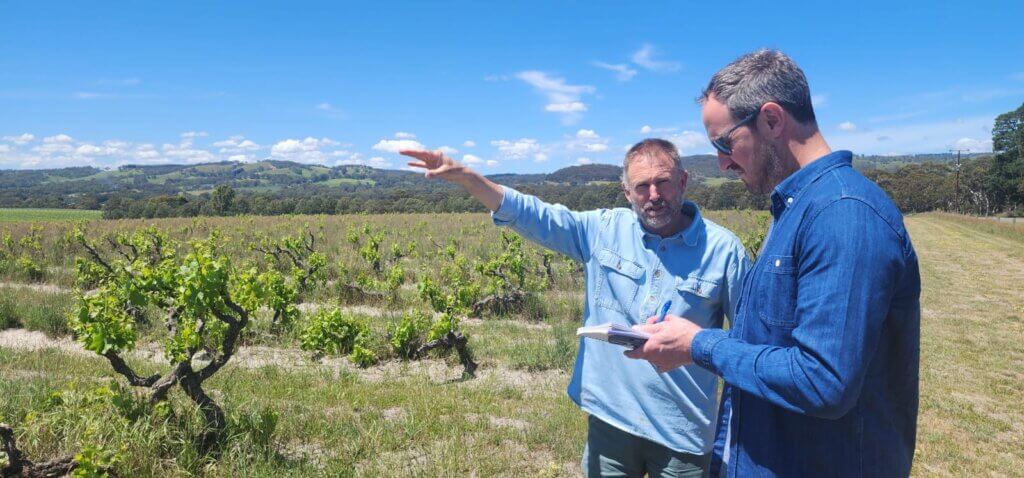
Peter: Peter was head winemaker and general manager at Yangarra in Blewitt Springs. He died in a house fire in McLaren Vale on 27th November 2025, aged 51, just a month after I’d been lucky enough to spend time on a beautiful spring day with him at Yangarra, touring the vineyards and sitting down to record for the podcast.
Susie: Needless to say, this tragic news sent shockwaves through not just the local McLaren Vale community, but the entire wine world. Peter was not only tremendously well respected, he was also tremendously well liked. He was affable, gentle, modest, genuine, ready with a laugh, but also determined, hard-working and conscientious.
Peter: Yeah, Peter was a champion of biodynamics and what he might have termed sensitive vine growing and winemaking. Though he and his wines won an impressive litany of prestigious awards, he remained self-effacing and dedicated to the task of crafting ever more nuanced, age worthy, elegant wines that spoke of their place more than their maker.
Susie: Maclaren Vale was Peter’s home. The son of chicken farmers, he went on to dedicate his life to wine, and particularly the northeast corner of the Vale in the prime territories of Blewitt Springs and Clarendon. He became a brilliant advocate for old vine Grenache, not just in his words, but perhaps even more eloquently in his work, crafting wines of complexity and refinement, but also joy and excitement.
Peter: Shortly before he died, Peter had been on a tasting tour with fellow winemakers under the Grenaissance banner, showing grenaches from McLaren Vale and elsewhere in the world, and was hosting verticals of his iconic High Sands Grenache. His colleagues in McLaren Vale and beyond have expressed not just their grief, but also their desire to celebrate and, build on his tremendous legacy.
Susie: After hearing the news of Peter’s death, we thought long and hard about the best way to pay tribute to him. And we realised the one thing we could do was let his words speak for themselves.
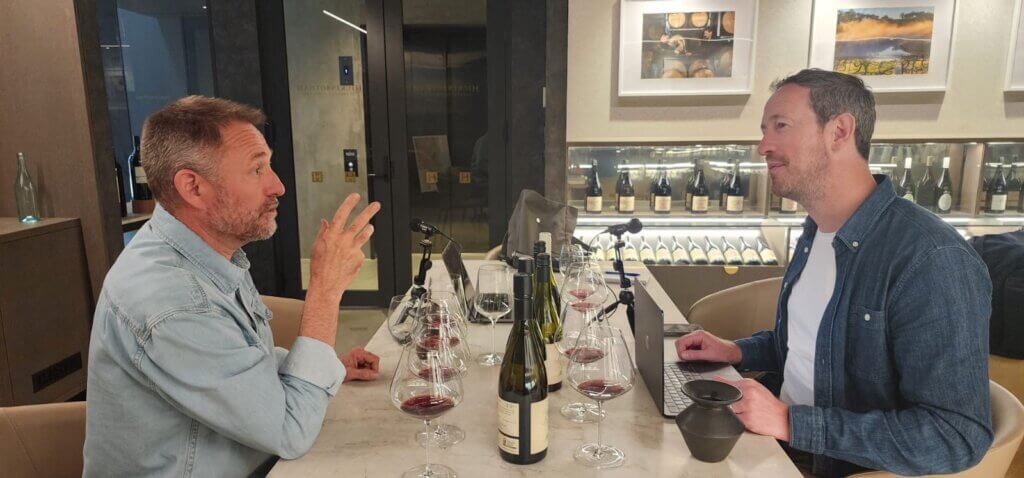
Peter: So the following interview was recorded on 24th October 2025 at the Yangarra Winery. We just visited the vineyard, spotting a couple of kangaroos along the way. Peter, was a great animal lover and accomplished horseman. To add to his other talents, I said I’d been impressed by the Grenache Blancs I’d tried from McLaren Vale. He explained they’d been the first to plant it in the region and he very much agreed about its potential. He showed me the new red Grenache vineyard, saying, we think the future is Grenache.
Susie: Now, just to preface a couple of details from this chat, Chateaux Rayas is one of the most famous and sought after Chateauneuf-du-Pape producers, making famously ethereal, pale, age worthy and rather expensive wines based on pure Grenache. The Jimmy Watson is one of Australia’s most prestigious wine trophies. And the Smart family are, the growers behind some of the finest vineyards in McLaren Vale, including the dry farmed bush vine plot first planted in 1946 that Yangarra took over and which became High Sands.
Peter: Yeah, we’ll put some wine recommendations on the show notes if you’d like to raise a glass to Peter’s memory. It would be a fitting way to pay tribute to the man and his work, which has played a critical part in shaping the modern wine landscape of the McLaren Vale. For now though, we leave you with his words. and I began the interview by checking the sound levels with our standard tester. question. What did you have for breakfast?
Peter Fraser: I had two coffees and the crust of my kids’ toast!
Peter: Breakfast of dreams.
Peter Fraser: Yeah, yeah, yeah.
Peter: Perfect, thank you. Well, let’s start at the beginning. Can you briefly introduce yourself, please, including your name?
Peter Fraser: My name’s Peter Fraser. I am the winemaker at Yangarra Estate vineyard here in Blewitt Springs, McLaren Vale.
Peter: And what a beautiful place it is to make wine.
Peter Fraser: It is. Especially today. It’s so sunny and springy and spring is in the air…
Peter: It is. So Peter, you know, what is McLaren Vale to you?
Peter Fraser: McLaren Vale to me, and to Yangarra, has become predominantly Grenache focused and Rhône variety focused. But it’s a place that produces a freshness and a brightness that I think really stands it out on its own.
00:05:00
Peter Fraser: And it’s evolving into this place, especially in the northeast part of McLaren Vale, with a finesse and tannin structure and transparency of place to its wines that, more than many in, in Australia and starting to kind of, get a popularity to it because of it.
Peter: I mean, put that in a global context for us because you travel widely, you taste widely, you know, how exciting is McLaren Vale Grenache from this part of the Vale, in a global sense?
Peter Fraser: I was fortunate enough to do a tasting last week that had some of the best Grenaches around the world. And fortunate enough, twice in two weeks I’ve had an 11 Rayas, which I can’t afford to buy, and some of the great Gredos and Priorat and Montsant Grenaches, South Africa. And there’s a, ah, vibrancy tension, across the very best of them. But the grenaches from McLaren Vale that are off these sandy dunes of Blewitt Springs or the, you know, higher elevation of Clarendon, show this incredible, sense of place, this fragrance, when they’re, you know, made with a real sensitivity, which most of them are being made that way. Ah, showing this length of tannin and. And a kind of balance between fruitiness and savoury, and probably wines that will also age really well. And. And I, I think if you were to pick a variety. And I’ve said this a few times the last few days. And And so as some of my friends that I’ve been travelling with, there’s this, you know, nearly an indigenous variety of that that should be here. It’s. It’s Grenache.
Peter: Yeah. Because it’s so well suited to the conditions here.
Peter Fraser: It is so well suited because it was for the most part planted on some of the worst soils because nothing much grew on here. When I say soil, it’s not really soil, it’s sand. you know, you could easily confuse that. You were actually about to step into the beach at Port Willunga, but you’re actually stepping into a Grenache vineyard. you. You can’t grow cereal crops, you can’t grow stock, you know, because the sand so loose they just, you know, ends up just a sand pit. And Grenache was the only variety that that kind of, prevailed, or prevailed in over the. Over those era. it’s interesting if you go back to Ebenezer Ward’s summary, who was a journalist of the time in the 1840s and he wrote a piece of the grapevines of South Australia. And one of them was the Clarendon Vineyard, planned by Edward Peat. And one of his big glowing, remarks was Grenache seems to be a star performer amongst other resilient varieties. And you know, to look back at that, and then I’d imagine that the, you know, 1922 block of the Smart Vineyard at Clarendon probably came from those, Those plantings, from the Edward Peat Vineyard in Clarendon. And then, that Smart fan, the Smart family that have that block owned what is Yangarra Ah. There’s been this probably continuum of these very old vines that are coming uninterrupted, that haven’t had phylloxera or had to be removed. So they’re not on rootstocks, they’re still on those original and fully old express probably the oldest expression of pure Grenache without, an effect from rootstock.
Peter: And how on earth does the Grenache manage to survive as it does? As you say, these are incredibly sandy soils. They look, you know, some of the poorest soils possible. And you’ve got these beautiful old vines. How does that work?
Peter Fraser: Well, I’m assuming it flourished in places like Spain. When you think about the heat and the arid conditions that it grows in there, when it was probably sourced back in the 1800s. but it’s in those sandy soils 1.5 metres down, depending on where you are. Some are closer, some are probably even deeper. there’s a clay layer which has moisture, so it goes in search of the water. And, And interestingly from that, it’s then influence of the, you know, geology that lies underneath, which is actually very ferrous, in it, in its nature. And you start seeing some of those sanguine characters from the. More so the geology. And that sandy silica is very kind of, inactive in
00:10:00
Peter Fraser: terms of. From a mineral perspective.
Peter: And what do you’ve mentioned old vines? What do the old vines give to the wine itself?
Peter Fraser: Knowledge. and that seems a funny statement. but I think old vines have a much better sense of regulation, so they’re kind of regulating. They’ve got this survivalist kind of mentality and they know when to crop and when not to. I would say, for the most part, they don’t get it right all the time. They take a bit of manipulation. but because there’s a. Their roots are down and they’re… It’s a bit like, you know, you don’t get your best work out of a teenager. And actually, you know, the wiseness with age, I think translates to a plant. and so you’re getting much more complex expressions, of their uptake from the soil, and less about their growth. And so we’ve got to see that we planted some, Grenache as bush vines in very similar soils, you know, less than 20 years ago. And we’re getting to see those wines and they went from probably in their earliest additions, very confectionary and simple, gradually getting more with very little tannin. so probably like thicker skins, bit more kind of depth, as they Got older and older and even where we went through and really manipulated yield didn’t seem to make much difference. They still showed this kind of more lighter, more early drinking suiting kind of wine. And it’s really just now they just. I can just see the, the seriousness coming through to them.
Peter: So how was that?
Peter Fraser: About 18, 20 years.
Peter: So like.
Peter Fraser: Yeah, just like the human just starting to go to university and they’re just starting to become you know, having you can really have, you know you go from grunting to. To having an in-depth conversation.
Peter: And in terms of regionality or terroir expression here in the Vale. Can you just give us a sense of that? What, what maybe some key areas.
Peter Fraser: You know it’s interesting off those sands is definitely a fragrance and a kind of red fruited cherry. but there’s a line that you see to these especially off the sands, lower pH and that I can talk to for, for way too long. but the, the lower pH gives, gives a more amplified expression of tannin. And, and so those tannins often you see is gritty and can range from fine to sometimes even a little bit angular. That’ll gradually soften with age but it gives it that and line especially with colder fermentations to retain and with that low longer extraction if you’re feeling them too hot, you end up more sweetness and more upfront fruit. but if with this manipulation you can really tease out all those beautiful tannins. but it’s. And that the other beauty I think in Amongst winemakers of McLaren Vale making Grenache. And it’s quite universal isn’t it’s really unusual for people to use oak or small oak or let alone any new oak. And so we’re seeing a lot more use of concrete, ceramic eggs, amphora, you know we use some thick stave Austrian oak because of its m. Kind of subtleness, and larger formats. So across the board I think very sensitive winemaking across the region that’s, that’s really massaging this variety to express all those senses of place and then the uniqueness between different vineyards, and different little blocks and you know,
Peter: McLaren Vale is mainly planted to Shiraz as a great variety. But am I right in saying that this is the first year when you’re actually going to have more Grenache planted than Shiraz? And can you tell us a little bit about why you’re doing that?
Peter Fraser: we’ve from all along had a, had a belief that Grenache was the jewel in the crown of this region. Partly we talked about before about the. It’s, it’s just so made to be here. It’s drought, tolerance, it’s you know, lack of intervention of winemaking and
00:15:00
Peter Fraser: as people are drinking more lighter and medium bodied wines, Grenache is probably still a bit more unknown but we, we think it’s got a huge future. If you think of the, the influx of Pinot Noir from the old world, the New World, through to you know, the influx of Italian varieties, Nebbiolo, Sangiovese, and Grenache. We, we’ve just been doing a bit of a roadshow around with good friends that make great Grenache and we did a tasting with those varieties and to show people that the value that Grenache gives you in a glass of wine, and also that all those wines, it’s a very relatively limited resource. the three of us were showing wines that were all from a single vineyard, you know, and an affordable by the glass, that you know, are just next to the vineyards that are you know, our single block expressions. So, so it’s really exciting for to turn people on to these wines and I think what they deliver in that suite of lighter to medium bodied wines.
Peter: now you don’t just make Grenache, you make lots of things. what’s getting you excited right now?
Peter Fraser: Amongst the other varieties, probably the most exciting and proudest thing was, was pioneering Grenache Blanc and, and its white friends in this region. And there was a lot of and still is a lot of excitement to Italian varieties in our region. which is fantastic because any of the Mediterranean varieties from these warmer climates, Italy, various other parts of, of the Mediterranean if you like. I think I’ve got a great future because they, they ripen a little later, and they just make wines. You know, we, we all live by the sea pretty much in Australia. And you know he wants to be drinking big heavy reds, in that kind of climate. And so this kind of need to you know, when I first started making wine in, in this region, Chardonnay was the most planted white variety or still is actually to this day. But it was much more prolific and was actually I think one of the highest priced grape varieties. And it’s a variety that ripens way too quickly and we now know there’s some m lovely cool cold places that, that express that in a far different manner. And so we’re getting, ahead around that, but back onto those, those Southern Rhône white varieties. They grow in a warm climate and you know, we’re seeing Grenache Blanc, really lovely, apple, flavours and aromatics, a, little more on that, like the green skin, crunchiness, the. And through to Grenache Gris, that’s giving you more of that kind of pear. and it’s fragrant and And they all kind of have this pithy, textural element to them that makes them so interesting. you have to be careful. We have. We’ve had Roussanne planted since 2003. We made our first resign in 07. Roussanne’s probably the most regal of them all, but. But the most powerful. So you have to, you know, from a blending perspective, be careful. We make 100% one for its own style, but. But great in the blending. And then interestingly, we’re finding the varieties like Clairette and Bourboulenc, especially in warm years, kind of bring an acidity and a, an attention that kind of wraps it all up and ties it together. We’re making those wines in 100% ceramic, which gives them a real purity and expression of the variety. So it’s something I’d like to say, and site differences, but there’s not many people, ah, have these varieties yet. So we’re still kind of seeing, you know, how they express their self in different sites.
Peter: And you’re making wines that, I mean, they’re not cheap wines, are they? They’re special wines. Maybe special purchase, but certainly complex. How easy or difficult is it to sell those kind of wines from McLaren Vale right now?
Peter Fraser: pretty good. we’ve been very fortunate to build a following and some lovely accolades, to the wines that we’ve made. And I think due to their. Some of the innovativeness of the wines, the attention to
00:20:00
Peter Fraser: detail that we hope that. And that they stand up amongst, similar varieties that are, ah, being produced around the world, that they actually offer as good, if not better value from. From some of our old world, friends,
Peter: Go on, go on, go on, go for it.
Peter Fraser: Of wines that we like to drink as well. And, And I think such as, Because we’re the challenger where we. It’s hard for us to, To. To be more expensive than those wines. And so look, Chateauneuf-du-Pape produces, you know, some of the white, blends out of Spain out of Gredos, out of. Out of Priorat out of California, out of South Africa. and they’re all, you know, fabulous wines that I, I love to look at and, and see what they’re all doing. and one of the things that I’m really proud of is that some of the things, the skin contact thing that we’ve done, the blending that we’ve done, the, the use of ceramic eggs has not been in a sense about copying another producer. Taking lots of ideas that, and nearly playing and seeing what works with our varieties in our site. And you know, sometimes like Grenache, it’s kind of like, oh, RAS is 100% whole bunch. So I’ve got to do that. it’s like we, we haven’t used very much bunch at all with Grenache because we find we get a much more pure expression. Doing it sorted and getting rid of any raisins and getting, you know, getting. That’s over, now 25 years become our style. and then I always kind of say it’s like threading the needle of style. You kind of gradually take things on a different journey. And I would say over the years we’ve probably become looking for m. More and more finesse, more and more fragrance as people are, having a urge for more of that. And that’s exciting, but still following the line of the estate and kind of a consistency through that. You know, somebody collecting these wines is going to taste from 2011 through to, now and go, oh, I can say kind of this thumbprint of a producer now.
Peter: Recently a McLaren Vale Grenache won the Top Champion award at the National Wine Show. how significant was that both for McLaren Vale and for Grenache? huge.
Peter Fraser: And it’s kind of, you know, I look back to 2016 vintage when Grenache won the Jimmy Watson, which was a huge award and still is in, in Australia. the. Our 2016 Higher Sands won Halliday Wine of the Year. We then followed and won it again with our. Our Old Vine Grenache, with our 21. and then, recently, the Smart Vineyard, won it again this year, as the Halliday. So the Smarts have actually been involved in that award three years in a row. And you know, my, my great friend, you know, David Gleave and Willunga 100 to win that National Wine show award was just, just fantastic.
Peter: So really it’s been a succession of recognitions that yeah, are putting, putting it more and more on the map. Is there still More work to do though?
Peter Fraser: Totally, there is so much, I think to understand that Grenache can deliver this kind of medium bodied wine, that’s really quite delicious. And you know, for once was the largest fried or red variety planted in the world. We kind of went into this powerhouse, Cabernet took over. and it’ll be interesting to see what the next 20 years hold up. You know, who knows, maybe Grenache can make its return.
Peter: Can we dare to dream that we, you know, in 20 years Grenache could be as big as Barolo and Burgundy?
Peter Fraser: I hope so. I think at the top level it, they’re equally as, compelling, they equally transparent in, in showing this, their touch of the winemaker, their touch of the site. and hopefully actually, you know, the site is probably one of the most exciting things. If you think about, you know, the excitement that goes with Chardonnay or Pinot Noir or Nebbiolo. It’s all about, well, you know, where are we drinking it from?
Peter: A couple of final questions. Sustainability is a big but slightly boring word. But what does it mean for you? It’s a key concept in McLaren Vale right now, isn’t it? And you guys
00:25:00
Peter: take an active interest in this.
Peter Fraser: we’ve been farming organically and biodynamically since 2008. And I had a, I suppose epiphany at a biodynamic seminar that was like talking about synthetic fertilisers and and herbicide. And I was like, I want to make wines from a place. And when you take away the microbiology of the soil, I sterilise it, with overpowering, nitrates, and glyphosate. You, you remove nature’s ability to access the minerals that, that lie in the soil. And for me it was like that was my, my moment that I was like, if, well, if I want to make wines that express a place, I’ve got to get the soil into a natural state and encourage as much microbiology as I can because they are what is going to make honest expressions of place. And so that started our journey. I would say it has a few on, flow on effects that it gets you in the vineyard more and more because you actually, there’s no silver bullet that you can just add and it reacts quickly. Everything so much more pre-emptive, proactive, preventative. And so you kind of, if you’re not touching and feeling it all the time, you can’t farm it that way. So that gets you connected from a quality standpoint, and now we’re kind of entering into this world of regenerative farming too. That’s really exciting. Like some of the vineyards, Shiraz, vineyards that we’ve actually removed as we’re shifting towards this more Grenache, focus side of things. you know, where we’re looking at you know potentially planting native seed, potentially having that carbon mass and using that as mulch and all those kind of things that build more biodiversity on the estate. We’re fortunate I have to have I suppose more than double the land to vineyard. So there’s an ability to, to encourage a lot of biodiversity within that. and that’s bugs and you know all the beneficial plants that bring in a greater diversity of insects so you don’t get a pest if you like. so it’s. It’s a really exciting kind of journey that you not only got all these things that grow that make you be a better farmer for quality perspective, but you’re leaving the place in a, you know, in a better way than it. Than it was before you started.
Peter: What about challenges, frustrations in McLaren Vale?
Peter Fraser: I think the biggest challenges is that I feel like sometimes the New World or and this probably applies to other regions in Australia is that we have to work twice as hard to be taken seriously, to be making wines that are you know rival some of the great wines of the world. And So that’s probably the number one or just you know, misconceptions that happen in wine. And It’s I think. But that’s our challenge. and for the most part the good great things are, is that there’s a lot of enthusiastic, wonderful people that understand a lot of those similar types concepts and A kind of Really progressing the same message and the same kind of. And pursuing this kind of excellence in wines that I think will lift everybody as we go through.
Peter: How do you see the future for McLaren Vale?
Peter Fraser: Exciting. I think you’re going to see this progression of lighter medium bodied red wines. an influx of Mediterranean white varieties, that are incredibly drinkable and lifestyle, driven and. And hopefully there’s you know, a bunch of other producers that are all kind of really chasing after that those special bottles of wine that are collectible, potentially age worthy and
00:30:00
Peter Fraser: I think all amongst those things there’s a bit of something for everyone.
Peter: Peter, thank you so much.
Peter Fraser: It’s my pleasure. Thank you.
00:30:10