- Season 7 Trailer
- The Jancis Robinson EXCLUSIVE Part 1
- The Jancis Robinson EXCLUSIVE Part 2
- Chile Wines of the Year 2025
- SAN LEONARDO – The insider’s Guide
- The Story of The Billionaire’s Vinegar – Part 1
- The Story of The Billionaire’s Vinegar – Part 2
- Blind Tasting Top 2021 Super Tuscans
- Top of the Pops: Classic Fizz Beyond Champagne
- Rock and Rhône
- Our WINES OF THE YEAR (2025)
- Our BOOKS OF THE YEAR (2025)
- Hugh Johnson UNCUT
- McLaren Vale – Boxer to Ballerina
- McLaren Vale – The Grenaissance
- Peter Fraser – A Tribute
- New Zealand Wines of the Year 2026
- Sam Neill UNCUT
- Giveaway EXTRAVAGANZA + Game-changer Coravin
- Greg Lambrecht UNCUT
- The Story of Stalin’s Wine Cellar PART ONE
- The Story of Stalin’s Wine Cellar PART TWO
Summary
Jancis Robinson is without doubt the leading wine writer in the world today.
But what’s she really like behind the (highly) professional façade?
Join us in this fascinating two-parter to meet the real Jancis: unfiltered, frank and sometimes really quite eye-opening…
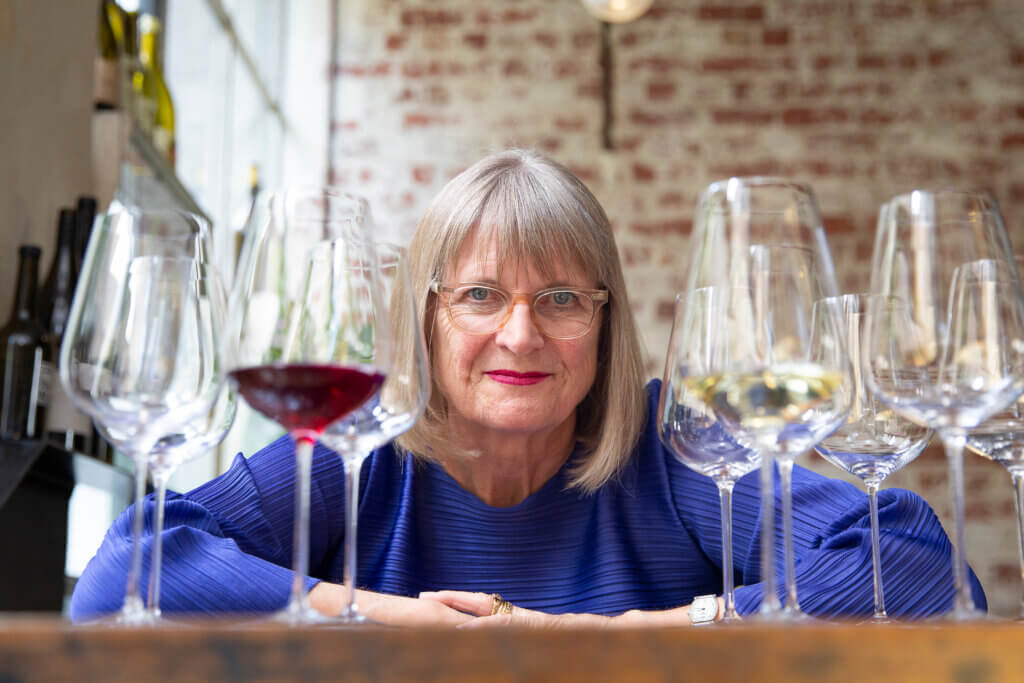
In this interview, we wanted to do something different from the many other profiles of this wine superstar.
For instance, Jancis’ wine scores are famously parsimonious, her reviews sometimes brutal (the best she could write about one wine was, ‘it’s wet’).
So does she really enjoy drinking wine?
What’s she like when she’s tipsy?
How do her wine friends tease her?
How did she cope when she lost her sense of smell and feared her career was over?
Does she really think she’s ‘addicted’ to the stuff?!
Along the way, Jancis talks about what the perfect wine tasting note might be (it may surprise you); her horror of boring people about wine (and seeming ‘bought’); and what she thinks the best value wines in the world are right now.
She also addresses controversial topics like wine scores, Robert Parker and the Pavie 2003 spat, wine price inflation – and wine bores.
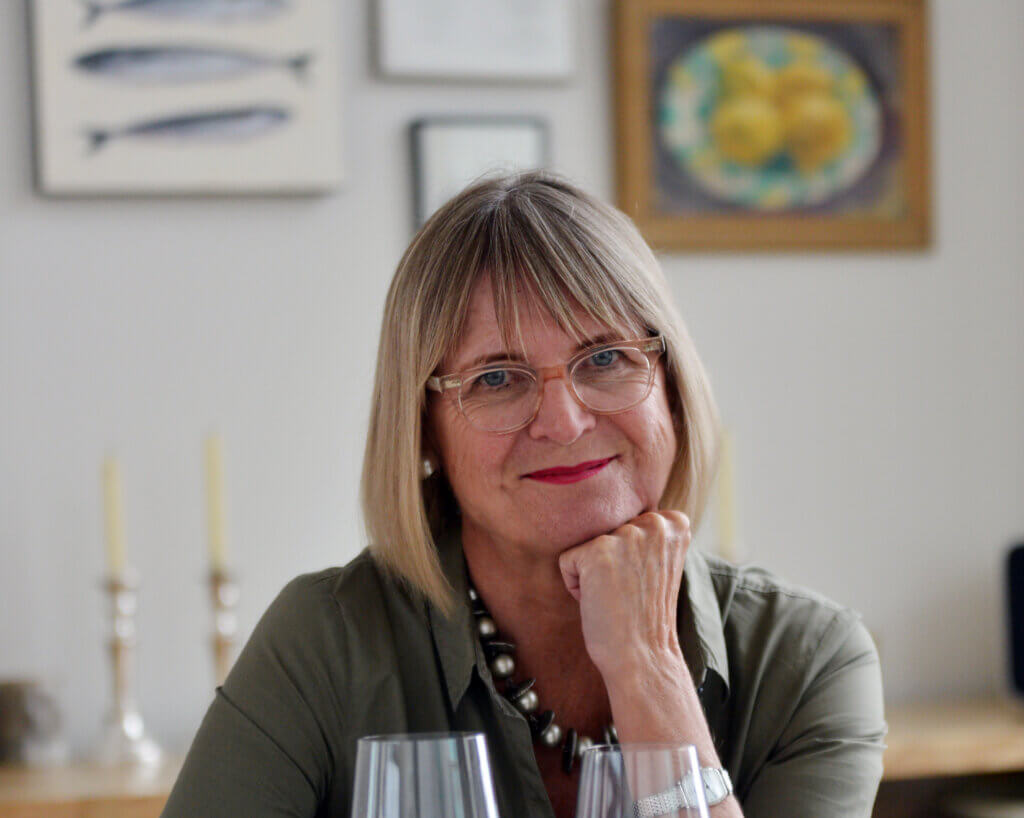
In the next and concluding part, we spring a quick-fire question round on Jancis, and touch on subjects from the Queen to influencers, setting up then successfully selling her website, negotiating with lawyers in a swimsuit, Cumbria, anorexia, regenerative viticulture, cans – and other hot potatoes.
Don’t miss it!
Starring

Links etc
- We refer to Jancis’ autobiography a few times in this interview. It’s a great read, though not the easiest to find. It’s called Confessions of a Wine Lover in the UK and Tasting Pleasure in the US.
- If you want to read more about Jancis, there’s a good section on her website: Jancis Robinson – the long version
- You can find our podcast on all major audio players: Apple Podcasts, Spotify, Google, Amazon and beyond. If you’re on a mobile, the button below will redirect you automatically to this episode on an audio platform on your device. (If you’re on a PC or desktop, it will just return you to this page – in which case, get your phone out! Or find one of the above platforms on your browser.)
Subscribe
Sign up to Wine Blast PLUS to support the show, enjoy early access to all episodes and get full archive access as well as occasional subscriber-only content.
Just visit WineBlast.co.uk to sign up – it’s very easy, and we will HUGELY appreciate your support.
It takes a monumental amount of work to make Wine Blast happen. Your support will enable the show to continue and grow – and we have lots of fantastic ideas of things we’d like to develop as part of Wine Blast to maximise the wine fun. The more people who sign up, the more we’ll be able to do.
We currently have an 15% Early Bird discount on initial headline subscription prices – just use the Promo Code magnum25 when you pay. But it’s a limited time offer – so don’t hang around!
Get in Touch!
We LOVE to hear from you.
You can send us an email. Or find us on social media (links below).
Or, better still, leave us a voice message via the magic of SpeakPipe:
Transcript
This transcript was AI generated. It’s not perfect.
Susie: Hello, you’re listening to Wine Blast with me, Susie Barrie and my husband and fellow master of wine, Peter Richards. Welcome to this, our season seven opener, and there’s lots as ever going on.
Peter: Yes, hello, welcome. one of those things going on, as we mentioned towards the end of season six and explained in our season seven trailer, is that we finally got round to introducing subscriptions. huge thanks. If you’ve already subscribed, if you haven’t, head to wineblast.co.uk or click the link in our show notes. We would love to have you join the Wine Blast Plus club and, we’d really appreciate your support to help keep the show thriving and delivering properly, in depth, opinionated, entertaining content on a regular basis.
Susie: In return, subscribers will get early access to episodes as soon as they drop, including both parts of this interview, as well as full archive access as our back catalogue gradually starts to become subscriber only. Not only that, but we’ll be putting out exclusive bonus content just for subscribers, including a series of uncut interviews from our back catalogue that have never been aired in full. we’re kicking off with wine legend Hugh Johnson, but, we are also lining up the likes of Sam Neill, Tim Spector, Oz Clark, John Malkovich, Charles Spence, Virginia Willcock, Miguel Torres, Laura Catena and others. Some absolute gems there and we can’t wait to share those.
Peter: Yeah, so times have changed, but necessary ones. so please do support us if you can, and that will enable us to keep growing this wonderful WineBlast global community, which is such a magical thing. plus, if we get enough active subscribers, we can definitely look to increase the benefits, to do even more fun and exciting things and hopefully develop the show in other ways too. we have an early bird discount of 15% off if you use the code magnum25 head to wineblast.co.uk, but be quick because that’s a limited time offer, so.
Susie: Certainly lots going on. One other thing going on is our interview with Jancis Robinson. Oh, yes.
Peter: OMG
Susie: Without doubt the leading wine writer in the world today. Author and editor of the best wine reference books in existence, presenter and maker of numerous TV and radio shows on wine Financial Times, wine correspondent for the past 35 years, winner of countless awards. It takes a long time to even read through the summarised list. In short, a wine superstar. Now, here’s a taster of what’s coming up.
Jancis Robinson: I mean, the great thing about wine is it facilitates conversation and, not just conversation about wine. That’s what I love. I was thinking about. I’m probably addicted to it, I think. I think about one wine I did write. Well, it’s wet.
Peter: So, yes, we were given privileged access to this wine vvip. I went for an intimate chat at, Jancis uber contemporary flat, which sits high above the buzzy King’s Cross redevelopment and enjoys panoramic views over London, one of the wine world’s great hubs. Of course, the perfect place to reflect on her life and career as she celebrates 50 years of wine writing on the 1st of December, 2025.
Susie: That’s quite something, isn’t it?
Peter: It really is. My words.
Susie: and it’s also quite a story or series of stories and important to say from the start. Though we didn’t want to do yet another rerun of Jancis life story or that’s been done. Not least in her autobiography, Confessions of a Wine Lover or Tasting Pleasure in the us. What we wanted to do was get an insight into Janis, the human being in the round. You know, what makes her tick, how her process works, her response to some of the more controversial moments in her career, her views on the current state of wine, and then how she sees the future.
Peter: Yeah, I mean, we wanted to do something fresh and different with this one, didn’t we? You know, we’re lucky enough to, you know, have got to know Jancis and her husband Nick quite a bit over the years. and we wanted to touch on, I don’t know, maybe some of the things that don’t often get discussed about Jancis in the public arena. Also, you know, perhaps to seek clarity on other key issues. she’s such an important figure in wine that, you know, we wanted to. To really get under her skin and give this the time and the focus it warranted.
Susie: And on that note, we’ve split this interview into two parts to make it more digestible and to give Jancis’ words a bit more breathing space. We think it works really nicely and we hope you enjoy it. So whatever you do, don’t miss the concluding second part when we challenge Jancis to a quick fire question round and quiz her about all sorts of juicy things.
Peter: Yeah, okay, so we need to do a bit of a preface before we get into the interview proper. and this intro will be split between the two episodes so we don’t end up repeating ourselves. but to start here, ah, if we’re being really scrupulous,
00:05:00
Peter: and probably a bit obsequious too, we’d introduce her as Dr. Jancis Robinson OBE, MW, MA, DUniv, to include recognitions from the Open University, the honorary doctorate at, Oxford University, the Institute of Masters of Wine and the Queen. not a bad lineup of credentials, is it, as credentials go.
Susie: And of course, testament to that is the fact that she’s one of those rare people who only needs all one name for unquestionable recognition. She is Jancis.
Peter: Like Beyonce?
Susie: Like Beyonce?! I’m not sure she quite like that.
Peter: The one name. The one name.
Susie: Anyway, she got into wine during and after her time at Oxford. After university in 1975, she joined a wine trade magazine and there then followed a succession of articles, columns, books and TV programmes. In 1984, she became the first person outside the wine trade to pass the demanding Master of Wine exams. In terms of reference books. In 1994 she published the first edition of the Oxford Companion to Wine. And in 2001 she joined forces with Hugh Johnson, who of course we also interviewed on the pod, to co author the fifth edition of the World Atlas of Wine. These were the first editions of several that Jancis has been involved with.
Peter: In both cases, she’s certainly been a. Constant presence and guiding light throughout both our wine careers. one of the major initiatives she undertook was launching her subscription based website, jancisrobinson.com in 2000, which means it’s celebrating its 25th anniversary this year. she’s built up a fabulous team around the website of contributors, editors and experts, including Julia Harding, who mentored both of us through our, Master of Wine exams. and in 2021, Jancis successfully sold the website, something we’ll be discussing further in the next episode.
Susie: And of course we had her on the podcast recently talking about her glassware range she developed in 2018 with designer Richard Brendon. Here’s a sample quote from that.
Jancis Robinson: I’ve always, throughout my m life, communicating about wine. I go for simplification, practicality and, and welcoming people in making it less snooty and, and complicated.
Susie: Cheers to that.
Peter: Yeah.
Susie: Her husband, Nick Lander, is a former restaurateur turned writer, restaurant reviewer and food service consultant. And her son Will is a current restaurateur with the Quality Chop House in Clerkenwell, among other venues.
Peter: Now this is all necessary information to preface this first part of our chat. there are many other fabulous sources of information on Jancis life and career, including her website. If you’d like to find out more, we’d also flag up an upcoming podcast series on her very own, appropriately named thejancisrobinson.com podcast, helmed by our fellow master of wine and expert podcaster, Richard Hemming. That one’s going to be a really deep dive into every decade of her life, including all the early stuff and starring some stellar names from the world of wine as special guests. So well worth checking out when it drops around, I think. October, November 2025 time.
Susie: Right. I reckon it’s high time we heard from the lady herself. And this is how she introduced herself.
Jancis Robinson: I’m, Jancis Robinson, and on the 1st of December this year, I will celebrate my 50th anniversary writing about wine.
Peter: Congratulations. You know, we’re sitting in your very wonderful, elegant, beautiful flat with stunning views, over London. It’s summer 2025. How are you feeling about life in general?
Jancis Robinson: Ha ha ha! A nice, simple question. I feel very, very lucky, I suppose, because I really love my work. I have no intention of giving it up unless forced to. I. Now, I used to overwork terribly when I ran jancisrobinson.com myself, pretty much, with an increasing number of, people on the team. But I was in charge of everything, like, you know, finance, planning, commissioning, all sorts of things. And since I sold the website in 2021, we have a wonderful managing editor, Tara Q. Thomas, who does all the nasty stuff, leaving me to do nothing other than taste, write and travel, which are the three things I absolutely love. So life is fun, work, life is great. And we’re very, very lucky because we have three wonderful children, six wonderful grandchildren, and they all live within walking distance, so what’s not to like, really?
Peter: And this area of just walking here from the tube station, it’s so buzzy.
Jancis Robinson: King’s Cross. Yeah. And so we moved in 2016 from, a, Victorian family house in Belsize
00:10:00
Jancis Robinson: park to something completely new, you know, with all sorts of excitements with lots of young people around. And I think that’s more exciting than downsizing to somewhere where you used to be, but smaller, which is a bit defeatist.
Peter: now, as you said, this year, 2025 marks your 50th year, and 50th anniversary of wine writing. How would you describe your personal as well as professional relationship with wine?
Jancis Robinson: Love it. I was thinking about it. I’m probably addicted to it because I do drink. I’m a boomer, you know, it’s too late for me to go on a health kick, I’m afraid. And I have this very dangerous grandmother who was a big fan of gin, and when she was in her 80s, was heard on what she would call the wireless that too much gin was bad for you. So she switched to whiskey and lived till she was 98. So I’m hoping I’ve got quite a few of her genes. But I do drink wine every day, M and I enjoy it. And I’d see a huge difference between tasting and drinking, as you know, tasting is what we do hypercritically during the day and spit every mouthful out. And drinking is the enjoying bit.
Peter: So you taste, but also you do drink and you enjoy.
Jancis Robinson: Love it.
Peter: You make sure you have fun with it as well as.
Jancis Robinson: Oh, I love it. Absolutely love it. Yeah, yeah.
Peter: You temporarily lost your sense of smell.
Jancis Robinson: Oh, yes.
Peter: Didn’t you, a few years back?
Jancis Robinson: Well, I had.
Peter: What was that like?
Jancis Robinson: Terrible, terrible, terrible. It. I got a really bad cold virus. It was way before COVID and actually flying out to South Africa to judge a wine competition. And of course there’s no way I could, you know, pretend. But what was quite interesting was, although I’d lost my sense of smell, I got something from my palate and it was spooky how similar my judgments were to the fully functioning judges, actually. And I came back, still no sense of smell whatsoever. and my children would sort of wave perfume bottles under my nose and say, surely you can smell that, Mum. And I couldn’t. When, in fact, the only time I’ve been as a guest to Chelsea Flower show was during that period when I couldn’t smell all those lovely flowers and the doctors couldn’t help. And I was all ready to sort of make an announcement and sort of say, I’m sorry, but my career’s over. Although the doctor said I wouldn’t do if. Do that if I were you. I think it probably will come back. But medical science actually didn’t seem to help. But Nick was having some acupuncture at the time, so I went to an acupuncturist. And after my very first session, my nose started to sort of twitch. And that evening I did actually get some of my smell back. Not immediately, but, thank the Lord it was restored.
Peter: That must have been terrifying.
Jancis Robinson: It was. It really was, yeah. and then I had a bad pneumonia. I was hospitalised with it at the end of the beginning of 2024. And I didn’t lose my sense of smell, but I got this thing where everything. I lost my desire to drink wine. Everything tasted metallic and, nasty wine in particular.
Peter: Gosh. So you’ve been.
Jancis Robinson: That was over quite soon.
Peter: Yeah. Yeah. But during those Times that must have felt. Yeah, professionally and personally.
Jancis Robinson: But at least I knew that it wasn’t forever the second time.
Peter: Yeah, yeah, sure, sure. And now, you’ve written about how wine appealed to you at an early age because it combined huge sensual pleasure with great intellectual stimulation. How do you strike the balance between the hedonist and the intellectual in you? you know, when it comes to making and, communicating judgments about wine and wineries and wine people.
Jancis Robinson: Interesting question. I have a horror of boring people about wine. And I think if you were to ask, my friends, I don’t think any of them would go, oh, God, you know, sit at the table with Janice and she’ll tell you what side of the valley the grapes were grown on. Don’t do that at all. But obviously, I am paid to impart information about wine. I, try and keep it as interesting as possible and not too nerdy. I mean, I think, the place for nerdiness is probably the Master of Wine exam room rather than the website or, ah, a column in the Financial Times. But as you know, it is difficult to match words to the taste of wine. I mean, there are two things in your question, aren’t there? There is the background to the wine and sometimes I try and pick out most interesting, often human elements to that. I love describing people and their quirks and so forth, or the more journalistic aspect of my life, sort of what’s new. But actually finding words to convey the taste of things
00:15:00
Jancis Robinson: is a real challenge. if you think about all those many food programmes on tv, and the worst, the least interesting bit of them is when the dish is tasted and the TV host has to describe what they’re feeling when they taste it. And it’s rubbish, really. I mean, they just say mmm. You know, I sometimes think the ideal tasting note is just mmm, you know.
Peter: And a big smiley face.
Jancis Robinson: Yes. Yeah.
Peter: So, you know, I mean, going into the personal thing a little bit, a little bit more, you know, you’ve described yourself in the past as a wine connoisseur most days, and then a wine lover every night. Sometimes an excessively ardent wine lover…
Jancis Robinson: Oh, I think this is par for the course…
Peter: I’m m intrigued by that. How does that manifest? I’m just intrigued.
Jancis Robinson: With particular company? there is just a sort of a small group of us who get together, I don’t know, every few months and taste ridiculous number of bottles.
Peter: And what would those people say, the excessively ardent Jancis Robinson is like?!
Jancis Robinson: I’m teased because I. Oh, I don’t get. I’m not a sort of obvious drunk. I don’t climb on the table or shout or any like that. No, they tease me because my, most frequent compliment about a wine is very fresh. So I say, mmm, nice freshness. And then one of them is always going very fresh.
Peter: I’m also sort of fascinated by how the Jancis process works. You, know you write in your autobiography that you can be very friendly in the flesh, which I absolutely concur with, but also coldly objective or even.
Jancis Robinson: Brutal behind at the keyboard. That is true.
Peter: So give us an insight into that. How does that process work?
Jancis Robinson: Okay. I think I remember contrasting with my very frequent early wine travel companion, who was Tony Lord. He was Australian, the first editor of Decanter, and he was the most ill behaved, winery guest. You know, terribly rude to his hosts and rather boorish, really. Very good fun to travel with. But when he was writing it up in Decanter, everything was absolutely marvellous, you know.
Peter: Oh, so he went the other way.
Jancis Robinson: We went completely the other way. Yes. whereas I would be a very well behaved guest. But I suppose my early days on the Sunday Times probably informed my objective journalistic streak. And I suppose I have a horror of seeming bought, if you like. I don’t go short of good meals and if anybody, you know, especially not having a restaurant critic for a husband and a restaurateur for a son. so if anyone thinks that I, can be bought by with a good lunch, they’re wrong. Yeah, I just think you owe it. Part of my job is not to be a PR person for the wine industry. So everything I think I and Our team on jancisrobinson.com write is for the consumer, it’s not for the producer. which is probably why our tasting, notes are not. Well, my tasting notes anyway are not very often, used as a sales pitch because they are genuinely my stream of consciousness as I taste a wine rather than what will sell the wine.
Peter: Your notes are very fresh and frank.
Jancis Robinson: And frank.
Peter: In an era where sometimes they can be overly ornate and baroque.
Jancis Robinson: Yes. I do remember the lovely late Ben Collins from Bibendum once ringing me up and saying, did you really mean to write just that? I think I think about one wine I did write. Well, it’s wet.
Peter: You know, you are famously parsimonious, I think that. Is that fair to say when it. Comes to scoring wines?
Jancis Robinson: Absolutely, plead guilty to that.
Peter: It’s rare a wine gets more than.
Jancis Robinson: 18. although we do have literally hundreds of Scores out of, 20 out of 20.
Peter: Exactly. So you do have some high scores. It’s not, it’s not, you know, impossible, but it’s very rare.
Jancis Robinson: Yeah.
Peter: So why, why is that? Why? Is it because you dislike issuing what might like, seem like a definitively enthusiastic statement about a wine? or is it you want to leave headroom for improving wines?
Jancis Robinson: Exactly. Because, the quality of wine in my lifetime has, has soared leaps and bounds every year. the average quality of wine seems higher than it was the year before, and we are leaving ourselves headroom between that, 18 and 20. And I think I haven’t done the analysis, but I suspect our average scores have definitely been going up and up as average wine quality has been going up and up and up. and in fact, it’s very rare to find a really bad wine nowadays. You can find lots of boring ones if you look not that carefully, but
00:20:00
Jancis Robinson: very red and so many exciting wines. So we’ve got the headroom, whereas those who started, you know, who gave 100 points in the last century have not got any headroom.
Susie: So if we pause there for a moment, it is an interesting point that. About leaving yourself wiggle room when it comes to scores. On the one hand it’s unique, understandable, and there’s nothing worse than constant breathless over enthusiasm on the other. I guess you could argue this in perpetuity, that wine will keep getting better and better horses for courses, I guess. and she admits her approach does tend to err on the critical side of things when it comes to rating wines, even if she doesn’t like to be called a wine critic.
Peter: Yeah, I mean, I think. I think we know lots of producers and merchants who throw up their hands in frustration when it comes to many of her scores. You know, she might write a really enthusiastic tasting note, but then give it a modest score. But, you know, but she did point out that she does give 20 out of 20 occasionally. she’s actually given that perfect score on more than 150 wines, if you check her website like I did. I mean, they tend to be obviously the classics from a amazing vintage 70 years ago. But, I might be generalising unfairly there, but, you know, she has given a perfect. So that’s, that’s fair enough, you know. And, and on a related note, I did like her take that the, the ideal tasting note was just, you know, so Homer Simpson would agree, I think.
Susie: Not sure we can quite talk about Homer and Jancis in the same breath!! On the subject of comedy, though. I do like the idea of her friends ribbing her with a very, fresh epithet.
Peter: Yes, very fresh. maybe. Maybe just think about. She could be the fresh princess of King’s Cross. Does that work? No. No. Okay, maybe not. Maybe not. Let’s move on. Let’s move on. how bad must the wine have been for her tasting note to have been? It’s wet.
Susie: That is tempting to write sometimes, though, isn’t it? Seriously.
Peter: So funny. but the fact she probably published it too, it reminded me of our profile on Hugh Johnson, which of course, subscribers can check out in our uncut bonus episode. when he totally rejected the concept of scoring wines numerically. But he did admit to having his own system of ranking. The lowest rung on which was one sniff. So, you know, it meant the wine was so bad he’d only take one sniff of it and no more.
Susie: That was it.
Peter: Yeah.
Susie: And the other end of the scale was liking it so much, you’d buy not just a whole case, but even the whole chateau, which she did. okay, so I think it’s time to take a breath before coming up for more. By way of brief recap so far, Jancis Robinson is a living wine legend. Prolific author, presenter, columnist and all round communicator. Charming in the flesh, but often brutal in print. She is celebrating 50 years of wine writing and has no intention whatsoever of giving up. In fact, despite some tasting faculty scares in recent years, she seems more enthused than ever. Sometimes over enthusiastic, too.
Peter: So when we left off, we were discussing scoring wines, and I wanted to bring up Robert Parker, the American lawyer turned wine critic behind the Wine Advocate, who popularised the hundred point score and became fabulously influential in his time, which was, I guess around the turn of the century and shortly after, before he retired in 2019, his big thing was reviewing and scoring wines, particularly red Bordeaux, at a time when global demand was on the Alps.
Susie: He was so powerful that Parkerization became a term, whereby winemakers would create wines to suit Parker’s perceived taste for rich, ripe, creamy styles. Because wines that obtained high Parker points would reach the financial rewards in terms of sales, and they were considerable, by all accounts, flying. Winemakers and consultants like the influential Frenchman Michel Roland were very much associated with this particular trend.
Peter: And then in 2004, Jancis and Parker had a very public disagreement about the style and quality of one particular Bordeaux wine, the Saint Emilion Chateau Pavie 2003, owned by Gerard Perse. this was a vintage that had been baking hot. Jancis tasted it blind and called it porty, ridiculous, completely unappetizing. Parker called it one of the wines of the vintage and accused Jancis of having an anti Pavie agenda and not tasting it blind. but that’s enough prefacing. Back to the chat.
Peter: So, talking about 100 points, we can’t have this discussion about scores without mentioning Robert Parker, the American wine critic who popularised the hundred point score and someone you got to know quite well.
Jancis Robinson: Yeah, we had dinner in each other’s houses. And so, yeah, I often wonder what he’s doing now.
Peter: I was gonna say he stepped back from frontline.
Jancis Robinson: Well, since I think, I think the last time he wrote was 2016,
Peter: he didn’t say he was. Going to retire and be a very sort of satisfied gourmand or something along those lines, didn’t
00:25:00
Peter: he? Which maybe he’s doing, who knows? But how would you evaluate his legacy, both positive and negative?
Jancis Robinson: Positive, I suppose, drawing the whole world of wine lovers and wine producers together, unifying them, I suppose, by questionable, slavish following of numbers, but introducing a whole load of people who didn’t necessarily speak English to the joys of wine by a very comprehensible system of these numbers. I suppose it’s arguable that wine would not have grown as rapidly in Asia, if there hadn’t been numerical scores for people to latch onto who didn’t perhaps, fully understand the subtleties of a tasting note. Negative would be. Although he would. His power was negative. And he didn’t set out to be that powerful at all. It wasn’t his fault that everybody slavishly followed him. And was it? It was understandable why people followed him. He was a very reliable, consistent good taster, that although he denied it, he clearly did have a particular, preference for particular wines. bigger the better. Which I think is probably why he never really, got to grips with Burgundy. And Burgundy certainly didn’t really get to grips with. With him. and there was a time when it was regrettable that if not winemakers, then winemakers, bosses were telling them all to make wines that would appeal to Robert Parker or the people who were feeding the US importers who were feeding samples to Robert Parker, or the odd, wine consultant Michel Roland, who was famously a good friend of Parker’s. and so there was a certain sameness of wine style that infected, I think, did infect the wine world over the turn of the century, sort of late 90s, early 2000s. But, you know, for every Action. There’s a reaction. So he had all these, younger American, wine writers sort of being anti Parker and let’s have wine as pale as possible or as. As acid as possible. And I remember that, you know, there was a time when every wine producer wanted to make a copy of red Bordeaux and a copy of white Burgundy and that those days are way over. and there’s been a lot of experimentation with a far wider array of grape varieties, which is really, really healthy. and do you remember there was a book, I can’t remember who wrote it, that I think was called Godforsaken Grapes because Parker came out with this rant at one stage about, ah, all these new wines from. Made from godforsaken grapes, which was quite funny. I do wonder whether the pendulum has swung too far towards too pale, too tart, too natural. That’s a whole nother thing, I would say. But even mainstream, I’d say perhaps some Australian winemakers of the new wave. Australians are, picking the grapes so early to avoid being accused of being heavy and big and alcoholic, that sometimes they’re sacrificing a bit of flavour. I mean, this is not a general criticism, but just the odd. I see signs of that. And also, having seen pendulums been around for so long and seeing pendulums swinging, I do wonder whether, and I’m very, very pro, the current pendulum that is swinging towards white wine. Because when I started, white wine was all the rage. Everybody was desperate to get a Chardonnay. There weren’t all that many Chardonnay grapes in the world, actually. And then it swung very rapidly towards red wine, not least, I think, because of Parker’s enthusiasm, really greater enthusiasm for red wine. And now I love the fact that, white wine is, you know, seeing, Seeing the light again, partly, perhaps because of climate change, and people looking for freshness.
Peter: So ahead of the curve. Of course, talking about Parker is topical because, Gerard Perse very sadly, recently died…
Jancis Robinson: Yes. We’re not going to talk about Pavie 03, are we?
Peter: Just a little bit. Just, just. I know you’ve talked about it many times, but we have to just touch on that. Just. And also because I think partly, you know, I think it gets to what your taste is.
Jancis Robinson: Yeah, maybe. But, you know, and I noted that, in an obituary of Gerard Perse, it was said that Parker and I glossed over our differences, which is not the right way to put it. We were both in the same, for context, for people who, were not around in the exciting days of the 2004, when there was a
00:30:00
Jancis Robinson: strong difference of opinion about Chateau Pavie 2003, me thinking it was just overdone. Parker loving it, and accusing me of knowing what it was, when in fact, I tasted it blind. So that there was a bit of a having been to dinner in, each other’s houses. We separated a little bit after that, and I can’t remember exactly when it was. It could have been about 2010 or just before then. We were both in the same Bordeaux hotel in the same breakfast room. And so we kissed and made up, and he said that Pavie thing. I overreacted. So that was nice.
Peter: So, and obviously. But this is a time, in terms of the wider global wine scene, when, as you say, wines were getting ever bigger, ever richer, ever more alcoholic, and Bordeaux seemed to be chasing it. Obviously, it’s normal.
Jancis Robinson: Yeah. Bordeaux changes style quite a bit.
Peter: What are we seeing about that now, 20 years on?
Jancis Robinson: I do admire, Bordeaux University, and they’re really on top of every little nuance of winemaking and how to improve and, react to the weather and all that kind of thing. I think, although the world is slightly turned against the style of red Bordeaux, it’s got impatient. It’s because, really, to. Although I’m convinced that the best value wines in the world are those on the kind of basic petit Chateau rung of Bordeaux, because they’re unfashionable and overproduced. Well, there are too many of them, so prices are ridiculously low, even for some quite mature wines. To really appreciate Bordeaux at its finest, you need something a notch or two above that, and you need a cellar or to pay through the nose for storage charges, because the Bordelais like selling their wines far too young and hold onto it for years and years to really make the price of it pay in terms of pleasure. Because, although they’re trying to make their wines more drinkable young, which is understandable and laudable, to get max pleasure, you really. With a really good Bordeaux, you do need a decade or two. so that’s a pretty big commitment, and especially in our impatient era when people want immediate gratification. So I think Bordeaux is better than it’s ever been in terms of quality. And the whites have certainly way better, than they were, but more difficult to sell.
Peter: So correct me if I’m wrong. You just said that for you, some of the best bargains in the wine world are humble, humble Bordeaux.
Jancis Robinson: Yeah, yeah. Petit Chateaux Bordeaux. Not. Not branded Bordeaux. But say you Know, a well made cru bourgeois costs next to nothing and it can’t find a market and it does mature faster than a class growth. So, you know, it can be jolly nice at 5 years old.
Peter: Now, going back to wine scores, arguably one result of the wine score fever was sort of price inflation, particularly among the top properties, particularly in Bordeaux. How do you feel about that trend?
Jancis Robinson: Unhappy. I remember a wonderful wine merchant, Simon Loftus of Adnums. I think we had to do a little talk somewhere together and he expressed a sentiment which I’ve heard many people say of, you know, I was turned onto wine by a wonderful mature first growth and the young people of today are never going to be able to do that because the wines are so expensive. My counter argument to that is that the range of wines available today is, is so infinitely wider than it used to be and you don’t have to just worship the old classic, traditional, supposedly top wines. You know, you can find marvellous wines from countries that were never, you know, probably not even in the world. Atlas of wine in its first or second edition. from a huge array of grapes and made in lots and lots of different styles. So I don’t think, I think anybody youngish getting into wine today is probably more thrilled by the variety than sort of notching off, you know. Yeah, I’ve tasted Romanee Conti kind of thing. And of course this is all in parallel with the fact that the number of billionaires in the world has mushroomed and billionaires need billionaires wines. You know, they need a wine that has a massive price tag that they can tell their friends if they’ve got any that they bought or they own or they’ve
00:35:00
Jancis Robinson: tasted.
Peter: But your advice to people maybe these days would be find that that sensational, life changing bottle of maybe Australian Pinot Noir or Chilean Cabernet, whatever it is.
Jancis Robinson: Somewhere else, experimenting and notice what, what you like. And there’s an old trope this, but don’t follow what other people like or what other people worship. Put it that way. Yeah. Do you think, do you think there.
Peter: Is a good kind of good wine lover and a bad wine lover type? and if so, what, what let’s say you’re sitting down for a meal and you think, gosh, this person’s genuine love of wine and, and something that’s genuinely positive. What would you say characterises beyond a love of wine?
Jancis Robinson: Well, somebody who’s actually noticing the taste rather than the reputation or the score or the price. You know, I love my wine dinners with Friends love them and that’s huge, huge enjoyment. But I have had my share of wine dinners with collectors. That’s not always that much fun. You know, it’s just, you know, I’ll tell you about this wine I’ve had, and then somebody else said, but I’ve. I’ll trump that with this wine I’ve had. there’s more, there’s more. I mean, the great thing about wine is it facilitates conversation and not just conversation about wine. That’s what I love.
Susie: And we will be continuing this intriguing conversation and, not just about wine in the next and concluding episode, when we’ll be touching on the Queen, influencers, setting up, then selling her website, negotiating with lawyers in a swimsuit, Cumbria, anorexia, regenerative viticulture, cans and other hot potatoes.
Peter: Just before we end, though, Jancis did email after our chat to clarify, and I quote, what I should have added about Parker’s power was that it was stoked by the fact that he always acted as though his opinion was the only possible one. whereas you get the sense from Jancis, she’s very clear about how subjective wine tasting is and that it’s quite common for many different opinions to be valid about the same wine and the score isn’t everything.
Susie: And interesting what she also said about Bordeaux, Petit Chateaux being some of the best bargains in the world wine world right now. I mean, I suppose if you like that style.
Peter: Exactly, Exactly. That was a great tip. If, if you. If you’re into that thing, you know, I’d say we could go and grab one out of the cellar to quickly review and then drink tonight. But that’s not really our bag, is it?
Susie: Not really.
Peter: We don’t really have those. There you go. Horses for courses again. I guess. one other thing our cellar certainly won’t be packing is billionaire wine. sadly, I remember in her, Autobiography, Jancis writing about feeling, and I quote, physically sick at certain wines becoming investment vehicles because their price had gone up so much and describing the fine wine inflation rate of the 90s as absurd. So I think when she says, he’s a bit unhappy about that. Ah, trend. It may be an understatement, let’s put it that way.
Susie: Right. Let’s draw things to a close on that note of understatement, because it does lead nicely into the concluding part of our conversation. In the next episode of this exclusive, Jancis Robinson two parter. Do join us there. You can do that right now. If you are a Wine Blast PLUS subscriber. If you’d like to subscribe, head to wineblast.co.uk to sign up. Thanks to Jancis Robinson and thanks to you for listening. Until next time, Cheers.
00:38:17