- Season 7 Trailer
- The Jancis Robinson EXCLUSIVE Part 1
- The Jancis Robinson EXCLUSIVE Part 2
- Chile Wines of the Year 2025
- SAN LEONARDO – The insider’s Guide
- The Story of The Billionaire’s Vinegar – Part 1
- The Story of The Billionaire’s Vinegar – Part 2
- Blind Tasting Top 2021 Super Tuscans
- Top of the Pops: Classic Fizz Beyond Champagne
- Rock and Rhône
- Our WINES OF THE YEAR (2025)
- Our BOOKS OF THE YEAR (2025)
- Hugh Johnson UNCUT
- McLaren Vale – Boxer to Ballerina
- McLaren Vale – The Grenaissance
- Peter Fraser – A Tribute
- New Zealand Wines of the Year 2026
- Sam Neill UNCUT
- Giveaway EXTRAVAGANZA + Game-changer Coravin
- Greg Lambrecht UNCUT
- The Story of Stalin’s Wine Cellar PART ONE
- The Story of Stalin’s Wine Cellar PART TWO
Summary
Jancis Robinson is a wine superstar.
But in this concluding episode of our two-part exclusive interview, we want to get behind the sparkling achievements and get to know Jancis in a personal as well as professional sense.
The result is thought-provoking, funny and occasionally eye-opening.
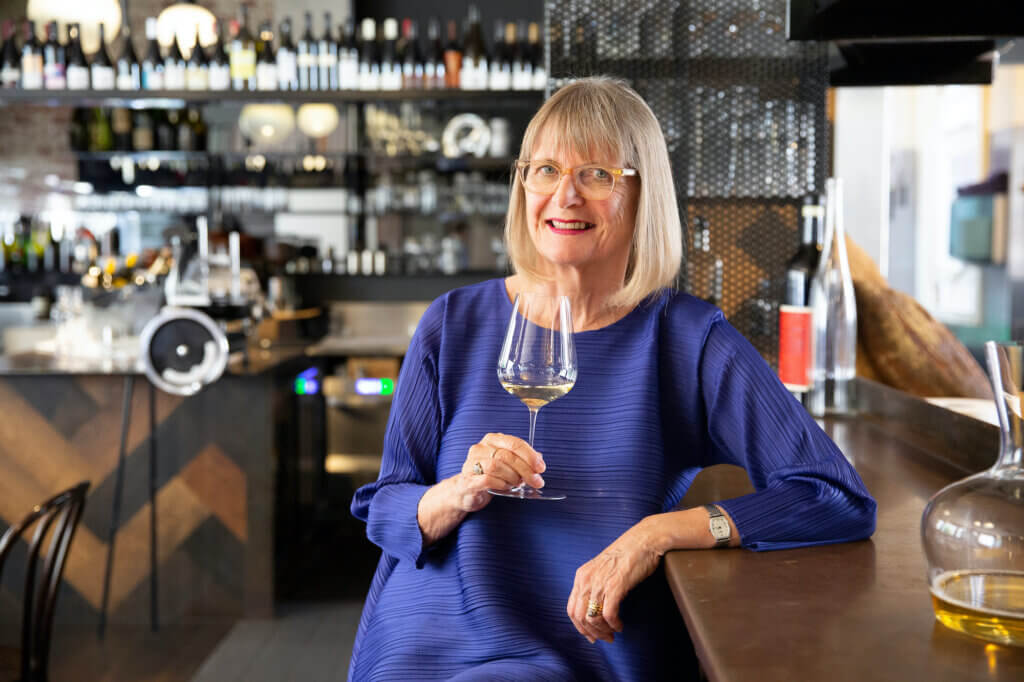
We kick off, somewhat unsportingly, by springing a quick-fire question round at Jancis before moving on to discuss everything from the Queen to influencers, negotiating with lawyers in a swimsuit, Cumbria, anorexia, regenerative viticulture, bottle weights, cans – and other hot potatoes.
We also explore how she presciently set up her subscription-based website in 2000 then successfully sold it 21 years later. A rare commercial success in the world of wine…
If you haven’t caught the first instalment of this interview, please do check it out. You don’t need to listen to that one, though, in order to enjoy this one.
Starring
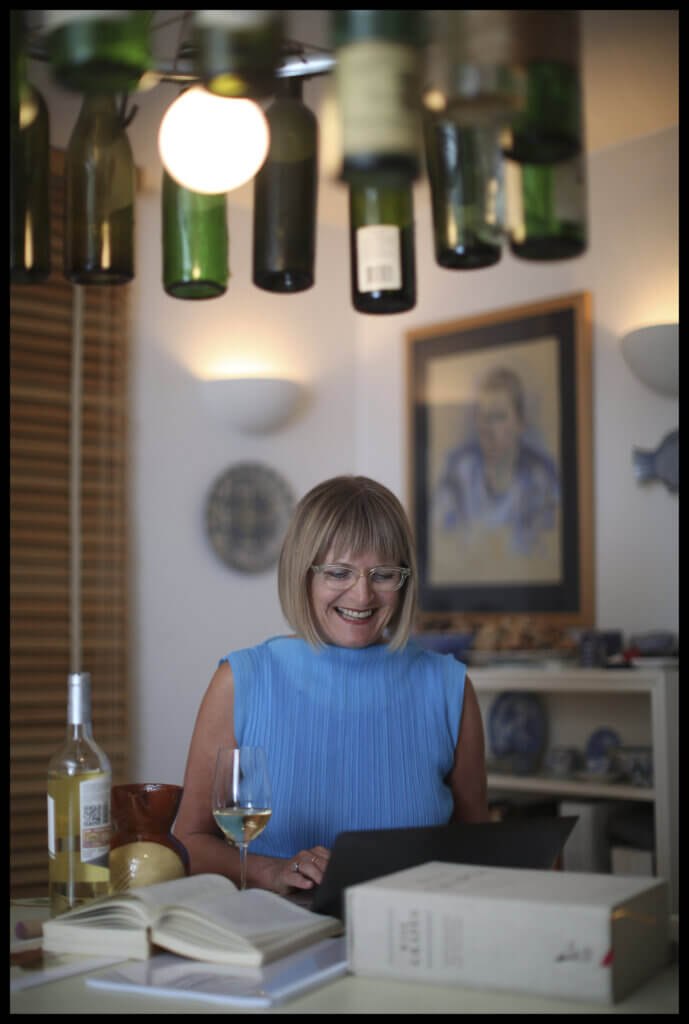
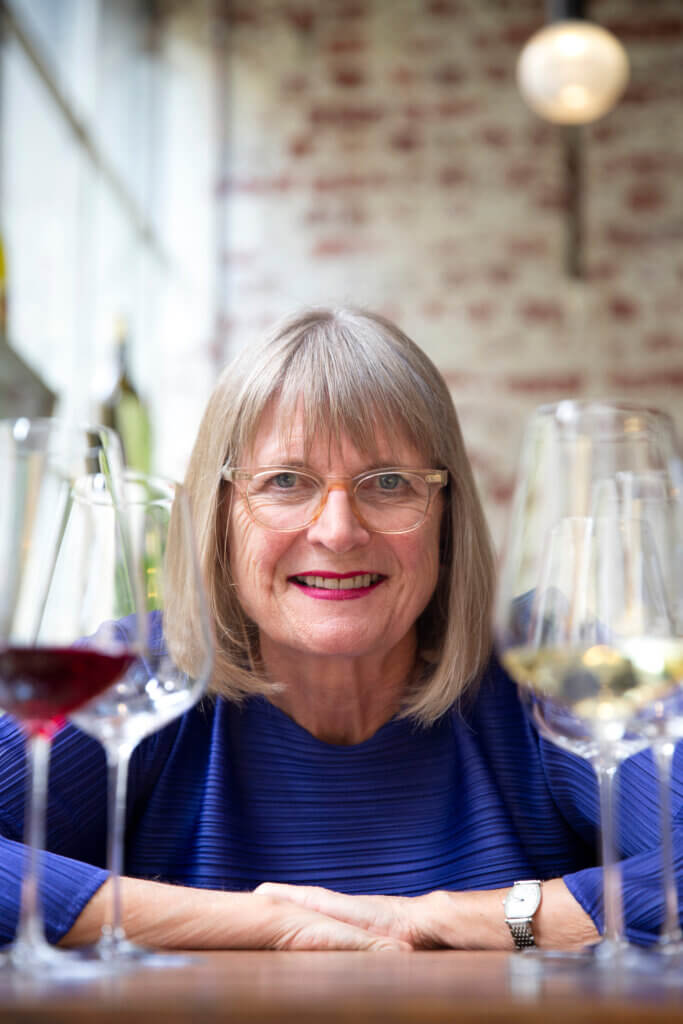
Links
- We refer to Jancis’ autobiography a few times in this interview. It’s a great read, though not the easiest to find. It’s called Confessions of a Wine Lover in the UK and Tasting Pleasure in the US.
- If you want to read more about Jancis, there’s a good section on her website: Jancis Robinson – the long version
- You can find our podcast on all major audio players: Apple Podcasts, Spotify, Google, Amazon and beyond. If you’re on a mobile, the button below will redirect you automatically to this episode on an audio platform on your device. (If you’re on a PC or desktop, it will just return you to this page – in which case, get your phone out! Or find one of the above platforms on your browser.)
Video short
Here’s a short video by way of teaser for the interview. It features some of the quick-fire questions Jancis was bombarded with…
Subscribe
Sign up to Wine Blast PLUS to support the show, enjoy early access to all episodes and get full archive access as well as occasional subscriber-only content.
Just visit WineBlast.co.uk to sign up – it’s very easy, and we will HUGELY appreciate your support.
It takes a monumental amount of work to make Wine Blast happen. Your support will enable the show to continue and grow – and we have lots of fantastic ideas of things we’d like to develop as part of Wine Blast to maximise the wine fun. The more people who sign up, the more we’ll be able to do.
We currently have an 15% Early Bird discount on initial headline subscription prices – just use the Promo Code magnum25 when you pay. But it’s a limited time offer – so don’t hang around!
Get in Touch!
We LOVE to hear from you.
You can send us an email. Or find us on social media (links below).
Or, better still, leave us a voice message via the magic of SpeakPipe:
Transcript
This transcript is AI generated. It’s not perfect.
Peter: Hello and welcome to Wine Blast! A doubly warm welcome if you’re joining us as a new subscriber, we hugely appreciate your support and hope you enjoy the benefits of early episode access, full archive access and the bonus content, including exclusive uncut interviews that will be coming very soon. If you haven’t subscribed and would like to subscribe or just want to find out a bit more, head to wineblast.co.uk
Susie: Hello, yes, it’s lovely to have you join us as we’re chatting to wine superstar Jancis Robinson, unquestionably the world’s leading wine communicator. And we’re getting privileged access to the intriguing personal as well as professional stories that get to the heart of who Jancis is and why. Here’s a taster, of what’s coming up:
Jancis Robinson: And I was whizzing around, you know, in my swimming gear, talking to these lawyers in America. It was so Heath Robinson, like, absolutely ridiculous. But it was fun! You see, that was the great thing. I’d rather be a celebrator of wine than a critic of wine.
Peter: Same here! So this is the second and concluding part of our exclusive interview with Jancis Robinson. OBE MW Etc. Etc. you can’t start to list the accolades with Jancis because you go on for a very long time. in the first part, we talked about her life and work. she’s feeling lucky and enthused and with no intention of giving up, despite 2025 marking her 50th anniversary of wine writing. and it was all pretty fascinating, wasn’t it?
Susie: Indeed it was. She let slip she’s, and I quote, probably addicted to wine. Though I imagine that covers the writing and tasting and travel and lifestyle as much as slip simply drinking the stuff. We got an insight, though, into tipsy Jancis, and how her wine friends tease her, how she nearly jacked it all in when she lost a sense of smell, how she has a horror of boring people about wine and how she sometimes thinks the perfect tasting note for a wine is just ‘mmmmmmm’
Peter: She talked us through how she can be friendly in flesh, but brutal in print, being a famously parsimonious scorer. And in one tasting note, the most complimentary she could be about the wine was that it was ‘wet.’ we discussed the famous American wine critic Robert Parker and the infamous spat the two had over Chateaux Pavie 2003, which led into a discussion of Bordeaux more widely, with, Jancis identifying one particular kind of Bordeaux as the best Value wines in the world.
Susie: We also discussed price inflation in the world’s top tier of wines, but also how wine quality is getting better and better, better across the board. So there’s more and more joy to be found beyond the classic wines too. All in all, a fascinating chat, well worth checking out if you haven’t already. Equally though, you don’t need to listen to that episode to appreciate this one.
Peter: Yeah. By way of brief biographical recap to to set the scene for this part of our interview. Jancis was born and raised in Cumbria, a beautiful but remote part of northwest England up towards the Scottish border. She was head girl at school, no surprises there. before heading to St Anne’s College, Oxford, where she not only read maths and philosophy, she also discovered the joys of fine food and wine for the first time. Her Damascene bottle being a Chambolle Musigny Les Amoureuses, 1959. What she loved was that in that glass there was ‘history, geography, psychology, creativity and a heck of a lot of science.’
Susie: Food and wine at that time was apparently considered frivolous, so she briefly went into travel instead. there’s a very funny bit in her autobiography where she talks about a booze fueled coach trip where the group couldn’t get to grips with her name. So she was just Jan for a week. just can’t imagine that. Anyway, but A Year in Provence convinced her to give wine a go. So she joined a wine trade magazine and the rest is wine history.
Peter: Tv, radio and many books ensued, including the monumental reference tome that is the Oxford Companion to Wine, whose first edition, helmed by Jancis with a team of global contributors, appeared in in 1994. It’s currently on its fifth edition. she also joined forces with Hugh Johnson to co author the fifth edition of the World Atlas of Wine, which came out in 2001 and is another seminal reference book in the world of wine today. It’s currently on its 8th edition.
Susie: In 2000 she set up her subscription based website, jancisrobinson.com which she successfully sold in 2021, something we’re going to come on to in our interview. In 2003, she was made an OBE by Her Majesty the Queen and in 2011 she became honorary president of the Wine and Spirits Education Trust, the wset. Nowadays she’s, a trustee of the Gerard Basset foundation, designed to bolster
00:05:00
Susie: diversity and inclusion in the wine world. And she’s also active on the sustainability front, having become a patron of the Regenerative Viticulture foundation and campaigning to reduce the weight of glass bottles, which represent the biggest part of wine’s carbon footprint.
Peter: Now, we don’t want to too bogged down in Jancis biography or we’ll be here all day. long story short, I sat down for an intimate chat with her at her central London flat. And as part of this probably ordeal for her, I would say, I, somewhat unsportingly, sprung a quick fire burst of questions on her, as you do, which she, of course, bore with patience and good grace. And I thought it would be quite fun to kick off this episode with that interlude. what do you think? Does that sound okay?
Susie: Does sound fun, you know, snappy.
Peter: All right. All right then. Here we go. My first question was what’s the best white wine grape?
Jancis Robinson: Riesling.
Peter: Still. Still. No, not prevaricating on that one.
Jancis Robinson: No.
Peter: What’s the. What’s the best red wine grape?
Jancis Robinson: Best and worst might be Pinot Noir. I like Aglianico and Nebbiolo. That’s.
Peter: That’s three.
Jancis Robinson: And, Yeah, sorry, I can’t come up with one.
Peter: Fine. What’s the best Jancis Robinson book?
Jancis Robinson: the one I’m probably most proud of, is the Oxford Companion. Went from no words to 800,000.
Peter: It is a remarkable achievement and fantastic.
Jancis Robinson: But with lots of brilliant contributors.
Peter: But managing a contributor list as wide as that is a huge achievement in itself…
Jancis Robinson: especially pre email.
Peter: How on earth, did you do that with fax?
Jancis Robinson: Nightmare.
Peter: your go to bargain on a restaurant wine list.
Jancis Robinson: that’s a very good question. Beaujolais, often. And white, chenin, sometimes Loire chenin or a South African chenin.
Peter: What, do you drink when you’re not drinking
Jancis Robinson: Tea. lot of tea. And I surprise myself by how nice water is sometimes.
Peter: Which of your many awards meant the most?
Jancis Robinson: Well, it was a complete shock to get the OBE. I just actually said this morning to somebody, I still don’t know who put me up for it. That was in 2003. I still haven’t a clue. And I suppose, you know the fact the lovely queen was involved and she was the one who gave it to me. That was a, And my mother could come and see it. So that was. That was lovely. And also I was almost as surprised as when the vintners made me an honorary vintner, because I always thought I was sort of slightly outside something as conventional as the vintners company.
Peter: One wine you’d really like to taste but haven’t yet.
Jancis Robinson: Good question.
Peter: There can’t be Very many.
Jancis Robinson: I’d like to taste more. 28 red Bordeaux, nothing specific.
Peter: Leave it out there and I’m sure They’ll be flooding into your door…
Susie: I think I’d like to taste a few more of the 1928 Bordeaux too, as it happens! And I also agree about the tea. Good tea is a thing of beauty.
Peter: As for this ‘water’ stuff she mentions?! No clue. Have you got any. Have you heard of this stuff called water?
Susie: Who drinks water?
Peter: It’s all about wine, isn’t it? But talking about non wine drinks. Do you remember when we asked that question of Oz Clarke and he went off on a fascinating tangent about the terroir of milk and tasting the cow? Do you remember? That was so funny.
Susie: Milk is a bit more interesting.
Peter: Both very interesting options. I think that interview with us is from season three, if you’d like to, experience that special moment again.
Susie: And Beaujolais and Chenin Blanc as wine list bargains. I think they are good shouts. we can add those to Jancis’ mention of Bordeaux Petit Chateaux being some of the best value wines in the world right now from the last episode, can’t we?
Peter: Yes. Top tips. All agree. right, we should get back to the interview proper. I think. we left off last time after we’ve been talking about wine scores, and wine bores, actually. she’d also mentioned her husband, Nick Lander, former restaurateur turned food writer and food service consultant, and her three children. so let’s pick it back up.
Peter: You’ve always described yourself as a wine writer.
Jancis Robinson: Yes, I don’t like to be called a wine critic.
Peter: So then tell us why. What is it about the term critic you don’t like? And what is it about the term writer you do like, even though these days, clearly you do so much more than writing?
Jancis Robinson: I love writing. I’ve always loved writing. I wouldn’t say that I write brilliantly well at all, but if I ever feel that I have written something that’s better than usual, it gives me a huge buzz. I love reading good writing. I think my who’s who entry has always said my interests are wine, food and words, I think. So I want people to understand that I see my chief job as writing about wine, not criticising it. And critic just sounds so negative. I’d rather be a celebrator of wine, than a critic of wine. Not just to say I have a critical lens, certainly during the day when I’m trying to
00:10:00
Jancis Robinson: give a score and things, but I think I Just find critic rather negative and it also conjures up visions of it’s like theatre critic or somebody sitting there passing judgement rather self satisfied rather than an exploring which I wouldn’t mind wine explorer, but.
Peter: Talking about doing more than writing, how you’ve done everything and you continue to do everything you’ve done. Tv, radio, books, podcasts, video, whatever. What’s your take on the state of wine communication today and what gets you excited and what makes you sad?
Jancis Robinson: The preponderance, the importance of schools did make me sad and particularly the fact that wine merchants, wine retailers certainly for quite a long time and some perhaps still have just abandoned their role as a selector of wine, as a judge of wine, as a finder of wine and just bought what got a high score. That’s really sad because presumably most of them got into wine because they were interested in it and they should be continuing that interest rather than sitting back and allowing somebody else to make all the judgments. So that’s what made me sad. I am sort of slightly befuddled by the whole influencer thing. I’m quite glad. I feel very, very grateful that the arc of my career has followed the world falling in love with wine. And I’m sad that total consumption is going down if that means that fascination with wine is going down. But I don’t think it does. I think it’s probably just people getting healthier. I hope. I just feel I can’t quite, I can’t see myself going into the whole online influencer business and I do see a difference between the paid influencers and those who are really making a name for themselves as you and Susie obviously have done online, with genuine judgement and entertainment and information. I don’t really like the idea that someone can be paid to spread the word about a wine, and I’m a little bit suspicious about this new brand ambassador role. But there are so few roles for people communicating about wine nowadays, aren’t they? I feel so lucky to have my perch at the Financial Times every Saturday and I fully aware that there are probably hundreds of people who would love to knock me off my perch. so I’ve got to work very hard to earn my place there now.
Peter: talking about the sort of changing scene in wine communication, you were ahead of your time when you set up your subscription based website in 2000 which is of course now then celebrating its 25th year. Congratulations again. Why did you do that?
Jancis Robinson: I’ve always said my career has been a series of responding to external stimuli rather than having a plan. In 2000, if you remember, the world was going online. I had a succession of men. It was all men coming to my front door in Belsize park saying, you know, I’m going to make you a fortune. Just come into business with me. Because I had what they didn’t have. I had content masses, of it. And then the one guy that I thought was the person that I would devise jancisromison.com with turned out not to be as straight as I thought. But I’d already asked the publishers of my next book to mention jancisrobinson.com on the jacket. So it had to exist, it had to happen. And literally it was sort of, from my desk with the guy who helped us buy computers. Ah, it was so Heath Robinson, like, absolutely ridiculous. but it was fun, you see, that was the great thing. And I was going to all these tastings. I had all these tasting notes that were just accumulating in the attic, literally. And so here was something where I could share, because coming from the north, I waste not, want not kind of person. so it was ideal. And then I realised I was spending so much time on it, it couldn’t just be a charitable thing. And that’s when. So a year later, we devised a subscription element to it.
Peter: So, obviously, since then, you know, your website’s gone from strength to strength. you’ve built a wonderful team.
Jancis Robinson: Oh, wonderful team. Fantastic and lovely people, you know, not just very competent. Yeah.
Peter: So how do you feel about having, having sort of built that team and what that means, you know.
Jancis Robinson: Oh, it’s hugely, hugely satisfying. Yeah. And the only reason that I sold the website, apart from trying to get sleep better, was, you know, when I hit 70 and
00:15:00
Jancis Robinson: so many friends just, you get some horrible diagnosis. It’s when you know, you can get really, really ill. Ah. And I just thought if I got the team, I owe it to the team to ensure that the site has a future beyond me. Okay.
Peter: As you said, you successfully sold the website in 2021.
Jancis Robinson: Yeah.
Peter: I won’t ask you how much you got for it. Of course. I would never do anything, like that. Instead, I’ll limit myself to asking how, how satisfying was the outcome for you?
Jancis Robinson: Oh, it was great initially just to feel. Well, the most satisfying thing was when Tara, the managing editor, was appointed and then huge weight off. I think that the initial owners commissioned the ex editor of Wine Enthusiast to analyse the workings of jancisrobinson.com and I think she was pretty horrified and they were pretty horrified to find I was doing far too much. and that was what inspired them to appoint, managing editor. So that was the most satisfying thing, really. Somebody I remember distinctly. It was really interesting, the process of selling it, it happened during COVID so all the, encounters had to be online, which was quite fun in itself. And just the process and appointing, you know, a lawyer and a banker and all that, it was a whole new territory for me.
Peter: Had you been thinking about doing it for a while?
Jancis Robinson: No, I think it was You know, turning 70 was, it was just okay. And it wasn’t a sort of long term aim either. so no, I had lots of interesting encounters. But it happened, so happened that the actual completion was when we were on holiday.
Peter: It’s always the way.
Jancis Robinson: Oh, we were in our favourite hotel on the Costa Brava and luckily, Nick’s brother and sister in law were there. So I had two friendly people to sort of witness everything. Otherwise it would have been the hotel manager or something like that. And I was whizzing around, you know, in my swimming gear when I was talking to these lawyers in America. And then on the very day of the signing final final, we went back to our house near Carcassonne where our older daughter, as she does every summer, had all her university friends and their increasing number of children to spend a week. But all of them unfortunately had early morning flights. So I, because people said, what did you do to celebrate? And I honestly, I said, oh, I did seven loads of washing.
Susie: That’s just a brilliant series of very relatable scenes there, starting with the one where she’s launching her website with her local computer guy, you know, in a totally kind of amateur way. But look what happens happened. You know, it’s rare that wine people are good business people, but Jancis has done brilliantly over the years in that sense and both creating, then selling her website were masterstrokes, whether they were planned or not.
Peter: Yeah, I mean, good for her and for her team, of course, for whom we have huge respect. and she says she’s never had a plan, but she has worked incredibly hard. And it’s also true, as she says, that her career sort of blossomed at a time when wine really started to become popular on a global scale from say, you know, the 1980s onwards.
Susie: She’s clearly not going to go big on social media though, is she? Befuddled by the whole influencer thing, in her words. But I do like her alternative descriptions of what she does as being a celebrator of wine or a wine explorer.
Peter: Absolutely. and just at the end there, she mentioned their house near Carcassonne. they’ve had that for 35 odd years now, I think, where she and the family escape in the summer to get away from it all. So, you know, She told me she doesn’t know the area that well in wine terms, or maybe m as well as she might. because when she’s there, ah, she tends to stay resolutely on the compound.
Susie: I like that. I really like that. Okay, so, time for a pause before we come back with more to briefly summarise. So far. Jancis Robinson is the world’s most influential wine communicator. She describes herself as a wine explorer rather than a wine critic, decries the excessive importance given to wine scores, and almost certainly won’t be signing herself up for TikTok anytime soon. She set up her hugely successful website in decidedly amateurish fashion, but then finalised its sale in a swimsuit poolside in Spain and celebrated said sale by doing seven loads of washing, as you do.
Peter: So at this point in the conversation, I felt like a change of tack would be interesting, so I took Jancis back to her roots. and just a mild trigger warning, we do get quite personal and discuss eating disorders along the way.
Peter: Moving from the future to the past, if I may. I want to take you back to your early days growing up
00:20:00
Peter: in a remote part of Cumbria in northern England. And firstly, I just have to ask this. Apologies. You have the most wonderful voice. We all know your voice. You’ve used it for many voiceovers, voiceover work in your time.
Jancis Robinson: It’s too posh now then as well.
Peter: This is what I want to get to.
Jancis Robinson: So you’re going to say. Yeah, yeah.
Peter: Can we. Can we have a sample?
Jancis Robinson: Oh, like what? I mean to say, like, I didn’t know. That’s outside the talk up there. No, in my village, the farmers, would have said that.
Peter: But just also talking about your early days, you were into fashion early on.
Jancis Robinson: Well, I think I’ve always been interested.
Peter: In fashion, obviously, but your first published article was on fashion.
Jancis Robinson: Yeah. And I illustrated it! Yes, it is now in the, My archive in the University of, at Davis. University of California, Davis. In their library. Because very. I’ve just been so lucky in my life that, they had Hugh Johnson’s archive and they wanted my archive. Just at the time we were moving from the big House to the much smaller flat. So my attic went across the Atlantic and it’s been digitised.
Peter: I think it’s a great article. I’ve seen it. A more personal question, if I may. You’d be wonderfully open about having a brush with what you term, mildish anorexia, when you were young and then this fascination with food ultimately led to wine. How did you manage to get beyond that sort of unhealthy interest in food?
Jancis Robinson: I wish. I wish I knew. I wish I knew because it would be so helpful for so many sufferers. And of course, what happens is you go off, you try to eat as little as possible, therefore become weak, therefore that affects your judgement. And, you know, you look at yourself in the mirror and you think, oh, God, I’m so fat. You know, when in fact, you’re skinny. Skinny. I honestly don’t know. I think that. I mean, certainly I was still pretty skinny in the sixth form. I think the turning point must have been sort of between that and university. Don’t know, certainly. But I was. We were all. We all wanted to look like Twiggy at, university. It wasn’t unusual, but I was lucky that I did turn the corner and, you know, my parents must have been terribly worried.
Peter: And do you think that sort of. Has it stayed with you subsequently, do you think?
Jancis Robinson: No, I’d happy to say, yeah, totally. I mean, I adore food and I think one or two of my friends still don’t have a normal relationship with food, but I’m glad to say I do. Yeah. And I’ve never been bulimic or anything like that. I just. It was partly, you know, I was a mathematician and I learned. I learned about calories. I thought, oh, that’s interesting, I’ll start counting calories, you know, and that. So I tried to eat fewer and fewer calories each day. There was a sort of numeric aspect to it.
Peter: and also, I guess, a determination. You’re quite. I would.
Jancis Robinson: Quite determined.
Peter: You’re quite determined. You say you’ve never had a career plan, which I completely believe, but you were quite a determined.
Jancis Robinson: Yes. I mean, put a hurdle in front of me and I. If I’ve got a broken leg, I’ll still try and get myself over.
Peter: Do you think that’s been, Has it in it? Obviously it’s been a tremendous asset. Do you think it’s ever been a burden or.
Jancis Robinson: Yes, I think Nick would probably say, you know, when Hugh asked me to take over the World Atlas of Wine from him in 1998, it probably would have been nicer for Nick if I’d said no.
Peter: But yet here we are and you know, you’ve done these amazing.
Jancis Robinson: Works and now hard at work on the ninth edition.
Peter: Ninth edition.
Jancis Robinson: I took over with the fifth.
Peter: Gosh. And with the Oxford Companion. What are we on now?
Jancis Robinson: the fifth, but I’m glad to say the lovely Julia Harding is now the lead editor of that. I was the lead editor for four and that was quite enough.
Peter: now one of your newer roles is a patron of the Regenerative Viticulture Foundation. Can you tell us a bit about that, why you took it on and maybe the importance of sustainability?
Jancis Robinson: Yeah. well, it just seemed, seemed so sensible that soil health is so important and it’s not just for viticulture, but for agriculture in general. And probably the most eye opening tasting I was ever given were two wine glasses in which were, you know, soil from a conventional vineyard and soil from. Actually, in this case it was a biodynamic vineyard. This was actually at Quartz Reef in New Zealand. And the contrast between the two, I think everybody actually, if they’re interested in agriculture, should have an experience like that. You know, the one from the conventionally farmed one that was chock full of agrochemicals was like grey sand and had no smell and was completely, heterogeneous, homogeneous rather, whereas the biodynamic one had lots and lots of little fronds and microbes and tiny little things and insects and smell. Absolutely gorgeous. And really it was, more educational than pretty much all contrasting wine tastings I’ve had.
Peter: And yet wine has been, you know, a
00:25:00
Peter: baddie in this, a villainous story, hasn’t it?
Jancis Robinson: Absolutely. But then, you know, people, especially current generation who are often very rude about their parents who use agrochemicals, they were needs must. I mean, Post Post war, the 60s, white hot technology, all the rest. People didn’t realise how bad agrochemicals were. They seemed as though they were a solution. We needed to feed the world. Famine was an even worse problem then than it is now. anything you could do to step up production seemed worthwhile. So, you know, it’s horses, of course, it’s. You’ve got to see things in their historical context, I think.
Peter: But do you think that wine generally should be moving more towards this regenerative, slash, organic biodiversity?
Jancis Robinson: Very much so. I think it is, definitely is. I’m slightly wary of wines that are sold solely on the basis of, say, being organic. You know, I think it’s it’s got to taste good, number one. And I sometimes think, for instance, that Chateaux Latour could probably sell itself as a natural wine almost. It’s probably got just a smidgen more sulphur sulfites than a, most natural. But it’s, it’s, it pretty much ticks the boxes.
Peter: And of course, talking about climate change, you’re renowned right now for publishing the weight of the wine bottles that you taste.
Jancis Robinson: It’s going down!
Peter: Is it going down?
Jancis Robinson: Definitely going down. And the great thing too is that when I started it, you could tell by looking at a bottle what its weight was really. The lightweight ones looked pretty cheap and nasty, but the bottle manufacturers have really got behind this. and the design of some of the lightweight bottles is fantastic. I can no longer tell just by looking at a bottle what it’s likely and actually, funnily enough, nor can I tell by lifting it nowadays. They seem to, I don’t know, they’re very clever.
Peter: Maybe they’ve got to your scales!! Are you also a fan of alternative packaging cans, bag-in- boxes?
Jancis Robinson: Yeah, I do think, you know, everyone’s tearing their hair out about, oh, young people, they’re not drinking wine the way we did. But it is pretty bizarre to sell a product in a whole 75 centilitre package that is kind of six at least, if not eight servings, for which you need a special implement to actually get in. So I’m pretty Pro a little 25 centilitre can for introducing people to wine. And I know that, you know, there are, technical difficulties. You don’t want to keep still wine in a can for too long. But I’ve tasted some pretty nice wine out of cans.
Peter: Now, also on a topical theme, you published a book in 1988, I believe, called the Demon Drink. Now these days, in that one, you were talking about the global anti alcohol movement, neo temperance movement. It’s rearing its head again, typified by the WHO saying there is no safe level of alcohol consumption. What’s your take on this? Is it a storm and a teacup or is it sort of.
Jancis Robinson: Well, it’s a very powerful storm in a teacup. And it makes me cross that it’s all down to sort of great big unnuanced headlines like, you know, the WHO stats are about certain cancers. Yes, you increase your risk by zero point something. But, but of course, the drinks trade is, is on a hiding to nothing to combat it really, because we all know alcohol is a toxin and it’s not alcohol per se, is not good for you. What it does to you can be lovely. But, too much of it is definitely too much. I think people like Laura Catena from in Argentina, ah, Who is a medical doctor and a scientist, she’s doing a good job. It’s a hot potato. That’s the trouble.
Peter: Yeah. Do you think. I mean, how existential is this? Because, you know, this could easily push down. You say people are drinking less and less. Is this just going to be another slight nail in a, you know, in a declining, ever declining market for alcohol and wine in general?
Jancis Robinson: I think it will be definitely a factor. And if people are drinking less, it probably is a good thing and I’m not going to follow them, I’m afraid. But, I think it is a good thing and I think. I think that in the wine market that what’s going to suffer are those, you know, bottom shelf in the supermarket wines that there really aren’t going to find, nearly as many people willing to swill them. And you’ve only got to look at, the graph of French wine consumption and that red wine consumption in France was sustained by elderly chaps who were drinking it from litre bottles without any thought of the taste and connoisseurship and stuff. And they’ve been dying off and that’s why that line has been going down and down and down.
Peter: So it’s not necessarily a bad thing or a terminal thing, it’s just a recorrection.
Jancis Robinson: Yes, I think so.
Peter: Less but better.
Jancis Robinson: Yeah, yeah, yeah. And, interesting that. I mean, wine tourism is hugely popular. Wine education is hugely popular. I think these vicarious ways of enjoying wine are actually, having a moment in
00:30:00
Jancis Robinson: the sun. It’s just the actual quantity drunk is probably going to continue to go down.
Peter: Talking about a moment in the sun, the, end of your autobiography, admittedly written a while ago now, you said your dream would be to gently tour the world’s vineyards and better restaurants with Nick, your wonderful husband that you mentioned in semi retirement, long last, getting the balance between reception and transmission of information. Right, where are you on that?
Jancis Robinson: I’m gently, gently, gently going there. We do a lot of, restaurant going together, and travelling together, which is lovely. yeah, I’m moving towards that, I’d say.
Peter: Final question. You once said that all wine writers should pinch themselves at the start of every day. Did you do that this morning?
Jancis Robinson: M. I Pinched Nick because it was the first of, the month. You know, pinch and a punch. The first of the month. you’re right. I should do that. I do. Honestly, I do realise how incredibly lucky I am.
Peter: Jancis, thank you very much indeed.
Jancis Robinson: Thank you.
Peter: Just to say, this is not a green light for you to start pinching and punching me on the 1st of every month just because Jancis does it to poor Nick.
Susie: Can’t promise anything.
Peter: Yeah, okay.
Susie: Gosh, lots to ponder there though, isn’t there? I personally did like the sound of that soil comparison at Quartz Reef. And she has been very vocal about trying to get producers to reduce bottle weights to reduce carbon emissions.
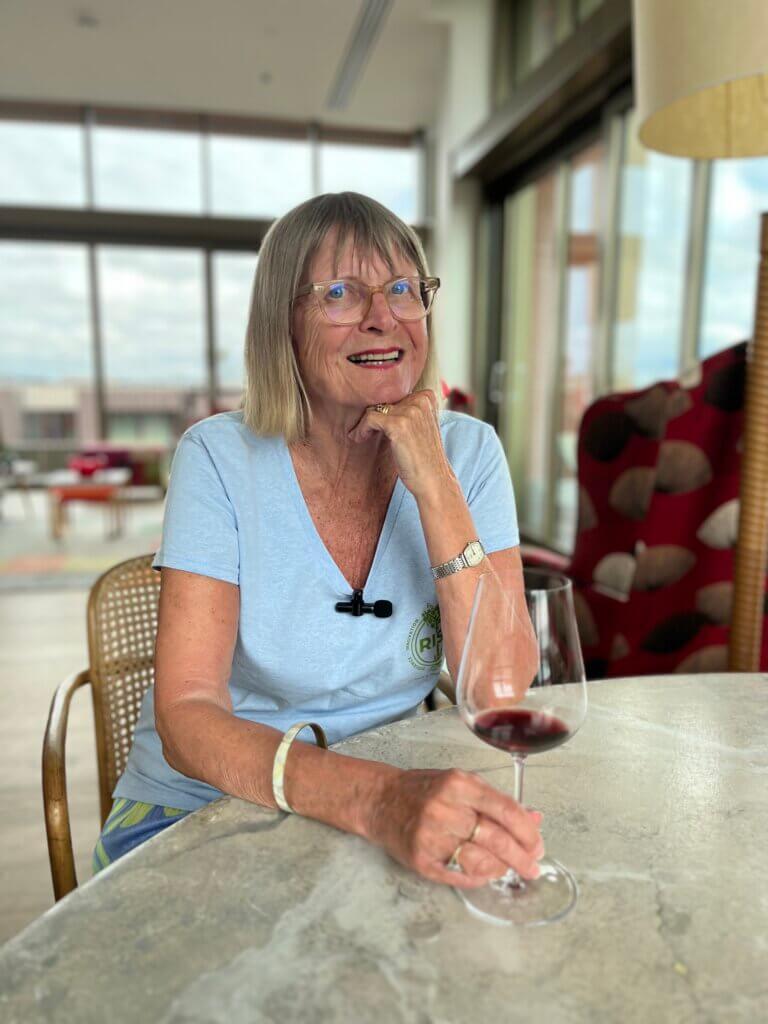
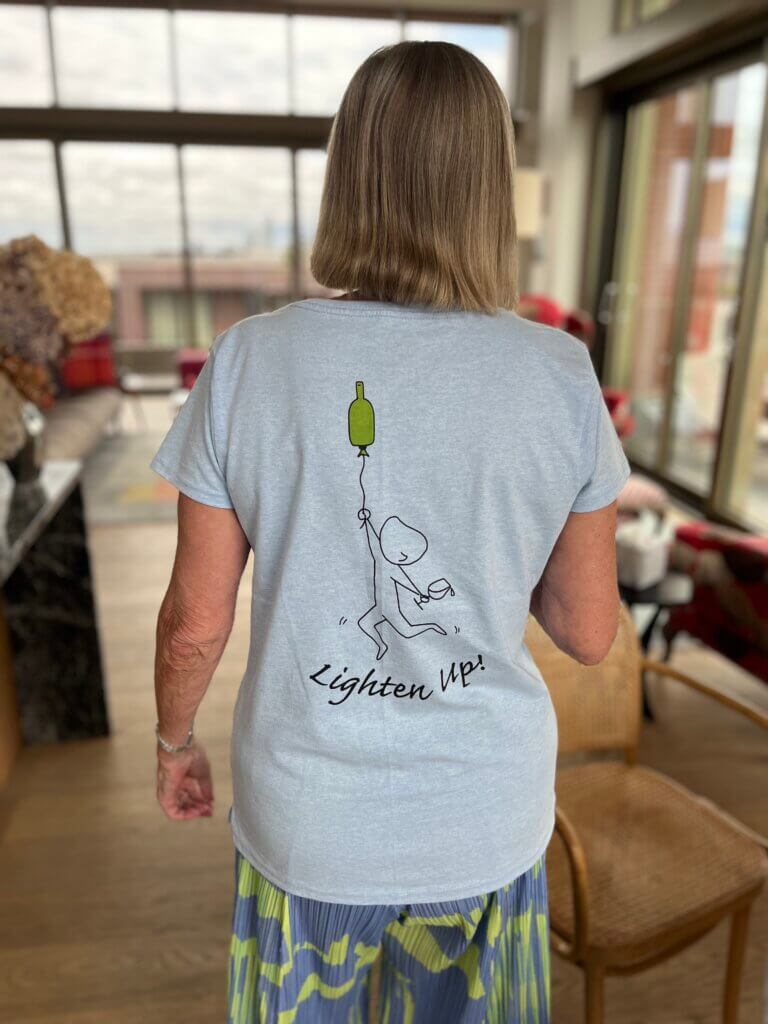
Peter: M. So she now publishes the weight of the bottles with her wine reviews on the website. So when we had lunch after our interview, some delicious Syrah from Kusuda in Martinborough, her scales had clearly been hard at work because she’d scribbled away on the label. You could see, and not just that, but she was proudly wearing a T shirt saying lighten up with a picture of a wine drinker holding a bottle shaped balloon. No. Yeah, it was very cool. Very cool.
Susie: I love it. I did like her description of wine bottles as bizarrely anachronistic and the championing of cans. Do check out our fun episode on Wine Cans. We quite agree with Jancis on that one, don’t we?
Peter: We do, we do. As for wine education and wine tourism, having a moment in the sun, you know, here’s raising a glass to that. so I think time to draw things to a close. if you’d like to learn more about Jancis or her work, start with her website, jancisrobinson.com Alternatively, if it’s all about podcasts for you, do look out for an in depth profile of Jancis. Coming soon to the jancisrobinson.com podcast.
Susie: And if you’d like to support this show even more than by listening right to the end of the episode, then please do consider subscribing at wineblast.co.uk the show takes a tremendous amount of work to make happen and we’d love to not just continue, but also grow the community and expand what we can offer you by way of wine fun. But in order to do that, we need your support. thanks in advance and thanks also to our wonderful interviewee, Jancis Robinson. And as ever, thank you for listening. Until next time, cheers.
00:33:05