- Season 7 Trailer
- The Jancis Robinson EXCLUSIVE Part 1
- The Jancis Robinson EXCLUSIVE Part 2
- Chile Wines of the Year 2025
- SAN LEONARDO – The insider’s Guide
- The Story of The Billionaire’s Vinegar – Part 1
- The Story of The Billionaire’s Vinegar – Part 2
- Blind Tasting Top 2021 Super Tuscans
- Top of the Pops: Classic Fizz Beyond Champagne
- Rock and Rhône
- Our WINES OF THE YEAR (2025)
- Our BOOKS OF THE YEAR (2025)
- Hugh Johnson UNCUT
- McLaren Vale – Boxer to Ballerina
- McLaren Vale – The Grenaissance
- Peter Fraser – A Tribute
- New Zealand Wines of the Year 2026
- Sam Neill UNCUT
- Giveaway EXTRAVAGANZA + Game-changer Coravin
- Greg Lambrecht UNCUT
- The Story of Stalin’s Wine Cellar PART ONE
- The Story of Stalin’s Wine Cellar PART TWO
- Drop Stop: Wine’s Big Water Issue
Summary
It’s not every wine story that comes with lashings of guns and cash and enforcers and heart-rending breakages – plus the odd death threat.
Not to mention unicorn wines aplenty.
But this one does! Which is why it’s a must-listen.
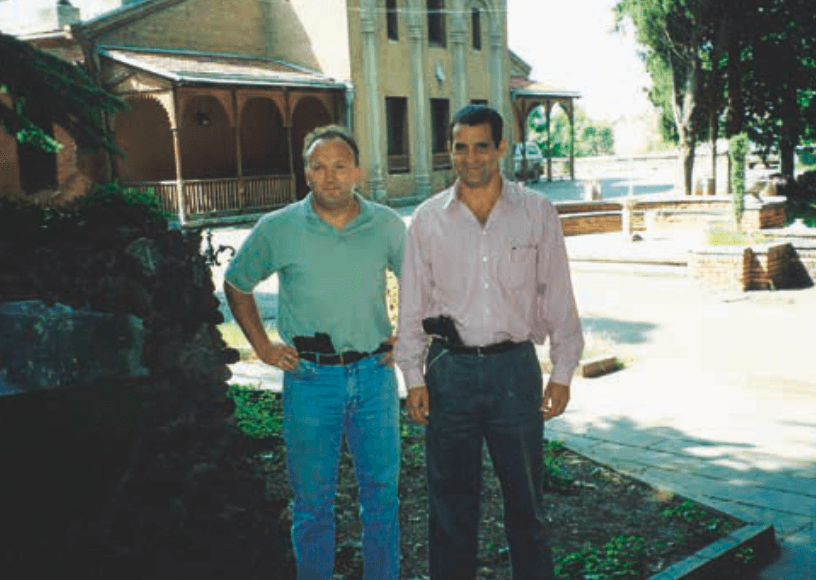
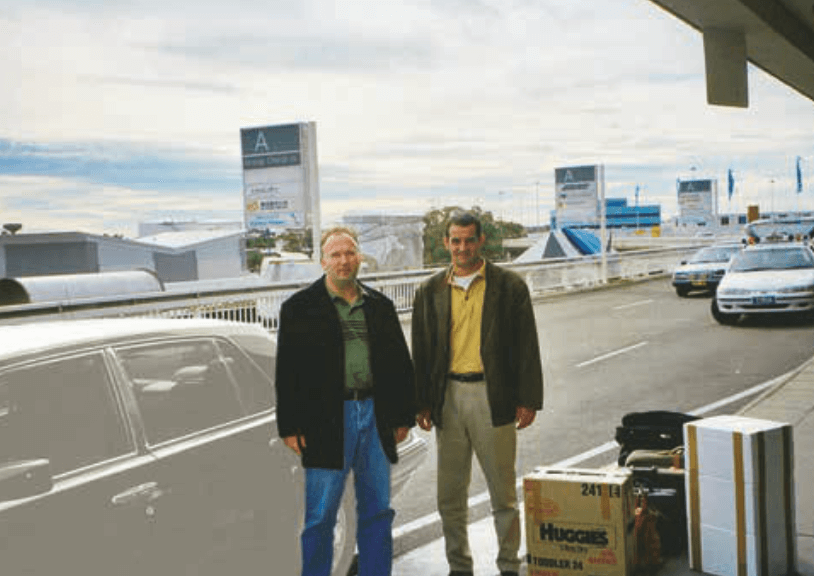
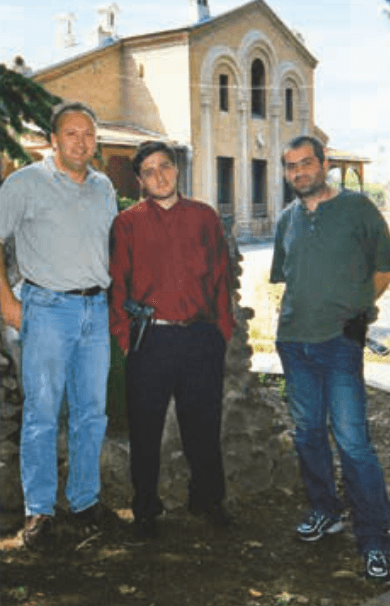
John Baker (on the right in the photo above) was a Sydney wine merchant with a sideline in fine and rare wine when opportunity came knocking in the form of a mysterious wine cellar in Tbilisi, Georgia, apparently chock full of the greatest wines in the world, some more than a hundred years old.
It was, in his words, ‘a potential wine goldmine.’
And that was even before you took into account the eye-opening story about where the wine had come from…
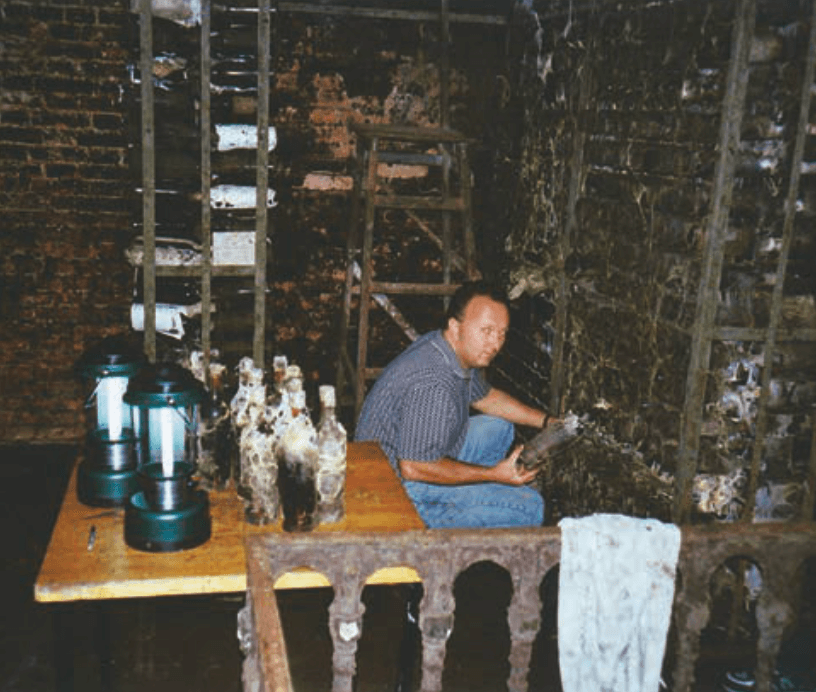
What happens next is the subject of his best-selling book, Stalin’s Wine Cellar.
It’s a fantastic story, full of intrigue and mystery and surprise and suspense.
Not to mention the odd bit of nudity.
John tells us the story in his own words, adding extra detail, context and humour, plus some exciting latest news.
This is a narrative two-parter – the second and concluding part is available for Wine Blast PLUS subscribers now. (If you’d like to sign up, click here.)
Starring


Subscribe
Sign up to Wine Blast PLUS to support the show, enjoy subscriber-only bonus content as well as early access to all episodes (including the concluding part to this fabulous story) plus full archive access, not to mention subscriber benefits and giveaways.
Just visit WineBlast.co.uk to sign up – it’s very easy, and we will HUGELY appreciate your support.

It takes a monumental amount of work to make Wine Blast happen. Your support will enable the show to continue and grow – and we have lots of fantastic ideas of things we’d like to develop as part of Wine Blast to maximise the wine fun. The more people who sign up, the more we’ll be able to do.
Photos
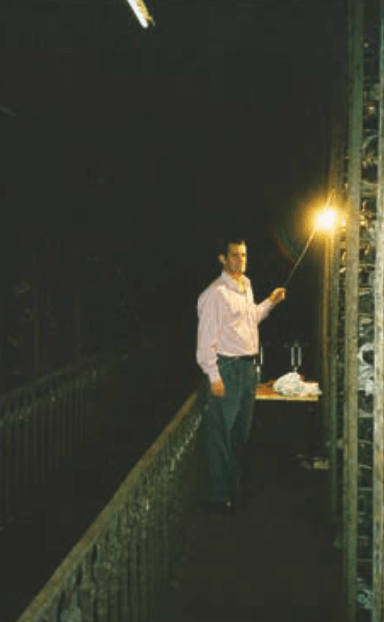
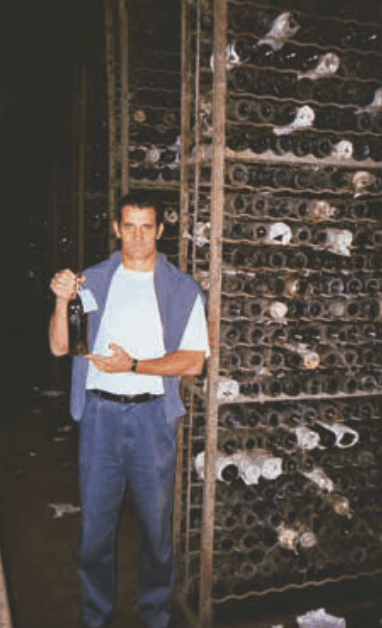
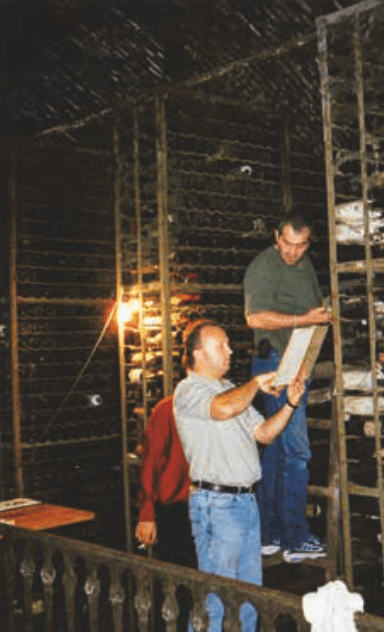
All photos here are provided by John Baker, and as featured in the book.
There are more on the show notes for Part Two.
Get in touch!
We love to hear from you.
You can send us an email. Or find us on social media (links on the footer below).
Or, better still, leave us a voice message via the magic of SpeakPipe:
Transcript
This transcript was AI generated. It’s not perfect.
Susie: Hello and welcome to Wine Blast! Now, as you know, we love telling stories on this podcast. All kinds of stories – but we’ve got one now that is truly something else. A tale with darkness as well as light. Definitely a fair amount of intrigue and mystery and suspense, not to mention lashings of fine wine.
Peter: Yeah, it’s not every wine story that comes with a side helping of guns and cash and enforcers and heart-rending breakages. Plus the odd death threat. And, as you say, unicorn wines aplenty. Plus a fair few laughs along the way too. But this one does! Here’s a brief taster:
John Baker: I said, ‘is that gun loaded?’ And he looked at me. I thought: man, that was a dumb question. So it’s a 100-year-old bottle of the great Sauternes Suduiraut. And this was a crucial moment because if this wine wasn’t superb, we’re on the first plane out of there.
Susie: John Baker there, author of Stalin’s Wine Cellar, a book we gave a very brief plug to back in season five in our Six Best Wine Books episode, but one which when we reread it we knew we just had to bring to life on the pod because it’s such a good story isn’t it?
Peter: Yeah. And John was a great sport. So this is going to work in a similar way to our Billionaire’s Vinegar episodes. It’s a two parter narrative format, essentially telling the story of the book, but with extra juicy details and context. plus a bit of an update at the end. both parts are available from the outset for our Wine Blast PLUS subscribers. If you’re not a subscriber, you’ll have to wait for the second part to go on free release in our normal schedule.
Susie: So our advice would of course be to sign up now via wineblast.co.uk and enjoy immediate access to this two parter, as well as a whole range of subscriber, benefits. But coming back to John, he’s from Sydney and he was a hotelier and rock and roll promoter in the 80s era of Midnight Oil, INXS, and Men at Work. But he got bored of coming home at 4am smelling somewhere between A cigarette factory and a brewery. So he got into wine.
Peter: A natural progression if ever there was one! of course. you know, INXS to wine. There we go. Anyway, John became a wine merchant with a number of stores in and around Sydney, as well as a Bordeaux importing business. and that’s where we find him as the book opens. it’s the late 1990s and John’s main store was in Double Bay, an affluent area of Sydney. by then, he’d become known for doing things a bit differently from the norm, putting on unusual tastings and dinners and also specialising in fine and rare wine.
Susie: Now, just before we dive into this story a few notes. Yquem, or Chateau d’Yquem is the most famous, expensive and venerated Sauternes sweet wine from Bordeaux which ages magnificently. Ah, it’s a wine actually we featured before and it even got a mention, I think, didn’t it, in our latest episode with Greg Lambrecht. Suduiraut and Rieussec are also highly regarded Historic Sauternes Estates. Chateau Lafite is a Pauillac first growth that is one of the longest lived dry reds out there, while Penfold’s Grange is perhaps Australia’s most iconic dry read, historically speaking.
Peter: Now, I don’t want to give too many spoilers or equally teach my granny to suck eggs, but this story does involve Georgia, the historic nation that sits at the eastern edge of the Black Sea, bordered by Turkey, Armenia, Azerbaijan and Russia. its capital is Tbilisi and the grapevine is thought to have been first domesticated for human purposes in this wider South Caucasus area. In other words, this is pretty much ground zero for wine. So it’s important and historic for many reasons. Georgia also enjoys, let’s say, a complicated historic relationship with its vastly larger northern neighbour, Russia.
Susie: Finally, when John talks about fluoros, he means bright fluorescent lights. And he does also occasionally drum his fingers while he’s telling the story in case you’re wondering what that. That sound is. What’s more, he’s prone to what we might charitably call significant understatement. He’s quite dry. And not one to go in for flights of fancy, is he? But that’s quite, quite endearing.
Peter: Yeah. and also he’s very good at seeing the funny, lighter side of things too. So I started by asking John about his dabblings in fine and rare wine.
John Baker: Yeah, well, this was in a affluent part of the eastern suburbs of Sydney, which is the area between the city and Bondi Beach. Shall we Say along the harbour. And I believe you have to have a point of difference, otherwise you’re just another corner store. And our point of difference was old and rare wines. And we. That’s in the early days we used to buy a lot at auction and anywhere we could get them. And then. But it became a self, generating business. The more you dealt with these sort of wines, the more people would come in and offer you their cellars. So we ended up with quite a
00:05:00
John Baker: good system of, People would come and offer us their cellars or various bottles of wine and whatever. Some we’d take, some we wouldn’t. And it just generated itself really. And we had one particular character we talk about in the book called Harry Zuckor who used to come and bring us what he’d call opportunities or deals or whatever. And some were absurd figments of his imagination and some weren’t. Some were quite interesting. And I think early in the book we deal with one we bought, in one of the suburbs of Sydney and brought it back to the store and we’d have a invitation only tasting on the Thursday night, for our better customers. And, they’d come in and they’d have first opportunity to buy these wines and then we’d have them over the weekend and they’d almost all sell out by the end of the weekend. So it was quite a lucrative part of our business.
Peter: So you’ve mentioned Harry there. Let’s go into detail and could you just go into a little bit detail about one particular cellar you mentioned in the book? Probably as a way of setting the context that the Terrey Hills cellar. could you tell us about that particular cellar, Maybe some of the wines involved there and just the process of selling that, just so we get a picture of it.
John Baker: Sure. This was a cellar owned by a chap who I think had a large cleaning business and he moved back to Europe and wanted to sell all the wines. And I come in, I think it was $120,000. this was in the 90s, so it was still quite a bit of money. And of course he wanted cash, everybody wanted cash. So I had to come up with $120,000 in cash. But anyway, you that. So we inspect the cellar and satisfy ourselves that what was in it was. Was good and valuable and in good condition particularly. And we would. He had a list of the wines and we’d negotiate a price on the list and they’d always be what we call unders and overs. There might be two. One more bottle of Wine and one less of another. And we just do that calculation in this, in the settling up process and we would pack it all up and take it back to the store. And I think in this. And Penfolds Grange, which is probably iconic Australian wine. So there’s two full sets of Grange, which I think went from 1951 to about 1990, I think. And then there’s another, I think two, six packs of 1955 Grange, which was considered, I think, the best vintage of the 50s. I think there’s five or six cases of 1966 Lafite Rothschild, which was surprising and surprisingly when we tasted it, was a little disappointing. But, that happens. and I think I remember there’s some Rieussec in there. Yeah, it was certainly interesting. And our customers in one stage, two gentlemen were squabbling over a case of Rieussec It was the last case. I said, gentlemen, how about we have half each? And they, you know, remembering themselves, went, of course, of course, of course.
Peter: But, but didn’t you have a little accident with a certain bottle of Grange?
John Baker: Oh, yeah, it’s another one of our accidents. Yeah. When we’re packing them into, into boxes, you know, one should be very careful. And I was sort of, maybe not as careful as some, of my staff, which was, and I pulled the top off a 1954 Grange, which was one of the bottles of one of the two sets. So suddenly we had one set without a 54 Grange. And that really was a bit of a problem because you couldn’t buy a 54 Grange. I think I don’t know how you’d buy one.
Peter: And how exactly did you break it?
John Baker: I just, instead of picking it up by the body, I picked it up by the neck and basically just pulled the neck off. Because these are old bottles. Who knows how, what the quality of the glass was. And I just pulled the neck off the top of the bottle.
Peter: And I was going to say, so some of these old bottles, they can be pretty fragile, can’t they?
John Baker: Sure, yeah, they can, yeah.
Peter: Ah. And how expensive was that particular mistake?
John Baker: Well, I, think I deducted $2,000 from the full set. I think I sold this full set for $25,000, which is ridiculously cheap today. And I think I deducted $2,000 for the bottle that I’d broken or bottle that was missing.
Peter: Okay, so we’re talking just to set the time period. We’re talking sort of late 90s here. Aren’t we talking? So 1998, 1999.
John Baker: Correct.
Peter: Seems like A different world now, doesn’t it? and I’m just wondering if you. Could you possibly introduce Kevin, who’s also a key protagonist in the book.
John Baker: Yeah, Kevin. Kevin’s quite a character. Great sense of humour, quite dry. Although he was my general manager at the store, Kevin very much runs his own race sometimes. I didn’t know what he was up to. But Kevin was sharp. Kevin was smart, had
00:10:00
John Baker: a sharp brain for wine and value. And he used to trade and still does, I think, even to today. wine all around the world. He’ll buy wine in Hong Kong and sell it in London or something. And he just plays that game and enjoys it. So he was valuable. And when we look at sellers, invariably Harry Zuckor, this one chap who would bring us sellers or other ones, they bring them to me and I’d basically just give it to Kevin and say, Kevin, you know, is this. You know, what’s this cellar worth? And Kevin was quite good at doing the numbers. And you never knew exactly what you could sell these wines for vintage, but you work it out. And all I was interested in was, you know, we’re on the right side of the. Of the numbers. And, yeah, there was a. A profit to be had and there’d be good wines and. And we work at work, all the details out later sort of thing.
Peter: So you and Kevin were making a great team. You had this really good business with a little bit of a sideline or a focus on fine and rare wine. At which point you get another message from Harry about another potential cellar. But it was mysterious, wasn’t it, because it seemed to be in some sort of code. talk us through that one.
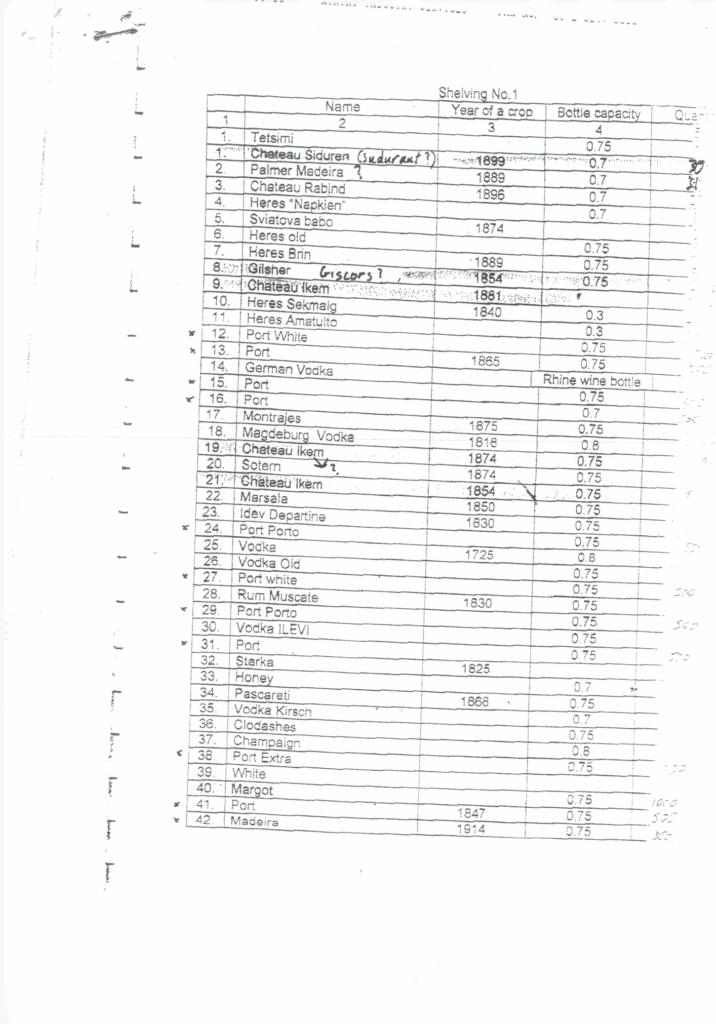
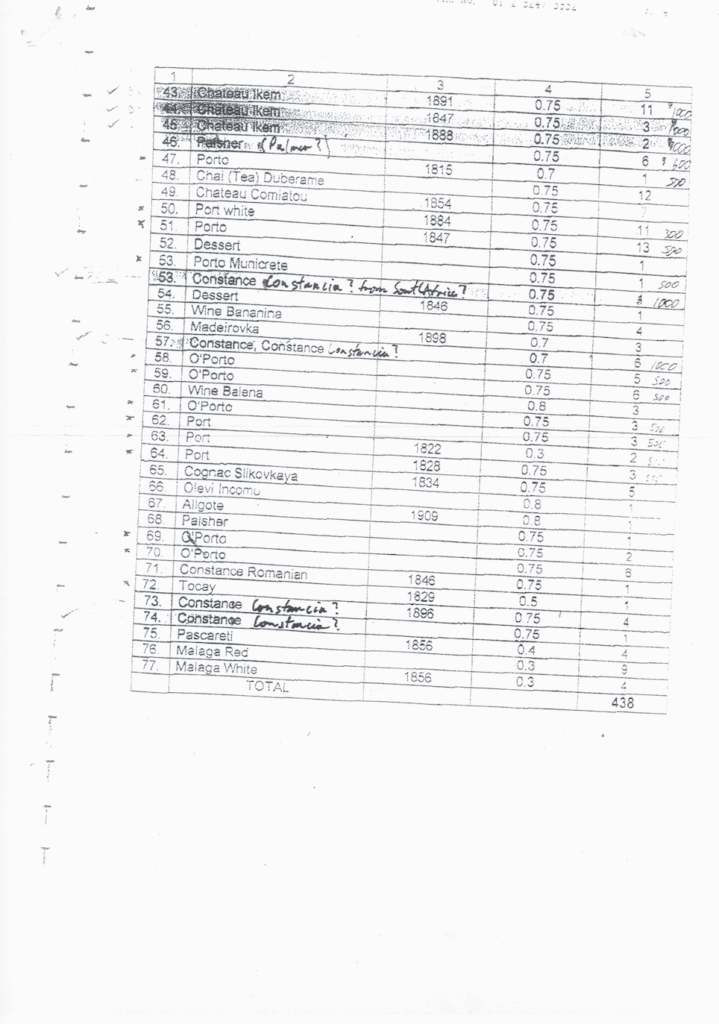
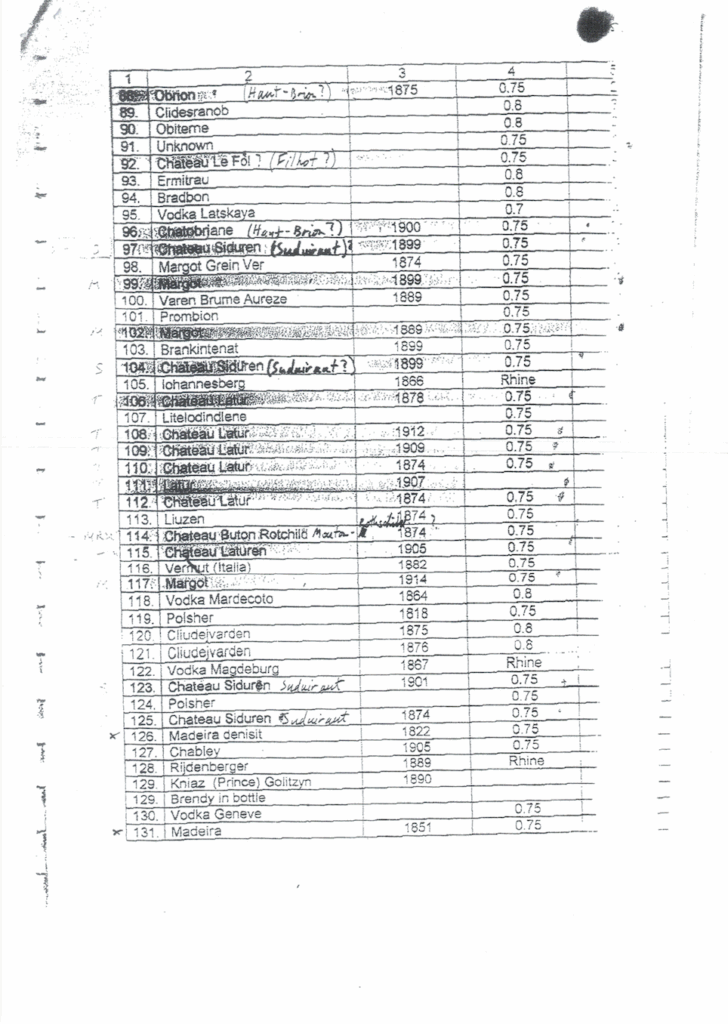
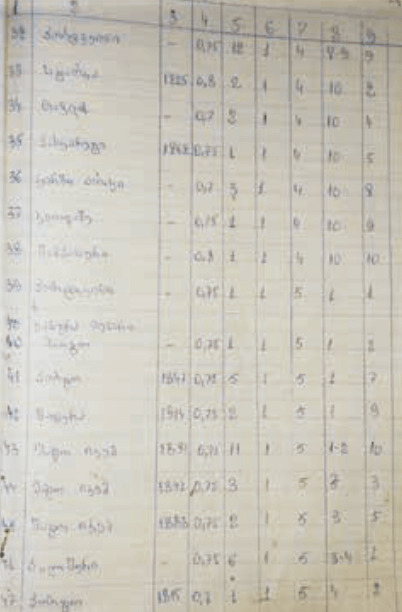
John Baker: I was upstairs in the main office and the fax started whirring because this was 98, 99. And fax machines were very much a part of communication. So the fax started whirring and. Which was unusual. It was often going off, but it just seemed to go off continually. And there was page after page. And I thought, this is unusual. So I just looked up, looked at the top page, lifted up and instead. Interested question mark. And, there’s 30 pages. And this was from Harry Zuckor, who. And for Harry to put just interested question mark. For Harry to underplay something means he probably really got something. And, Because otherwise he’s usually coming in with all this flamboyance about the wines he’s gotten. Wasn’t always quite so, but this one was. So 30 pages poured off the fax machine and Kevin was there at the time as well. Which is good. And, So we got the list and looked at it and tried to work out what it was. Because obviously it was wine. Because Harry wouldn’t be contactless with anything else. But the names down in the left hand column weren’t names that we recognised. They weren’t the Great wines of the world or even the Great wines of Australia. But the second column had, dates. 1856, 18, 1910, et cetera, et cetera, all the way down. I thought, well, that’s interesting. But we’d never dealt with wines that old. You know, when we’d buy a cellar in Australia, you know, we’d be used to, you know, 1960, 1970, 1980. Those sort of vintages, really. So these vintages are 100 years old, and there’s some even from the century before 1700. almost was a bit mysterious. So we thought, well, what is this? And Kevin’s my man to work this out, you know. Kevin. I said to Kevin, so, come on, you’re the sharp one. What’s all this? He went, not sure about this one, but knowing it’s from Harry. And obviously it was a list of wines. Somehow we thought, well, look, don’t knock ourselves out about this. Let’s just ponder it. And, I’m a great believer if you’ve got something that’s really puzzling, you, don’t knock yourself out about it. Just go on with life. And don’t worry, if it’s of interest, your subconscious will be working in the background. It won’t have forgotten it, and it’ll work it out. And, maybe one time when you’re walking down the street or making a cup of tea, the penny will drop. And that’s what happened. I was in that weekend, when we had the big sale of the Terry Hill Cellar. I was in the store, I think it was Monday or Tuesday, and a chap came in and said, oh, do you have any of that Chateaux Dieu Chem? Or. I can’t remember. I can’t remember how he pronounced it, but as you know, Yquem’s unusual spelling, but it’s actually quite simple. But he couldn’t pronounce it. And, I said, no, I’m sorry, sir. Whenever we get back, vintages of Yquem, it all sells out. So he left, and that was okay. And the penny dropped. And I had the list with me because I was occasionally glancing at it, going, come on, talk to me. And when I looked at the list, there was this wine, IKEM M ikem M and I remember when I first looked the list, I thought, I thought, ikea, I don’t want any IKEA wines. You know, what’s this about? And then, but when you. But then I thought, hello, this list has been compiled somewhere in the world where English or French probably wasn’t their language. So I thought someone somewhere has either read out these labels and someone’s
00:15:00
John Baker: recorded them and it happened to be Georgian because this all happened in Tbilisi, Georgia. And then when someone wanted, when they wanted to read, when they wanted to sell a list, they just translated the list phonetically back to English. Hence you had a Kim I K E M Chateaux Margaux pronounced are spelled M A R G A U X and it was M A R G O T, I think Latour correctly. L A T O U R was L A T O R I think. And then it just, it just went on. And when you do that, phonetic translation, these become the great wines of the world. This becomes an extraordinary cellar. so I think I, when I was standing in the shop and this was all coming to me, I thought, wow, this is suddenly very interesting. And I rang Kevin, I think he was off that day, and he came in and I explained to him and he ran his eye down the list and said, this is extraordinary if this is so. because, just these were 100, 150 year old wines. I think there’s 217 bottles of Yquem from the 1800s and the early 1900s, which is exceptional, Extraordinary.
Peter: So, and how many, you know, just give us a sense of the scale. How many bottles were we talking about? what kind of price was being asked for this? rough, you know, what kind of, how would you describe it? What was the, what did it, how did it strike you in that sense?
John Baker: Well, they wanted a million dollars US for the cellar. And I understand why, because remember this was 1998. the Berlin Wall came down in 89. I think Tbilisi or Georgia became a republic in 92, 93, I’m not exactly sure when. And when Russia left, of course they left Georgia with nothing. No constitution, no nothing, and certainly no capital. So I think what was happening was people were trying to raise capital any way they could, particularly US dollars because the price was a million dollars in US dollars. So there’s 40,000 bottles. A lot of them were old Georgian wine, but they have quite a value in themselves. Not that we particularly interested in that, but the offer was a million dollars for the 40,000 bottles.
Peter: And you saw photos didn’t you?
John Baker: Earlier, when I realised what, what the story was and what the cellar was, it was phonetic. We, Kevin and I went to see Harry because you know, we wanted to know, obviously we wanted to know a lot more about this. And I said to Harry, I said harry, the list’s phonetic, isn’t it? And he said yeah, that’s right. I said okay Harry, come on, tell us a story whose wines are they and where are they and all that. And he says I’ll have to get Neville to tell you. And I said well who’s Neville? And he said oh he’s, he. Neville has a gold mine in Tbilisi, Georgia and his partner in Georgia is George. His name is George I thought, yeah, of course. And he owns these properties. And when they bought these properties I think it was the realisation of property going back to the private hands. you end up with whatever’s above and whatever’s below a property you buy. And I think sometimes you buy a whole block, not just a property. So they bought this, I think a block. And part of it was this old winery called Savane Number One Winery. And when they looked downstairs was all this amazing old wine. And so Neville had some photographs because he’d been there and he’d been in the cellar and had seen it. So I had some photographs of it. And some racks, had broken so there’s a sort of glass at the bottom of the racks. And it was very wet, I could see that. And it was And a lot of the bottles were covered with cobwebs and, and all that sort of thing. So yeah, it looked, it looked interesting.
Peter: So you were intrigued, 40,000 bottles, with some amazing wine names in there. You called it in the book a wine potential wine gold mine. and there was one other detail, wasn’t there, about the cellar that really caught your attention. Tell us a little bit about the provenance of these wines.
John Baker: Yes, right. So of course you know, we want to know whose wine was it, where it was and all the rest of. And Neville said, the story he was told by George was that this was originally the cellar of the last tsar, of Russia, Nicholas ii. When he was coming Russian Revolution, of course he was taken out and dealt with and Lenin took over. Then Lenin died a few years later and Stalin took over. So Stalin being the dictator that he was, everything in Russia suddenly became Stalin’s
00:20:00
John Baker: whether they liked it or not. And so in effect this became his cellar. And then the, this is Neville telling Us a story And then when the, with the Second World War, Stalin was very concerned that Hitler was going to overrun Russia. So he was moving artefacts out of, I guess, St Petersburg and the Winter palace or wherever. And there was this, wine cellar and story we were told, is it was divided into three parts. And one part went to the Massandra Winery in the Crimea, which is a Russian national winery. And one part, and I gather it was probably the very valuable French wine, was sent to Tbilisi in Georgia, because Stalin was a Georgian, he was born just outside Tbilisi, so it was sent to Georgia to never be found. And it basically wasn’t found until it came whirring off our fax machine. And, so that was the story we were given. I thought this is an incredible fabrication. If it’s not true, but it’s possibly true, if it were true.
Peter: How excited did that get you?
John Baker: Oh, very, you know, very. Except I was very sceptical about the whole thing. you know, it’s one thing to buy sellers around Australia and work out how you’re going to move them all and, you know, in hot summer conditions and things like that, it’s another thing to go on the other side of the world. But having said that, you know, I’m a great believer that opportunities arrive in life. And, people say, oh, you get lucky. Well, you know, I think everybody gets lucky. It’s a question of whether you take the opportunity when it comes. And I thought, okay, it’s just the other side of the world. It’s the same product, it’s the same. It’s the same story You know, we’ll work it out as we always do.
Susie: Okay, so I think we should briefly come up for air here. John has been presented with a potential wine gold mine. A huge cellar with some of the very finest wines in the world. Hundreds of years old, priceless, but also not priceless. Very valuable. In fact, not only that, these wines have a story attached. That is one in a million. These were quite possibly wines that had been held in the hands of the last tsar of Russia, Nicholas II and Joseph Stalin.
Peter: Yeah, I mean, it’s like a wine lover’s fever dream, isn’t it? I mean, you know, what? Wines aside, for one moment, Nicholas II is the stuff of legend, isn’t he? The last Romanov emperor, patron of Rasputin, executed by the Bolsheviks in 1918. And then Joseph Stalin, of course, you know, who helped see off Hitler and Nazi Germany, but was also a brutal Soviet leader responsible for millions of deaths. More to the point, Stalin was originally from Georgia, which as John points out, is of great relevance to the story
Susie: But John, true to form, is not letting all this go to his head. he remains stoically sceptical as we take a break. To recap so far, John Baker was just an ordinary Sydney wine merchant when opportunity came knocking in the form of a mysterious wine cellar in Tbilisi, Georgia, rumoured to have once belonged to the last Tsar of Russia and Joseph Stalin himself.
Peter: Now, John remained circumspect, though admits to feeling a little bit excited. by way of background, I asked John what was the link between great French wines and Russia and Georgia.
John Baker: When, Peter the Great created St Petersburg, he considered Russia was too barbaric and, ah, it needed a gentrified port on the, on the Baltic where it could trade and communicate with Paris and Venice, I think, were the two great cities at the time and I imagine London as well. And so he created St Petersburg out of actually some swamp land that the Swedes actually owned at the time, but they were next door and he, I think he invited them to leave. Or if you want to stay, you could build my city for me. You take your picks sort of thing. So they sort of thought, better we get out of here. so he built St Petersburg, everything. And Paris, I think was his model city. And, in the nobility of St Petersburg, you spoke French, you dressed in French clothes, you ate French food, you drank French wine and if you didn’t, you’re out sort of thing. So France became the supplier of so much to early days to Saint Petersburg artists, sculptures and, wine, of course. And the Russians, and I think most of Eastern Europe have a very sweet palate, have a great palate for sweet things. And of course the chem was the ultimate sweet wine and it delivers that incredible intensity of, of sweetness and richness and, it’s incredibly aspirational. It is one of the great wines of France. So it became highly desirable for the court in
00:25:00
John Baker: St Petersburg. So I’d imagine that in successive Tsars after Peter, I’d imagine they maintain that relationship, and certainly up to Nicholas ii, the wines that we’re looking at, they would have come through, probably from Nicholas II or I think his father’s Alexander iii. So obviously they must have maintained it to have these wines there.
Peter: So the Russian elites were very Francophile, so they bought a lot of French wines, particularly the sweet ones, as you said, with a sweet tooth. But tell us a bit about Tsar Nicholas II and indeed Joseph Stalin?
John Baker: Yeah. I don’t know a lot about Nicholas II myself. I think he wasn’t a great, I think he liked to spend his time with his troops on the battlefield and spend a lot of time drinking with them. I think he’s a bit of a reluctant tsar, in some ways, for my reading. And then, And Joseph Stalin was, course, the incredible dictator that the world came to know and fear. And his atrocities of. Of his own people, I think, were legendary, unfortunately. So I don’t know if he had much of a palate. There’s no real records of his drinking. I think, the last chems in this cellar were 1910 and the dates stopped, not long after the Bolsheviks had taken over. So I guess they probably stopped that, flow of French wines. It all sort of adds up chronologically.
Peter: But Joseph Stalin inherited the cellar, as it were, and then, as you said, it was split up, possibly because of the Nazi invasion. They wanted to. To secrete these, these wines away and some of them ended up in. In Georgia.
John Baker: Yeah, correct.
Peter: But we don’t know that much about Stalin’s drinking habits, do we? Some people say he was a heavy drinker, but actually what it seems to be is that he used alcohol as a way of getting secrets out of his enemies. Wasn’t that right?
John Baker: Or, or out of his own people, out of his own generals and out of his own military and anyone. I think Stalin, I, from what I gathered, probably didn’t have many friends and therefore everyone, therefore everyone else was. Everyone was an enemy. And, you know, I think when you’re running that sort of regime, there’s going to be, ah, secrets and there’ll be alliances going on. And I think, I imagine he wanted to know what they were. And alcohol was one of his, means of getting these stories or getting this information. and I think, you know, the Russians don’t mind a drink anyway, so, I know when we were there, keeping up with the shots of vodka was, a bit of a challenge.
Peter: So you had this cellar in front of you with this fax, with this promise of a wine gold mine. You were quite excited on the one hand, but you also had win. Real reservations and doubts on the other. So what was the plan you formulated to come up with, to deal with this Georgian cellar?
John Baker: Well, it was pretty obvious to us right from, Right from the beginning that someone had to go and inspect it and authenticate it. I mean, there’s no point, there’s no point in talking much more if you didn’t want to do that because. What are you talking about? And obviously the reason Harry Zuckor came to us with it is because he wanted us to go and do it. And quite rightfully we probably were in the best position to do it. You know we’re used to dealing with old rare wines so yeah so we made an agreement between myself, Kevin, Harry Zuckor and Neville. We each put $10,000 into a kitty and off Kevin and I went to Tbilisi, Georgia to do our best. And that’s how it all happened.
Peter: And what were your initial impressions of Tbilisi?
John Baker: You got to remember I get fairly single minded when I’m doing something like this. You know we’re going to have to spend a million dollars U.S. i mean that’s a lot more than I’d spent on a cellar and I actually didn’t have the million dollars but I did have a few people in Sydney that said come on, come on, we’ll, we’ll take, we’ll finance it if you need it. Anyway, so we hadn’t got to that stage yet but yeah so we flew I think we packed up some gear, we took. One of the things that I took note of in the flew in the photographs was how dark it was. And even with these photographs that Neville had you could see that there was a flash taking and there was just a single bulb which was the light which I assume was in the cellar. And I could see that everything was very wet. So we took some very good fluoros, we took some very strong torches and some other gear and yeah off we went. Sydney, Singapore, London, back to Tbilisi I think it took us 30 hours and we arrived at 2 or 3 in the morning or something like that if you’re feeling terrific. And George was there to meet us of course and John Baker, John Baker my friend, you’ve come to our country,
00:30:00
John Baker: came over and shook my hand like I was President of the United States or something. So that was our arrival in Tbilisi and I said to George we need to do customs. And he said oh John, don’t worry, don’t worry, we do customs for you. And he took us upstairs to meet some of his colleagues and we had a plate of chocolates, and a bottle of sparkling Georgian red wine. Just what you want at 2 or 3 in the morning.
Peter: And just to recap, George was your, George was your key point of contact.
John Baker: He was our point of contact, yeah. And I had exchanged a few emails with him before fax and emails, I think, before we left. And we did make one, arrangement with him before we left that we’ll need to take 12 bottles, home with us because we want to take them to the various chateaus and have them authenticated. Oh, he says, oh, we talk about that. And I said, no George, we don’t talk about it. That’s part, that’s the deal. Otherwise we’re not coming. He said, oh, okay, okay, I worked that out. George sort of could work everything out sort of somehow. And so that was quite important though, because I really did want to take those, the chateaus to have them authenticated.
Peter: So you wanted to take away 12 bottles from this initial trip to get them authenticated to prove the cellar was kosher and that you could, you know, it might be worth A million U.S. yeah, yeah.
John Baker: I mean I can, you know, I thought I had a pretty good idea. I mean I’ve dealt with quite a lot of bottles of Yquem. Not that old, but I’ve seen a lot of old bottles and I, and also, you know, ah, in our authenticating process we’d work out if they’re genuine or not. But I, no matter what we thought, I want to take 12 bottles.
Peter: But that authentication process was really vital, wasn’t it? That was what you were there to do. but you know, as well as, chocolates and sparkling wine, you were also met with sort of slightly intimidating types with, with guns and a black Mercedes which would then ferry you around at top speed, with, with complete disregard to the police. Is that right?
John Baker: Pretty well. Pretty well. when we drove into town from the airport that night or that early morning, you know, we, we saw the other thing. I said to George, we have to get our bags. He says, oh, no job. John, will you get the bags too? So we didn’t test anyone, they just did it all. So I don’t know how, how that works, but that’s how it works. And we got into the black Mercedes with the tinted windows, which is sort of our staff car for a few days in a fashion. And off we drove into Georgia about 100, 120, 110 kilometres an hour, whatever it was. And we’re cruising along through the suburbs and there’s a red light and they just swerved to the other side of the road and went through and says, oh, we know, stop at red lights. I thought, oh, that’s interesting. And then we got to the hotel. Fortunately, we got a little bit of sleep. They were Picking us up in the morning. And when they came to pick us up, as they’d arrived, they’d come through the door and there’s a sort of metal detector as they came through the door and they put their guns on the counter and come and get us. And on the way out they get given back their guns like they’re an umbrella. I mean, it’s just no big deal. And that was just how it was. And they sure, most of them. George never carried a gun that I could see. But if all his henchmen had bulges in their pockets and some just had a gun hanging out of their belt sort of thing. This is the early days of Georgie. You know, there was. I guess there was police, but you know, I think cash and guns ruled. It’s just, you know, just a function of a country coming out of suppression as it was from Russia.
Peter: Cash and guns ruled. I mean, did you feel. You must have felt quite afraid? No. And especially there was one particular chap, wasn’t there? Pyotr or Peter, who particularly, particularly steely.
John Baker: yeah, they’re all very nice to us because they wanted a million dollars from us. And I don’t know who knew what how out of all the team, shall we say. But I. And maybe mistakenly, and I was a lot younger then and you know, we were busy and we’re answering questions from the shop in Sydney and you know, as we’re going sort of thing. And yeah, I mean I had this maybe somewhat mistaken thing that I had a sort of a gold million dollar halo over me, that they were going to look after me anyway. It proved to be like that. But no, I mean it was certainly just a bit disconcerting when you sit down to lunch and they just put their guns on the table. Like today someone put a mobile phone on the table. but I remember saying to. I m. Think it was to Pyotr or on stage, you know, silly me, maybe I was trying to make conversation or something. I said, is that gun loaded? And he looked at me. I thought, man, that was a dumb question.
Peter: Do you want to find out?
John Baker: Yeah. What do they think they had in it? But anyway. But Pyotr particularly was very helpful when we were there. He spoke quite good English. He was Chechen and Chechen. And I think Kevin. I had a few conversations with him. I think Kevin finds these sort of characters quite interesting, how they work. I think Kevin said he thinks he was in the Chechen War. And he was a big strong fellow. I mean, you wouldn’t want to mix it in. But fortunately, we thought he was on our side, so we didn’t have to.
Peter: So you had an initial meeting at the winery with the key people. just very briefly, tell us about that meeting, mainly your kind of your impressions after. Afterwards.
John Baker: Yeah. Well, we, went to the winery with Savane Number one, with George, and one of his henchmen was driving the car. And, when we arrived, we thought, oh, it’s great. We’re gonna get to see the wine. And first of all, we were ferried into the general manager’s office and handshakes meeting. Great. Wonderful. Nice to meet you. And. And George was there and. And then they went on in a very long, rambling story about the winery in English, but mainly in Georgian. And it just went on and on. And I sitting next to George and I think I. One stage, I looked at him and he said. He just put his hand. Just don’t worry, just let them go. And what we came to realise, in that meeting and a little bit later, is that they wanted the winery to, be reinstated. It was really old and decrepit. I mean, the bottling line, I’m sure, hadn’t been used for many years. And they thought or were told that we were potential investors in their winery in Savane number one, and they’d get it all going again. Which, of course, was. We weren’t there for that, for sure. We were obviously there for the cellar and we didn’t know who knew what. But George certainly knew what we were there for. And so there became this, well, subtle jockeying going on of different agendas. but we, you know, we went along with it because, well, we didn’t have a choice. And, we thought, well, this is the way things happen differently in different countries and different cultures. And so, yeah, we sat to sit there and listen to this.
Peter: So they thought you were there to buy the winery, you, were there to buy the cellar. George was somewhere in the middle, pulling the strings. You must have been a bit concerned at this stage, to say the least.
John Baker: Yeah, concerned. But, I couldn’t really establish who owned the wine. And even though I asked George that, he was a bit evasive on that one. But, there’s no doubt that George had authority there. Because when these management of the cellar were, you know, going on a bit too much, George, you know, pull it up and just sort of, you know, he seemed to have. Seemed to have some ability to control the meeting. And, And at one stage, I think he said, just let them Let them talk their way out of it. You know, they’re elderly gentlemen, they’ll get tired and, then we can do, do what we want to do. And I went, okay. I mean, you know, we were guests, so we’ll go along with what’s happening.
Peter: and then, you know, after all the stalling and the endless talks, you did finally have a chance to see this mysterious cellar. Tell us about that moment and, and what your first impressions were.
John Baker: Yeah, we, we actually didn’t get to the level of the cellar where the old wines were until the next day. We, I think we went down, looked at some, their newer wines and again, we were just going along with what was happening and I think I might have put my foot down and said, george, we just travelled halfway around the world. if this is to happen, we want to see these wines. And the next day, Now this is a funny thing. The only person had a key to the cellar, was what we called the lady with the keys. I think we didn’t know her name, I can’t remember what it was. And I could see this from the communist era that she was probably somehow had the keys to the cellar. And it was a bit of a hangover from those days. She still had the keys to the cellar and she might have had the only keys to the cellar. So the only way you get into the cellar is you have to wait for the lady with the keys to turn up and she would unlock the door if she felt like it. Anyway, we got in the next day and we went down to cellar and there was a whole team, I think couple of George’s henchmen were there. They came and Kevin and I, George general manager and the winemaker. So we’re all winding down these spiral stairs and, lady with the keys unlocked the level so we could get in and flick, the switch. And when she flicked the switch, there’s a couple of lights just on cords down the cellar and they just sort of
00:40:00
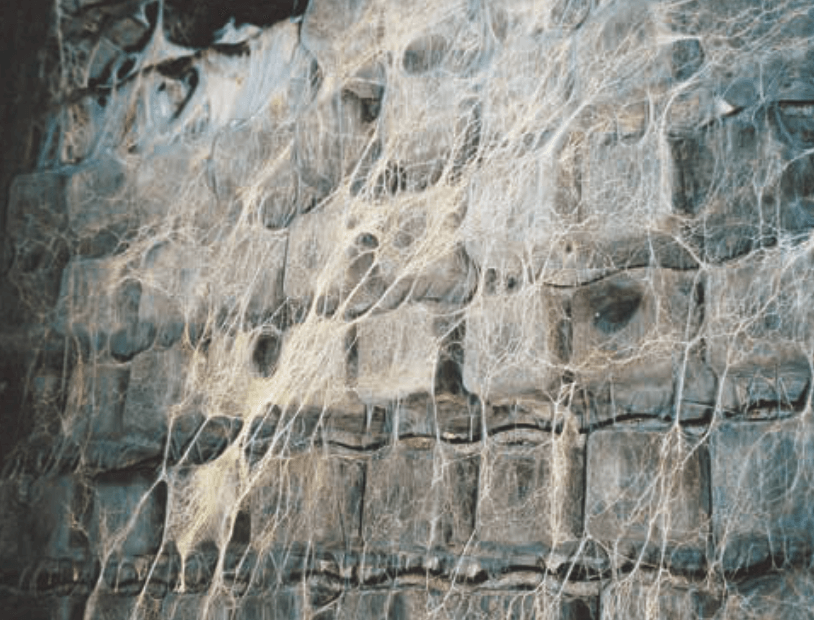
John Baker: glowed and you can see that there was just rows and rows and rows of bottles on racks and really not much light. So. Well, yeah, enough light, but we had our fluoros with us and torches and that. And a lot of the racks were covered with cobwebs, but not all of them. And it was very wet. You could see, I mean, the walls were wet, there’s water dripping, which meant, a lot of the labels were missing. Anyway, as you know, labels is not the main way to authenticate a bottle of wine. But so a lot of the labels were missing or partly missing. And so we’re looking around and Kevin typically was already wandering along the road looking, almost smelling. Because Kevin, people ask me, why did you take Kevin? Kevin is a fox. And I don’t always use that word, sometimes use a stronger word. but there’s no doubt if there’s a fox at play in this, Kevin would have smelt it straight away because he’s a little bit of a fox himself. So if there’s anything untoward going on, his antennas would be up for sure. So he was wandering along looking, and then Mr. Revaz, the chief winemaker, wandered along one row and I was standing at the end and the floor had sort of a paved brick arrangement and he wandered along there. And I thought, I didn’t think anything of it, but my sixth sense was saying, don’t know if he should be wandering along there, but I guess he’s a chief winemaker, so maybe he can. But anyway, he leant over and took a bottle out of the, out of the racks. I thought, that’s interesting. And I happened to be on, in the same road. He turned around and was wandering back to us. And Mr. Revaz wouldn’t be terribly healthy, had a bit of an ambling gait. I’m sure he hadn’t had any exercise for a long time. And as he was coming towards me, he moved the bottle from one hand to another and being wet and slippery, it slipped out of his hand and just went. And I was fortunately not far from him. And as it landed, I quickly got my foot under it and to break his fall. And I scooped up the bottle with my hand like a good slip salesman. And of course it was instinctive it wasn’t it, nothing else, because really when bottles land like that, they usually shatter and you end up with a handful of, broken glass. But fortunately, I can only imagine it probably landed on its, on its neck and the neck snapped something and I caught the rest of it before it hit the ground. And so I had a bottle of wine in my hand and I looked and it was 1899 Chateaux Suduiraut So it’s a 100 year old bottle of the great Sauternes Suduiraut. So, everyone sort of drew breath and I sort of think I stood there going, what am I doing? But you know, there you are. And this, of course is one of the great serendipitous moments in our adventure. So suddenly I had this bottle that was 100 years old that was truly representative of the wines of the cellar. And in theory we were going to get to taste it because it’s now open in effect. And and I think Mr. Revaz, Chief winemaker, he went very red and skulked off somewhere sort of thing. And I think Kevin thanked him and said, oh thanks Mr. Revaz. Now you get to taste the wine. So we poured, we got found some material and we found a little jug and poured the wine through the material just in case there’s any broken glass. And they had some glasses which they cleaned and wiped out. Very good, very well. And so we all had a taste of this wine and this was a crucial moment because if this wine wasn’t superb, it went on the first plane out of there. So we all had this wine and I remember smelling it at first or looking at it and had that lovely old. And you know, Suduiraut is nothing like Yquem A Yquem is quite a robust wine. Suduiraut is a much more elegant style of Saturn. And I’d imported number vintages of Suduiraut I’d probably tasted maybe 20, a 20 or 30 year old Suduiraut but nothing as old as this. But it had a fine, you know, had a fine golden colour to it, it hadn’t gone dark brown or anything. So we had had a smell. And of course immediately on the smell you got that lovely apricot, butterscotchy, aromas from it which I thought this is, this is pretty interesting. And then when we all sipped it and it had that lovely melange of butterscotch and nutty and again that slightly apricot character,
00:45:00
John Baker: as you know, comes from the Botrytis. And it had a very fine bead of acidity which to me meant the wine was quite alive. And it was just exceptional. It’s just so ethereal in its presentation and it was exquisite wine and probably where I’d accept Suduiraut to go in 100 years if it was a Yquem, I’d think there’s something wrong with it. it’d be too light or too fine and too elegant, I think. So, this wine was amazing and I think, as I say in the book, the wine was brilliant but the orchestra was deafening for this wine to be as good as it was. So that was a key moment.
Peter: So yeah, you tasted this delicious hundred year old wine which for you was a marker that this cellar was real. You’d just come down into this cellar which you had thousands of bottles stretching away into the darkness, covered in cobwebs. What were your emotions at that moment, what were you feeling?
John Baker: Gee, I don’t think I’ve ever been asked that question. Certain, certain amount of excitement, a certain amount that there’s a chance that this is the real thing. I mean, this wine can’t taste like this and the other one’s not to be good. So, you know, so, you know, and also, as I said, I’m a bit single minded. I, I keep, I stay very focused on what we’re doing. Okay. This wine tastes good. I’m pleased. So where do we go from here? Rather than getting too excited or. And also, you know, we were playing a bit of a poker hand. We were keeping our cards fairly close to our chest with the Georgians because they actually didn’t know what they had. And we were prepared to tell them. We’d tell them, you know, in our way and I guess when we wanted to. But, but no, we’re really, you know, I’d sort of been in this situation with certainly lesser wines in Australia in cellars. And you know, we had our, we had a job to do and we kept our mind on the job.
Peter: And with that job with a business hat on, even then, you know, were you daring to dream? Because this cellar was going to cost you a million dollars US but you presumably had some sort of an idea what you might be able to sell it for.
John Baker: Oh, well, in, in Australia, before we even left, I, I gave the cellar to Kevin. I said, can work, work this out, will you? So always do it. And he’s, I think he did it when he was still in Australia. He valued it probably about seven or eight million dollars worth. And the 217 bottles of a Yquem, I think represented four to five million dollars. I mean there are three bottles of 1847. And I think 1847 sell anything up to $200,000 a bottle. So there’s three of those in the cellar. So we’re looking quite, we’re looking, we’re on the right side of the ledger, shall we say. and also the, the question in all of this is, okay, these are great rare wines of considerable value, but what’s the providence worth? You know, they’re, they’re wines that have gone, you could be almost certain they’ve gone from the chateau to Saint Petersburg. So they’ve only had one, one fairing. they probably laid there forever and then they’ve gone to Tbilisi in Georgia. So the condition, the way they’ve been selling looked after would be impeccable. So, you know, and they set the wines of Nicholas II of Stalin, of the Russian Revolution. You know, the provenance I think, is extraordinary. But, M, what’s it worth? How would you know?
Susie: The wines of the Russian Revolution, shipped out by Stalin to evade the Nazis, including Ikem 1847. Potentially $7 million of profit. And it all seems to be checking out. Yeah.
Peter: And in the centre of it all, the unflappable John Baker. I did love his turn of phrase when he said the wine was brilliant, but the orchestra was deafening. Possibly he’s letting himself go a little bit there.
Susie: Glorious. Glorious. Anyway, so we’re going to end this part here. It’s a long episode already. If you want to listen to the next and concluding part of the story right now, sign up to Wine Blast PLUS at wineblast.co.uk or click the link on our Show Notes.
Peter: You definitely don’t want to miss it. Meantime, thanks to John Baker, the book is Stalin’s Wine Cellar, published by Penguin, and we’ll see you for the next instalment. So until next time, thanks for listening and cheers!
00:49:38