- Season 7 Trailer
- The Jancis Robinson EXCLUSIVE Part 1
- The Jancis Robinson EXCLUSIVE Part 2
- Chile Wines of the Year 2025
- SAN LEONARDO – The insider’s Guide
- The Story of The Billionaire’s Vinegar – Part 1
- The Story of The Billionaire’s Vinegar – Part 2
- Blind Tasting Top 2021 Super Tuscans
- Top of the Pops: Classic Fizz Beyond Champagne
- Rock and Rhône
- Our WINES OF THE YEAR (2025)
- Our BOOKS OF THE YEAR (2025)
- Hugh Johnson UNCUT
- McLaren Vale – Boxer to Ballerina
- McLaren Vale – The Grenaissance
- Peter Fraser – A Tribute
- New Zealand Wines of the Year 2026
- Sam Neill UNCUT
- Giveaway EXTRAVAGANZA + Game-changer Coravin
- Greg Lambrecht UNCUT
- The Story of Stalin’s Wine Cellar PART ONE
- The Story of Stalin’s Wine Cellar PART TWO
- Drop Stop: Wine’s Big Water Issue
- Missing the Point?
- Keep Calm and Sauvignon
- Yeastie Boys: Wine’s Modern Microbial Solutions
- Adelaide Hills: Lofty Ambitions
- Natural Wine RELOADED
- The Judgement of Paris 50 Years On
- The Greatest Chardonnay Showdown
- Pays d’Oc Part 1 – Land of the Free
- Pays d’Oc Part 2 – Future Proofing
- News & GB Wine Update
- Wine Travel: The Inside Steer
NB: This is a free audio taster – the full episode is available exclusively for Wine Blast PLUS subscribers. Use this link to subscribe to Wine Blast PLUS.
Summary
A privileged tasting of 100-point wines gets us thinking about scores, so-called perfection in wine, the risks of premature evaluation and how points for wine…somehow miss the point.
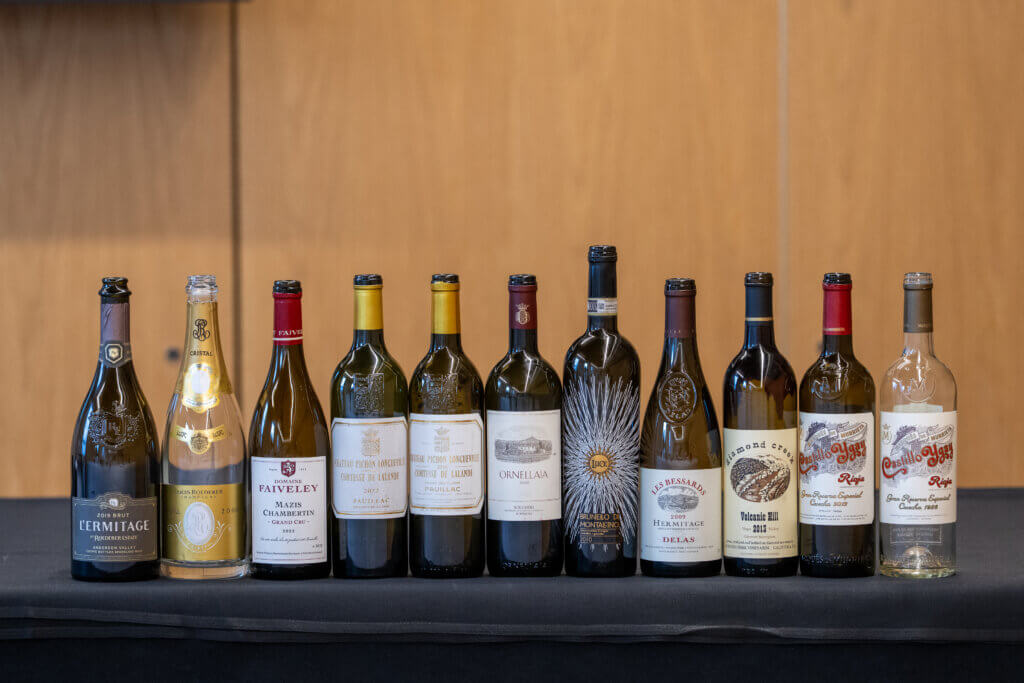
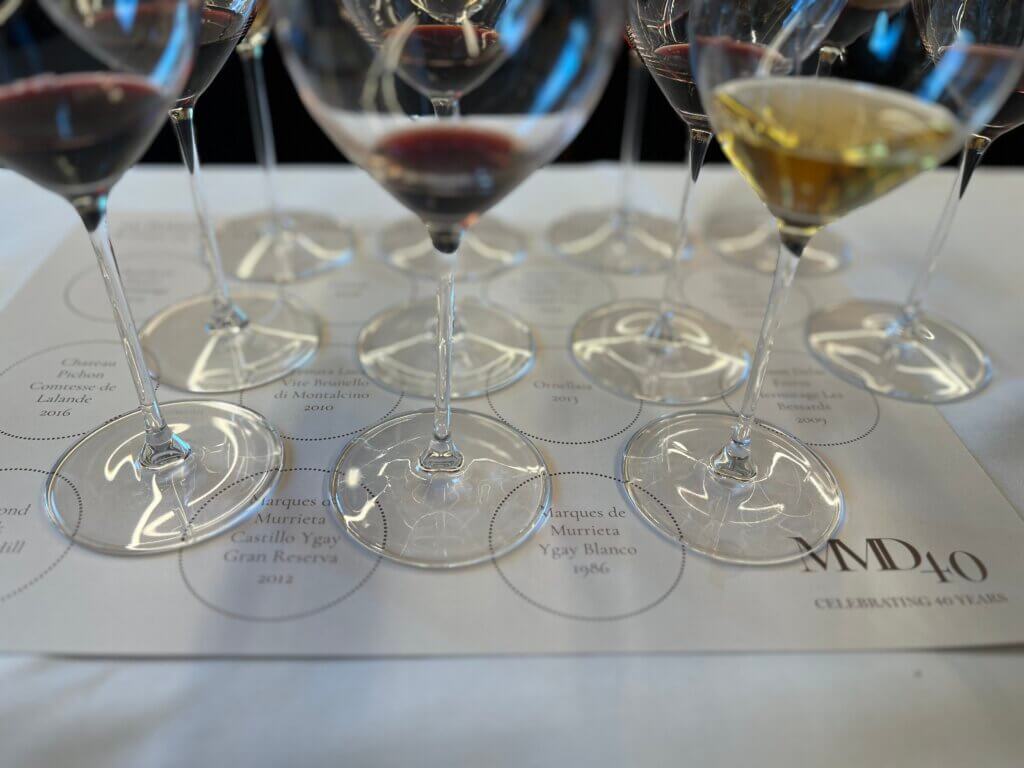
First up – the wines: Cristal 2008, Pichon Lalande 2016, Ornellaia 2013, Diamond Creek Volcanic Hill 2013 and Castillo Ygay Gran Reserva Especial Blanco 1986.
We report on these and other stellar bottles, all of them recipients of a ‘perfect’ 100-point score.
But here’s the thing.
What does ‘100 points’ mean these days?
How valid are such scores, which seem to be everywhere in wine, as endless tasting notes and numbers are churned out on a seemingly constant basis?
What are the pros and cons?
Is it time for a reset, starting with the 100-point system itself?!

In this discursive episode, we subject not only these supposedly spectacular wines but also scores (and ourselves) to unflinching assessment.
Peter gets hot under the collar about Bordeaux En Primeur; Susie has to intervene.
We weigh up scores in a public and personal context.
But, lest you fear this is all a bit po-faced, we also touch on the magic of discovery, not entirely serious ‘anti-scoring’ wine rating scales and the importance of wines that make you smile…as indeed some of these bottles definitely did.
Links
- Shortly before we published this episode, Jancis Robinson explored the issue of scores in her Financial Times column (republished on her website). Her piece focuses more on the technical reasons why the same wine might taste different, and thus receive varying scores. But there’s definite overlap with this episode. Do check her article out, it’s free to read on her website: When the Same Wine Tastes Different
- This is another interesting piece touching on the off-putting effect of 100 points, this time on Wine Searcher: The 100-Point Wine Turn-Off
- You can find our podcast on all major audio players: Apple Podcasts, Spotify, Google, Amazon and beyond. If you’re on a mobile, the button below will redirect you automatically to this episode on an audio platform on your device. (If you’re on a PC or desktop, it will just return you to this page – in which case, get your phone out! Or find one of the above platforms on your browser.)
Wines
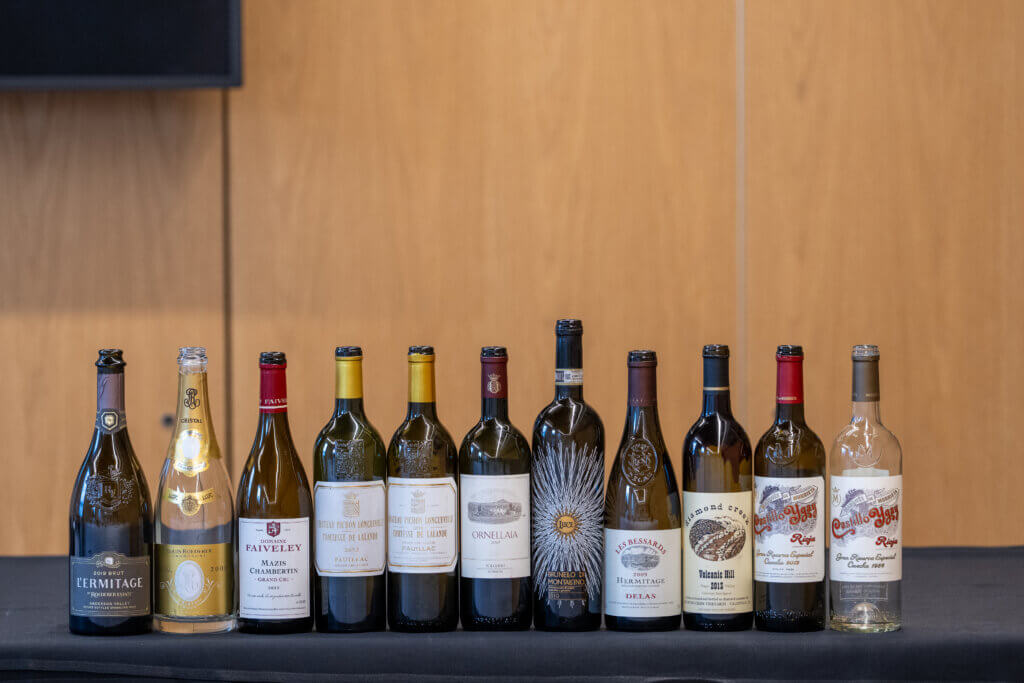
These are the wines featured in this episode, following a stellar ‘100-point’ tasting by UK importers and distributors Maisons Marques et Domaines on 10th March 2026.
- Roederer Estate, L’Ermitage 2019, 12.9%
- Champagne Louis Roederer, Cristal Brut 2008, 12%
- Domaine Faiveley, Mazis Chambertin Grand Cru 2022, 13.5%
- Château Pichon-Longueville, Comtesse de Lalande 2022, 13.65%
- Château Pichon-Longueville, Comtesse de Lalande 2016, 13.32%
- Luce della Vite, Brunello di Montalcino 2010, 15%
- Ornellaia, ‘L’Eleganza’, Bolgheri Superiore 2013, 14.5%
- Delas Frères, Hermitage Les Bessards 2009, 14%
- Diamond Creek Estate, Volcanic Hill 2013, 14.5%
- Marqués de Murrieta, Castillo Ygay Gran Reserva Especial 2012, 14%
- Marqués de Murrieta, Castillo Ygay Gran Reserva Especial Blanco 1986, 13.5%
Subscribe
Sign up to Wine Blast PLUS for first-class subscriber-only content (like this episode), to access our full archive, support the show and get every episode before it goes on free release.
You’ll also get subscriber-only discounts with the likes of Coravin, Jancis Robinson glassware and Academie du Vin Library.
Just visit WineBlast.co.uk to sign up – it’s very easy, and we will HUGELY appreciate your support.

It takes a monumental amount of work to make Wine Blast happen. Your support will enable the show to continue and grow – and we have lots of fantastic ideas of things we’d like to develop as part of Wine Blast to maximise the wine fun. The more people who sign up, the more we’ll be able to do.
Get in Touch!
We love to hear from you.
You can send us an email. Or find us on social media (links on the footer below).
Or, better still, leave us a voice message via the magic of SpeakPipe:
Taster Transcript
NB: This is a transcript of the short taster audio (as above) rather than the full show. It’s AI generated, so it’s not perfect.
Peter: Hello! This is a short taster of a show inspired by a magnificent tasting that I did of wall to wall 100-point wines, featuring no fewer than 11 of these perfect scoring bottles, from top Burgundy to Bordeaux, Brunello, Bolgheri – and that’s just the B’s…
Susie: Maybe Lucky Boy or similar should be added. So, the full-length episode is now live for our Wine Blast PLUS subscribers. And this is a short teaser – important to stress from the outset this isn’t a gloating, bottle stroking kind of episode. It’s possibly just the opposite because this is a show where we get stuck into scores and how they can miss the point.
Peter: yeah, we’re asking what 100 points even means these days. How valid are, scores, which seem to be everywhere in wine as endless tasting notes and numbers are churned out on a seemingly constant basis. What are the pros and cons? Is such wine scoring a concept that has had its time and is ripe for a reset, starting with the 100-point system itself?
Susie: And we’re putting not only scores under the spotlight, but also these supposedly perfect wines going back 40 years, from Cristal 2008 to Pichon Lalande 2016, Ornellaia 2013, Diamond Creek Volcanic Hill 2013 and Marques de Murrieta Castillo Ygay Blanco 1986. Can they live up to the almost impossible expectations that a hundred-point score inevitably confers?
Peter: And in case you’re wondering about pots calling kettles black here, we also take a pretty unflinching look at ourselves in the mirror. We’ve been known to score wines, sometimes even by way of consensus. Are we guilty of perpetuating an inherently flawed system? How does a marriage even survive that process? we also weigh up the storytelling approach versus the scoring strategy. Waste of life is mentioned, as is how and why things need to move on.
Susie: And I do have to intervene when you get a bit hot under the collar about Bordeaux en primeur… But this is not all heavy going. We also touch on the magic of discovery. Not entirely serious anti scoring wine rating scales and the importance of wines that make you smile, which some of these bottles definitely did,
Peter: Proving wine can and does have the power to take the grump out of the man. So if you’d like to listen to this episode in full, sign up to Wine Blast PLUS at wineblast.co.uk we can’t offer 100 point wines by way of a signing on bonus. but we can offer an episode about 100 point wines, which hopefully, will also provide food for thought.
Susie: We’ll Leave you now with a couple of short clips from the programme. Enjoy.
*****
Susie: So those of you who caught our, interview with Hugh Johnson, the doyen of wine writers, will remember him telling the storey of how back in the late 70s, his New York publisher showed him a new wine book by a then little known writer with lots of tasting notes. And Hugh thought it was great, but he was a bit confused and had to ask why there were lots of numbers. Next to each wine scores came the answer. The book, of course, was written by one Robert Parker.
Peter: Uncle Bob himself. Parker went on to become one of the most prominent wine critics of his era, famously using the 100 point scale, modelled on the American high school marking system. Apparently we wouldn’t know much about that. Ah, but there you go. which basically scores things, as far as I understand, from 50 to 100. but it’s essentially 100 point scale because half marks are allowed. and he would use this rating system to score and rank wines, thousands and thousands of them.
Susie: Now, Parker almost certainly wasn’t the first to rate wines numerically, but his system did become the most widely adopted. These Parker points were viewed as a convenient shortcut to a wine’s quality and you didn’t need any wine expertise to understand them. You didn’t even need to speak English to get the message. It was a universal wine language of sorts.
Peter: So that’s one of the main arguments advanced in favour of scores, that they help make wine accessible to newcomers, and that they’ve helped sort of internationalise the world of wine, particularly fine wine.
Susie: And there’s also the suggestion that scores can help exciting new producers get recognised faster than they did in the past and that they help raise standards among producers more generally. Yeah.
Peter: And at the MMD tasting, just thinking, our fellow Master of Wine, the lovely Mark Bingley, a, founding director of the company, said specifically of 100 point wines, that it’s a point of excitement, you know, because these wines can’t just be good, they have to be the best. they’re the kind of wines that make. You have to have another glass, he said, the kind of wines that make you smile from the first moment you smell them.
Susie: Now, I can relate to that!
*****
Peter: There’s a temptation in wine to think everyone is hanging on your every word and score,
Susie: are they not?!
00:05:00
Peter: You know, I mean, though you just, you see so much of the stuff and I think passing judgement on wines, I don’t know if you just, if that’s the main thing, it’s possibly just a bit of a waste of life, in our view, maybe is that harsh?
Susie: Well, each each to their own. But individual tasting notes and scores definitely have a sell by date. And they’re. And they’re inevitably limited in their appeal, given how personal they are. I mean, plus they can end up being a bit boring, you know, both to read and to write, to be very honest. I mean, I think we’re. We’re much more Interested in telling stories, aren’t we, in talking to people, in exploring how and why a wine is as it is. I mean, particularly if there’s something unique or intriguing or different about it, rather than just issuing a pronouncement. I mean, both can be valid things to do, but I know which I prefer to do.
Peter: So we’re not against scores in principle. They can serve a purpose, but their importance and significance has, probably been overblown in the last few decades. Would we agree on that?
Susie: Yeah.
Peter: maybe it’s time for a reset.
*****
Susie: Okay, so we’ve batted around the theory of scores a bit and been a little bit catty in the process. But what about us? You know, we score wines, we’ve even given the odd perfect score. So are we just as guilty as everyone else of perpetuating a fallible, imperfect system?
Peter: It’s a fair cop. It’s a fair cop. Quite like imperfect, fallible things in general. But anyway, you know, you’re quite right. You’re quite right.
*****
Susie: This sounds like 100 point wine, right?
Peter: Look, I mean, I wasn’t quite. Don’t look at me like that. I wasn’t quite at 100 points.
Susie: Where were you?!
Peter: I wasn’t far off. I wasn’t far off. Exactly. You know, this was definitely one of the wines of the tasting. and would I begrudge someone giving it perfect marks? You know, if you were sat next to me, you gave that. No, I would not. I would not. It was a sensational wine. But one thing I would say here is, you know, this is a wine, I think, with a long, long future ahead of it. So why rush into 100 points now?
Susie: Now, that’s a really interesting point. And we touched on this, didn’t we, when we talked about Bordeaux en primeurs. But is there a risk that critics are too eager to score young wines very highly, you know, when actually we should be patient and let them mature a bit before we can be sure how exactly they’re evolving and what their real quality is?
Peter: I think so. I think so. I’m not sure if it’s controversial opinion, but I’m sorry. I don’t know. I just think rushing to champion nascent fine wines is a fool’s game.
*****
Susie: Gosh, hang on a minute. We’re nine wines in, and I think I’ve counted two, possibly three wines that you’ve been really impressed with.
Peter: I am such a grump.
Susie: You are. You, really are.
Peter: Thank you. I appreciate that. From. From my wife. I am. Okay. You know, this is me in critical mode, I suppose. But anyway, let’s not get ahead of ourselves, you know. There’s a lot more to come and we did finish with two Spectacular wines.
Susie: Well, I’m very pleased.
Peter: So we’re back on the up here. We’re on the upward gradient. I’m not going to finish this episode grumpy, even if I am midway through.
*****
Peter: I think it’s a wine you might have to beg or steal or something like that.
Susie: Stay legal, people. And. But nice end on a high note!
Peter: I know…
*****
Peter: So, there we go! If you want to hear the show in full, all you have to do is subscribe to Wine Blast PLUS at wineblast.co.uk or follow the link in your show notes. as a subscriber, you get early access to all episodes and enjoy subscriber only bonus content like this show, as well as full archive access.
Susie: You’ll also be supporting the show and benefiting from subscriber only discounts with the likes of Coravin, Jancis Robinson Glassware and Academyie du Vin Library. We’d love it if you joined the gang. In the meantime, thanks for listening and cheers.
00:08:36