Summary
Some people say non-alcoholic wine is a contradiction in terms, a blasphemous notion (or just plain disgusting).
Others say the world has changed and it could be the saving of wine.
In this episode, which may ruffle a few feathers, and for which we tested more than 100 bottles (at least one over £100), we ask: is non-alcoholic wine any good? Is it worth our while? Does it taste like wine? Should it even be classed as, ‘wine’? Who’s buying it? And what does the future hold?!
Spoiler alert: we don’t see eye to eye on this one. We also share a shameful confession.
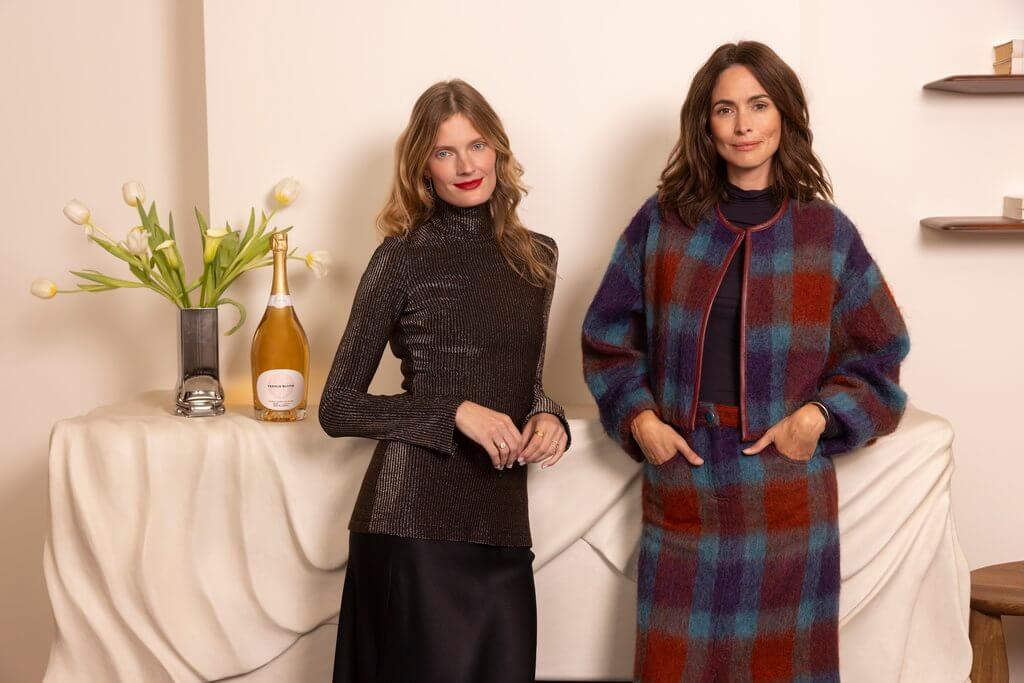
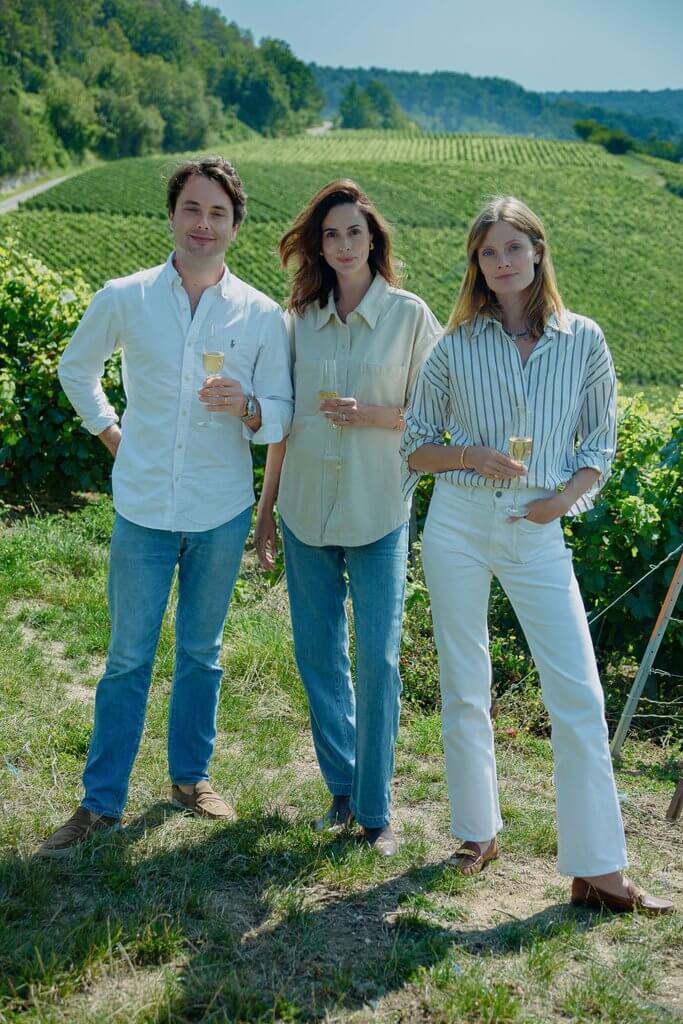
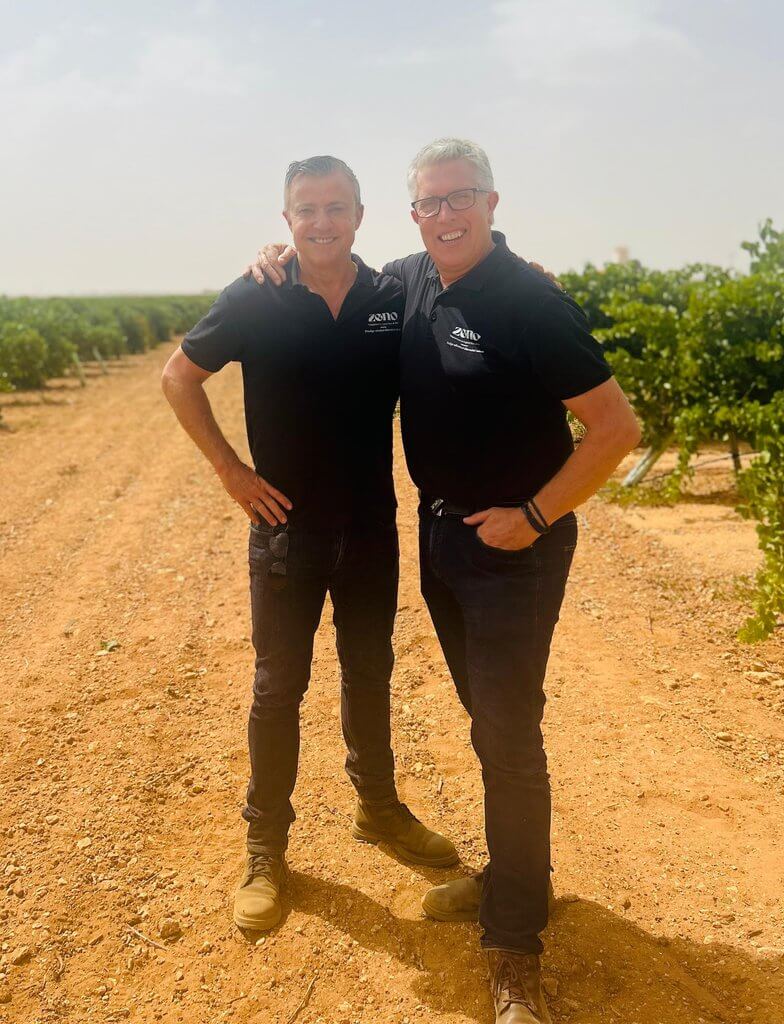
Joining us are leading figures in the world of non-alc wine: Maggie and Rodolphe Frerejean-Taittinger (French Bloom), Will Willis (ZENO) and Paul Beavis (Wild Idol).
Along the way, we touch on ducks, Dragon’s Den, religion, book-ending, April fools, cauliflower noses, bubbles, secret yeasts, gas and air, and zebra striping.
Starring
- Maggie and Rodolphe Frerejean Taittinger (French Bloom)
- Will Willis (ZENO)
- Paul Beavis (Wild Idol)
Subscribe
Sign up to Wine Blast PLUS for first-class subscriber-only content, to access our full archive, support the show and get every episode before it goes on free release.
You’ll also get subscriber-only discounts with the likes of Coravin, WineMasters TV, Jancis Robinson glassware and Academie du Vin Library.
Just visit WineBlast.co.uk to sign up – it’s very easy, and we will HUGELY appreciate your support.
It takes a monumental amount of work to make Wine Blast happen. Your support will enable the show to continue and grow – and we have lots of fantastic ideas of things we’d like to develop as part of Wine Blast to maximise the wine fun. The more people who sign up, the more we’ll be able to do.
Links
- For those interested, here’s the official OIV definition of wine
- If you’re interested in the secretive method that BOLLE are using (like we are), then check out this page on their website
- We reference a couple of past Wine Blast episodes in this programme, here are quick links to those:
- Dry Drinking (2021)
- The End of the Hangover (2023)
- You can find our podcast on all major audio players: Apple Podcasts, Spotify, Google, Amazon, YouTube and beyond. If you’re on a mobile, the button below will redirect you automatically to this episode on an audio platform on your device. (If you’re on a PC or desktop, it will just return you to this page – in which case, get your phone out! Or find one of the above platforms on your browser.)
Wines
The following are non-alcoholic wines we’d recommend:
French Bloom Le Blanc, Alcohol Free, 0.0% (£29) – baked apricot, bready/doughy, biscuity, juicy acidity, fine bubbles, foodie
Wild Idol Twenty Twenty Five, 0% (£29.99) – dried apple, white peach and herbs, juicy, succulent, well integrated fizz
Wild Idol Rosé Twenty Twenty Four, 0% (£29.99) – baked plum, dried herbs, fruit-forward, tangy, moreish
French Bloom Le Rosé, 0.0% (£34) – rosehip, pear drop, bready, vinous feel, mouth-watering, not too sweet
BOLLE Grand Reserve Twice Fermented Blanc de Blanc, 0.5% (£49.99) – zesty lemon, fresh herbs, creamy texture, almost a farmhouse cider hint, layered and long, impressive
French Bloom La Cuvée Vintage 2023 Blanc de Blancs, 0.0% (£109) – effusive, honeyed, bready, creamy, almost caramelised aromas, citrus acidity, nutty finish, full-on but vinous, characterful, gets close to aged champagne
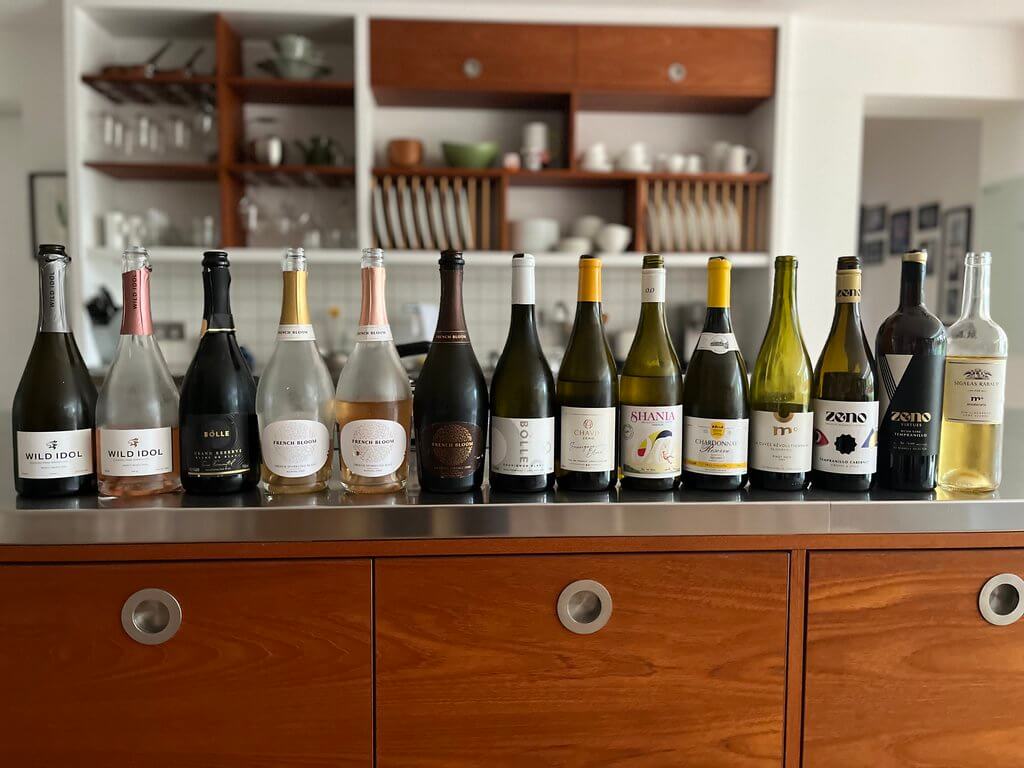
Chavin Zéro Sauvignon Blanc, 0% (£12.85) – grassy, lemon, tangy but succulent and gluggable
BOLLE Sauvignon Blanc, 0.5% (£19.99) – citrus and apple, greengage, almost Riesling-esque, tangy, honeysuckle, succulent
Bolle Reserve Chardonnay, <0.5% (£29.99) – fresh peach and apple, with creamy hints, shades of Maconnais typicity, refreshing
Moderato La Cuvee Revolutionnaire de Moderato Pinot Noir 2024, 0.3% (£15.70) – dark berry, wet dough, floral hints, tangy acid, decent with lamb
ZENO Tempranillo Cabernet 2025, 0.3% (£10.25) – spiced mulberry jam, floral and graphite hints, fine tannin, not too sweet
ZENO Virtues Bush Vine Tempranillo 2023, 0.4% (£24.99) – smoky, creamy, woody, rich dark fruit, firmish tannin
Sigalas Rabaud Par Moderato Vin Liquoreux Sans Alcohol (£17 for half bottle) – honey, sweet apricot, barley sugar, juicy and rich but not as sweet as classic Sauternes. Seriously impressive and rewarding
Get in Touch!
We LOVE to hear from you.
You can send us an email. Or find us on social media (links below).
Or, better still, leave us a voice message via the magic of SpeakPipe:
Transcript
This transcript is AI generated. It’s not perfect.
Hello and welcome!
Susie Barrie MW 0:05
Hello and welcome to Wine Blast for an episode that I think is going to ruffle a few feathers! Because some might say we shouldn’t even be talking about it at all on a proper wine show. Yes, this one is all about non-alcoholic wine.
Peter Richards MW 0:21
Which some people say is a contradiction in terms, akin to blasphemy, which others reckon is just irredeemably disgusting. And we say is both misunderstood and fascinating. Certainly a subject well worth our time as wine lovers. So, whatever your position on this contentious debate, stick with us. Here’s a taster of what’s coming up.
Maggie Frerejean Taittinger 0:44
I think we all can agree that wine is a religion. It’s a quite conservative religion. And in places like France or Italy, for example, it’s actually dogmatic. And I think it’s really a strong message that the future of fine wine, but also luxury hospitality, will include exceptional experiences without alcohol.
Will Willis 1:03
Put away the red trousers and the cauliflower noses! If we can deliver a wine that gives all of the aromatic and textural and taste profile and pleasure, why would that be seen as heresy? Wake up and smell the roses. The sky’s the limit.
Susie Barrie MW 1:18
Maggie Frerejean Taittinger of French Bloom and Will Willis of Zeno there. In this episode, we’re going to be hearing more from them, as well as other pioneers at the cutting edge of non-alcoholic wine. We’re also tasting and assessing non-alcoholic wines along the way, one of which sells for more than a hundred pounds per bottle. And as we go along, we’re going to be asking, is this stuff any good? Is it worth our while? Does it taste like wine? Should it even be class as wine? Who’s buying it and what does the future hold?
Peter Richards MW 1:53
The world is changing fast, and the people and brands we’re featuring are making waves. Non-alcoholic wine is also something we take a keen personal interest in. You might remember our Dry Drinking episode back in 2021, where we shared how we take semi-regular nights off the booth, so are constantly on the lookout for tasty, affordable options to plug that gap. Lately, confession alert, that’s meant non-alcoholic beer. I’m almost ashamed to admit as Masters of Wine. But is this the moment when we start to give non-alcoholic wine a second chance?!
Susie Barrie MW 2:32
And just to, as a general preface here, I’m not sure we, as in you and me, entirely see eye to eye on this one. So there may be some differences of opinion coming up, which hopefully will be agreeable disagreements, which we can resolve without falling out too much.
Peter Richards MW 2:50
So we all need to brace ourselves, is that what you’re saying? I think so. Particularly me. Um and I’m getting that I might be well advised to prepare a stiff drink for afterwards, which is maybe not the best start for a non-alcoholic episode. Just the way you’re glaring at me… Okay, all right. Anyway, it sounds good. It sounds good. I think this is a debate that needs to be had. And you know, on the subject of contrariness, I think we should start with a recap on what might be termed the wine traditionalists’ position, and the opposition to non-alcoholic wine.
The opposition to non-alc wine
Susie Barrie MW 3:19
Yep. Let’s start with a very short clip that I think captures the essence of this position. It’s from Dragon’s Den on BBC One, September 2026. And here’s Dragon Peter Jones’ reaction when being pitched the Zeno alcohol liberated wine business.
Peter Jones 3:37
Interesting. It’s not really wine though. Oh, here we go.
Peter Richards MW 3:44
Now, spoiler alert for anyone who hasn’t seen that episode, self-confessed wine lover Peter Jones did then go on to describe the quality of the Zeno wines as ‘absolutely amazing,’ saying he was ‘genuinely surprised how good it is. Fantastic.’ But that comment really does tap into what is a strong body of opinion: that wine has to contain alcohol to be wine.
Susie Barrie MW 4:10
And this is a key point. For some people, particularly traditional wine producers, wine just isn’t wine without alcohol. Grape juice isn’t wine. It’s fermentation that transforms the flavours and experience from a sugary juice into something altogether more intriguing, nuanced, food-friendly, and sometimes even magical. You could say that alcohol is simply a by=product of that process, but it’s undoubtedly more than that. Alcohol is a key part of the flavour experience of wine. You know, it adds richness, body texture, and flavour complexity.
Peter Richards MW 4:46
You could also argue that the effects of alcohol are a welcome and important part of the wine experience. But this is where we start getting into slightly more controversial territory. So let’s park that for now as something to come back to before fisticuffs break out within the first five minutes. I guess, you know, one thing that people tend to revert to in this context is the basic definition of wine itself.
Susie Barrie MW 5:10
Yeah, so the definition that every student learns is that wine is fermented grape juice. The OIV, a global wine organisation but based in France, goes a bit further with its definition, stating ‘wine is the beverage resulting exclusively from the partial or complete alcoholic fermentation of fresh grapes, whether crushed or not, or of grape must. Its actual alcohol content shall not be less than 8.5% volume.’ The definition then goes on to add that wine can go down to 7% alcohol by volume in certain cases. But there you have it. In writing, wine has to contain alcohol to be wine.
Peter Richards MW 5:49
And that has historically been the position surrounding global wine legislation. To be called wine, a drink has to contain fermented grape juice and alcohol. That’s starting to change now, but it’s clear that many wine people we speak to strongly endorse this view. One example I think captures this perfectly. In April 2024, historic Alsace wine producer Hugel put out an image on social media with what seemed to be a new label for a 0.0% Riesling.
Susie Barrie MW 6:21
Which turned out to be an April fool.
Peter Richards MW 6:23
Exactly. Uh they swiftly followed up with a statement saying, and I quote, ‘Famille Hugel is not embarking on the production of alcohol-free wines, not to mention the disastrous carbon footprint of such an energy-intensive process. This principle runs counter to our entire family culture. We’re talking about an industrial process whose aim is to strip wine of a part of itself. What a waste of time. What a lack of consideration for the product. What disrespect for the drinker. In our eyes, the only true alcohol-free alternative is water.’
Susie Barrie MW 6:58
And they are not alone in that view. But here’s a thought. Was this in fact an own goal? A fundamental misreading of the room just at the time when the wine world was starting to evolve in ways the traditionalists weren’t anticipating? The OIV’s figures paint a stark picture of wine’s decline over recent years, with production and consumption in free fall, hitting 60-year lows in 2024, and with very few bright spots on the horizon.
The case for the defence
Peter Richards MW 7:27
One of the few areas of growth has been in the non-alcoholic sphere. Now, figures vary, and it’s true to say that the non-alcoholic market is still tiny compared to global wine, which is estimated to be around $600 billion annually, I think. But it’s growing. The global alcohol-free wine market is valued today at $1.65 billion, so less than half a percent of global wine, but it’s forecast to surpass $5 billion by 2035. So effectively tripling in a decade.
Susie Barrie MW 7:59
Now, just a quick explainer and clarification at this point. Non-alcoholic or alcohol-free generally refers to anything under 0.5% alcohol. In this episode, we’re focusing exclusively on non-alcoholic wine. So wine-like drinks with less than 0.5% alcohol, but not flavoured alternatives or other similar things.
Peter Richards MW 8:21
Yeah, there are so many options out there when it comes to lower alcohol, from beers to spirits to functionals to wine alternatives, even I guess mid-strength wine, which is around 7 to 9% alcohol. But the very low alcohol stuff, so under 1.5%, is often referred to as the no and low category or NOLO category. In this programme, we’re narrowing the focus to just non-alcoholic wine, as you said, because we feel that’s the most interesting area for wine lovers.
Susie Barrie MW 8:49
So, as you’ve said, the non-alcoholic wine sector is growing. But this is true beyond wine as well. You know, the global no and low alcohol category is valued at $26 billion today, but is slated to reach $45 billion by 2034. So nearly doubling in eight years. UK no and low figures show a similar trend. You know, £413 million today, forecast to be £800 million by 2030. And the UK alcohol-free wine market is predicted to grow from £150 million in 2025 to £300 million by 2030.
Peter Richards MW 9:30
Recently we had Pays d’Oc IGP president Jacques Gravegeal on Wine Blast, which of course was fun. Uh in our interview, he said, not the bit we played, but he said that alcohol-free wines could reach the equivalent of 10% of current wine consumption. Now, this is a senior French wine figure, and he said the following of non-alcoholic wine. And I quote, ‘is it ethical or traditional? No. But if it allows us to produce several million extra litres and keep vines in the ground and people in jobs, then I refuse to dismiss it.’ And he described the quality of modern non-alcoholic wines as ‘truly astonishing.’
Susie Barrie MW 10:09
And then, of course, more recently, we’ve had Laurent David from Chateau Edmus in Saint Emilion championing de-alcoholised Grand Cru – and microbiome expert Professor Tim Spector talking up the health benefits of non-alcoholic red wine, describing it as a ‘really exciting area.’ So you do get that sense that the world is moving on and starting to reconsider this category.
French Bloom with Maggie and Rodolphe
Peter Richards MW 10:32
Yeah, so we’ll come on to our thoughts on all of this in due course. But on this theme, I’d like to bring in Maggie Frerejean Taittinger. Maggie launched non-alcoholic sparkling wine brand French Bloom in 2019 after feeling excluded from social events while pregnant because her drinks options were, and I quote, ‘either overly sweet or austere or artificial.’ I mean, I guess you could add bleak if you throw in the Hugel water thing, couldn’t you?
Susie Barrie MW 10:59
Some people like water!
Peter Richards MW 11:00
Oh, yeah, no, no, there’s nothing wrong with water. It’s just not particularly interesting as a drink, is it? Anyway, Maggie’s friend and co-founder Constance Jablonski felt the same as a top model regularly attending late-night festivities.
Susie Barrie MW 11:12
So the two female co-founders had three key objectives with French Bloom from day one. Try to make it as wine-like as possible – keep it natural, so organic wine, no added sugar or sulfites – and aim to create a brand that transcends its category, becoming an experience in its own right. If that sounds ambitious, it was. Here’s Maggie.
Maggie Frerejean Taittinger 11:36
What we decided to do was extremely bold in different ways. The first is launching a non-alcoholic sparkling wine in France. In a world where you know I think we all can agree that wine is a religion. It’s a quite conservative religion. And in places like France or Italy, for example, it’s actually dogmatic. So for us to have two women coming and saying, let’s look at new ways in which we approach winemaking, but also consumption, it definitely shuffles, it definitely ruffled a lot of feathers.
Peter Richards MW 12:08
So I take your point about ruffling feathers, and seeing as you’ve mentioned that, maybe we could just touch on that. There are some people who say non-alcoholic wine is a heretical notion, that it isn’t proper wine. You know, what’s your response to that?
Maggie Frerejean Taittinger 12:23
I think I think what’s really interesting is that we’re moving away from an era of acceptance to an era of appreciation. And with that, when I speak to our restaurant partners or hotel partners, it’s no longer a question of IF they’re going to work with non-alcoholic products. It’s HOW are they going to work with non-alcoholic products? And for us at French Bloom, we do consider what we do winemaking. We have, you know, from the beginning, from selecting our terroir to harvesting our grapes to pressing, aging, blending, we are taking the steps as a winemaker would do. We believe that first and foremost, wine is a terroir in a bottle, and we’re taking that same approach with French Bloom. So we believe that French Bloom should be considered a non-alcoholic wine. Um, of course, that last step, the dealcoholisation, is what differentiates us. But we think that, you know, there’s space for provenance, there’s space now for vintage, there’s space for ageing in the wine space. And that’s where we’ve really been the forefront of.
Peter Richards MW 13:25
And just say, do you think that the world has changed and the world has moved on? And people who do have this view are just slightly behind the times in that sense?
Maggie Frerejean Taittinger 13:33
The world looks very different than it did when we first had the idea of French Bloom. Remember, this is 2019, this is pre-COVID. I think when we first developed French Bloom, we were wrong. We thought it would be for pregnant women, it would be for the sober community, it would be for the religious market. And today, if we fast forward to five years since we released our first bottles, I can tell you 80% of our customers do drink wine and champagne and every once in a while cocktails. But there’s this general shift, there’s a general premiumisation that’s happened in the space. People are drinking higher quality wines, myself included, and I’m drinking just a little bit less. So when we’re not drinking, we’re still wanting to maintain that wine experience. So again, it’s it’s incremental value for our partners. It’s going from a glass of wine or champagne, and then when they have the option to have the wine list or have that second or third glass, they’re switching to non-alcoholic because there is, again, this general moderation.
Susie Barrie MW 14:36
So wine as a conservative, dogmatic religion that’s being disrupted because there’s demand for it. Um, and clearly from Maggie’s experience, that demand isn’t just coming from teetotallers or abstainers, it’s coming from regular wine drinkers who want to moderate and don’t want to compromise on taste.
Peter Richards MW 14:53
Yeah, and and this is a consistent theme that emerges when you talk to these non-alc guys. Um, the market’s clearly way more diverse than they ever expected. Uh, which means, of course, the potential for growth is that much bigger too. But also, you know, if the majority of your customers are wine lovers, you’re gonna want to make something that replicates the experience of wine as closely as possible.
Susie Barrie MW 15:12
And that’s obviously what Maggie’s getting at in terms of aiming to express terroir, for example. Um now they also have a secret weapon in the French Bloom team because it just so happens that Maggie’s husband is none other than Rodolphe Frerejean Taittinger, very much part of the French establishment, having co-founded Champagne Frerejean Freres and worked in Cognac and the fine wine world too. So he came on board early to help guide the technical and logistical side of things.
Peter Richards MW 15:40
Yeah, now Rodolphe says it’s all about creating ‘a new know-how,’ a ‘new definition of wine.’ He makes the point that both champagne and cognac are somewhat artificial in their production, with a base wine fundamentally manipulated into creating something magic. Um they initially looked all over France to identify the secret to making a base wine that could then be de-alcoholised and still taste good. And along the way they realised that, for example, Puligny-Montrachet and top Bordeaux are great wines, as normal wines, but actually they’re horrible without the alcohol.
Rodolphe Frerejean Taittinger 16:14
From that we realise again, you can take the best wine in the world if you’re de-alcoholising it. It’s not going to make a good alcohol-free. If you make a if you de-alcoholise a Petrus, you’re not gonna make a good alcohol-free Petrus.
Susie Barrie MW 16:25
What they realised was that a good base wine for them actually needed a very bold character to be able to withstand the de-alcoholisation process. And we’ll come back to the the method in a bit. Um anyway, so they they headed south to the Languedoc, where it’s also easier to find organic vineyards, and they hit upon Limoux, which has history with sparkling wine, and it’s where they’ve now bought an estate, with the eventual aspiration to make a single parcel wine from a vineyard they call Le Clos.
Rodolphe Frerejean Taittinger 16:54
And in Limoux, we find an amazing terroir with great Chardonnay, great pinot noir, a little bit more of altitude, but still some great sun. A place when they they make actually some very nice cremants of Limoux. But we found this place as the best place on earth, in our point of view, to craft the future of alcohol-free sparkling wine.
Peter Richards MW 17:19
So that’s an ambitious aim. Uh but then this is an ambitious project all round. Um, as we’ve said, they launched in France, arguably the heartland of wine traditionalism. Their wine is now proudly poured in the Ritz in Paris, 700 Nicolas Stores, and Les Crayères in Champagne, a two Michelin-style establishment in the very region their product is arguably disrupting. Um, and after the US, now France remains their second biggest market. That’s quite an achievement.
Susie Barrie MW 17:46
And they’ve had some pretty high-profile backing too, haven’t they?
Peter Richards MW 17:49
As well. Yeah, so Jean Moueix of Chateau Petrus and Béatrice Cointreau of Remy Cointreau were early backers. And then in 2024, big news: Moet Hennessy became minority shareholders. So the French luxury elite, LVMH, owners of Dom Perignon, Veuve Clicquot, Krug, Hennessy Cognac, that’s a big statement, isn’t it? Here’s what Maggie said about this.
Maggie Frerejean Taittinger 18:12
The investment by Moet Hennessy was an extraordinary milestone for French Bloom, but also a powerful moment for the entire non-alcoholic wine category. Because for the first time, a group like Moet Hennessy invested in a non-alcoholic wine maison. And I think it’s really a strong message that the future of fine wine, but also luxury hospitality, will include exceptional experiences without alcohol.
Susie Barrie MW 18:37
So remember, French Bloom only started in 2019. But according to Rodolphe, they see significant potential for further growth. Uh sorry for the slightly glitchy sound at the start.
Rodolphe Frerejean Taittinger 18:48
I truly believe that the size of the market is limitless because it’s much more than just the alcohol drinkers we talk about, we talk to anyone. So, yeah, we believe that we are really at the beginning of a major, major wave. If you take the the size of the non-alc market, I put the the wine, spirits, and beer, it was about a $10 billion market in 2020, around $30 billion in 2026, and around, I believe, around 40 to 50 billion by 2030. Um, so we distribute by Asahi in Japan, and the the CEO of Asahi in Japan he is forecasting to sell about 50 percent of his beer will be non-alcoholic by 2030. So you you know when we see when we see that we hear those types of things, we we see also the growth we’re doing. We’re doing about 140% growth every year. Uh we we believe the the the market can be much bigger, for example, than the champagne market by itself in the next five to ten years. Because health is a new wealth, I guess. And also, yes, people don’t stop drinking alcohol, they just drink much less, and they and they are much more mindful about the wellness aspect. They they they want to still have the pleasure and the experience without necessarily having the alcohol during the week. The world is changing, and and I believe French Bloom really reply to the this new change of consumptions.
Peter Richards MW 20:43
So the non-alcoholic wine market being potentially bigger than the champagne market in the next five to ten years, and champagne sells what is it, around 300 million bottles, a value of about five to six billion dollars every year. Um, that puts things into perspective, doesn’t it? And here’s how Maggie sees the future.
Maggie Frerejean Taittinger 21:02
I think if you look at the history of wine, consumption habits have always evolved. What’s changing today is that consumers want more choice, and now they’re no longer willing to compromise on quality or experience because we’re starting to finally approach the quality in which the non-alcoholic wine category deserves. The good news for all of us is that wine will exist for the next seven centuries. I think the beauty of this market is that it’s going far beyond abstinence. Our customers for French Bloom in particular are wine lovers. And so I think we want to ensure that people have options at that same level, whether or not you’re drinking alcohol or not.
Susie Barrie MW 21:42
So the world is changing. Wine lovers want options. Uh, and we have the French Bloom wines in front of us. Uh, so what do we think?
Peter Richards MW 21:49
We do. Um they’re impressive. You know, definitely a big step forward in terms of quality and approximating a wine experience. Um, the acidity is refreshing. But not sour. The bubbles are well integrated. There’s fruit and sort of savoury flavours and texture. They’re not too sweet. And the vintage 2023 Blanc de Blancs here is got it’s got loads going on, doesn’t it? It’s really complex and nutty, creamy, sort of honeyed shades of mature champagne. Very ambitious and impressive. They do use some new oak on the base wine, so perhaps that’s where that sort of character is coming from.
Susie Barrie MW 22:27
But now I step in with some grumpy caveats, don’t I? I mean, firstly, they do still have some of that raw dough, baked fruit sort of damp cardboard smell that does just seem to be unavoidable from the vacuum distillation alcohol reduction process. But that’s pretty ubiquitous across the category. So perhaps a slightly unfair comment. And they do manage, French Bloom do manage to attenuate it with the extra complexity the wines definitely have, as you say. But then the elephant in the room, the price, you know, the vintage 2023 is £109 a bottle. I mean, that’s a tough sell for really good champagne, let alone non-alcoholic stuff.
Peter Richards MW 23:11
Yeah, no, it’s fair enough, it’s fair enough. And broadly speaking, I agree. But you know, this the straight blanc, which we’ve got here as well, is £29. The rosé is £34. That’s not breaking the budget, is it? I mean, Maggie says their aim was always to position themselves as a premium wine, you know, to give people complexity and pleasure and emotion. Yeah, I mean, you know, if you buy a wine at three quid, your expectations are already set at a certain level of, you know, and that works in reverse too. Plus, you know, their production costs are high with organic wine and oak aging and no shortcuts. Um, Maggie says that in restaurants they tend to sit at about 80% of the price of the house champagne by the glass, which they find is a real sweet spot, and and people can feel like they’re drinking something special. And at the end of the day, their sales over the last six, seven years show there’s a real appetite for it.
Susie Barrie MW 23:57
Yeah, I mean, I just personally like to see more of more affordable quality options for those of us who want something around the £12 to £15 a bottle marker, the thrifties. And I’d also want, to be fair, the packaging to be a bit better, you know, have a more premium feel at those kind of price levels. Um but we’ll come back to these points. For now, let’s take a breath.
MID-EPISODE RECAP – and Zeno
Susie Barrie MW 24:18
To recap so far, non-alcoholic wine has often been decried as heretical or just plain horrible. But now things seem to be changing. Sales are growing, albeit from a small base, in stark contrast to conventional wine. Bold new brands like French Bloom are aiming high and wide with premium pricing and stories to match. And they are not the only ones.
Peter Richards MW 24:44
Indeed. So much more to come. Um, but first up, let’s turn to Zeno, the brand we mentioned earlier, which appeared on Dragon’s Den. Zeno is based around a family-owned organic estate in Castilla-La Mancha in Spain. It was founded in 2020 by two wine trade veterans, Will Willis and David Hodgson.
Susie Barrie MW 25:02
Will says the secret to making non-alcoholic wine taste decent is time and quality. Hence, zeroing in on one quality wine estate, removing alcohol gently, and then focusing on building mouthfeel and texture without resorting simply to sugar. He admits to using creative methods, but he says nothing outside the traditional winemaker’s toolbox. And they take their time. They delayed the red release by a year, I think it was, to get the texture just right.
Peter Richards MW 25:32
And we were pretty impressed by their reds, weren’t we? Yeah. Yeah, no, we weren’t. Um the Tempranillo Cabernet, which you’ve got in front of us, at £10.25. And the new release Virtue’s Bush Vine Tempranillo, which is oak-aged for 14 months, at £25. I mean, really good balance in both, I think. The feel of red wine, you know, with tannins and acid and fruit that’s not too confected. And also they taste recognisably Spanish. Yeah, they do. They do absolutely always a good sign. And both also have that kind of there’s a sort of engaging graphite-y, meaty herbal complexity, too.
Susie Barrie MW 26:06
Yeah, yeah. I mean, the the Bush Vine, oh, here we go again. The bush vine tempranillo is definitely on the pricey side. Um, plus it comes in a very heavy bottle, which is frankly baffling for what’s otherwise an initiative which seems to major on its sustainability credentials. Um but what’s great is, as you say, they’re not overdone, they’re not overly sweet and essentially a version of Ribena, which so many non-alcoholic reds seem to be. Uh, they’re definitely pushing the boundaries when it comes to non-alcoholic red.
Peter Richards MW 26:34
Yeah, on which note, here’s Will’s response to people who say that non-alc wine isn’t real wine.
Will Willis 26:40
Put away the red trousers and the the cauliflower noses! It’s it’s changed. Uh Rosé was heretical 40 years ago. And I think people who see it as heretical are missing the idea as to it we’re not trying to replace anything. This is adding value to a category, it’s adding breadth to people who once could drink and can’t anymore, or people who are now on medication and they’re looking to cut down on alcohol for health reasons, why should it be that if we can deliver a wine that gives all of the aromatic and textural and taste profile and pleasure, why would that be seen as heresy? Wake up and smell the roses. So if we don’t want to lose these wonderful vineyard areas and see these vast reductions in in production, we need to find an alternative use. And if we can keep people in the category by offering good quality alternative, then that’s got to be a good thing.
Susie Barrie MW 27:45
And keeping people in the category, I guess, means both keeping vines in the ground, which otherwise might be ripped out because of plunging demand for conventional wine, and then also keeping drinkers buying a version of wine rather than buying non-alcoholic beer or spirits or water.
Peter Richards MW 28:02
Yeah, and I think this is a really good point. You know, you know how to set me off. Uh Rodolphe mentioned that Asahi think half of their beer sales in the future may be alcohol-free. Half. Wow, half. Um, do the beer industry, do the beer industry say non-alcoholic beer isn’t beer?! You know, I I mean that would be commercial suicide. So for wine people to say that non-alcoholic wine isn’t wine is utter madness, in my view. Uh, wine can and should be a broad church. I think drinkers are grown up enough to make the distinction, even when they’re at the younger end of the spectrum, like Gen Z.
Susie Barrie MW 28:36
You know, it’s a potential massive win-win. And I guess it’s no surprise that wine lovers like us, if we want to have a night off or a driving or just want to moderate on a big night out, we’d ideally want something that comes close to our favourite drink, which is wine.
Peter Richards MW 28:50
Yeah, and that’s exactly what Will says about how the market works right now.
Will Willis 28:55
Um, I see it being a a really important part of our weekly basket. Monday to Friday, I I love a glass of wine, but I don’t want the alcohol. And then Saturday, Sunday, start with non-alcoholic, and then move to alcoholic and finish with non-alcoholic. There’s a there’s a lot of this sort of anecdotal phrasing, bookending, is what I’ve just described. You start and finish with alcohol free, but you’re still enjoying a glass in your hand, or the or the wonderful zebra striping, where where you spend an evening hopping back and forth between the two. Um, and that that’s that’s what we envisage. You know, I I’m I’m not anti-alcohol. I I still drink alcohol myself, it’s still an important part of my my social experience, but in moderation, and that’s obviously the fourth virtue of the Stoics of Zeno himself: moderation of balance. Um, and as long as we’re true to that, whether it’s with salt or red meat or sugar, just be true. Be a leader balanced lifestyle. It doesn’t always have to be alcohol, but it has to taste good.
Susie Barrie MW 30:05
So bookending and zebra striping, this is the new lingo, the new reality. Um I personally particularly like the idea of bookending because I tend to drink the first few glasses way too fast, as you know, which means it goes straight to my head. And then I tend to want to stop drinking before everyone else, which is again where a good non-alcoholic option would come in very handy.
Peter Richards MW 30:26
And I just like zebras. So there we go. It all works out, doesn’t it? But no, Will is also quite optimistic in terms of growth, saying Zeno is growing at 10% year on year, while conventional wine is shrinking at 5-6%. Um, they’ll soon be making their millionth bottle and are looking to quadruple in size in the next two to three years. I mean, he admits they’re starting from a small base, but cites research saying that one in three drinkers are now actively looking for alcohol-free options in bars and restaurants. And he’d love to see good quality and non-alcoholic growing to about 10% of the market. So that figure again. And here’s what he had to say about the future of non-alcoholic wine.
Will Willis 31:06
I think we’ll see more people entering, and I but I hope they’re entering in a virtuous way in order to add value and add quality to the category. I see the consumer moving up the price ladder and realising that you just as with alcoholic wine, you get what you pay for. Um, and so I think we’ll see more great varieties, more alternative options. So you’ll be able to choose with quality first, going, this tastes great, and it’s not got any alcohol in. So I do see it growing significantly, as we we’re growing twice the rate that the alcoholic wine is shrinking, which is really encouraging. And I think as long as quality remains the mission for all the producers, and not just bandwagoning, then I think we’ll we’ll we’ll see some really exciting wine. As long as the consumer is open to the opportunities, then you know, really is the sky’s the limit.
Wild Idol with Paul Beavis
Will Willis 32:09
Susie Barrie MW 32:09
Now, someone else betting on market growth is Paul Beavis at Wild Idol. Paul worked in champagne for many years before launching this new frontier startup in late 2022 for the following reason.
Paul Beavis 32:23
I I genuinely felt there was a requirement for the market to produce alcohol free that was not confected, manufactured, was made from a proper vineyard with real varietals and being very natural in the same process.
Peter Richards MW 32:40
Now, interestingly, Wild Idol, which is sparkling, does not involve fermentation. Almost all the other brands we’re covering in this episode ferment a base wine and then de-alcoholise and then do various different things around that to create points of difference. Going back to our definition issues, some will say that even non-alcoholic wine should be fermented. Uh, and the term Wild Idol used on their labels, interestingly, is ‘sparkling drink.’ But at the risk of going out on a limb here, I’m not sure people really care how it’s made. As long as it tastes sufficiently like wine and gives a wine-like experience, then that can work too.
Susie Barrie MW 33:19
Yeah, I’d go along with that.
Peter Richards MW 33:20
Do you agree?
Susie Barrie MW 33:21
Yeah, I mean. So what they do for Wild Idol is blend grape juice with wine vinegar and then carbonate very slowly with the juice kept very cool over several months. They use juice from the Muller Thurgau variety with a bit of Merlot for the rose to give colour, from the Rheingau in Germany. And Paul is really interesting about this, saying that Riesling wine is interesting, but Riesling juice isn’t. Whereas Muller Thurgau makes great wine-like juice. Who would have thought it? He says. Um, they tried out lots of different locations and grape varieties as well as lots of different iterations before ending up with this final formula. He says it wasn’t the easy route, but they were totally focused on quality and purity.
Peter Richards MW 34:07
This process means the wines can get up to five and a half bar pressure and retain their fizz, which is important for buy the glass programs and bars and restaurants. And Paul says he definitely wanted to do this method rather than de-alcoholise because the latter can require a lot of subsequent manipulation. And do you know what? The wines are here and they taste pretty darn decent, don’t they? I mean, I definitely, for me, put them among the leading non-alcoholic wine options out there. They’ve got a very wine-like shape and texture. The fizz is so well integrated. There’s really good intensity of flavour. You know, they’re quite succulent and sweetish, but certainly not cloying in any way. It’s a kind of it’s a different kind of flavour experience to the de-alcoholised wine.
Susie Barrie MW 34:52
And I have to add, the packaging, which I’m always very keen on, is by far the best on the market, in my opinion. It’s so classy. Overall, a very elegant, polished experience. Um and Paul actually says he was aiming to create something ‘soft, sublime, elegant, which didn’t look like a big exploding bubble.’ You know, some non-alc fizzes can be very frothy. Um, and apparently they have already done back vintage tastings of Wild Idol. So that gives you an idea of where they’re trying to position it.
Peter Richards MW 35:23
Yeah, so I think the pricing is around £30 per bottle, isn’t it? Which which isn’t crazy. Uh Paul says they’ve doubled volumes every year for the last three years. 85% of their business is bars and restaurants, and their market is way more diverse than they’d initially anticipated.
Susie Barrie MW 35:37
Now I asked Paul how he responds to people who think non-alcoholic wine isn’t proper wine.
Paul Beavis 35:43
You know, the reality is that the marketplace is changing, customers are changing, our lifestyles are changing. Um, what’s wrong with giving people a choice? I I don’t understand why. There’s lots of people who can’t drink, don’t want to drink, but want to have a great time. And wine is very much a brilliant incubator for bringing lovely people together. So I I I respect everybody’s opinion, and I think you should, but at the same point, I feel that one of the reasons we created Wild Idol is to let people be part of the occasion. I think people should be able to do what they want. And as long as you’re not being disrespectful to an industry, you’re not trying to take share from an industry, if anything, it’s probably keeping people in the to some extent. And I think that’s only a good thing. I don’t believe that alcohol-free takes market share from alcohol at all. If you’re gonna drink, you’re gonna drink, and that’s great. But what about those people ultimately won’t be drinking as much as they used to? Why can’t they still be part of that occasion? And if I’m giving somebody the chance to drink a spot thing, and they feel that they’re celebrating with their friends, they can have a good time, they can then get in the car and drive and they’re okay with that, that’s fine. I I just feel there’s an opportunity here to let people engage and stay within the space. And the expectations I think are changing, and I think we have to be able to move with with the way the market is growing. Um but it never it’s never to take on the way, trade. That’s the last thing, isn’t it? You know, I mean we applaud people to drink, there’s nothing wrong with that at all. Um it’s almost just to say that the marketplace has changed, and there’s other there are people out there that actually necessarily don’t want to drink water or sugary mocktails just because, you know, otherwise they’re not having the same sort of occasion.
Susie Barrie MW 37:29
So that’s a really interesting point about non-alcoholic wine not competing with wine necessarily, not stealing market share, but potentially being complimentary.
Peter Richards MW 37:37
Yeah, so traditional wine doesn’t need to feel threatened by this. Um Paul still drinks alcohol, doesn’t he?
Susie Barrie MW 37:43
He does, he does, but he is quite mindful about it, given he’s doing lots of sports and Iron Mans and impressive things like that. Um plus his kids don’t drink, and he doesn’t like them feeling the peer pressure to drink, which I quite understand. Um I also asked him what the future of non-alcoholic wine holds.
Paul Beavis 38:02
Innovation with intent. Um, I think that quality will improve, I think that investment levels will improve, I think that there will be a list one day. You look at a wine menu and it’ll have maybe 20 different alcohol-free options for people, whether they be naturally alcohol-free or de-alcoholised, I think that’s what we’re going to start to see. Um and I think slowly but surely there will be it will be respected by sommeliers around the world for the quality that goes in it. Um, and that is no different to what’s happening wine. Um, and I think that there’ll be more provenance, there’ll be more storytelling, there’ll be more authenticity. Um and and I but I tell you what, it’s gonna take some bold, brave people to do it because this is not a quick fix. And this is not a quick win. But I do feel that it will take a space rightly so in the industry because it it deserves one. It totally deserves one. Um and it can work in harmony with alcohol, and it will work in harmony with great wines. So I think it’s an exciting space to be, to be honest.
Peter Richards MW 39:08
I think everyone we spoke to made the point that while the prospects for non-out wine are exciting, it’s taking huge amounts of work and investment to effectively build the category, educate both the trade and customers, particularly when it comes to the premium end of the market. But I guess the potential rewards could well make it all worthwhile.
A surprising Sauternes – and BOLLE’s secret
Susie Barrie MW 39:27
Yeah, indeed. Um now talking of rewards, we did a lot of tasting by way of research for this episode. Including going to the brilliant Parched tasting in London, billed as ‘the driest event of the year.’ And I will put our top tips together on the website show notes. But there were two things we want to mention particularly. The first one was a very successful Sauternes, if you like that kind of thing. Um, it’s not my bag, I have to admit, but this really did taste very Sauternes-like, just without the alcohol. It’s the Sigalas Rabaud Par Moderato, ideal as a match for terrine or a cheese board, or frankly anything that would normally go with Sauternes.
Peter Richards MW 40:06
Yeah, and I suppose it makes sense that it works because the sugar provides the body. Um, and you know, perhaps this could help revive the fortunes of sweet wines, which aren’t looking too bright right now. It’s quite optimistic, but maybe. Maybe, but you know, I don’t know. Either way, this is a new one on me, and a really pleasant surprise. Yeah. Plus, interestingly, looking at the back labels, it’s perhaps the least manipulated of all the non-alcoholic wines we tried. It’s 100% dealcoholised wine with just some sulfites added for stability.
Susie Barrie MW 40:33
And then one other name we wanted to flag up, even if I probably won’t pronounce it correctly, is Bolle B-O-L-L-E. Now, this is an intriguing one. Uh we’ve tried their wines quite a few times lately and been consistently impressed. Uh, their grand reserve, twice fermented Blanc de Blanc, is zesty, bready, herbal, tangy, and seriously impressive. Um, I think you got a bit over excited and called it ‘the Dom Perignon of Alcohol Free.’ Um and then we’ve also got their reserve Chardonnay sourced from the Maconnais, and it tastes quite like a Macon, so still white, full of, you know, clean, bright apple and pear fruit with a hint of cream. I mean, they are without doubt two of our favourite current non-alcoholic wines.
Peter Richards MW 41:18
Yeah, I mean, seriously impressive across both fizz and still. Um, now one thing you notice with these wines is, you know, they suffer much less from the curse of vacuum distillation than other non-alcoholic wines. Um, you know, we’ve said we’d touch on methodology. So briefly, when it comes to the vacuum distillation or spinning cone method, the wine is gently heated so it evaporates with different elements coming off at different temperatures before everything’s blended back together, minus the alcohol or the bits you don’t want. But even with the vacuum, meaning evaporation happens at lower temperatures, you can still get this noticeable aroma or flavour like baked fruit or raw dough or damp cardboard, however you want to phrase it, from the heat treatment.
Susie Barrie MW 42:04
Now, the technology is improving all the time, so this is becoming less of an issue with the better wines. But Bolle is going one step further. Their founder, Roberto Vanin, is an Italian chemistry and ethnology graduate who worked for 40 years for big consumer goods companies like Reckit, Mars, and Suntory across things like beverage science. Bolle was born out of his failed attempt at dry January because he couldn’t find anything appetising. So he came up with a method to make his own non-alc and was inspired by champagne.
Peter Richards MW 42:37
Yeah, hence Bolle, which is Italian slang for bubbles. Roberto noted how champagne is transformed by a second fermentation and subsequent lees-aging. And he thought this process could rebuild flavours and texture post de-alcoholisation, as well as combat the off-flavours. Problem is, if you do a second fermentation, it tends to produce alcohol.
Susie Barrie MW 43:00
So Roberto’s solution, drawing on his chemistry background, was to identify specific ‘lazy’ yeasts and a specific method that would allow a second fermentation initiated by the addition of fresh grape juice to produce bubbles and flavour, but no alcohol. Now they’re quite tight-lipped about these yeasts and the method, perhaps understandably because they have a patent pending with the idea of ultimately using their method to make non-alc wines for other people. But it is as intriguing as it is mysterious. And it obviously works.
Peter Richards MW 43:35
Yeah, yeah, I did press them on this because, of course, lots of people all around the world have been trying to identify yeasts and methods to produce lower alcohol lately, without great success. Um, but I didn’t get much joy from the pressing. Um, what I did also do though was check with some wine and yeast experts, and they said that this method could work via something like respiration, which is the alternate pathway for yeast. So when they have have enough oxygen and not too much sugar, they won’t actually produce ethanol. But it’s a tricky process to manage. Um, either way, as you say, whatever Bolle are doing, it’s it’s clearly working, allowing them to rebuild texture and flavour and also targeting those off flavours. And they can then age the wines on lees in the tank for up to nine months for the Grand Reserve sparkling, for example, which is you know a real point of difference.
Susie Barrie MW 44:22
They’ve now got plans for a California Cabernet and a Burgundy Cremant. So it will be interesting to see those in due course, too. But meantime, a brand to keep your eye on. Um, although the issue of price rears its ugly head again, sorry. Uh, the Grand Reserve Blanc de Blanc is £50 a bottle, not £109, but £50. Uh, and the Reserve Chardonnay is £30. So, again, not cheap.
Our take on this contentious topic
Peter Richards MW 44:46
Yeah, and I guess this is one point if we’re gonna come on to airing our views that we’d say, you know, just just again, we’re all for quality, we’re all for the category growing, and we recognise you need some pioneers to build the category’s reputation at the top end. But realistically, we also need good wines that aren’t too expensive if we personally are gonna start buying them to drink on a regular basis.
Susie Barrie MW 45:07
Yeah, there will undoubtedly be a demand for non-alc wines that have a luxury feel and probably priced to match. But most of us won’t want to break the bank on these things, especially initially. So I would encourage, I think we’d both encourage a bit of realism on the pricing.
Peter Richards MW 45:22
Yeah, we would, but then we would say that, wouldn’t we? But beyond that, what would we say then about quality? Is this stuff any good? Is it worth our while?
Susie Barrie MW 45:30
I think we slightly differ here. Um, I think you’re more bullish about this. Uh I’m still more on the fence, if I’m really honest. I still struggle to get excited by these wines. You know, I see what they’re trying to do, but they’re not enticing me in a way I’d ideally want them to. I mean, it’s like they’re they’re a separate category, a different kind of drink to wine. Um and I think only when I start to approach them with that mindset can I really start to appreciate them.
Peter Richards MW 45:58
Yeah, that reminds me of something that Will Willis said in our interview, which was along the lines of: people need to appreciate these wines for what they have, rather than criticise them for what they don’t have. Um, of course, you know, in an ideal world, we’d be able to have non-out wines that tasted almost exactly like normal wine, just without the alcohol.
Susie Barrie MW 46:19
Do you think that’s gonna happen?
Peter Richards MW 46:20
Um, honestly, I don’t know. It may do. I hope so, as a wine lover, but you know, in the meantime, I’m just excited about the prospect of being able to enjoy a drink that is pretty darn close to the experience of my favourite drink, you know, wine, without the booze. Actually, you know, I don’t think non-out wine necessarily has to be as good as wine. I just think it needs to be good enough as an alternative. And I think what we’re tasting now is significantly better than anything to date. Which and that, you know, is seriously exciting. Um, and I’d call it now, I’m gonna call it, we’re at the inflection point where non-alcoholic wine has arrived as a credible entity. Uh, the game has officially changed.
Susie Barrie MW 47:05
That’s a big statement. Yeah, you heard it here first. Um so I agree with the progress, but when it comes to alcohol, I think we need to question this aspect of wine and be honest with ourselves. Because I don’t think alcohol is just a byproduct of fermentation. I think it’s an essential part of wine’s appeal, and it’s certainly a big part of what makes wine enjoyable to me.
Peter Richards MW 47:30
Yeah, and I think that’s very honest of you to say. Um, and I’m sure there’s lots of people who would agree with you. You know, that that buzz, that the gentle escapism, the loss of inhibition that enables conviviality and fun and and yeah, sometimes silliness. You know, we all benefit from it as human beings, even though it’s hard to acknowledge sometimes, for fear of the abstinence brigade weighing in.
Susie Barrie MW 47:52
Yeah. And then going one step further, I think though, the Holy Grail might be genuinely effective, functional non-alcoholic wine, where you have some kind of clever chemistry or natural ingredient which you can add to non-alc wine that gives you a bit of a buzz and a loss of inhibition, as you said, but which can be controlled and ideally has an antidote to sober you up instantly if you need to drive, that kind of thing.
Peter Richards MW 48:18
I mean, I love the idea.
Susie Barrie MW 48:19
Too much to ask?
Peter Richards MW 48:20
Uh well, yeah, yeah, I think in my book, yeah, I think it is. Um that’s not not you’re not a stranger to to big big asks, are you? Um I don’t know. Yeah, it’s a good thing. You know, it reminds me of of of just talking about it, of my experience with gas and air in the hospital. Do you remember that moment this summer? After I dislocated my finger playing cricket. I mean, you know, after inhaling that stuff, I was on cloud nine. Why’d no one ever told me about this before? But then, you know, 10 seconds later.
Susie Barrie MW 48:47
You haven’t had a baby.
Peter Richards MW 48:48
Well, there is that, yes, there is that too. Uh you didn’t clearly tell me about it, but anyway, you know, you you come off this stuff and you’re you’re immediately you’re stone cold sober. I mean, it’s really weird, which you know, because as someone used to alcohol, that’s a it’s a real shock.
Susie Barrie MW 49:03
Yeah, and the nurses definitely seem to find your reaction quite quite amusing, didn’t they?
Peter Richards MW 49:08
You know, I just couldn’t get my head around the whole thing. But you know, coming back to your notion of the of the functional non-alc wine, I mean, yeah, it’s a great idea. Um, I just I just don’t know how feasible it is. You know, humans have been experimenting with all kinds of mind-bending substances for so long. It’s a trait that seems to be hardwired into our DNA and and societies. But you know, my instinct is we would have found that solution by now if it existed. I mean, I know we’ve had David Nutt with his Sentia stuff talking about GABBA on the pod, and and we’ve tried other so-called functional products, but they just haven’t worked.
Susie Barrie MW 49:40
For us at least, no, no. But who knows? They may get there. I’m still hopeful. But beyond that, the point of principle still stands. I think functional wine would be the real game changer if it could happen.
Peter Richards MW 49:52
Yeah, sort of. I mean, I you know, I think if I wanted that kind of experience, I’d go with alcoholic wine. You know, that that’s my mind-bender of choice.
Susie Barrie MW 50:00
Yeah, but if you have to drive or you were on medication or you didn’t want the hangover or or just needed a night off?
Peter Richards MW 50:06
Yeah, yeah, I mean, I don’t know. Fair point, fair point. But I don’t know. I do just wonder if this isn’t pie in the sky, because, you know, it would also need to taste good, which those kind of hybrid drinks rarely do. But, you know, I’m not sure we’re gonna see eye to eye on this one. So so let’s move on. Um, and perhaps just recap. You know, I think the quality of the best non-alc wines out there right now is good. Could it improve? Yes. Will it improve? Undoubtedly, as the techniques and technology and investment picture continues to advance. So, you know, that’s what’s making me bullish and excited, and that’s why I’d encourage everyone to give it a, you know, give it a try.
Susie Barrie MW 50:42
Or a second chance if you’ve been scarred by past experience, which I think isn’t uncommon. Um, does non-alcoholic wine taste like wine? Not exactly. So I think to contextualise your position, I’d still urge people not to approach it with a wine purist’s mindset. You know, consider it a different kind of drink. Wine adjacent, perhaps, as much as I dislike that term.
Peter Richards MW 51:07
Yeah, I mean, as for whether it should be classed as wine, I think it would be tremendously short-sighted of the old school wine brigade to continue to build barriers, much better to build bridges, live and let live. Drinkers just want something tasty that goes with their steak or their celebration, you know. And as the saying goes, if it looks like a duck, quacks like a duck, it’s probably a duck.
Susie Barrie MW 51:29
Or perhaps a chicken wine. Joking aside, I can understand the reservations. Um, wine is a very precious thing and it deserves protecting. So maybe there could be some nuance in labelling terminology to make the difference clear. But I agree, there is a place for non-alc wine in the broader wine family.
Peter Richards MW 51:48
Yeah, especially if it keeps wine growers in business, vines in the ground, people in jobs, and and drinkers in wine when they’re moderating. And that, as we’ve heard, can be for any number of reasons. For bookending or zebra striping, for health or wellness or religion or medications, including GLP1 weight loss drugs, which we’ve discussed a fair bit on the pod and which are very common now. Um for Gen Z or millennials or boomers or whatever and whoever, frankly, wine can and should be a big tent. End of.
Susie Barrie MW 52:20
Something tells me that might not be the end of it, but hey, as for which styles currently work best in the non-alcoholic wine sphere. Well, we’d say fizz is definitely the best option at the moment. Um and also on the evidence of that, so turn sweet wines too, if that’s your thing. Um there are encouraging signs with whites and reds, but there’s more work, I think, to be done there.
Peter Richards MW 52:42
Yeah, I mean, if if non-out wines can start to show provenance and terroir, which I think that Bolle Reserve Chardonnay does and the Zeno reds do, then that’s a big leap forward. Um, I still think though, many of the wines struggle to pair with food as well as conventional wines, so that needs a bit of work. And I do also worry about how they make you feel after drinking them in the night or the morning after, you know, a few big tastings and evenings that we’ve had with them just felt a little bit odd afterwards, you know, especially perhaps those wines that have had the most work and additions to rebuild flavour.
Susie Barrie MW 53:14
Yeah, but but of course, you know, non-alcoholic wine has to include an ingredient listing, unlike conventional wine. So you can see more or less what’s happened to every bottle, which is helpful. Um as for what the future holds, however we define it, it definitely seems like we’ll be seeing a lot more non-alcoholic wine in the future. So, no doubt, this is a subject we’ll be revisiting soon.
Peter Richards MW 53:37
Yeah, as for whether we’re gonna be giving non-out wine a second chance, definitely maybe. Um, I mean, I’m still not sure the alcohol-free beer is going to be disappearing from our fridge anytime soon. Is that about right?
Susie Barrie MW 53:50
That’s fair. That’s fair.
Peter Richards MW 53:51
Yeah, and we’d love to have more options in, say, the 10 to 15 pounds a bottle region. Um, but it’s looking much more likely than it ever did. Yeah. Let’s put it that way. Uh, at the same time, water is looking less and less likely to be the only true alcohol-free alternative in case anyone from Hugel is listening.
Outro
Susie Barrie MW 54:10
Thanks to our interviewees, Maggie and Rodolphe Frerejean Taittinger, Will Willis, and Paul Beavis, and thanks to you for listening. Uh, we’ll put those recommendations on our show notes. Do check them out. And let us know your thoughts on this most lively of debates. Send us a voice message via Speakpipe if you can. They’re always fun to receive.
Peter Richards MW 54:30
We’d love to hear from you. Thanks for listening, and until next time, cheers!