Summary
When we drink wine, we tend to focus on how it tastes, rather than what the wine is doing to our ‘tasting gear’ (mouth, teeth, tongue, gums, throat, saliva…even oral microbiome).
Truth is, wine does have a pretty big impact on all that stuff – and, just as importantly, all that stuff can influence the way we taste wine too.
Step forward Dr Ron Georgiou MW: dentist by day, Master of Wine by night.
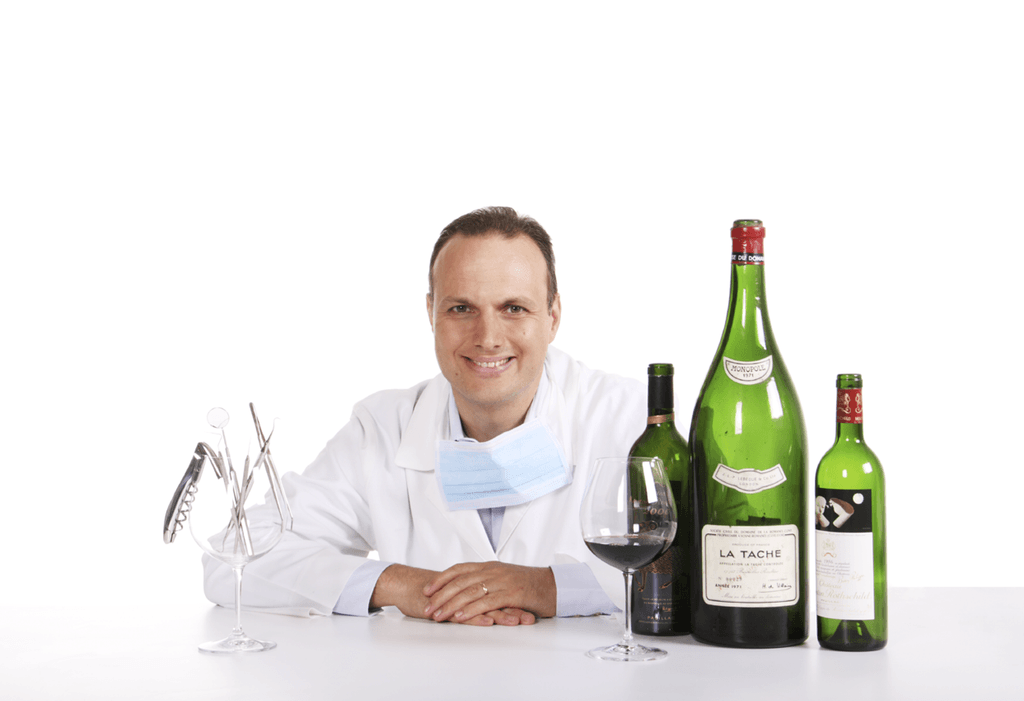
Like almost no one else, he can tell us what effect wine has on our mouths and teeth – and also, how we can keep our personal tasting apparatus in pristine condition so we can taste wine to the absolute max.
This is an eye-opening episode that every wine lover needs to hear.
Wine can damage our mouths – but there are ways to mitigate or prevent the dangers.
Plus, the top tips in this programme can help you become a better taster.
We also share our approach – including how we’ll be changing in the light of this episode. (We did say this podcast would change your life…)


Starring
Subscribe
Sign up to Wine Blast PLUS for first-class subscriber-only content, to access our full archive, support the show and get every episode before it goes on free release.
You’ll also get subscriber-only discounts with the likes of Coravin, Jancis Robinson glassware and Academie du Vin Library.
Just visit WineBlast.co.uk to sign up – it’s very easy, and we will HUGELY appreciate your support.
It takes a monumental amount of work to make Wine Blast happen. Your support will enable the show to continue and grow – and we have lots of fantastic ideas of things we’d like to develop as part of Wine Blast to maximise the wine fun. The more people who sign up, the more we’ll be able to do.
Links
- In this episode, we discuss both the oral and gut microbiome – check out our previous episode with Dr Tim Spector: Wine and Your Microbiome
- Also of relevance here is our very fun programme with Dr Charles Spence: The Magical Science of Taste
- Here’s a link to an interesting piece on the importance of the oral microbiome: The frightening links between our gums and our health
- There are many interesting academic studies on this subject, particularly on the oral microbiome – here’s one that particularly caught our eye: Relationship between Wine Consumption, Diet and Microbiome Modulation in Alzheimer’s Disease
- You can find our podcast on all major audio players: Apple Podcasts, Spotify, Google, Amazon, YouTube and beyond. If you’re on a mobile, the button below will redirect you automatically to this episode on an audio platform on your device. (If you’re on a PC or desktop, it will just return you to this page – in which case, get your phone out! Or find one of the above platforms on your browser.)
Taster Video
Get in Touch!
We LOVE to hear from you.
You can send us an email. Or find us on social media (links below).
Or, better still, leave us a voice message via the magic of SpeakPipe:
Transcript
This transcript is AI generated. It’s not perfect.
Hello and welcome to the dentist’s chair!
Susie Barrie MW 0:05
Hello, this is Wine Blast – but I’m sorry, I want you to imagine you are in the dentist’s chair. Now, normally it would smell faintly of antiseptic and anxiety, with very little light relief available. But this is not your average dentist…
Peter Richards MW 0:22
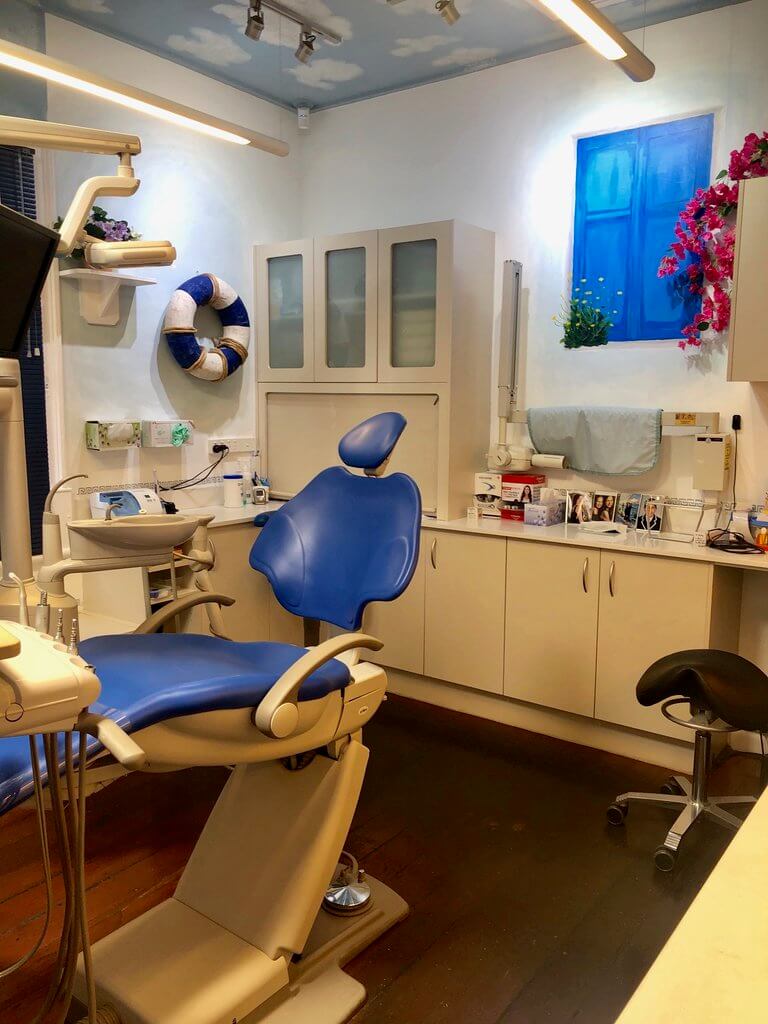
No, this surgery is different! It’s like you’ve gone down the rabbit hole and emerged in the middle of a glorious sunset on the Greek wine island of Santorini. The walls are painted with that most evocative of landscapes: white houses, blue roofs, azure sea, golden sunset. Around the room, there are replica vases, a Greek bust on a plinth, a profusion of pink Bougainvillia flowers, even a sandpit in lieu of a beach. There may not be bottomless Assyrtiko, but this is my kind of dentist!
Susie Barrie MW 0:57
And the dentist in question is Dr. Ron Georgiou MW. Note the titles. Dr. Ron is a rare beast in being both a full-time dental surgeon and a Master of Wine. He’s also a firm believer in what he calls a holistic approach to a dental surgery. Apparently, before Santorini, it was ancient Egypt, and before that, it was a tropical rainforest complete with toy orangutans that the kids could cuddle while being treated. When we asked about all this, he said, ‘like you, I like to shake things up a bit and be creative and passionate and do things differently.’
Peter Richards MW 1:36
Dr. Ron is based in Sydney, Australia, and is known as the wine industry’s very own Superman: Dentist by day, Master of Wine by night. So we just had to get him on the show. Here’s a bite-sized taster of what’s coming up.
Dr Ron Georgiou MW 1:52
You probably don’t want to brush your teeth in the morning for various reasons.
Peter Richards MW 1:55
So there we have it!! A dentist on record, on record, telling us not to brush our teeth.
Susie Barrie MW 2:00
Yeah, I think you’ll find Ron told us very firmly NOT to selectively edit that comment out. We will be in serious trouble. And everyone tuning in now has to commit to listening to the interview in full to find out the true context of that remark…
Peter Richards MW 2:14
Yeah, yeah, fair enough, fair enough. That was very cheeky. Sorry, Ron. Uh just couldn’t help it. Um how about this little morsel instead?
Dr Ron Georgiou MW 2:22
Yeah, you’re going to have dirty, horrible-looking teeth, but your teeth might dissolve away, at least for a moment in time!
Susie Barrie MW 2:29
We’ve all been there. Although quite what that really means, again, you’ll have to wait and see. What we can promise you is a fascinating episode that every wine lover needs to hear. And we’ll also be chipping in on a personal level as to what we do and how that will be changing in the aftermath of making this programme.
Peter Richards MW 2:47
Yeah, we said it before, we’ll say it again, this podcast will change your life. Um it’s certainly changed ours.
Susie Barrie MW 2:52
In ways you can never imagine.
Peter Richards MW 2:54
So before we bring Ron in, um, shall we just briefly set the scene?
The context of wine and your mouth
Susie Barrie MW 2:58
Okay, good idea. So when we drink wine, we tend to focus on what we might term the ‘top level’ processes. In short, what the wine tastes like. On one level, that’s what we perceive from the taste buds in our mouth. Um salt, sweet, sour bitter, umami. On another level, it’s the more subtle flavour perceptions from aromas generated on our palates, which are then processed by the olfactory bulb.
Peter Richards MW 3:23
What we don’t often pause to consider is what we might crudely call our ‘tasting gear’: uh our mouths, teeth, tongue, gums, soft tissue, throat, saliva, even our oral microbiome. The truth is, though, that wine impacts all these bits of our tasting apparatus. And’ conversely, all these bits can influence the way we taste the wine. So the immediate questions that arise are: what effect is wine really having on these things? And how can we best ensure we taste as well as we can and do as little damage as possible?
Susie Barrie MW 3:58
The answers are intriguing. But before we hear from Dr. Ron, it’s worth recapping on some basics as we understand them. Eating or drinking things that are acidic or sugary means the pH in your mouth drops. In other words, it becomes a more acidic environment. This weakens your tooth enamel and disrupts your oral microbiome. Wine is pretty acidic and can be sugary too. But it’s not as simple as saying wine is nothing but bad for your mouth. There’s much more at play. And many things we can do to preempt or minimise the adverse outcomes.
Peter Richards MW 4:35
Yeah, it’s also true that your oral status can determine your tasting ability and acuity. There are ways to make sure our tasting gear is in the best possible condition, enabling us to get the most out of our carefully chosen wines. Things like oral probiotics, sugar-free gum, whitening, tooth mousse, they’re all becoming more mainstream these days. Are these good things for us wine lovers to dive into? Or should we be wary? And while we’re at it, what the hell is our ‘acquired pellicle’? And why is that important?!
Susie Barrie MW 5:07
Now, where things have got particularly interesting recently is the ongoing research into the oral microbiome and the gut brain, gut mouth axis. And of course, we did uh that fascinating episode, didn’t we, with Dr. Tim Spector on wine and the gut microbiome back in season four. Now, here’s a fun fact for you. Did you know your mouth has a greater diversity of microbial populations than your gut or your skin? It harbours all kinds of viruses, archaea, protozoa, fungi, and more than 700 species of bacteria. And it seems increasingly clear that your oral microbiome can have a significant impact on your general health, with research linking a healthy oral microbiome to better outcomes regarding everything from Alzheimer’s to cancer, diabetes, depression, arthritis and cardiovascular disease.
Peter Richards MW 6:02
Yeah, on the flip side, of course, uh a poor oral microbiome and gum disease are linked to negative outcomes across many or all of these diseases. And gum disease is significantly more common than we might think. Recent figures estimate around half of UK adults have gum disease. And 60% of England’s adult population have not seen an NHS dentist in the two years to March 2026. Quite eye-opening, isn’t it? Given that wine can be bad for your mouth, we wine lovers need to sit up and pay attention.
Dr Ron Georgiou MW – on taste perception
Susie Barrie MW 6:37
Okay, so on that bombshell, it’s time to bring in Dr. Ron Georgiou MW. We’re gonna split this interview into two, dealing with taste perception and how we can best enhance that first, before then moving on to more explicitly health-focused topics. And on both fronts, we’re not just asking about the background, we’re also asking for tips about how to live our best wine lives. First up, I asked Dr. Ron how our mouths influence what we taste.
Dr Ron Georgiou MW 7:09
That’s a very complex question. How long do we have?!
Susie Barrie MW 7:13
Well, start with a broad brushstroke and we’ll we’ll uh hone in on bits!
Dr Ron Georgiou MW 7:18
Well, clearly the tongue’s sort of the central player in this. Um and a little bit of uh fun fact is that we have all the over 4,600 taste buds on our tongues. Um the the traditional map that we all may have learnt in terms of where we taste sour and bitter and salty and umami and and sweet, etc., has been um debunked quite a few years ago. And every area of the mouth has the ability to taste every nuance in food and wine. And interestingly enough, as we get older, um we we lose the number of taste buds that we hold. So by the time someone turns 60, we lose 50% of our taste buds.
Dr Ron Georgiou MW 8:06
It’s it’s a complex thing because taste perception varies on many things besides the obvious that the type of things that we’re eating, it varies depending on um saliva. So some people have lots of saliva, some people don’t. As we get older, we tend to have drier mouths. That influences taste greatly into the negative. Uh a drier mouth generally tastes things um in a more bitter sort of or sour profile.
Susie Barrie MW 8:33
Why is that? What’s the saliva doing?
Dr Ron Georgiou MW 8:36
So the saliva is um, besides being a lubricant um and antibacterial, saliva is what dissolves the food and releases the uh the particles and stimulates um the receptors in our tongue. And also we have taste buds and taste receptors at the back of our throat.
Dr Ron Georgiou MW 8:57
So, as you know, um 80 or 90 percent of taste is smell, and you know, when we teach wine, we get people to hold their noses and taste the wine and then take their hand off their nose and taste the wine, and then the perception’s completely different. So if you have um a dry mouth, you simply can’t put a lot of those um aromatic esters into a gaseous form for our our receptors to pick them up appropriately. So that’s the big part of it.
Susie Barrie MW 9:24
So so so so just to understand that, so saliva kind of opens the door to flavor, does it?
Dr Ron Georgiou MW 9:30
Correct. Saliva is hugely, hugely important, and you’d like to think think that the um the runny stuff that we have in our mouths is the same for everyone, but it’s completely different from person to person. Some people have very, very watery saliva, some people have very, very thick saliva. Um, the consistency of saliva and the flow rate of saliva is not only um affected by how much water we drink, for example.
Dr Ron Georgiou MW 9:55
Um by the way, just so you know, we produce over a litre and a half of saliva a day. That’s a lot of saliva. And we need at least 600 mils of water to help the body produce enough saliva, let alone um the rest of our sort of needs.
Dr Ron Georgiou MW 10:10
So the the volume and the type or the consistency of saliva is hugely, hugely important, but also in terms of how it influences pH, you know, the the neutral acidic base scale. So the pH of the mouth is somewhere between 6.8 and 7. Um, and depending on what’s happening with saliva, because saliva can buffer acids, for example, if you have less saliva, then the pH is skewed in the mouth, and therefore taste perception is skewed as a result of pH because different things release differently depending on the the environment of the mouth, including pH.
Susie Barrie MW 10:46
And so, you know, if you if you’re taking in wine, it’s obviously acidic. The more saliva you have, the the better it is at buffering that acid acidity.
Dr Ron Georgiou MW 10:57
Correct. Um, and and that will also depend um on the time of day. You know, we tend to wake up in the morning with a very, very dry mouth. You know, we haven’t been hydrated through the night, we’re often breathing, you know, through our mouths, especially if we’re congested with allergies or whatever. So that dryness in the morning has a huge influence.
Dr Ron Georgiou MW 11:16
And it’s interesting because when we were learning how to become Masters of Wine, we used to want everyone to taste in the morning. But in actual fact, that’s probably not the best time to taste. It’s probably late morning or the middle of the day for lots of different reasons.
Susie Barrie MW 11:30
And just to finish on saliva, you say there’s some more runny, some thicker. You know, what is the best sort of saliva? And can we ourselves improve the quality of our own saliva in any way?
Dr Ron Georgiou MW 11:41
Yes, but that will impact on us in other ways. So generally, a more runny sort of saliva um has a higher content of amylases, which are enzymes that break down food particles. So theoretically, if you have more of those um enzymes in a runnier saliva, you’ll be breaking down the food components more readily and therefore improving the ability of the body to register taste.
Dr Ron Georgiou MW 12:09
You can improve saliva flow by using things like gum, sugar-free gum. When you chew sugar-free gum, you can increase your saliva flow rate by a factor of 10, but only for as long as the taste of the chewing gum lasts, which is about 20 minutes. And then after that, you you just get a sore jaw.
Susie Barrie MW 12:28
And just talking, you talked about the tongue and and how many taste buds we have. You know, how can we maximise the benefits of our tongue as well when we’re tasting?
Dr Ron Georgiou MW 12:37
Um, well, that will vary very much on how you look after your mouth. So it’s not such a big thing here, and I’m not sure about the United Kingdom, but as dentists, we actively teach patients to brush their tongues because all the debris of food, the uh protein content of saliva, it all lands in the tongue.
Dr Ron Georgiou MW 12:59
When you look at a tongue under high magnification, it’s a series of hills and valleys, and all the gungy stuff sits in the valleys, um, including the microbes. And the microbes, uh, especially when pH is lowered, can produce horrible sulfur containing compounds like hydrogen sulfide. So that leads to bad breath and bad taste. So brushing the tongue helps clear away the microbes, helps clear away dead cells, um, and therefore you expose the tongue to a broader, cleaner surface and a larger surface area to interact with the things that you’re eating.
Dr Ron Georgiou MW 13:35
But then people get quite aggressive with tongue scrapers and things and damage their tongue. So I’d suggest probably a brush.
Dr Ron Georgiou MW 13:42
Um, and also in terms of taste, you’ve got to remember that if you’ve just brushed your teeth in the morning, then your taste is going to be skewed for maybe half an hour after you’ve brushed your teeth because of all the chemicals, the flavorings, and the additives in toothpaste as well. So probably if you’re serious about tasting wine, you probably don’t want to brush your teeth in the morning for various reasons, but that’s one of them.
Susie Barrie MW 14:05
Wow, yes, gosh, that seems a funny thing, doesn’t it? Not to brush your teeth in the morning, but I completely understand. And coming from a dentist as well. Can you believe that?
Dr Ron Georgiou MW 14:14
Please, please be careful with this edit and make sure all the words are in the right sentence!!
Susie Barrie MW 14:18
Absolutely. Now, dental work as well. Um apparently the dental work you’ve had can impact taste. Um, how can wine lovers sort of avoid issues in that sense?
Dr Ron Georgiou MW 14:30
Uh well, I’m now I’ll put my dentist hat on and say you should really go to the dentist every six months, make sure you don’t have any fillings in the first place. Um, and then you won’t have to worry about all those dental um materials that we are still fighting to make as safe as possible.
Dr Ron Georgiou MW 14:45
So I’m sure you’re well aware of the old silver fillings and amalgam, which was a, you know, basically had a composition of silver, copper, and tin and mercury. And although once placed and set, they may have been relatively stable as they break down. Um, they they start to release tastes, they get leaky and gappy where bacteria can settle. And we’ve already talked about the impact of uh the microbes in the mouth and changes in pH, etc.
Dr Ron Georgiou MW 15:14
So um reducing fillings, maintaining good oral hygiene, really, really important. But remember that things like um gum disease as well has a huge impact on inflammation and as well as all the body effects that that uh gum disease can have, and we can talk about that later if you like. The main take-home line, I guess, with gum disease, besides the obvious dental effects, is that it creates a massive uptick in inflammation, and any inflammation in the body, any inflammation in the body will damage all parts of the body.
Dr Ron Georgiou MW 15:49
So if you have arthritis, for example, and you have high inflammation in your body, that will impact the taste buds on your tongue. Um, if you have gum disease, that will impact your taste buds because especially the mouth, it’s a very, very heavy wear and tear area, and it it it needs a very intact, I’m sorry, immune system to regenerate what we damage. Um and as we get older, unfortunately, the ability to fix what we break is not as good.
Susie Barrie MW 16:20
So just to conclude, if you want to get the very best out of your wine, how is it best to do that from an oral status perspective?
Dr Ron Georgiou MW 16:29
So the obvious things would be um a clean mouth. Um so we’ve we’ve talked about you know, maybe tongue brushing, um, rinsing your mouth out with water, um, making sure that you are well hydrated. So I don’t think it’s a great idea to be having a big night out with um strong flavours and chilli, you know, at at the local Indian and uh you know, burn your mouth and uh upset and inflame all the taste buds, and then walk into a tasting the next morning.
Dr Ron Georgiou MW 16:58
Um use your whole mouth. We have we haven’t sort of touched on that very much yet, but um the the we said that we taste with with our tongue, but we also taste with our soft palate, um, we also taste with our throat. So often people ask me what is the best way in terms of tasting wine and maximising that. Well, the the answer is cover as much of your mouth as possible, and that includes the back of your palate and your throat, because there are receptors everywhere.
Dr Ron Georgiou MW 17:27
Um, medications also be aware that quite a few medications will impact your taste perception as well. So, I mean, some things you can’t avoid, correct, but um certainly you wouldn’t necessarily have reflux medication just before a tasting exam or um tasting wine seriously because it hugely impacts taste perception. And so being aware of your medications and how they might influence.
Dr Ron Georgiou MW 17:51
And again, I guess finding someone who can advise you with that because doctors probably won’t know, and if dentists don’t have a specific interest, they probably won’t know either. So here’s an niche uh new business I’m going to set up.
Susie Barrie MW 18:03
I was gonna say everybody needs to go to you, Ron!
Peter Richards MW 18:07
So basically, Ron is using this podcast as a way to set himself up in a new and highly profitable role of elite dentist to wine lovers around the world.
Susie Barrie MW 18:17
Well, all people, including other dentists, could just listen to this episode because there’s already some great advice and insights there, um, especially about saliva. Who knew it was so important? I mean, in terms of being able to unlock flavour in wine, which is borderline heroic. I mean, I feel like I’ve been under-appreciating my saliva all my life.
Peter Richards MW 18:38
Yeah, what did you call it? You said saliva opens the door to flavour.
Susie Barrie MW 18:42
Do you like that?
Peter Richards MW 18:43
I did, I really like that. It’s a lovely turn of phrase. Thanks. That was almost like a very polite, very sort of efficient butler opening the door for you. But you know, no, you’re quite right. You know, I I never realised saliva was so important, or that it varied so much between people. Um, and that things like medication can affect it, even things like antihistamines, which I take for hay fever, you know, not drinking enough water can affect it. And wine is, of course, a diuretic, so you’ll tend to get more dehydrated as you drink.
Susie Barrie MW 19:10
But things like chewing gum can obviously help increase saliva production, which then helps rebalance mouth pH and the oral microbiome. So that’s interesting. And apparently eating food can also stimulate saliva production. So nibbling on something like cheese can help.
Peter Richards MW 19:26
Maybe not too strong. Cheese. Um and uh interesting to learn also that saliva production varies quite significantly, partly according to age. You tend to produce less saliva the older you are, but also according to things like time of day. So early mornings are not so good for wine tasting as a general rule because your mouth often dries out overnight. So apparently the middle of the day is best, um, as Rohan says, when both hormone and saliva levels have stabilised and your brain is at its most perceptive. I mean, I’m taking this um for the record as a firm endorsement of the long lunch as the perfect, the best environment, the best way to enjoy wine you would have. Are you with me?
Susie Barrie MW 20:07
No surprises there… Yeah, yeah, yeah, yeah, yeah. But but listen, good good to touch on the tongue too, which I feel doesn’t always get enough love. Um we all clearly need to be brushing our tongues if we aren’t already. I mean, do you?
Peter Richards MW 20:18
I confess, I mean it’s an odd question to come from your side of the podcasting desk. I confess I do not. Do you?
Susie Barrie MW 20:25
Not yet, but I’m maybe going to start. Let’s start together.
Peter Richards MW 20:28
Let’s go on this great adventure together! Um definitely I will. I will now. Um and I won’t scrape. No scraping, no scraping. Dr. Ron, I won’t scrape. I will dutifully brush. Uh I will also dutifully go to the dentist very regularly.
Susie Barrie MW 20:42
Well, I think we do anyway, don’t we?
Peter Richards MW 20:44
We do, we do, but I don’t, you know, to avoid any more fillings or anything like that. Yeah, yeah, yeah.
Susie Barrie MW 20:48
And Dr. Ron also touched on inflammation and gum disease there, something that we’re going to come on to in the second part. But what he did say was that the gut-mouth axis is hugely important, especially given something like 80% of our immune protection comes from our gut, which will impact our mouth too. Um, he noted how gastrointestinal issues can affect perception by skewing tastes towards sour and bitter and metallic. And he added that IBS, irritable bowel syndrome, sufferers often show massive changes in their oral microbiome and sometimes report not being able to taste salt and sweet flavours very well. Um so these things and the workings of the oral microbiome are hugely significant. That’s quite something, isn’t it?
Peter Richards MW 21:34
Um as for the advice not to brush your teeth in the morning. I’m here for that. Um, after decades of a strict brushing after breakfast retreat, it does seem weird to me.
Susie Barrie MW 21:45
Yeah, I don’t really like the idea. Yeah, it’s a bit to embrace this.
Peter Richards MW 21:49
Maybe we do, maybe we do. So we need to step out of our comfort zones. Anyway, that’s uh another one we’re gonna come back to as well. Meantime, let’s take a break.
MID-EPISODE RECAP – and Dr Ron on mouth health
Peter Richards MW 21:58
To recap so far, wine probably has more of an impact on your mouth than you think. And you have the ability to taste wine better by getting to grips with your tasting gear and following the expert’s advice. All in all, this kind of insight and information is worth paying more than just lip service to…
Susie Barrie MW 22:17
Oh God. Let’s keep moving and hope no one clocks the terrible puns! And we’re gonna move on to the health impacts of wine on your mouth. I warn you, it’s not all plain sailing, but it’s much better to be aware of these things than labour in ignorance. Plus, Dr. Ron has plenty of useful tips for us to stay as healthy as we wine lovers possibly can. So I asked him how wine impacts our mouth, teeth, and general oral health.
Dr Ron Georgiou MW 22:48
Yeah, sadly, I’m afraid this conversation is going to be quite substantially skewed towards the bad. It influences our mouths in in lots and lots of different ways.
Dr Ron Georgiou MW 22:59
So, first of all, we talked or touched upon the fact that lowering the pH with when you’ve got wine in your mouth will change the microflora and it will help bacteria that aren’t necessarily great in areas such as gum disease in particular. So that’s the first thing. The acid content will start to sadly damage our enamel. And I mentioned earlier that the pH in the mouth is 6.8. The pH at which teeth start becoming damaged through acidic challenge is 5.5. And as you’re well aware, with wine it can be three and a bit and keep going.
Dr Ron Georgiou MW 23:38
So to give you an interesting sort of pH scale, stomach acid is at a pH of one, lemon juice approximately two. Wine we know can be low threes to low fours. But things we don’t know is tea and coffee. We all drink lots of tea and coffee, or most people do, and the pH can vary between three and a half and four as well with tea and coffee. So it’s hugely acidic. So that’s that’s the problem.
Dr Ron Georgiou MW 24:08
And part of the reason for recommending not brushing teeth before a major wine tasting is to have that layer of salivary protein, and we call that the pellicle, by the way, it’s called the acquired pellicle. Those layers of the bugs that live in our mouth, the protein from saliva, the things that we eat, that’s called the acquired pellicle. And it’s like a blanket, it forms a layer of protection. Um, and it helps the enamel in that the challenge of acid has to work much harder to get to the enamel surface to start to change it.
Dr Ron Georgiou MW 24:42
But essentially, we damage the enamel, um, especially if we’re tasting a lot. And enamel is not particularly thick, um, it’s maybe one to one and a half millimeters in most parts of most teeth. So if you think about it, we’ve got our teeth for hopefully all our lives. We’re eating and drinking things that challenge the condition of the enamel, we’re using abrasives in toothpaste that scratch the enamel, that microscopically allowed greater penetration of things like acids in wine. And also the roughening of enamel also allows the tannins and the colourings, the polyphenols and the anthocyanins, to be attracted more readily to teeth.
Dr Ron Georgiou MW 25:26
So the older your teeth are theoretically, the more stained they’re going to get relative to a new taster, simply because their enamel is in better condition. It’s less rough and it’s less pitted by acid previous acid attack throughout a life.
Dr Ron Georgiou MW 25:40
Also, this is complicated, isn’t it? Um, as we lose enamel, we then expose the inner layers, the dentine of the tooth, and that is like a sponge. It’s much, much more porous, and stains from wine basically become part of the tooth, and they are very difficult to shift, if at all. And that’s where you get to the stage where dentists have to cover these things because either the teeth are getting very sensitive or they’re getting unsightly.
Susie Barrie MW 26:07
And what about, I know it’s not a nice thing to talk about, but um alcohol consumption as a risk factor for oral cancer?
Dr Ron Georgiou MW 26:14
Yeah, so um the problem we have with alcohol of any sort is it can change cellular structure and it can cause uh mutations, if you like, in cells. Um I think acetaldehyde is a class one carcinogen. Um, and so the impact is quite penetrating and quite damaging on cells, and it only takes one cell to be tripped and then to grow that to uh to create these issues.
Dr Ron Georgiou MW 26:45
And that’s why for a long time, um, you know, mouthwashes, dental mouthwashes were high in alcohol, Listerine, I think at one stage had mid to high 20 percent um in alcohol, and people used to bathe their teeth for fresh breath mainly, to be honest, three or four times a day, um especially if they had a date or they were going out and uh they were worried about their better half. Um, and so and you’d hold that in your mouth for quite a long time. So that was potentially horrendous. Um, and so that’s why virtually every major um mouthwash manufacturer now makes zero alcohol mouthwash, um, because it’s one of the huge issues is putting wine in your mouth and holding it there for a long time.
Dr Ron Georgiou MW 27:34
So I think in the day-to-day consumption of wine, and remember that uh when we’re tasting, you know, we are on a mission to taste wine. We’re not sitting there enjoying a meal, we’re not putting a whole lot of other potentially protective layers into our mouth through food. We’ve got a uh a mouth that’s stripped back bare, and we’re exposing it to a lot of wine.
Dr Ron Georgiou MW 27:55
So basically, you should be rinsing your mouth out with water regularly through a tasting, you should be doing that anyway. Rehydration, helping with the buffering, um, reducing the taste of lasting, trying to reduce that low pH as well, but also decrease the impact time uh of wine in your mouth.
Susie Barrie MW 28:16
So, as wine lovers, how can we best protect ourselves against the negative effects of tasting and drinking wine on our mouths and our teeth? And I’m assuming it’s probably slightly different for professional taster and just regular wine drinkers.
Dr Ron Georgiou MW 28:32
Sure. So um, as a matter of course, um, regular visits to the dentist decrease the number of fillings you have, because we’ve already indicated that the number of restorative materials and the type of restorative materials in your mouth will have an impact on taste, and that’s very, very hard to avoid.
Dr Ron Georgiou MW 28:49
Use high fluoride-containing toothpastes because they’re highly protective, they stabilise the crystalline structure of enamel. And most of the desensitizing toothpaste like Sensodyne, Colgate Pro Relief, here in Australia, for example, all have a high fluoride content, and that is hugely beneficial.
Susie Barrie MW 29:11
Can you give us a number on high fluoride? Would it be on the on the packaging?
Dr Ron Georgiou MW 29:15
Yes, it is. Um, so somewhere in the fine print on the back of the tube, it should say 1420 parts per million of fluoride, 1420 ppm. And that’s pretty much standard across the industry with all of these desensitising toothpaste. So they they work by stabilising the enamel, they also work um by changing the porosity of the teeth and and sealing the tooth as well. So that’s one thing that you can do. Uh rinsing with water in between your tasting of wine is really, really important, just to not allow the mouth to stay in that low pH state for any longer than it has to.
Susie Barrie MW 29:56
What about I’ve also um not just toothpaste, but the gums, are they any good?
Dr Ron Georgiou MW 30:01
Sugar-free gum is useful in terms of increasing saliva flow and increasing, therefore, the buffering ability of saliva. Um, saliva is also antibacterial, so there’s a huge benefit to increasing saliva flow in lots and lots of areas. In general, as we get older, our mouths get drier, and therefore the chance of having more gum disease, more tooth decay, more enamel dissolving becomes higher.
Dr Ron Georgiou MW 30:28
Saliva is key to oral health. It’s so important. And unfortunately, as we get older, we many of us need more medications to keep us going. And uh a lot of those medications, at last count, there are over 900 medications in the marketplace that cause dry mouth. Um, so we actively have to work towards rehydrating and rebalancing things.
Susie Barrie MW 30:52
So we did an episode uh a little while back with Tim Spector on wine and the gut microbiome. What about the oral microbiome? Because there are suggestions that looking after the legions of viruses and fungi and bacteria in our mouth could stave off things like Alzheimer’s or cancer. You know, how does wine impact all of this?
Dr Ron Georgiou MW 31:14
That’s a good question. Um the problem is, I mean, and a lot of this is research, yeah. In the last five years, um, we now know with great certainty that we can now track the bugs that should be in the mouth and nowhere else. And they often enter into our bodies through our unhealthy gums, which is why dentists place such a huge emphasis on gum disease.
Dr Ron Georgiou MW 31:41
Um, and there are many, many bugs that end up in faraway places that um from the mouth, Streptococcus mutans is one of them, that can damage microvasculature in the brain, for example, um, that can lead to an uptick in inflammation, to an increase in cardiovascular disease, etc.
Dr Ron Georgiou MW 32:02
So these bugs can essentially what happens is that, and I’ll talk about wine in a minute, but just to give you an idea of why this is so important. The bugs in your mouth, um, and there’s hundreds and hundreds of different species of bugs, it’s a very buggy place. It’s more buggy than anywhere else in your body. Um when you swallow, um, the acid in your stomach knocks off most of the bugs. Not all of them, by the way, but most of them.
Dr Ron Georgiou MW 32:26
When you have unhealthy gums, your gums bleed, and the bugs get in via the back door. Um, they enter your bloodstream directly, and uh the body, your immune system goes, you’re an invader, you shouldn’t be here. There’s a battle, there’s an attack, and there’s uh in the chemicals the body produces, there’s uh collateral damage. The bugs uh uh cause an uptick in inflammation. The chemicals can be damaging to us and to the bugs. Um there’s this inflammatory cascade that occurs, and these bugs can travel to faraway places and attach themselves to damage bits or to artificial bits.
Dr Ron Georgiou MW 33:06
Someone has got a tooth infection, for example, who’s about to have a knee or a hip replacement, really shouldn’t be having the knee or hip replacement because of what’s happening in their mouth, because the chances of those bugs traveling and doing damage through a brand new procedure is extremely high.
Dr Ron Georgiou MW 33:24
So we we need to maintain really, really good oral health in order to reduce the potential for the bugs that live in our mouths to do damage in faraway places.
Dr Ron Georgiou MW 33:37
So, in terms of the wine question, here’s the challenging part because wine reduces pH, therefore, it leads to a proliferation of bacteria that potentially can increase these risks as well. And so that is the challenge. And really, all we can do if we love wine and we want to enjoy it is to actually reduce the risk factors, reduce the gum disease, reduce the damage to enamel, all the places where the bugs can get in. We need to shut the door, as it were.
Susie Barrie MW 34:09
So, what about the positives? Are there any positives when it comes to wine and our mouths and teeth?
Dr Ron Georgiou MW 34:17
There can only be one in this conversation, and it’s not going to make anyone very happy. They’re going to go to want to go to their whitening toothpaste…
Dr Ron Georgiou MW 34:25
But tannins in wine, particularly, are hugely protective of enamel. So after your red wine tasting, um, where your teeth are a pretty colour purple, um the acidic part of it is the damaging part, but the staining part of it is actually protective, hugely protective, because, yeah, interestingly enough, isn’t it? And so that’s partly why we don’t want to brush our teeth, by the way, as soon as we’ve finished our wine tasting. A, because we’re in an environment where things are not in equilibrium, we’re still in that acidic mode, and then we’ll take more enamel away, particularly if we use toothpaste which has abrasive in it, but the stains are actually protecting the tooth structure because they bind to the tooth very, very strongly, and therefore the bugs can’t stick to the teeth anymore.
Dr Ron Georgiou MW 35:17
So yeah, if you’re going to have dirty, horrible-looking teeth, but your teeth won’t dissolve away, at least for a moment in time!
Susie Barrie MW 35:26
Where does wine sit in the context of other drinks? Um, fizzy, fizzy drinks, coffee, tea, many other things.
Dr Ron Georgiou MW 35:34
I don’t know if you were ever, when you were younger, that you ever had copper, dirty copper coins that you used to put into a glass of Coca-Cola to make them nice and shiny and new. Um, so that that may um that may uh remind us of the the uh less than wonderful benefits of things like Coca-Cola.
Dr Ron Georgiou MW 35:52
Soft drinks are much higher in sugar content normally. Um and uh also the carbonation part of it is hugely problematic in terms of uh the attack on enamel. It probably goes, soft drinks the worst. Um, probably tea, coffee, and wine would sit fairly close just under that.
Dr Ron Georgiou MW 36:13
But the issue often is the combination of acid and sugar. It’s so the sugars don’t forget feed the bacteria as well. Streptococcus mutans, which is the bug we keep going back to, which is a major player in the mouth, loves sugar. And it breaks down carbohydrates to sugar as well.
Dr Ron Georgiou MW 36:30
So you’ve got to remember that even the bag of chips that kids eat that sits in their teeth all day will be broken down to sugars. Um, and so we’ve got a problem with anything that generates sugar, but this definitely the soft drinks and fizzy drinks are worse. Definitely.
Susie Barrie MW 36:46
Any final tips for wine drinkers from an oral health perspective?
Dr Ron Georgiou MW 36:51
Uh use soft toothbrushes, um, drink plenty of water, use the least abrasive toothpaste that you can find. Uh, high fluoride toothpastes are a must. Regular checks of the dentist are a must, especially if you’re professionally tasting.
Dr Ron Georgiou MW 37:06
We touched on oral cancer earlier, and you know, as part of a your dentist should be doing a regular oral cancer screening. I know with every one of my patients, every visit, every time, that’s ingrained into our platform. And if patients ask, what are you doing? Why are you getting me to move my tongue to the left and right and lifting up, I tell them we want to keep you safe. And often in the mouth things are hidden.
Dr Ron Georgiou MW 37:32
So dentists should they are trained and they should look. Um, because if you’re talking to me and you’ve got your mouth open, the tongue’s in the floor of the mouth. I don’t know what’s underneath it unless I get you to move it.
Dr Ron Georgiou MW 37:44
But also, I guess to get your dentist to be a little bit educated in these areas as well, because a lot of dentists don’t have to deal with the the wine side of things as a big part of everyday living. I want you to be healthy and live long and prosper and enjoy more wine.
Susie Barrie MW 37:59
Ron, this has been absolutely fascinating. Thank you so much.
Dr Ron Georgiou MW 38:04
It’s a pleasure. I’ve really enjoyed talking to you and thank you for the opportunity.
Our discussion of wine and your mouth
Peter Richards MW 38:12
So, what I’m hearing is that basically we all need to get our dentists into wine. Is that it?
Susie Barrie MW 38:18
I think something like that. Um we should all take a mini tasting kit with us next time and see how we go. Uh but no, on a serious note, it’s clearly important to not only visit our dentists regularly, but also communicate with them clearly about wine drinking and ask them for advice given everyone’s different. Um also to check for oral cancer and that kind of thing.
Peter Richards MW 38:38
Yeah, and here’s me thinking the dentist was already scary enough. Um But you’re right, you’re right. Again, it’s way better to catch these things early if they do happen. Um by the way, after your chat, I did ask Ron more about which things are worse. Uh, you obviously touched on drinks like tea and coffee, which is surprisingly acidic, aren’t they? Yeah, yeah.
Susie Barrie MW 38:56
I didn’t, I really don’t think I would have known that.
Peter Richards MW 38:58
No. Um and also, of course, carbonated sweet, soft drinks, which sound like the worst of all. Um apparently energy drinks are similarly bad. But in terms of wines, which do you think are the worst, or which do you think Ron said are the worst for our teeth and mouths?
Susie Barrie MW 39:14
Okay, well, I mean I think thinking logically, it’s got to be those that are highest in acid. Um and Ron mentioned that carbonated or fizzy drinks are bad because they lower the pH even further. So I’d go for something like high acid sparkling wines.
Peter Richards MW 39:27
Yeah, yeah, spot on, spot on, as ever. Such a swot. Um champagne is the worst, he said. Um I’m guessing things like sparkling sweet Moscato are not far off because while champagne has a fair bit of acid, it tends to be on the drier side. Um but yeah, white wine is typically worse than red. Sweet wines are bad, sweet fortified similar. Uh, there’s no real best wine style in this context. I did try. I pushed that question quite hard. Ron pushed back. Um but from what I infer, especially given that Ron did say tannins can be somewhat protective, then maybe high tannin, lowish acid reds are probably the least bad. Interesting.
Susie Barrie MW 40:08
Um that is not great news for this particular lover of champagne and high acid reds. It’s also not a massively rosy picture when it comes to the oral microbiome. I mean, we have delved, haven’t we, into a few academic studies, and there are some bright spots from what we can see, including some potential positives from polyphenols in red wine having beneficial effects on the microbiome, in addition to what Ron mentioned about the tannins being protective of enamel. Um, but it’s clearly early days in terms of research, and I think there’s a danger in us wine lovers reading too much into the limited findings so far.
Peter Richards MW 40:45
Yeah, but as Ron says, we can focus on shutting the door by having good oral hygiene, not developing gum disease, minimising damage. Uh on which note I did ask him afterwards about specific products. Um shall we get briefly into that ?
Susie Barrie MW 40:58
Oh yes, go on, go on. I do like a good product.
Peter Richards MW 41:01
I know this uh well: tooth mousse. Tooth mousse. Just loves the name. That’s something that Dr. Ron does recommend. Uh he says it’s a wonderful product and you can rub it on at night, rub it on your teeth at night when there’s less saliva to wash it away, and it can, and I quote, remineralise, didn’t know that was a word, and recalcify your teeth, uh essentially putting back the building blocks of what’s being lost from the enamel.
Susie Barrie MW 41:25
Now I have to admit to doing a bit of googling on this front, and it’s not cheap. Uh but you can get tooth mousse, who knew, in some pretty amazing flavours, uh, from strawberry to vanilla to melon to tutti frutti and boring mint, of course.
Peter Richards MW 41:39
Um, you know, what it what it what it takes away with not being cheap, it gives in terms of flavour.
Susie Barrie MW 41:44
It just seems all wrong, doesn’t it? Something that’s good for your teeth called a tutti frutti flavour.
Peter Richards MW 41:50
And I have to say, uh tooth mousse is not something I’ve ever used. What about you?
Susie Barrie MW 41:53
No, no, no, no, no. But but I think other people I’ve talked to other people who have. So but again, maybe a good thing. I don’t think it’s easy to get hold of, that’s all.
Peter Richards MW 42:00
Okay, but maybe a life change we we we need to let’s try.
Susie Barrie MW 42:04
We need to be going for tutti frutti to shake things up.
Peter Richards MW 42:06
Uh well that’s another we’ll have that conversation after we finish recording. How about that? We’ll report back listeners. Um, something else I asked about was oral pre- and probiotics uh and whether they’re worth it. Um he was a little more ambivalent about this. Um he said the jury’s still out, um, it depends on the product, and it’s always best to have our body maintain the right balance for itself. But he did add that the good ones can be useful in supporting a healthy oral microbiome.
Susie Barrie MW 42:34
It’s interesting, isn’t it? Yeah. There were also a couple of other points from the interview that we didn’t have time to air. Um we went into a bit more detail about the best toothpaste for wine lovers, and he said there was a neutral, i.e., non-minty toothpaste called Biotene. Uh, but I have to confess I couldn’t find that. Um on a more general level, he added it was often best to go for non-SLS toothpaste. So that’s without sodium lauryl sulphate, which is a foaming agent. Um and also non-scratchy or low abrasion toothpaste, because abrasive ones like whitening toothpastes can make the tooth surface vulnerable.
Peter Richards MW 43:10
You also discussed whitening, didn’t you?
Susie Barrie MW 43:12
Ah, yes, we did. Um which he said was a controversial topic.
Peter Richards MW 43:17
I mean, it’s much more mainstream than it used to be, isn’t it?
Susie Barrie MW 43:19
Yeah, I mean, and you know, Dr. Ron wasn’t dead set against it. He understands why people do it, um, and it does work. Um, but he said anything that allows ingress of bacteria into the tooth that can cause inflammation is problematic. And whitening agents penetrate the enamel. Um, he particularly advised against low budget treatments carried out by people who aren’t proper dentists, which can be dangerous. Um he said whitening in general isn’t great. It all adds to the burden on our poor teeth. Um better instead to try to protect our enamel before it gets to that stage.
Peter Richards MW 43:54
So shutting the door ahead of time.
Top tips summary + how we’re going to change
Peter Richards MW 43:57
I think we should start to wrap things up. But before we do, can we precis?
Susie Barrie MW 44:02
Oh, can we? Is that me?!
Peter Richards MW 44:03
Just handing this elegantly over you. All the brilliant advice in this episode by way of a pithy summary. Like our version, I guess, of the sticker they give you, the dentist, for being a brave boy or brave girl.
Susie Barrie MW 44:17
Okay, well, let’s let’s give that sticker a go. Drink water and rinse when tasting or drinking wine. Go to the dentist regularly, discuss the wine thing and get it checked out properly. Don’t brush your teeth straight after tasting wine, leave it at least 30 to 60 minutes, even if there’s a lot of red wine stainage. And don’t brush after breakfast on the morning of a big tasting to maintain that protective biofilm.
Peter Richards MW 44:44
Top marks. I’d throw in: use a soft toothbrush and high fluoride toothpaste. Maybe get some neutral flavour toothpaste to try that out. Definitely don’t go for chocolate flavoured toothpaste, which I discovered does actually exist! I mean, the mind boggles. Let’s not go there. Let’s park that. Chew sugar-free gum to promote saliva flow, uh, perhaps after tasting. Uh consider tooth mousse and oral prebiotics. Um, and try not to draw out tastings too much. Uh, better to give your mouth a break and chance to recover.
Susie Barrie MW 45:20
But that’s maybe more for professional wine tasters than when we’re doing big tastings. Yes, yeah, perhaps. I mean, when you just want to enjoy your fabulous bottle of an evening with someone you love, we’re not advocating you chug it as quickly as possible.
Peter Richards MW 45:32
Well, you might want to if you know circumstances dictate?! No, okay, sorry.
Susie Barrie MW 45:36
Not if it’s a good bottle, no. No, no, no, no. There’s always a happy medium between being aware of health risks and actually enjoying the wine and life.
Peter Richards MW 45:45
Yeah, Ron talked about that too, and this is an important point, actually. Uh Ron said uh if you take all the joy away from life, you’re left with what he said is ‘the biochemistry of misery’, which I think was a really interesting phrase. And the resulting sadness, this is where interesting, will produce neurological and biochemical changes that can also have a huge impact on health and longevity. Um, inflammation is reduced when we’re happy! Oh. And this is a verbatim quote from Dr. Ron: ‘ I choose wine over misery!’ So the medical professional is telling us to enjoy ourselves and enjoy our wine because that has benefits too.
Susie Barrie MW 46:27
Amen to that. Um, so our final task is to say how we are going to change our personal habits in light of this episode. Your turn first.
Peter Richards MW 46:36
Uh really? Yeah. Okay, right.
Susie Barrie MW 46:39
Okay.
Peter Richards MW 46:40
Let’s see. Uh we’re signing up for this, aren’t we? Um okay. We uh we already use high fluoride Sensodyne toothpaste, don’t we? But I’ve got a sneaking feeling it’s also got the word ‘whitening’ on it.
Susie Barrie MW 46:53
I think that might be my fault. Yeah.
Peter Richards MW 47:00
I’m not gonna apportion blame. It might be indeed abrasive. I’m gonna suggest a change on that front for the sensitive or enamel one. Dunno. There’s loads of them, aren’t there? Yeah. And then I’m definitely gonna brush and floss properly at night. Uh, I’m gonna try this new morning routine. I might need some support. I think we should try this together.
Susie Barrie MW 47:18
Do you know you know it it’s that thing of getting too close to somebody who your breath’s not gonna be very nice…
Peter Richards MW 47:24
Well, we can tell you, we can tell each other if we’re if we stink, and then maybe we’ll we’ll re-evaluate. I think sometimes it’s more of a kind of um psychosomatic effect within yourself. You’ve had that, you’ve got to do it because you’ve done it before. It’s just what your brain is. Anyway, I don’t know. Anyway, we’ll try the new morning routine with no brushing before tasting. If anyone sees us out and about and and we stink, please just tell us. Yeah. Um and that is gonna protect our acquired pellicles, isn’t it? Now that we know all about it.
Susie Barrie MW 47:48
That’s what we could tell people. I’m protecting I’m protecting my acquired pellicle.
Peter Richards MW 47:52
Maybe we should wear it on the t-shirt and tell everyone before they before. Um I may even try out a cheeky bit of tooth mousse and the odd oral probiotic. Um what about you?
Susie Barrie MW 48:02
Okay, so I’m gonna try to concentrate my tastings rather than draw them out. Uh, though when it comes to drinking, sorry, the pleasure calculus all wins out there. Yeah, uh, I’m gonna swish water all day, like the best of them, particularly when I’m tasting, all in the hope of having the best possible saliva. Uh, and I’m gonna try to resist the urge to clean those red wine stains off my teeth after a big tasting, which will be hard.
Peter Richards MW 48:26
Yeah, apparently.
Susie Barrie MW 48:27
Almost as hard as not brushing my teeth in the morning.
Peter Richards MW 48:29
I know. It’s it’s some of this change it will be difficult. Let’s try it, let’s see how we go. Yeah. Uh yeah, if you if you are desperate, you can use a hanky or soft cloth dipped in water to gently wipe your teeth.
Susie Barrie MW 48:39
Oh, thank you.
Peter Richards MW 48:40
About those things. Dr. Ron. You know, you know, you know, we’re wine lovers. We um people are forgiving, more forgiving than you might think. You don’t judge, you know, a mechanic for having grease on them or a gardener because they’ve got mud on them, do you?
Susie Barrie MW 48:52
Fair enough. Fair enough.
Peter Richards MW 48:53
Uh we should be proud of our purple gums, us wine people. Um, and we should be proud to taste wine in the middle of the day. I’m just gonna throw that in there as well, ideally over a long lunch.
Susie Barrie MW 49:02
Well, I’m also gonna have a chat with my dentist, not about your long lunch. Um I might not persuade him to decorate the surgery in the Santorini style, but hopefully it will help in the quest to keep me as healthy as possible and my tasting gear in the best possible condition.
Peter Richards MW 49:17
Well said. So I think that’s where we’re gonna draw things to a close with a big dazzling smile. Thanks – you can just hear the ‘ching!’ Thanks to Dr. Ron Georgiou MW and thanks to you for listening. Until next time, cheers!