
Summary
What wine grapes will our grandchildren and great-grandchildren be drinking?
One thing’s for sure: given climate change, they will be different to the grapes and wines we know and love today.
So will they be thanking us – or cursing our memory?!
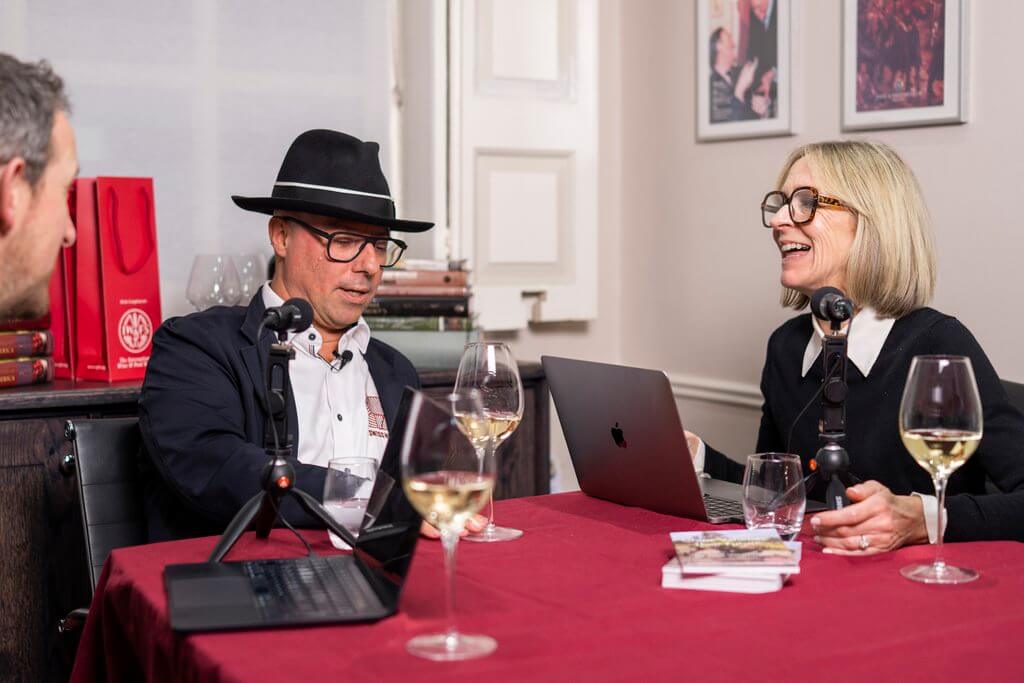
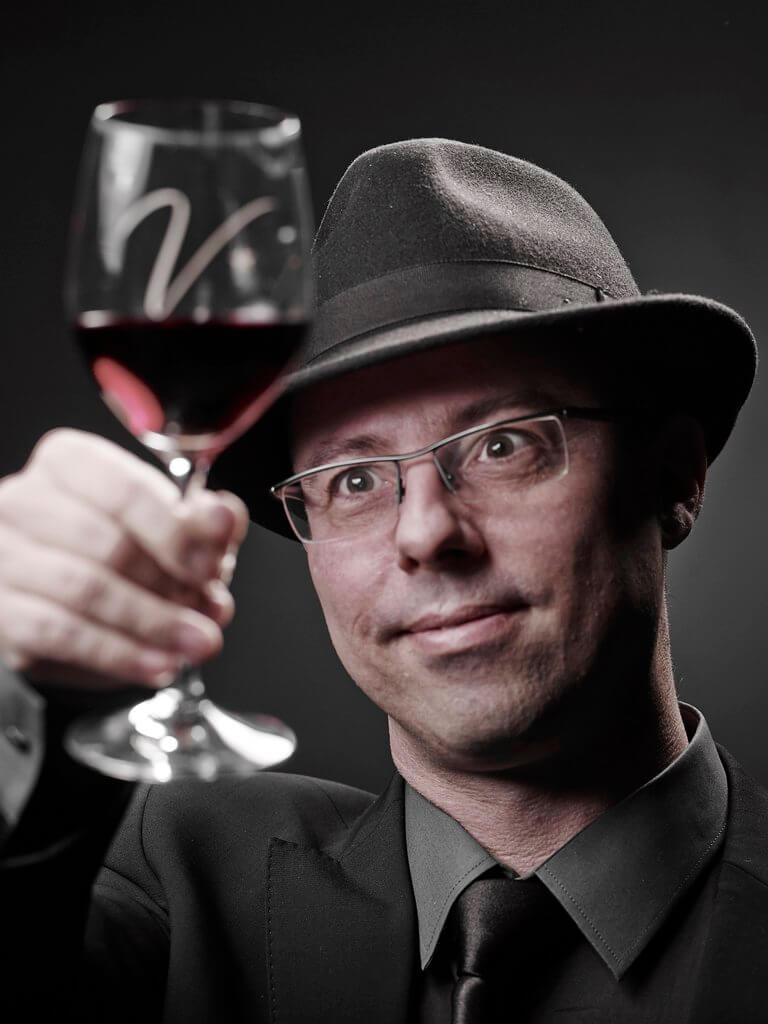
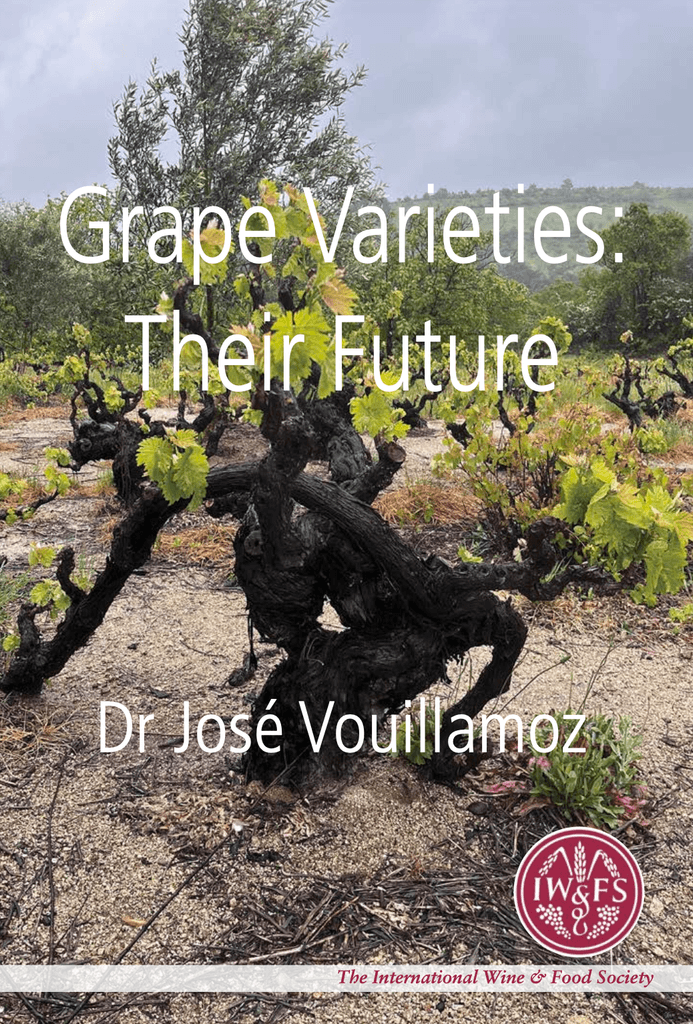
In this episode, we’re exploring the future of wine grapes with biologist, vine detective and author Dr José Vouillamoz, author of a brand new monograph entitled Grape Varieties: Their Future.
We talk ancient grapes, mercenary varieties, hybrids and crossings, gene editing, clones, old vines, RNAi, epigenetics and…going to mars with Elon.
José also posits the eye-opening thought of, ‘Nebbiolo Romanée Conti’.
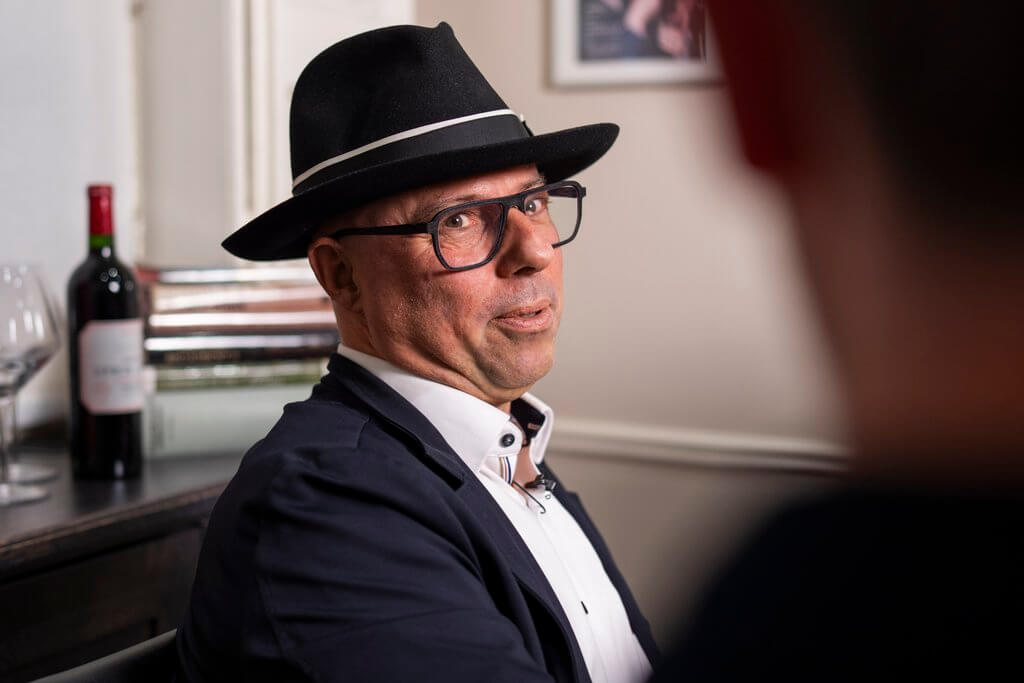
Thanks to the International Wine & Food Society (publisher of the monograph) for sponsoring this episode.
The IWFS is kindly offering all Wine Blast listeners a 30% discount on the cover price of the monograph until 31 Dec 2026 – so £7 rather than £9.99.
Use this link to secure your Wine Blast discount on Grape Varieties: Their Future.
It’s a pithy, punchy, thought-provoking read that we’d highly recommend.
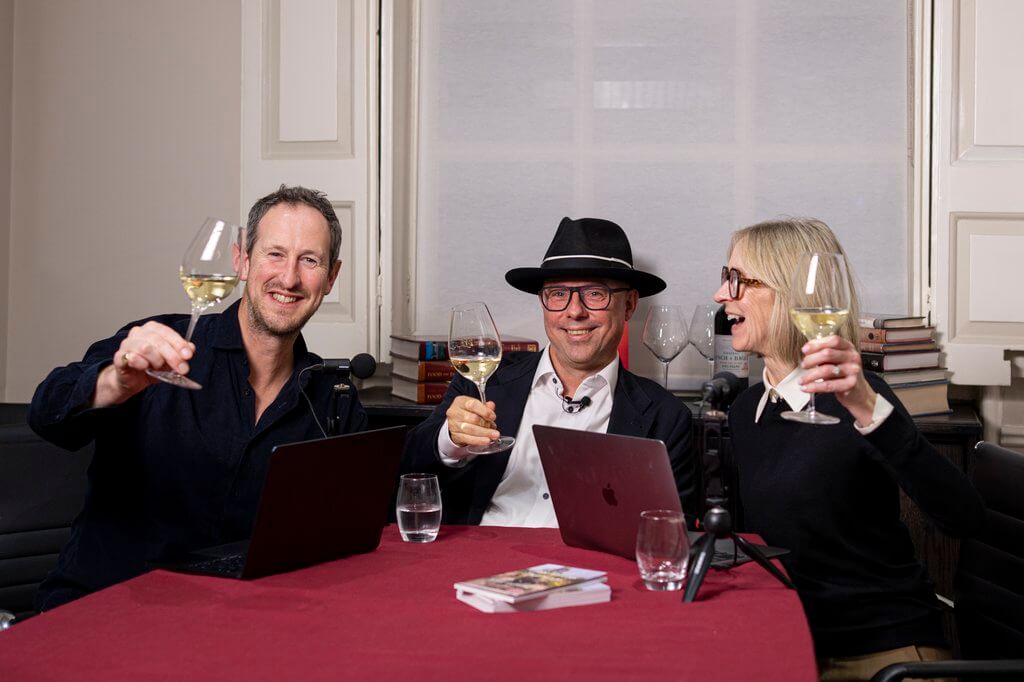
Starring
Subscribe
Sign up to Wine Blast PLUS for first-class subscriber-only content, to access our full archive, support the show and get every episode before it goes on free release.
You’ll also get subscriber-only discounts with the likes of Coravin, WineMasters TV, Jancis Robinson glassware and Academie du Vin Library.
Just visit WineBlast.co.uk to sign up – it’s very easy, and we will HUGELY appreciate your support.

It takes a monumental amount of work to make Wine Blast happen. Your support will enable the show to continue and grow – and we have lots of fantastic ideas of things we’d like to develop as part of Wine Blast to maximise the wine fun. The more people who sign up, the more we’ll be able to do.
Links & Notes
- We reference a couple of past episodes in this programme:
- The Best White Grape (featuring José, from Season One)
- The Vines of the Future…Are Here
- Credit for the photos and videos go to Ben Parker of Parker Photos
- You can find our podcast on all major audio players: Apple Podcasts, Spotify, Google, Amazon, YouTube and beyond. If you’re on a mobile, the button below will redirect you automatically to this episode on an audio platform on your device. (If you’re on a PC or desktop, it will just return you to this page – in which case, get your phone out! Or find one of the above platforms on your browser.)
A Message from the IWFS
The International Wine & Food Society (IWFS) welcomes members anywhere in the world and currently has a global membership of 5000+ across 26 countries and 132 branches, with a strong presence in the USA, UK, Australia and Asia.
Members get the chance to be part of a global community of wine and food lovers. The Society is much more than a dining club, offering exciting and unique opportunities to enjoy wine and food but also giving you access to an extensive resource of information about wine and food – vintage information, educational videos and visits to wineries (to name but a few).
Go to the IWFS website www.iwfs.org to find out how you can be part of the IWFS wine and food journey.
Get in Touch!
We LOVE to hear from you.
You can send us an email. Or find us on social media (links below).
Or, better still, leave us a voice message via the magic of SpeakPipe:
Transcript
This transcript is AI generated. It’s not perfect.
What wine grapes will our grand-children be drinking?!
Susie Barrie MW 0:05
Hello, this is Wine Blast. Thanks for tuning in. In this one, we’re asking the question: what wine grapes will our great-grandchildren be drinking? Because, big statement alert, they almost certainly won’t be the same grapes, or the same wines, that we all know and love.
Peter Richards MW 0:24
Yes, hello, welcome! This is an intriguing episode because we’re talking to world-famous vine geneticist and grape variety expert, Dr. José Vouillamoz, who has a knack of not only making complex topics simple and engaging, but also saying things that grab your attention and imagination. Stuff like this:
José Vouillamoz 0:44
Wine is not only alcohol, it’s culture, it’s history. And we don’t want to lose that. I always say a planet on which there is no more Pinot at Romanée Conti is a planet I don’t want to live on. Better go to Mars with Elon…
Susie Barrie MW 0:59
Just to clarify, Wine Blast does not endorse going to Mars with Elon under any circumstances. Just for the chilling thought of no more Pinot in Burgundy, uh we’ll come on to that, among many other things, in due course.
Grape Varieties: Their Future, by Dr José Vouillamoz
Peter Richards MW 1:11
Yeah, so this episode ties in with the release of a monograph by Dr. J entitled Grape Varieties: Their Future. It’s a fascinating read. It’s pithy and punchy, a distillation of the expertise and experience that José has built up over 15 years as a biologist, plant geneticist, DNA wrangler, vine detective, I suppose we could call him, wine lover, vineyard owner, lecturer, writer, and of course co-author of the magisterial Wine Grapes tome with Jancis Robinson and Julia Harding.
Susie Barrie MW 1:40
Now José says the one question everyone kept asking him was in an era of unprecedented change, what’s the future for wine grapes? So this is his answer, distilled into a wonderfully concise and readable format. He writes, ‘viticulture is one of the most climate-sensitive agricultural systems in the world.’ But of course, climate chaos is changing the wine game and demanding an urgent rethink of strategy.
Peter Richards MW 2:09
The monograph explores ways in which that change can happen. Fundamentally, José says it comes down to the vines. Viticulture and winemaking can mitigate the effects of climate change, but that can only go so far. The long-term answer is getting the right vines in the right place to maintain quality, not just for now, but also for the world of twenty, thirty, fifty years’ time. Wine growing has always been a gamble on the future, José writes. We know the stakes are high, but what are the options?
Susie Barrie MW 2:41
And essentially the answer to that comes under two headings: all change – or more of the same. And it touches on everything from resurrecting lost varieties to hiring in mercenaries to epigenetics and gene editing. It’s a genuinely fascinating topic. So we’re very grateful to Dr. J for joining us to talk it through.
Peter Richards MW 3:03
We should also thank the International Wine and Food Society, or IWFS, who are publishing this monograph and also sponsoring this show. The IWFS does fabulous work bringing like-minded food and wine lovers together all around the world. They currently have more than 5,000 members across 26 countries, including the USA, UK, Australia, and across Asia. They organise trips and tastings and dinners and provide all kinds of useful wine materials. So wherever you are, do check them out. Their website is IWFS.org and we’ll put a link in the show notes.
Susie Barrie MW 3:38
Now, as per our previous show on sparkling wine, the IWFS are extending a very generous 30% discount on the monograph to wine blast listeners until the 31st of December. Just use the link in the show notes. So it can be yours for just seven pounds, less than a pint of beer or a glass of wine these days. An ideal stocking filler or a treat for yourself.
Peter Richards MW 4:00
Happy days. Not only that, but the IWFS are kindly offering an entirely free copy for the first 50 Wine Blast PLUS subscribers to send them an email with a postal address. So, subscribers, there’s a link in your show notes to this end. Yet another reason to subscribe, right? Either way, get involved would be our advice.
Susie Barrie MW 4:20
Now, longtime listeners may remember we’ve had José on the show before back in 2020 in our episode on the best white wine grape. In that one, he revealed that white wine grapes are the result of an accidental mutation, the original wine vine being red-buried, and that his three favourite white varieties were Arvine, Terrantez do Pico, and Voskehat. Just a little bit different from our Chardonnay and Savagnin Blanc.
Peter Richards MW 4:49
What can I say? This is a man who walks to his own beat, isn’t he? As is clear from his personal style, too. Given he did the whole interview sporting his signature Panama hat. Very smart it was, too. Apparently an original Borsalino.
Susie Barrie MW 5:04
Whatever that means.
Peter Richards MW 5:06
We are not masters of hats, are we?
Susie Barrie MW 5:07
We’re definitely not. Fancy dress, maybe not hats.
Peter Richards MW 5:11
It was a real treat to have José over from Switzerland and back on the show.
Susie Barrie MW 5:16
Yeah, so I asked him, what are the issues that mean we need to question the future of wine grape varieties?
José on changing grape varieties
José Vouillamoz 5:23
With the warming temperature, varieties that are suitable to a specific region, if you take the example of Pinot in Burgundy, they might not be suitable anymore in the future because each grape variety has a window of the perfect ripening time and and and lifetime of the of the plant. Some of them are narrow, some of them are broad. The Pinot one is very narrow. So if you change the temperature, you change the climate, then my maybe Pinot would not be adapted to this terroir. And we need to do something and find solutions.
Susie Barrie MW 5:59
And how are rising temperatures affecting the growing season, vine phenology, and ultimately really wine style?
José Vouillamoz 6:08
So the the rise of temperature has an effect on the budding period of the vine, so earlier budding, earlier fruit set, earlier veraison, so earlier harvest. So if you if you think of a very simple diagram that is in my book, if you have the the perfect condition for a given variety, during the growing season, the sugar is increasing, the acids are decreasing. They would meet at some point where the ratio is ideal. And this point, if it’s the right location, is also the point when the aromas and flavours are at their peak. If you harvest at that date, you have perfect conditions and beautiful balanced wine. The same grape with a warmer climate in the same location, you will have the sugar increasing more quickly, you have the acids decreasing more quickly. When the ratio is reached, the aromas and flavours are not ready yet. So if you harvest at that date, you have a dull wine without flavours. If you wait until the aromas come up, then the the balance is lost. It’s either too acidic or too sweet, and the the wine would be heavy, jammy.
Susie Barrie MW 7:26
And presumably vintages like 2026 are a good illustration of this?
José Vouillamoz 7:31
Of course. Because 2026 broke many records of the earliest harvest dates in many places in Europe, especially in Burgundy, they never had such an early harvest as this year. I think they started mid-August in some areas. In Switzerland where I live, they they started August 11. While the regular period for even for the early ripening varieties was September. So we are almost one month earlier than what I have experienced as a child. It’s going very fast.
Susie Barrie MW 8:05
I mean, do you think that the time is approaching where Burgundy needs to decide if Chardonnay and Pinot Noir are still appropriate grape varieties for the region?
José Vouillamoz 8:15
Of course, we can already observe that. If you had some 2023 or even 2022 red burgundy, they are too ripe to my taste, and and and for me, most of them have lost the elegance and the balance that they used to have. And 2026, I haven’t tasted any, but will be even more powerful than what it used to be. So we are losing the proper identity of what an excellent, balanced, elegant, delicate red burgundy should be. And one thing that people must realizs if you have in your cellar old vintages of burgundy reds or old vintages of bordeaux reds, keep them. Because we will never, never, ever again be capable of doing the same wines in the future for the next 10,000 years, I would say.
Susie Barrie MW 9:10
So you truly believe we will never have wines like older Bordeaux in our cellars ever again?
José Vouillamoz 9:17
Yes, I do. The effect of climate change has been observed since the 1980s, and it’s not gonna stop. At least for the next 10,000 years. In the book I give the example of Léoville Barton 1982 versus 2022. Same family, same philosophy, same winemaking. The 82 was described back then by Robert Parker as an backward wine, awkwardly tannic, difficult to taste, with a potential, and 12.5 in alcohol. The 2022, same magazine, Wine Advocate, was described as fruity, round, powerful, mellow, almost ready to drink at 14.2 of alcohol. So same place, same wine, same family, two different wines. And I cannot think of any future vintage that would be similar to 1982 or 1961.
Susie Barrie MW 10:20
So, in the face of climate change, in the book, you propose two main solutions when it comes to grape varieties: either all change or the continuity model, which is basically adapting within a familiar varietal context. So, should we look at each of those in turn and start with the option of changing grape varieties?
José Vouillamoz 10:44
So, if you change grape varieties, you have a lot of choices. You can study grape varieties from another region to see if they are adapted to a given region. Let’s take the example of Bordeaux. Uh, they’ve been studying 52 different varieties over the last 15 years, measuring all the parameters, each vintage.
Susie Barrie MW 11:04
And that’s in one specific vineyard…
José Vouillamoz 11:07
One specific plot called Parcelle 52, parcel 52, 52 grape varieties. And one of them that stood out was Touriga Nacional from Portugal. Uh that
Susie Barrie MW 11:18
Used to make port
José Vouillamoz 11:19
Yeah. And the results were convincing. And since 2000, I think, 23 or 21, don’t remember, they have officially authorised Touriga Nacional in two appellations, Bordeaux and Bordeaux Superior. Up to 5% in the vineyard and 10% in the blend. In order to not completely modify the profile of the wine, but to bring some character, some tannins, maybe some aromas, flavours to the to the wine. So it’s already happening. Varieties that are not used to be planted in a region that are included. That’s why, and and and Aubert de Villaine was not happy with me doing that, but I created I created a fake Romanee Conti label. And I told him, Well, everybody does, so I can do that. He was it was not funny for him. But I made the label, and by the way, the the owner was myself, so this is science fiction, of course. But it was Nebbiolo Romanee Conti. Because at some point in 50 or 100 years, the perfect ripening window for Pinot Noir will be out for Burgundy. And and Nebbiolo would be the best suited variety to plant in Burgundy in 50 or 100 years. Shall we do that? I hope not. And I I always say, if you if you allow me, either if you plant Nebbiolo or a hybrid or whatever else in in Burgundy, especially in Romanée Conti, not that I drink that every day, but I always say a planet on which there is no more Pinot at Romanée Conti is a planet I don’t want to live on.
Susie Barrie MW 12:57
I think a lot of people would agree with you.
José Vouillamoz 12:59
Better go to Mars with Elon.
Susie Barrie MW 13:01
We’d rather not do that. Um do you have any varieties that you’d particularly highlight in in this context of moving to another variety for a region that’s traditionally had one specific or two specific varieties?
José Vouillamoz 13:15
Sure, but it depends on the region and and on the on the style of wine that you you would like. Speaking about Burgundy, of course, Chardonnay is is unmistakable, but if one day it is not adapted anymore, I would think of Assyrtiko, for example, from Greece, especially on Santorini, because it is heat resistant, drought resistant, and even in warm vintages it keeps high acidity, which is what we like in in Burgundy, especially in Chablis, with this razor-sharp acidity. So that would be an idea, and in Burgundy they should start planting some Assyrtiko to see how it develops with time. It might be a solution for the future, not that every producer would have Assyrtiko, but a small percentage could help.
Susie Barrie MW 14:03
I know you talk also about Savagnin.
José Vouillamoz 14:05
Savagnin, yeah. And Savagnin also has a high natural acidity, thick skin that prevents him to be attacked by by botrytis too much and not resistant but but coping well with powdery and downy mildew. So I think that Savagnin is very interesting for the future, and at the same time, it’s one of the oldest varieties that we have in Western Europe. Savagnin has been discovered in an archaeological site in Orléans, south of Paris, a grape pip that was kept in water, 900 years old. They did the DNA profiling and they were able to say 100% this is Savagnin Blanc. So it’s at least 900 years old, and it’s officially the oldest grape variety in the world so far. So it’s been around since a long time, and I hope it will be in the future because it had a huge influence on Western Europe viticulture. It gave birth to more than 50 grape varieties, and some of them are very important.
Susie Barrie MW 15:10
So instead of the thought of moving to just another variety, what else, what other options are there in terms of changing grape varieties?
José Vouillamoz 15:19
What I like most is to make good use of the heritage grape varieties that we have in each traditional historical wine regions. Why? Because these varieties may be obscure varieties under the radar, but they’ve gone through a lot of different climates. Uh we had a a warm period during the Middle Ages, the optimal warm period. Then we had the little ice age during which they kind of almost disappeared. Those that have survived have already undergone that kind of differences in climates, and for me they are the best ones to cope with the future climate change.
Susie Barrie MW 16:01
So they’re the sort of the indigenous varieties that have kind of been forgotten.
José Vouillamoz 16:05
Yeah, yeah. That’s the one I like to favour. And these are forgotten from the past, but maybe the flagship varieties of the future.
Susie Barrie MW 16:15
And can you name any that we may not have heard of in particular regions?
José Vouillamoz 16:20
Which region?
Susie Barrie MW 16:21
South of France. I’m just throwing something out here.
José Vouillamoz 16:23
South of France, uh I would favour Tibouren.
Susie Barrie MW 16:26
Ah.
José Vouillamoz 16:27
Have you ever tasted Tibouren?
Susie Barrie MW 16:29
Tibouren rose. Uh yes, yes, I have, yeah.
José Vouillamoz 16:31
But try the red one day. The reds are amazing and they have a potential for aging that is really unbelievable. Tibouren is very good to make rose in Provence, but also as a red, it’s really again, low in alcohol, balanced with with soft tannins and a potential for aging. This Tibouren is also found on the other side of the on across the border in Italy, in Liguria, where it’s called Rossese di Dolce acqua, which is also one of my favourite wines in Liguria. They are the same variety with two different names. And when you drink a bottle of Tibouren or Rossese di Dolceacqua, it’s gone in a quarter. It it has drinkability, which is what we are looking for. So important,
Susie Barrie MW 17:20
Absolutely. I want you to tell us about Diolle, if that’s the way you pronounce it, uh and your involvement with that variety.
José Vouillamoz 17:27
One of my babies. So Diolle is a very old variety from Valais in Switzerland, a white-berried variety. It used to be mentioned in historical documents since 1654 until 1903. Then it disappeared from the radar. It was considered extinct. In 2005, I have found two vines coming out from a dry stone wall in Valais, unidentified. So I checked the DNA, they had the same profile and did not match anything else. Then, comparing to the ancient ampelographic descriptions, I was able to announce that this was Diolle resurrected. So that was the resurrection of a grape variety in 2005. And I’m not a winemaker myself, so I was hoping that somebody would do that. And in 2012, when we released the book Wine Grapes with Jancis Robinson and Julia Harding, I invited a few Swiss producers with me, including a guy called Didier Joris, considered one of the best winemakers of Switzerland. And during the evening, Didier tells me, Oh, you know, next to my vineyard, I have one small plot. The owner wants to sell it. I suggest you buy it, you plant whatever you want, and I make the wine. Oh, great. So I was thinking, what I plant Petit Arvine, Reze, and all, and then of course, we need to plant Diolle! That’s what we did. And the story was really a journey because we had many problems, we had frosts, we had vandalism. Uh, we had someone who broke 108 vines.
Susie Barrie MW 19:08
Why on earth did they do that?
José Vouillamoz 19:09
Jealousy. Jealousy. Uh so I lost money in in the process, of course. But we were very happy to make this wine, very small quantity. The maximum we did was 144 bottles. And the 2019 vintage got 20 out of 20 points with in the Vinum magazine.
Susie Barrie MW 19:28
And tell tell me what does it taste like? What what what is what is a Diolle wine going to taste like?
José Vouillamoz 19:34
It is it is semi-aromatic, a bit similar across between Arvine, if you know Arvine from Switzerland, and Savagnin from Jura, because it it has the aromatic of apricot peel, a bit of of grapefruit, at the same time a nice acidity, the highest acidity that we have ever observed in a wine, in a white wine, higher than Riesling, higher than Assyrtiko. It’s crazy, and I love acidity. It’s high,
Susie Barrie MW 19:59
isn’t it? Yeah,
José Vouillamoz 20:00
yeah, very, very high.
Susie Barrie MW 20:02
Wow.
José Vouillamoz 20:03
But maybe, maybe it’s the wine of the one of the grapes of the future, because for 10 years we’ve been the only ones to make this wine, and today I know at least three producers who have planted it, including Marie-Therse Chappard, who is the most famous Swiss producer. And I had a chance to taste her Diolle only last Monday, uh and it’s beautiful, it’s really elegant, it’s slightly perfumed with this acidity that gives you that that keeps the mouth very fresh, and the only thing you want to do is to have another sip.
Susie Barrie MW 20:39
Perfect. What else do we want from a glass of wine? So moving on to the other options, which would be if we’re going to change grape varieties, we could obviously go to a crossing or a hybrid. Could you explain a bit more about what those are and what your options are with crossings and and hybrids?
José Vouillamoz 20:56
So, simply put, every grape variety is the result of a crossing. Every grape variety, including the traditional ones you mentioned, Syrah, we speak about Pinot or Merlot. Every grape variety has one father, one mother, just like us. Until the 18th, 19th century, these crossings would occur spontaneously in the vineyard. The pollen would go on the pistil by wind or by insects. And since a few decades, 150 years approximately, human beings know how to take the pollen and put on the pistil of whatever they want. So that that means it’s deliberate crossing. If you use two individuals from the same species, which is Vitis vinifera, we call it crossing. You remain within the same species. If you use Vitis vinifera and vitis something else, there are 30 different Vitis species in America, 30 other ones in in Asia, that would be a hybrid because you are crossing two different species. So the aim of crossing is to improve resistance to whatever you don’t like, most likely fungal diseases. And also for hybrids, the advantage is that you can introduce the genetics of the other species by crossings.
Susie Barrie MW 22:17
So if we just go back to crossings, are there any that you particularly think are good for the future? Really good crossings?
José Vouillamoz 22:24
Honestly speaking, I’m I’m not I’m not really fan of wines made out of crossings. Uh of course I tend to favour the old indigenous grape rides in every region.
Susie Barrie MW 22:35
Why? Just why why would you not be a fan of them?
José Vouillamoz 22:38
As far as I’ve tasted, they can be very drinkable, but they for me they do not represent the terroir and they don’t they don’t have the complexity and the depth that I can have in a traditional wine, be it Pinot, Syrah, or Savagnin, for example. But if you take the example of Marselan, Marselan was created in 1961 at the research station in Montpellier, crossing Cabernet Sauvignon and Grenache. And it was never really successful in France, but it has been introduced in China and it really matched the request and the demand of the Chinese market in terms of style. it’s it’s quite dark, quite spicy, powerful, And today it has become the most planted red variety in China, Marselan. So the cross was made in France and has been successful in China. One of the examples of crossings.
Susie Barrie MW 23:38
So just moving on to hybrids then, and what do you feel about those and what are the arguments in favour of using a hybrid?
José Vouillamoz 23:47
For me, again, and and and I would be happy to be proven wrong, hybrid wines do not have the depth and the complexity that you can find in a traditional variety. But I see many advantages with hybrids. First of all, and it they they have already started to do that in champagne. Champagne, they have included Voltis, which is a multi-resistant hybrid, very good resistance to powdery mildew, dynamic mildew. They have planted it up to 5% in the vineyard, 10% in the wine. It does not really change the profile of the champagne, but it’s very useful as a blend, blending partner. I see two good reasons to plant hybrids. Again, I don’t want to see hybrids at Romanée Conti. But in the case of champagne, you can plant hybrids like Voltis around the villages, around the houses where people live. So you don’t need almost, you don’t need to spray these vineyards, maybe once or twice a year. So it’s better for the human health, better for the population, and better for the image of wine. Because when you have a school with kids and you have a guy that is that is dressed like a cosmonaut going on on the moon, it’s not good for the for the image. So planting around the village is is one thing. But something that I’m suggesting since many years and nobody’s listening to me, I’m used to that. All the entry level of bulk wines that you find in supermarkets, sometimes in in the boxes like like milk, people who buy these wines and drink these wines, they don’t care at all about the variety that is in. So for those wines, plant hybrids that are resistant, you spray much less, it’s cheaper to make, better for the environment, better for the human health. So that would be, and and there is an ocean of that kind of wine on the planet.
Peter Richards MW 25:51
So when it comes to changing varieties, you get the feeling that José favours rescuing obscure indigenous vines rather than resorting to crossings or hybrids. ..
Susie Barrie MW 26:02
Yeah, I mean his story about Diolle was was great, wasn’t it? And in the book he writes that crossings only make up three and a half percent of the global vineyard, and hybrids are less than two percent. So that kind of tells its own story. I mean, I think he’s fine with it in certain contexts, like more high-volume wine, especially if hybrids, for example, can reduce the environmental impact and costs of growing grapes because fewer fungal, fewer antifungal sprays are needed.
Peter Richards MW 26:27
But you know, I guess I guess the challenge is awareness, isn’t it? Most people only know a handful of grape varieties at best. So trying to sell them even more niche ones won’t be easy. Um he did tell us another story about a variety called Saint Georgener, I think that’s the right way of saying it, which is a parent of Gruner Veltliner, but was considered lost in the mists of time until someone found one, one vine, just one vine, in an abandoned vineyard and coaxed it back to life. Um, there are now commercial plantings. And José says it tastes spicy and fresh, and could be another one for the future, you know, if if it can get the buy-in.
Susie Barrie MW 27:03
Yeah, it’s a big if. Um José says that a third of the world’s vineyard is made up of only 13 grape varieties, and half the total vineyard is just 33 varieties. I mean, considering there are something like 1,500 varieties in commercial production, that is a lot of new names to get our heads around.
Peter Richards MW 27:23
Yeah, so the other option is what I call the mercenary approach, shipping in solid players from elsewhere, like a like a club football coach importing foreign superstars. So Touriga Nacional in Bordeaux or Assyrtiko in Burgundy. Uh, he also mentioned Syrah being grown in Alsace. And in the book, he cites varieties like Aglianico, Areni, Baga, Castets, Kidonitsa, and Xynisteri as good options for this kind of role.
Susie Barrie MW 27:48
And then there’s Nebbiolo Romanee Conti. Um, quite the thought to focus the mind. And a good note, I think, on which to take a breath before we come back to consider the continuity option, which may sound a bit steady, but is actually full of eye-opening possibilities, some of which definitely sound like science fiction.
RECAP – and José on the continuity option
Susie Barrie MW 28:09
To recap so far, our climate is changing and wine with it. The question is how to best adapt our wine grapes for the future. Changing varieties is one option, be it via shipping in strong performers from other regions, rescuing forgotten local varieties, or planting crossings or hybrids. The other option is working to adapt the current grape varieties.
Peter Richards MW 28:33
And the good news is that there are a number of levers that can be pulled on this front, from clones to rootstocks to modern biotech and beyond. All of this to stave off the possibility of Nebbiolo Romanée Conti. And José blasting off to Mars with Elon.
Susie Barrie MW 28:49
Perish the thought. So José said that the first thing to do is explore the existing biodiversity within a great variety. Clones or biotypes are different types of individuals within the same variety with specific characteristics. So we’re still talking Pinot Noir, for example, but one clone has bigger bunches, one is later ripening, one has deeper colour. Now the fact is lots of clones already exist, so it’s worth finding out which ones are best equipped to handle climate change.
Peter Richards MW 29:21
The issue with clones is that they can diminish biodiversity, and that’s a risk if it increases vulnerability to future climate or disease challenges. The opposite of clonal selection is massal selection or massal selection. So you propagate your new vines from a variety of good older vines that are already planted. As José says, in his view, the best way forward is a mixture of both clonal and massal approaches.
Susie Barrie MW 29:47
Another way to explore existing biodiversity is looking at rootstocks. We tend to forget that the vast majority of vines in the world are planted not on their own roots, but on a grafted rootstock to give resistance against the phylloxera pest. But this humble rootstock can have a significant impact on a vine’s behaviour and suitability for the future.
Peter Richards MW 30:10
José says that many regions tend to focus on a small number of rootstocks, but there are hundreds available, and they can influence so many things, from a plant’s drought tolerance to its ripening date. He cited one Australian trial with Tempranillo that showed the same plant material on two different rootstocks, resulting in a 32-day difference in maturity levels, which is huge.
Susie Barrie MW 30:35
The challenge when it comes to root stocks is that not much research has been done and it takes time and money. So José said the following.
José Vouillamoz 30:43
We need to start now. For example, France has started, Switzerland has started already in 1992. They started to work on different rootstocks. So this for me would be one of the key solutions to climate change if you want to maintain the grape variety in a historical location.
Peter Richards MW 31:02
Just coming back to clones briefly, what’s helped our understanding a lot has been whole genome sequencing. We asked José about this, partly because we don’t really know what it means. And he said that DNA profiling is a relatively new technique, but could be incredibly useful in the future. The entire Pinot Noir genome was deciphered in 2007 and it cost 23 million euros. Then it dropped to 100,000 euros, and today it only costs 500 euros. The cost has fallen because the tech has evolved, so now it can be applied more widely.
Susie Barrie MW 31:37
And José told us how this can help understand biodiversity or clones, for example. So an Italian team analysed Nebbiolo and identified 98 clones across seven groups. They then mapped them across Piedmont and found all seven groups in both Barolo and Barbaresco, but only one in neighbouring Valtellina. And there’s similar research going on elsewhere now, too.
Peter Richards MW 32:03
And presumably this means once you know what you’ve got planted, you can work out how well adapted that clone is or whether you might need to switch in order to cope with future climatic challenges.
Susie Barrie MW 32:14
Yeah, yeah. I mean the important thing is the science is constantly evolving, which gives us hope and options for the future. Um, one subject very much in this realm is gene editing vines. So I asked José to tell us about that.
José Vouillamoz 32:28
Gene editing, they are using palindromic sequences. Uh it’s called CRISPR-Cas9. This is this is the name of the of the big protein that they are using. Uh, to make it simple, it’s like scissors for DNA that you can go and modify what you want with with the good precision. Uh, I like to call it the Photoshop of DNA, because you can you can go and switch on or off the expression of some genes. So let’s say that you have the gene for resistance to powdery mildew in your DNA, but it’s not expressed. And you know that the gene is existing, so you can go just before this gene and switch on the the trigger that will express this gene. So that’s what they are doing. They say that this is not GMO. It’s always difficult to agree with them because it is GMO for me. And you can also introduce another gene if you want with this same technique. But it’s quite promising because they have been able to create a Chardonnay plant that is almost completely resistant to powdery mildew using this technique.
Susie Barrie MW 33:43
Is it allowed to be used? Is it legal?
José Vouillamoz 33:46
Good question. Uh the regulation is rather vague about that. Nobody knows at the moment. Nobody knows. Be it CRISPR-Cas9 or GMOs, I don’t mind. What I would mind is that it’s very costly to do that on any grape variety. So you will do that on one or two clones. And if you think of Pinot that has more than 1,000 clones, all the other ones would be lost. And that that is what what I fear the most. I don’t fear the modification. I know how they do. I know that there’s almost zero risk for the human health. But the risk for me is what we call genetic erosion because you would lose the diversity within the grave variety if everybody if you have a Chardonnay that is resistant to anything you don’t like, everybody would want to plant it.
Susie Barrie MW 34:37
Now, epigenetics is fascinating too. Um can you tell us what that is and how it’s of interest here?
José Vouillamoz 34:45
So I did my biology studies in the 1990s, and this word did not exist, and I did not learn it at university. It did not, it’s a very recent field of science over the last 15 years, I would say, and it contradicts everything that I have learned back then, because we would always learn that the environment cannot influence the DNA. Of course, it is still true if you look at the molecules composing the DNA, the basis of life. The environment cannot influence these molecules, except if you’re close to Chernobyl and you have radiations, that is possible. But the environment can influence what is around the DNA molecule. There are a lot of proteins for the structure, a lot of other components that influence the expression of the genes. You don’t modify the genes, so the ATGC, you don’t modify them, these molecules, but you modify what is around, the what I call the decoration of the DNA. And if you modify it, you can influence the expression of a gene. The external influences can be integrated into this combination around the DNA. And if you take cuttings from this plant, you would propagate this influence. So my theory is again, it’s not proven, it’s still under study. But I was thinking of Merlot in Bordeaux vintage 2022. I was there for the for the em primeur thing, and many most of the producers I was talking to were telling we we were convinced that our Merlot would be completely dead, this vintage. They would complete be completely dried or cooked because it was so hot. Yet they were not cooked, they were fresh, they were balanced. And my interpretation is epigenetics, because the vineyards that were living the 2022 vintage had already lived the 2003, the 2009, the the 18, 20 and 20. So they had in their memory, genetic memory, past warm vintages, and they were better prepared to cope with 22 and of course 26, which was a record year. So basically, epigenetics is the memory of past climates within the cell of the grapevine.
Susie Barrie MW 37:20
So surely that that suggests that any new planting material should be selected from old vines?
José Vouillamoz 37:26
That’s the reason why, yeah.
Susie Barrie MW 37:28
Yeah.
José Vouillamoz 37:28
Because we were speaking about old indigenous indigenous grape varieties. Um, they have gone through different climates and they have the record, the chemical record in their chemical structure around the DNA of the past climates.
Susie Barrie MW 37:44
Now there’s an interesting initiative, isn’t there, in New Zealand to do with Sauvignon Blanc, Sauvignon Blanc 2.0, which takes this as sort of a stage further, the idea.
José Vouillamoz 37:54
Yeah, yeah. That’s a brilliant idea, Sauvignon Blanc 2.0, because it it’s a it’s a private company doing that. They are having cell cultures of Sauvignon Blanc in petri dishes, and they are exposing those to many stresses, heat, warmth, lack of nutrients, lack of water, and then they would recreate plants out of these cultured cells. And then they would select the plants and and put them under stress again to see which ones have integrated with epigenetics the resistance to that kind of stresses they are wanting to fight against. And basically they are recreating in in a laboratory what nature has been doing since centuries on each and every plant grape variety.
Susie Barrie MW 38:56
But presumably a lot quicker.
José Vouillamoz 38:58
Much quicker.
Susie Barrie MW 38:59
Much quicker. Do you think gene-altered wine grapes will be a part of the future of wine? Could we have a new generation Chardonnay, for example?
José Vouillamoz 39:09
I believe so. I think at some point we will have no choice. Uh not only for grape varieties, but also for anything we cultivate, also for human beings. Uh gene therapy is is underway for human beings. This is, I think, part of the future with grape varieties. It would be so difficult to keep the traditional grape varieties in their own place without using GMOs, because that’s what they are, genetically modified organisms. Uh, in terms of economics, in terms of environment, it would be much better to use altered or modified grape varieties than increasing the chemical treatments and and and or or changing the variety. I think we’ll we’ll have no choice.
Susie Barrie MW 39:59
And how much of a big deal is all of it, really, in your opinion? I mean wine consumption has has always changed over time, hasn’t it?
José Vouillamoz 40:08
Yes. True. But wine is not only alcohol, it’s culture, it’s history. And I think that the famous traditional wine regions are part of the history of Western Europe. It’s also the case in other parts of the of the world, of course, and we don’t want to lose that. If the only purpose is to drink alcohol made from some kind of grape variety and and and probably taste rather good, then fine. But if you want to keep the complexity and this sense of place that we all like in wine, we should keep the traditional grape variety, and there are many question marks to keep them.
Susie Barrie MW 40:56
So, how do you see the future of wine grapes? What’s your instinct about how all this is gonna play out? You know, can science save us?
José Vouillamoz 41:07
Well, science cannot save us every time, especially with climate change. We’ll have to find our own solutions. I think that in this book I’m giving many different approaches, and not one single of them will be the solution. I think a combination of everything that is dealt with in the book will be the future. In some regions we’ll have hybrids, in other regions we’ll have indigenous grave writers brought back to life, uh other regions we’ll have GMOs to keep Pinot Chardonnay. I think it will be a combination of everything that is suggested in the book in the future.
Susie Barrie MW 41:47
José, thank you so much.
José Vouillamoz 41:49
Thank you, my pleasure.
Our thoughts on epigenetics, gene editing and RNAi
Peter Richards MW 41:55
Rarely has continuity been so intriguing!
Susie Barrie MW 41:59
Indeed.
Peter Richards MW 42:00
I mean, epigenetics is fascinating…
Susie Barrie MW 42:03
It really is, isn’t it?
Peter Richards MW 42:03
It really is. Who knew? Yeah. I mean, the memory of past climates within the cells of grapevines.
Susie Barrie MW 42:09
And I guess we touched on this in the previous change option earlier when we were talking about rescuing old indigenous varieties, which presumably would have the same kind of lived history. So a good reason for preserving old vines and eclectic varieties.
Peter Richards MW 42:24
Another one, yeah. And and gene editing, of course, is interesting too. Um we covered this in our Vines of the Future episode back in 2024, I think it was. And I do find it intriguing, you know, as a way of keeping classic varieties, but vastly reducing the environmental impact of spraying and maybe also potentially helping them cope with climate change, too, I guess.
Susie Barrie MW 42:42
José also mentioned RNAi as another new technique or approach, which I’m not sure I totally understood when he explained it to us.
Peter Richards MW 42:50
RNAi, yeah. I mean, you did say RNA was sorry, it was also COVID vaccines were were RNA. Yeah, yeah, yeah, yeah.
Susie Barrie MW 42:59
And they were pretty cutting edge, weren’t they? But essentially, this seems like another technique that can modify the plant’s ability to fight diseases, for instance. And it’s brand new, only four or five years old in terms of research. But José describes it as ‘brilliant.’
Peter Richards MW 43:13
RNAi, okay, one to look out for. It sounds like grounds, further grounds for optimism. Um, and he does conclude that the future will probably feature a mix of all the things he covers in the monograph from the old school approaches like massal selection and rescuing indigenous varieties right through to gene editing, RNAi, and and maybe, I guess, if you extrapolate a bit, even things that haven’t been invented yet.
Conclusions & outro
Susie Barrie MW 43:37
Now I’d like to finish with a quote from the monograph, if I may. José writes, ‘This is not a call for revolution, nor for nostalgia. It is a call for attention to observe carefully, to experiment wisely, to preserve diversity wherever possible, and to avoid both inertia and panic. The grapevine has survived ice ages, phylloxera, two world wars, and profound societal upheaval. It is tougher than we think. The culture built around it has been equally resilient.’
Peter Richards MW 44:14
Stirring words. Makes you want to reach for a glass of red burgundy.
Susie Barrie MW 44:19
Or a monograph.
Peter Richards MW 44:21
By way of final summary, we need to rethink grape varieties if wine is to have a credible future in the face of climate change. The good news is we have options from experimenting with rootstocks to exploring clones, rescuing local varieties, co-opting strong performers to harnessing the power of modern biotech. We may not know exactly what our grandchildren will be drinking, but we do know that it will be different. Hopefully, it will be good enough for them to raise a glass to our generations for making the right choices.
Susie Barrie MW 44:56
Thanks to our fascinating interviewee, Dr. José Vouillamoz. Do get hold of his monograph however you can. It’s obligatory reading for any wine lover. Uh, thanks also to the IWFS for sponsoring this episode and their generous offers. Do check them out wherever you are. Links and all details are in the show notes.
Peter Richards MW 45:15
Thanks for listening. And until next time, cheers!