Summary
Let’s get straight to it: did the Brits REALLY invent champagne?
If so, what about Dom Pérignon and all that ‘tasting stars’ malarkey?!
And how on earth can Kings, Shakespeare, Samuel Pepys, Galileo, the Gunpowder Plotters, the Armada, a mysterious knight, urinals, disembowelling and rams’ scrotums all be part of the story??!!
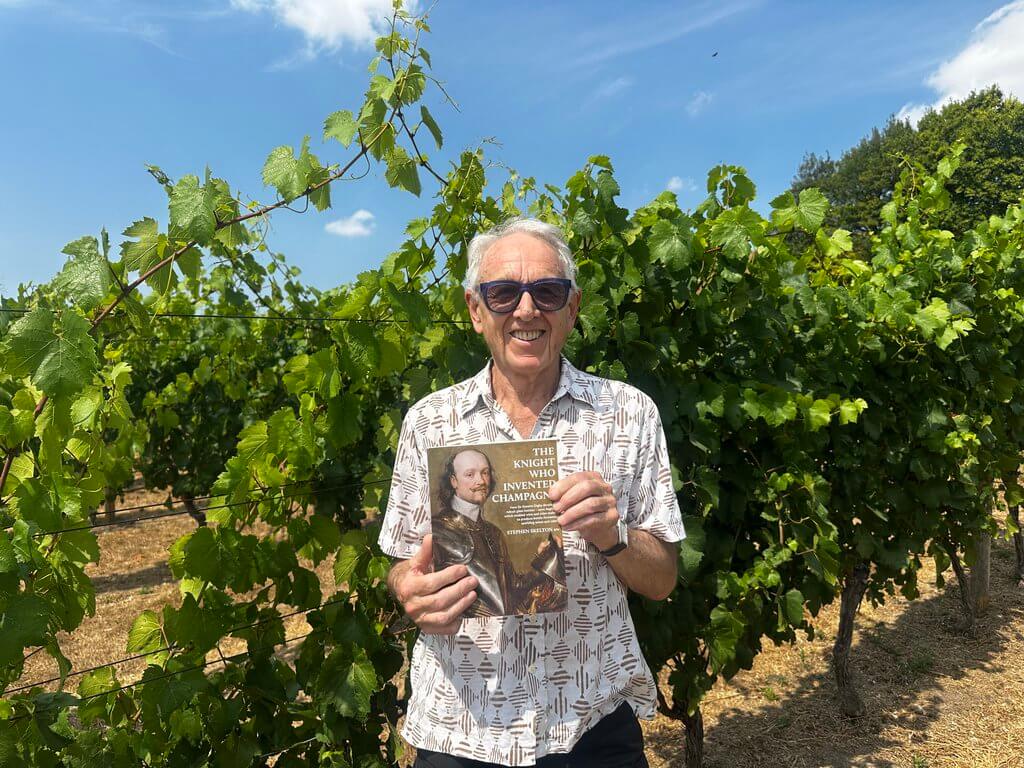
Joining us to tie all these seemingly disparate threads together, as well as clear up a whole lot of myths and misconceptions, is Stephen Skelton MW, author of The Knight Who Invented Champagne, the book this episode is firmly based on.
Champagne isn’t just a cool drink. It also has an astonishingly rich history behind it – including a technological revolution that Stephen compares to the advent of the smartphone four centuries later.
After this episode, you’ll never look at this bubbly elixir in the same way again.
This is a narrative two-parter – don’t miss the second and concluding part of the story, coming soon (and even sooner for Wine Blast PLUS subscribers…)
Starring
Subscribe
Sign up to Wine Blast PLUS for first-class subscriber-only content, to access our full archive, support the show and get every episode before it goes on free release (including the concluding instalment of this two-parter).
You’ll also get subscriber-only discounts with the likes of Coravin, Jancis Robinson glassware and Academie du Vin Library.
Just visit WineBlast.co.uk to sign up – it’s very easy, and we will HUGELY appreciate your support.
It takes a monumental amount of work to make Wine Blast happen. Your support will enable the show to continue and grow – and we have lots of fantastic ideas of things we’d like to develop as part of Wine Blast to maximise the wine fun. The more people who sign up, the more we’ll be able to do.
Links
- To find or buy Stephen’s book, click on this link: The Knight Who Invented Champagne
- There are more details about this story in the Christie’s World Encyclopaedia of Champagne and Sparkling Wine by Tom Stevenson and Essi Avellan MW
- Stephen mentions the English wine brand named after the hero of his story, who make some terrific wines, so here’s the link to Digby Fine English
- You can find our podcast on all major audio players: Apple Podcasts, Spotify, Google, Amazon, YouTube and beyond. If you’re on a mobile, the button below will redirect you automatically to this episode on an audio platform on your device. (If you’re on a PC or desktop, it will just return you to this page – in which case, get your phone out! Or find one of the above platforms on your browser.)
Video Clip
Get in Touch!
We LOVE to hear from you.
You can send us an email. Or find us on social media (links below).
Or, better still, leave us a voice message via the magic of SpeakPipe:
Transcript
This transcript is AI generated. It’s not perfect.
We’ve got a great story for you: The Knight Who Invented Champagne
Susie Barrie MW 0:05
Hello and welcome to Wine Blast, where we love great wines, but we also love a good story, and that’s exactly what we’ve got coming up for you over the next couple of episodes.
Peter Richards MW 0:16
Yes, this is a narrative two-parter all about The Knight Who Invented Champagne, a book by our fellow Master of Wine, Stephen Skelton. It’s got history, it’s got myth busting, it’s got Shakespeare, it’s got science, and it’s got pigeon dung. I mean, what more could you possibly want?! Here’s a taster of what’s coming up.
Stephen Skelton MW 0:37
Don Perignon definitely did a lot to improve the uh quality of champagne wines, but he didn’t put it into bottle, and he didn’t make it sparkling. So this is really the story of how glass got strong.
Susie Barrie MW 0:49
Stephen Skelton there. His book is an attempt to put the historical record straight when it comes to the invention of sparkling wine like champagne, which is a surprisingly recent creation, as we’ll explore.
Peter Richards MW 1:03
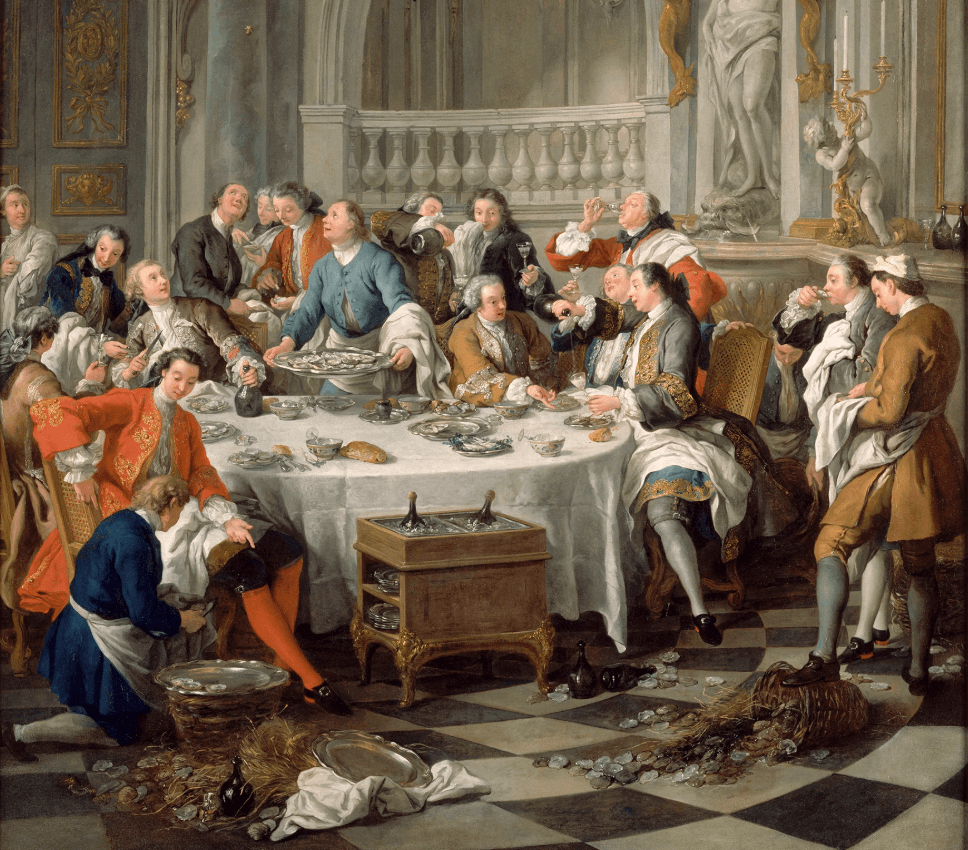
Now, you might think a story about how a consumer product came to be, how very interesting. Oh my yawn, yawn, you know, like the worst kind of school field trip. We’ve all been there. But this particular story is well worth your time. Uh, first of all, it’s not just any old product, of course. This is champagne we’re talking about here. Surely one of the most fun, hedonistic, delicious, coolest products out there, and which has more to its backstory than you can possibly imagine.
Susie Barrie MW 1:33
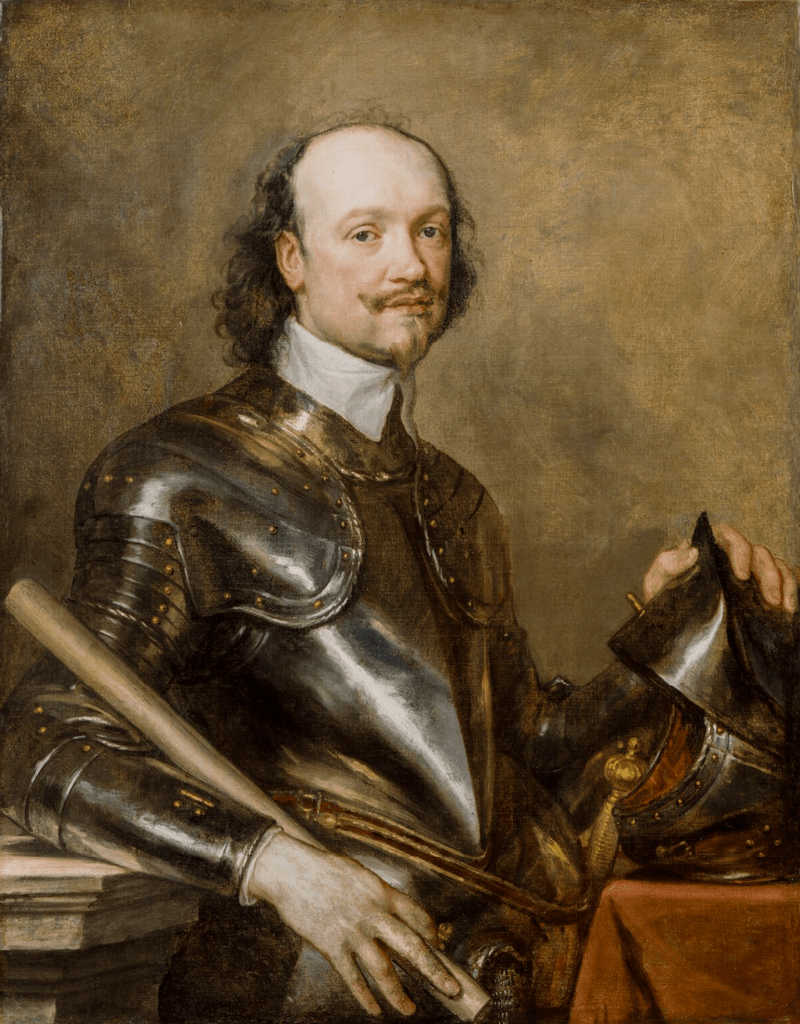
It’s also a story that involves an all-star cast, from Shakespeare to Samuel Pepys, King James I, he of the Bible, King Charles II, he of the Restoration, and the oversized wigs. Also the Gunpowder Plotters, Galileo, and Dom Perignon. Not to mention the hero of the piece, an enigmatic knight of the realm called Sir Kenelm Digby.
Peter Richards MW 1:58
Now the tale paints a fascinating picture of England and Europe emerging from the Middle Ages, riven by Catholic – Protestant divisions, but gearing up for the Renaissance and the Industrial Revolution, and touching on epic events from the Armada to the Plague and the Great Fire of London. We encounter everything from flamboyant monarchs and ambitious admirals to urinals, disemboweling, and rams’ scrotums.
Susie Barrie MW 2:23
Along the way, it clears up a whole lot of myths and misconceptions. We uncover the delightful origin of words like bottle, butler, and punt. We encounter new notions such as: how can a bottle be compared to a smartphone in terms of technological innovation? Finally, we get a definitive answer to the question: did the Brits really invent champagne?
About our author: Stephen Skelton MW
Peter Richards MW 2:50
Helping us tell this story is the author of the book, Stephen Skelton MW. Stephen has been professionally involved in wine since 1974. He studied in Germany before planting his first vineyard in 1977 in Tenterden, Kent, now home to one of England’s largest wine producers, Chapel Down. After a distinguished career making English wine, he became a consultant to vineyards and wineries in the UK. For example, helping Champagne Taittinger set up their English wine operation, Domaine Evremond, in Kent, a detail that we’ll come back to.
Susie Barrie MW 3:23
Now Stephen has also written several books, including The Wines of Great Britain, which is also on our shelf. As for why he wanted to tell this particular story, apparently he’d long been interested, partly because there were many conflicting accounts on this subject, going back as far as the 1880s. And in his words, he wanted ‘to tie down the historical facts.’ So on the one hand, this was a quest for the truth.
Peter Richards MW 3:49
It was also a product of COVID lockdown. Stephen suddenly had time on his hands, as did the archivist at the Royal Society, which is the source of much of the fascinating primary evidence included in the book. Stephen had already been to the historic library in the House of Lords, rifling through documents back to the 1600s. So he was set and raring to go. The Knight Who Invented Champagne was the result.
Susie Barrie MW 4:14
We’re going to tell this story over the course of two episodes, partly because it’s an account that needs a fair bit of a scene setting, which is in itself intriguing. Wine Blast P subscribers will get early access to the second instalment as ever. And we start in England in the early 1600s.
The historical and political context
Peter Richards MW 4:33
Yeah, the book’s introduction starts with the words: ‘It is 1615. Shakespeare is still alive, and the country is at peace.’ Henry VIII is relatively recent history, having ruled from 1509 to 1547, I’ve checked a lot of history books here…
Susie Barrie MW 4:49
I can imagine you have, yes…our books finally getting used.
Peter Richards MW 4:49
He broke away, of course, during his reign from Roman Catholic Europe and instigated the Reformation, laying the foundations for the Protestant Church of England. While Henry himself may not have been personally known to many of the protagonists in our tale, the implications of his reign were still front and centre in the British Isles, and indeed play a part in this story, too.
Susie Barrie MW 5:14
Another monarch of background significance to our tale is Henry’s daughter Elizabeth I, who ruled from 1558 to 1603. Noted for her steely nature, Elizabeth oversaw the defeat of the Spanish Armada in 1588, though she’s not primarily known as a wartime queen. She consolidated the Church of England and oversaw a period of relative religious tolerance and general stability. Culture flourished with the likes of William Shakespeare and Christopher Marlowe coming to prominence. A sense of British national identity surged, and maritime adventurers like Francis Drake and Walter Raleigh took centre stage.
Peter Richards MW 5:57
After Elizabeth died without an heir in 1603, her first cousin twice removed, I believe, James VI of Scotland, became James I of England. A few things happened during his reign. He commissioned a new English translation of the Bible, the King James Bible. The gunpowder plotters tried to blow up Parliament in 1605. And James I is an important figure in our story. Here’s Stephen Skelton to give us a glimpse as to why:
Stephen Skelton MW 6:24
So this is really the story of how glass got strong, and how the Industrial Revolution started with bottle making, not iron making, as people say, a century later, but really with King James I of England, six of Scotland, who issued this edict, and I can remember the date, the twenty-third of May, because happens to be my birthday, uh, 1615. And he issued this edict which said nobody should use timber for smelting.
Susie Barrie MW 6:53
Okay, so there’s a lot just in that little bit there! All will become clear in due course, I promise. But we’ve already got royalty and controversy into the picture, as well as the importance of the date 1615.
Peter Richards MW 7:06
Hmm. As to why James I would issue an edict banning the use of trees or timber for smelting, well, that was because he sorely wanted to rebuild his navy and to build a navy, which means boats, which in 1615 meant timber. Lots of it. Um smelting, by the way, was mainly used to make iron and glass in super hot furnaces.
The state of winemaking in the early 1600s
Susie Barrie MW 7:27
As for how James and the British Navy are involved in the invention of champagne, we’ll come on to that. First, we need to remind ourselves of not just the historical context, but also the wine context at this time in the early 1600s. Here’s Stephen to paint us a picture.
Stephen Skelton MW 7:44
Well, it was pretty primitive, and you were very much ruled by the elements, and you didn’t have plant protection products, as we would call them now. Um, and you didn’t have sprayers and everything was done by hand or with horses or oxen. And so, you know, wine was made, but I think it it it varied hugely from year to year, person to person, vineyard to vineyard.
Stephen Skelton MW 8:04
There were no regulations about what went into wine in those days, flavouring. Wine that was turning from wine to vinegar had to be had to be had to be sold, so it could be flavoured with herbs and spices, sugar of one sort or another, not sugar itself, of course, but honey uh was the bit the big sugar source to make it uh palatable. Um it was often mulled and uh served hot or warm. Everything was in barrel, of course, no glass. Everything was in barrel, it travelled in barrel, and it arrived at its destination, port in barrel.
Stephen Skelton MW 8:34
Um wine was not grown in England, and so there was a huge we were one of the big markets for wine, um, along with the low countries as well, eventually when they got a little bit richer. But we were we were trying we were exporting wool, of course, that was our big export, and it’s a one-way trade, and so what do you bring back with you? Uh you know, you need something for ballast, um, and so wine was a was a good uh business to be in, um, and was the foundation of many of the today’s fortunes.
Peter Richards MW 9:01
So wine at this time was pretty primitive uh and highly variable. Uh vines were often planted haphazardly, with vineyards likely mixed plantings of grape varieties, reds and whites, often picked unripe, because as Stephen says, grows had few products to ward off rot or disease as the berries got ripe later in the season. Wine equipment was often basic, not hugely hygienic. Uh that’s not to say decent wine wasn’t made, of course. It’s probably just best to think of wine as a seasonal drink, as most people would have at the time. Your best chance of getting a decent drop would have been shortly after harvest from a reliable source.
Susie Barrie MW 9:35
And talking of reliable sources, the most common route to market for wine growers was via wine merchants who would buy the raw materials and then often blend or improve the wines before selling them on often in barrel. By improving, by the way, we don’t just mean blending in flavourings to mask oxidation. The art of the merchant or vintner is a varied one, and it also became common to blend wines. For example, blending things like Bordeaux wines with stronger Hermitage or Spanish or even Algerian wines.
Peter Richards MW 10:08
Yeah, there’s a great quote in Stephen’s book from Joseph Addison, writing in 1709 in Tatler magazine, who says, and I quote, ‘There is in this city [London] a certain fraternity of subterraneous philosophers daily employed in the transmigration of liquors. They can squeeze Bordeaux out of a sloe and draw champagne from an apple.’ So you can see why wine bottled at source would eventually become the norm! Though this wouldn’t be for many years.
Susie Barrie MW 10:39
But while fraud was undoubtedly an issue, improving wines could also be done in perfectly respectable ways. As Stephen says, many fortunes were made from wine, and Britain was a big market. The book relates how in the Middle Ages it was estimated that wine accounted for a third of all imports by value in Britain, and that in the mid-14th century, England was taking one-third of all wine produced in the wider Bordeaux region. The Vintners’ Company was founded in London in 1363, so this was clearly a big business.
Peter Richards MW 11:16
So we’re in the early 1600s, and Britain is a big wine market. Um the likes of beer and cider are also popular, of course. Beer could be made year-round and apples could be stored for many months, too. Winemaking was primitive, and wines were often the product of serious intervention or amelioration.
The historic truth about champagne – and Dom Perignon
Susie Barrie MW 11:33
But where was this wine coming from? As Britain’s immediate neighbour, France was a prime source, with Gascony and the wider Bordeaux region particularly important. But there’s also this place called Champagne, just across the Channel. So what was wine from Champagne like back in the early 1600s, and what did the English make of it? And just a quick point here on terminology: by ‘still,’ we mean simply, not sparkling.
Stephen Skelton MW 12:01
Wine came from Champagne, which is our nearest wine-growing region, as you know, well served by by rivers and leading into the Seine, and the Seine’s not too far away from UK. It was still in barrels, um, and that was the way it was drunk. It was usually fair, I would say fairly light, quite quite relatively low in alcohol, probably 10% maximum. It was um quite often because they grew red and white grapes together in the same vineyard. It was normally this slightly grey colour, quite tart, I think, and were often uh adulterated, uh probably uh where they were drunk.
Stephen Skelton MW 12:38
But they didn’t it didn’t occupy a special position really in in Britain. In France it was slightly different because of course champagne champagne was important because in Reims Cathedral was used for the coronation of numerous Frankish and French kings, and being quite close to Paris, which of course is the capital, um its Champagne’s wines were still not sparkling, were known uh about and were were prized. And you know, London was not that far away, and uh London drank plenty of champagne even when it was still.
Peter Richards MW 13:09
But in the 17th century, all champagne was still wine, right?
Stephen Skelton MW 13:12
Pretty much, yeah. Yeah.
Peter Richards MW 13:14
So so what was Dom Perignon about if he wasn’t tasting stars ?!
Stephen Skelton MW 13:30
Well, Dom Perignon really was, he tried to separate red grapes and white grapes. He tried to find out by tasting the grapes to start with, and what quality they were. He would have grapes harvested, and so he left them on the windowsill so they could get cold, and he would taste them in the morning after picking. Um and he would get a good idea of where quality was coming from.
Stephen Skelton MW 13:40
Why was one wine better than the other? What was it about it? Was it the grapes? Was it the way they were grown? Was it where they were gro where they were grown? Uh, when they were picked. Picking date was very important as it is today. I think one of the most important um decisions in in uh in a winemaking is the date of picking.
Stephen Skelton MW 13:58
And he undoubtedly did a lot to improve the um uh quality of champagne wines, but he didn’t put it into bottles and he didn’t make it sparkling. That was an invention of I think Moet & Chandon’s PR department sometime in the early sort of 1920s, 1930s. And there’s no historical I mean, in fact, there’s lots of references to the fact he didn’t uh make this. But, you know, never let a truth get in the way of a good story and so forth.
Peter Richards MW 14:23
So Donm Perignon may not have been uh intimately involved with making wine sparkling, but he did make wine better. He improved the wine s of the Champagne region.
Stephen Skelton MW 14:31
I mean, Moet & Chandon have a brand, you know, they have an interest in bigging up Don Perignon for obvious reasons. But he was certainly a man that went out into vineyards, the best fertiliser is a farmer’s footstep, and I think he lived up to that.
Peter Richards MW 14:45
Just on one point, there was a there was a recipe in your book relating to Don Perignon, which involved things like sugar candy, peaches, cinnamon, nutmeg, and brandy. What what’s that all about?!
Stephen Skelton MW 14:56
Well, I think the recipe, I think that book was written after Don Perignon died. Um, and but it was it is said that whoever wrote the book, and I forget now, whoever wrote the book, followed closely what Don Perignon had had said you should do in the winery and in the vineyard and in the winery. But the recipe, it always included pigeons dung.
Peter Richards MW 15:15
Uh we’ll come back to the pigeon dung in a bit, if that’s okay! Uh meantime. The key point here is that historically wine from Champagne was still wine, not sparkling. Uh probably grey, quite light, quite tart, pretty popular because the Champagne region is close to Paris, which could then also be shipped to England.
Susie Barrie MW 15:34
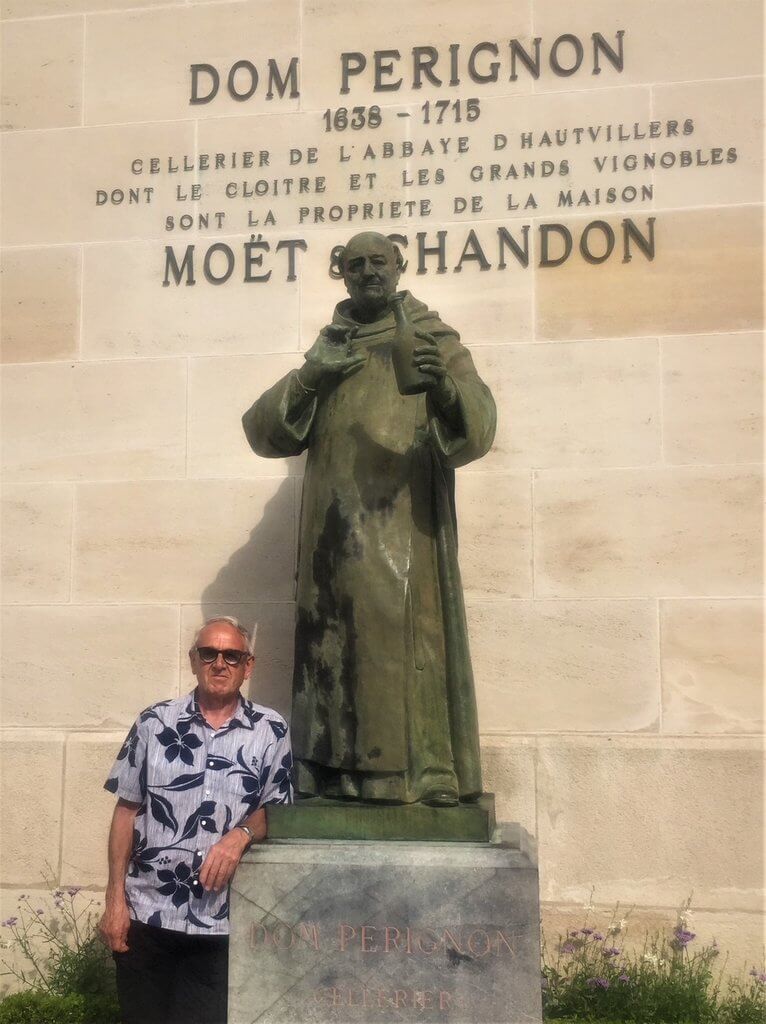
But then, of course, we come on to Dom Perignon, Champagne’s most famous friar, the monk who, according to legend, invented sparkling champagne and cried out after tasting his invention, ‘Come quickly, I’m tasting stars!’ Utter nonsense, apparently.
Peter Richards MW 15:51
Coldswallop. There we go. He did indeed live around this time. Pierre Perignon lived from 1638 to 1715. Um, but this is generally accepted as being before champagne started to become known as sparkling wine. Um he was a Benedictine monk, based in the Abbey of Hautvillers, just outside Epernay, for 47 years, and he did many good things. Uh he increased the Abbey’s vineyards and commissioned the construction of an underground barrel cellar in the vineyard. He worked to separate different grape varieties, prune for quality, harvest at the optimum time and in different stages, and in the winery he took care over pressing and blending. So by all accounts, he was, Don Perignon was a key figure in the development of the wines of Champagne.
Susie Barrie MW 16:34
What accounts from that time don’t mention is anything at all to do with sparkling wine. Now this didn’t stop plenty of legends springing up, but these came after his death. Legends like uh Don Perignon being blind, or that he was the first to use corks, or that he helped invent glass bottles, and of course, that he invented the methode champenoise for making fizz.
Peter Richards MW 16:57
Yeah, now this may have come out of a drive to promote the Champagne region more widely. It’s a great story, after all, about how a blind monk becomes the greatest winemaker of all time after a flash of inspiration. And Moet et Chandon , the Champagne House Stephen cites, owns the Don Perignon brand, which is of course one of the best known wine names in the world.
Susie Barrie MW 17:16
As for this outlandish recipe, uh you’ll have to read Stephen’s book. Um it comes from a treatise published in 1718, three years after Perignon’s death, written by a canon from Reims Cathedral, all about how to grow and make wine. And it includes practices we’d attribute to Perignon, things like later pruning to avoid frost, separating white and red grape varieties, how and why to replant, how to control weeds when best to harvest.
Peter Richards MW 17:47
But it also contains this mysterious and eye-opening recipe, apparently, and I quote, ‘one of Don Perignon’s secret ways of improving wines.’ Uh, and it involves blending in sugar candy, stoned peaches, powdered cinnamon, a grated nutmeg, and some burnt brandy, and I quote, ‘with the result of imparting to it a dainty and delicate flavour.’ Does that sound dainty to you?! Not that dainty. It’s more like knock your socks off, doesn’t it? Uh and also, according to Skelton, um some pigeon dung in the mix. I mean, presumably filtered out afterwards, maybe to help induce fermentation. I mean, who knows?
Susie Barrie MW 18:22
The mind boggles, it really does. Um, I think perhaps best to move daintily along and take a quick breath.
MID-EPISODE RECAP – and glassmaking
Susie Barrie MW 18:29
To recap so far, we’ve looked at the general historical context and what the wine situation was in the early 1600s, including wine from Champagne. I think the other main context we need to explore is regarding glass and glass making, because that’s an important part of this story.
Peter Richards MW 18:47
Yep, good idea. Stephen goes into this in-depth in the book, and for what might sound like quite a dry topic, glassmaking, it is actually pretty interesting. Um, essentially, to make glass, you need sand and a suitable flux. Uh, the flux helps lower the melting point temperatures and enables the molten sand to flow and be malleable. Um, you can also add in cullet, which is broken glass, to recycle it, and then you need a heat source.
Susie Barrie MW 19:12
Now, glassmaking has a long history, and over time it became evident glass wasn’t just useful for producing frivolous fancy ornaments. Because although it wasn’t easy to make, it was durable, waterproof, and you could see through it. So you can make things like windows and spectacles and mirrors and lenses. You could even, with the right skill, make it into a hollow see-through container, hence bottles and vials and flasks.
Peter Richards MW 19:41
These could hold precious liquids or oils or perfumes, but they could also have other uses. Uh apparently one of the earliest widespread uses of glass was for small flasks known as urinals, uh, which a doctor would use to inspect a patient’s urine before making a confident diagnosis. Uh, more on that in a sec. Here’s Skelton on glass making.
Stephen Skelton MW 20:05
So the ingredients for glass are silica, which is essentially sand. Um, you can use other materials, but but sand is readily available, river sand, um, preferably, which is uh not obviously salted. A flux, which is normally a vegetable matter, the the ashes of something like bracken. Um there are a number of other fluxes which can be used. This, when mixed in with the silica, is then melted. Crushed glass, ground glass, old glass, uh became also became used known as cull it. Glass, of course, is very fragile, so there’s plenty of it, plenty of broken glass. But apart from that, the flux lowers the temperature at which the glass will melt.
Stephen Skelton MW 20:50
So you get these ingredients together in the right proportions, and different glass required different proportions, and different sand required different proportions of flux, and you melted those in a heat-proof retort with a fire underneath it, usually an open retort, because following the melting, uh it would melt it around about sort of uh seven, eight hundred degrees centigrade. But with coal you could get it up to eleven or twelve hundred centigrade, and once it once the glass was liquid, you allowed it to cool a little bit, but the what the glass maker would then get a long handle, long handled spoon in effect, and scoop out a gather of glass as it’s known, and then put it on a steel or a metal or a stone slab called a marver, and then would attach a blowing rod, which is a hollow rod with a mouthpiece at one end and uh uh an opening at the other, and they would attach this gob of glass to this punty rod, as it was known, punty stick, and start blowing and start rotating and start and forming and using usually wooden implements, um, which uh would would quite often catch fire, but to to mat to to mould and and change and using scissors to cut off bits of glass, creating uh the object that they’re trying to create.
Peter Richards MW 22:16
And back in the day that would often have been windows, uh, it could have been lenses, it could have been small bottle, it could have been jewellery.
Stephen Skelton MW 22:24
Well, it could could have been containers, yeah. So containers for liquids which want which needed to be seen or which were were were beautiful on the table, which you know, glass is a fantastic object. It can be coloured, it can be engraved, it could be formed in different shapes, it can be seen through, so you can see the colour of your nice red wine. So it’s essentially very useful for a container for liquids, mainly liquids.
Stephen Skelton MW 22:49
But also, as you say, it could be seen through. So once the invention of the chimney happened, uh and people had then enclosed uh houses, um, they needed windows. And you know, some w sometimes they just had shutters with with with louvers, sometimes they used cow horn, um, which uh could be you know flattened uh and and sort of made thin. But glass really was the ideal product.
Peter Richards MW 23:14
And around this time, what were bottles like sort of before the events in your story?
Stephen Skelton MW 23:19
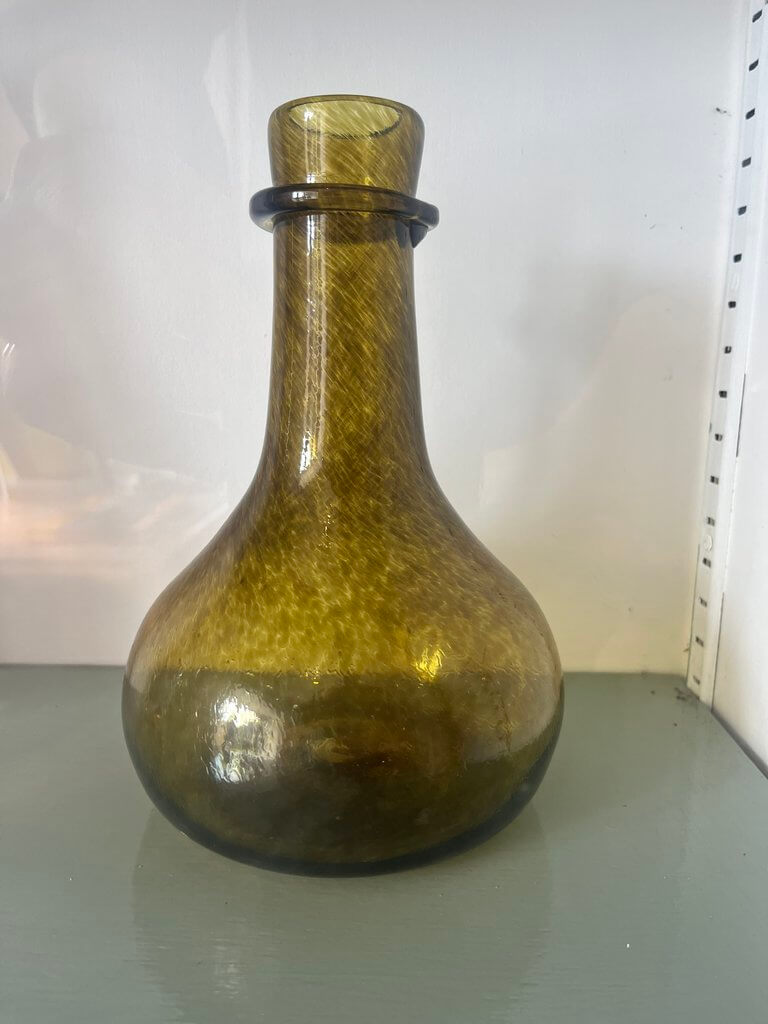
Well, they hadn’t really changed much since the f since the Egyptians produced them. Um, you know, they were um sometimes mould formed, but normally free bl freely blown, pretty rudimentary, always quite small, always quite heavy for the for their capacity. Always uh always coloured green or or brown, depending on the on the um on the flux you were using.
Stephen Skelton MW 23:40
But they were and they were used for uh purposes that we today wouldn’t use them for, particularly for urinals. That was the biggest market for for glass bottles. And they were sort of banana-shaped bottles, so you would uh what’s the corrup what’s the correct word? Um urinate into uh a urinal, and um your your your doctor would be able to see by the colour and the consistency and the uh overall sh shape and size of your urine what what was needed for to cure you or for whatever you’ve gone to see the doctor about.
Peter Richards MW 24:10
But to move uh seamlessly from urine to wine, well to make glass you need raw materials, you need a furnace, you need fuel, and you need ease of shipping both for the fuel and the final product.
Stephen Skelton MW 24:19
You need know-how. You need know-how. Glassmakers are more like jewellers rather than bricklayers. They had the knowledge. Uh, handling molten glass, you know, as it is today, is not for the faint-hearted. And it needs the right equipment and it needs the right no know-how knowledge of uh how it how it can be formed and used, made into something useful.
Susie Barrie MW 24:41
Okay, so really interesting how glass is made and its history. Now we’ll come back on to the punty stick, uh, and the less said about urinals the better. As to this key fact about know-how, this is important because it touches on why Britain is fundamental to this story and not somewhere else.
Peter Richards MW 24:59
Yeah, quite right. So we know the Egyptians were pretty skilled glassmakers. We also know that during the Roman Empire, uh, northern Italy and Venice, especially the island of Murano, became known for its crystal clear cristallo glassware. Apparently the secret ingredient is manganese oxide, if I’ve got that right, I’m not sure. Uh, but the first spectacles were invented on the island in the 1290s, apparently. Uh but it’s the subsequent history of this expertise that is of relevance here.
Susie Barrie MW 25:25
Yeah, I mean somehow glassmaking became associated with Protestants, particularly the Huguenots who were French Protestants, but also often skilled glassmakers and silk weavers. The Huguenots were persecuted by Catholics in the 16th century and so fled to the Low Countries, today’s Belgium, Netherlands, and Luxembourg, and also to Britain, because as we know, Henry VIII and then Elizabeth I had split from the Catholic Church. And so Britain was something of a refuge for Protestants, and these Huguenots brought their glass making know-how with them, which proved a boost to that industry in Britain.
Peter Richards MW 26:02
But at this time, glass was not your go-to product for daily use. It was often heavy, handmade, variable, breakable, of course, and expensive. It also required a huge amount of fuel to produce. It’s been estimated that one kilogram of glass required anything up to two hundred kilograms of wood. That’s a lot of trees.
Susie Barrie MW 26:22
So the historic way of making glass was to build a simple furnace in a forest to make something called waldglas, uh spelt W A L D G L A S, forest glass, which was named not because of what it was made from, but because of where it was made: in forests, because they needed timber as fuel, but so much that it would have been too bulky to transport, usually using river sand and bracken as the flux. And then the glassmakers would dismantle and move the furnace to another spot when they ran out of trees for fuel.
Shakespeare and Samuel Pepys join the fray
Peter Richards MW 26:56
But glassmaking wasn’t the only industry that needed trees. The shipbuilders and iron smelters also wanted them. So something had to give. And lo and behold, things did change, and pretty swiftly. Here’s Stephen on that change, which happened around 1632, a date we’ll come back to, citing evidence from the great playwright William Shakespeare and the great diarist Samuel Peeps, and how common wine bottles were in the early 1600s:
Stephen Skelton MW 27:24
There were none. I I don’t know how I came across this uh idea. I mean I’ve I read Pepys’ diary because the house I used to live in actually appears in Pepys’ diary. So I’m I read them quite carefully. And I know there’s a website where you can go on and you can find all of Pepys’ diaries, all of Shakespeare’s works, and you can search them for words or whatever. So I thought, well, Shakespeare and Pepys are sort of either side of my 1632, which is the sort of killer date in here. Shakespeare died in 1619, I think it was, or thereabouts. And um and Peeps was writing in 1665.
Stephen Skelton MW 27:59
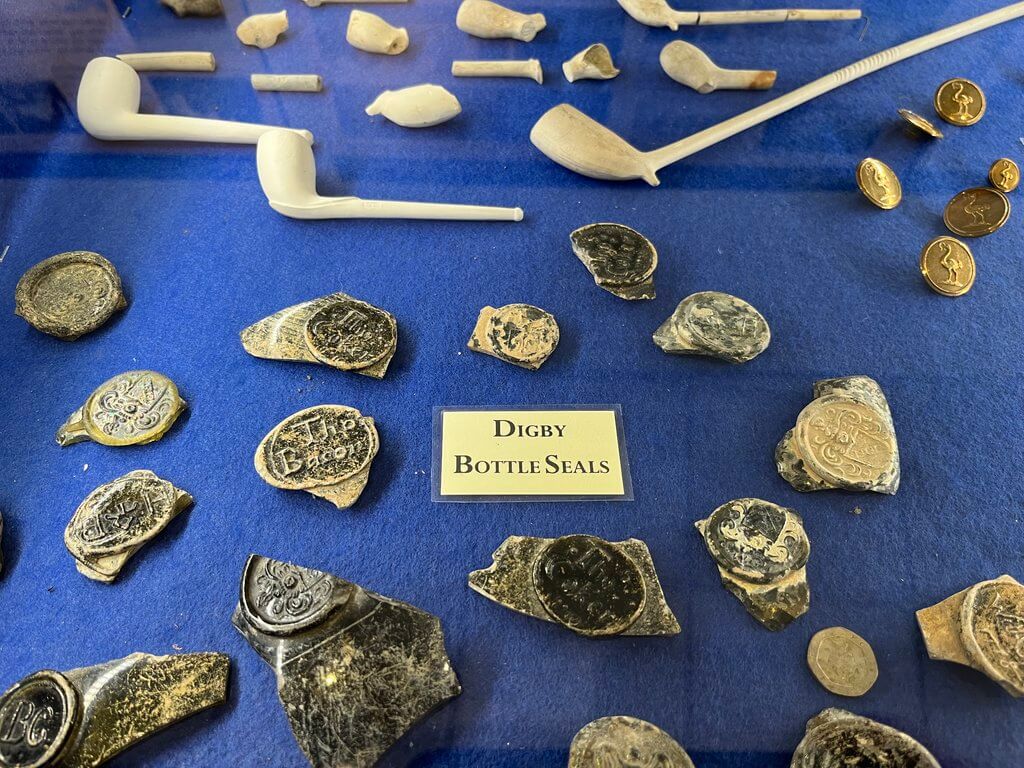
So I went on on online to Shakespeare’s, and he he mentions bottle twelve times, I think it is, in relation to a liquid carrying object. So pretty rarely from a million words. Pepys uh mentions them every the other page. You know, he had his own bottles made, and we went to pick up our own bottle, my own bottles, with his crest on. Um, wouldn’t it be nice to find a crest a bottle with with Pepys’ crest on it?
Peter Richards MW 28:22
So Shakespeare, who died in 1619, mentioned bottles very rarely in connection with liquid and even less so wine. Pepys, uh who was after that, mentioned them a lot. So you’re saying this is we we we have a sort of rough idea that bottles..?
Stephen Skelton MW 28:35
So it’s like asking your parents when was their first mobile phone. It suddenly happened. Well, it it’s it’s only happened not quite overnight, but overnight in in historical terms, over 30 years, from 1615 um to the sort of 1630s. Um, and it’s really the change of temperatures, the change from coal from wood to coal, um uh that really uh transformed it from a sort of small use object into an in into an industrial daily use.
Susie Barrie MW 29:03
Okay, so we’ve got Shakespeare and Pepys involved now. I feel better for that. And we’ve got culture in the mix. Uh but what Stephen’s saying, if I’m getting this right, is that glass bottles sometime between 1615 and the early 1630s suddenly became the new buzz technology that was everywhere. Like the iPhone in 2007. You know, before that, glass bottles were rare and fragile and expensive. After that, they became more common.
The big switch to coal
Peter Richards MW 29:30
Yeah, that’s exactly it. Um, and one of the main reasons for that is, as Stephen says, the switch to coal, which in itself was a big technology shift that changed the game and would ultimately bring about the Industrial Revolution. Because coal could then mean steam engines, hence powerful pumps to enable deeper mines to dig more coal, among other things, and production ramps up exponentially. So you could argue, as Stephen does, that this was one of the key moments that presage the Industrial Revolution and Britain’s propulsion to global power.
Susie Barrie MW 30:00
But to recap, it was the shift from wood to coal as the fuel source for glass-making furnaces that changed the game here. Yeah. And this, of course, links back to our James I moment in 1615 when he issues A Proclamation Touching Glasses, which basically prohibited the use of wood to make glass, and ostensibly to prioritise the use of timber for building warships. But there are other intriguing motivations behind this, which we’ll come on to.
Peter Richards MW 30:27
Indeed, yeah. People were starting to use coal more and more at this time. Stephen relates how it has coal has a much higher calorific value than wood, about three to four times more, so it can burn hotter. It’s also lighter per energy, about one-eighth of the weight of timber, apparently, therefore more efficient to transport and ship, especially by boats. So you could then design a permanent and more efficient glass furnace near a watercourse where the coal could be shipped in, and you can make stronger glass. And all of this process would have been turbocharged in Britain by James I’s proclamation, as you say, banning the use of timber as a fuel for glass and iron making. Here’s Skelton again.
Stephen Skelton MW 31:07
What they realised, of course, was that once the c once the coal was coming to you, once your fuel source arrived on your doorstep, and your doorstep was was nearer was near the sea or a river, uh, you could build a much more permanent kiln, and this is what started to happen.
Stephen Skelton MW 31:23
So they built these brick kilns, tall brick kilns, which shaped up into a funnel at the top, like a reverse funnel, um, to create the draft, because you know you need you need a lot of draft to keep get a fire really going. They could also we get getting a little bit technical here now. The strength, the quality and strength and appearance of glass is twofold. In the original glass, as it comes out of the kiln and is formed into the object that you’re making, then once it’s put into uh once it’s made, it’s then put into what we call an annealing oven.
Stephen Skelton MW 31:58
And the process of annealing, in those days it didn’t have these temperature controlled ovens, of course, but they had these annealing tunnels, and the glass would start out at the warm end, which is quite close to the original kiln, and by degrees of cooling would move down this, it’s a thing it’s called a lehr, which is the German for teach, and it taught the glass to become strong and pure and s and and would not crack. And so by the time it got to the end of this layer, this tunnel, uh, it was it was handleable, it was probably still warm, but it could be handled and it could be stored away and then eventually transported and sold. So it was this twofold the fact that the glass was made using coal which got the glass a lot hotter, and the fact that the annealing ovens were much more efficient in putting the strength into glass meant that at the end of the day you had an object, whether it’s window glass, mirror glass, or bottles, that could be actually transported and could then be sold and obviously used. That had not happened before.
Susie Barrie MW 33:02
So this is a big moment. You’ve had this move from rustic waldglas to stronger coal-fired glass, which in itself is a major technology shift and hints at the massive change that would be the Industrial Revolution in the 18th and 19th centuries. But then to focus back on our story, the result of this improved process is glass that’s tough enough for commercial use and transportation. And that then opens the door to lots of new possibilities.
FINAL SUMMARY – and looking forward to the next and concluding instalment
Peter Richards MW 33:31
Which is exactly where we’re heading with this story! So we started this story with an early 1600s picture of wine and glassmaking and the states of Britain and Europe. It wasn’t pretty. Uh, wine was basic, shipped in barrels and often adulterated or ameliorated by ‘subterranean philosophers’ or interventionist vintners. Um, I’m still trying to get beyond the pigeon dung, if I’m really honest. But anyway, there we were. We all are. Glassmaking was also pretty rudimentary, with one of the most common uses of flasks or primitive bottles being for urinals.
Susie Barrie MW 34:05
And the less said about those, the better, too. Um but this was also a time of change, religious, cultural, and technological. Coal and strong bottles are the 17th century equivalents of smartphones set to revolutionise the world.
Peter Richards MW 34:20
And revolutionise it, they did. So in the next and concluding part of this mini-series, we’ll meet our cast of key protagonists, including the elusive Sir Kenelm Digby, and discover how this all resulted in the invention of champagne as we know it today.
Susie Barrie MW 34:35
If you’d like to read more about this yourself, then we’d suggest you get hold of a copy of Stephen’s book, The Knight Who Invented Champagne. It’s currently available on Amazon for £27.50 or equivalent, and you can link through to there from Stephen’s website, www.englishwine.com. We’ll put a link in the show notes.
Peter Richards MW 34:52
Don’t miss the next and concluding part of this story. It’s a good finale, I promise. Positively delicious. Uh, subscribers, as ever, get early access to that second part, so sign up to Wine Blast PLUS at wineblast.co.uk. Meantime, thanks to Stephen Skelton MW, and thanks to you for listening. Until next time, cheers!