Summary
Bordeaux is a famous wine region currently beset by woes.
The question is: where does it go from here?
How can it harness its historic legacy and fighting spirit to get beyond the current crisis?!
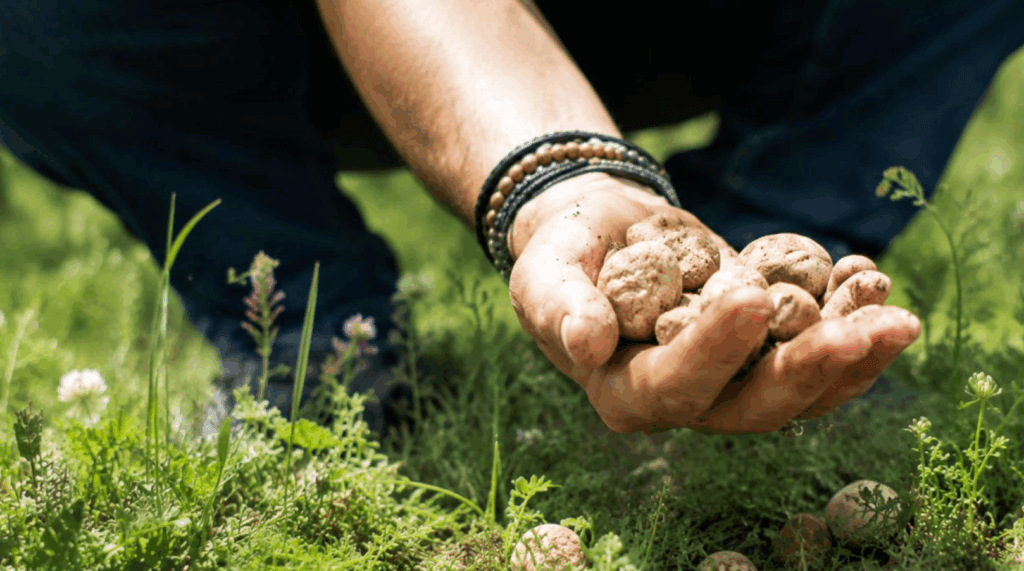
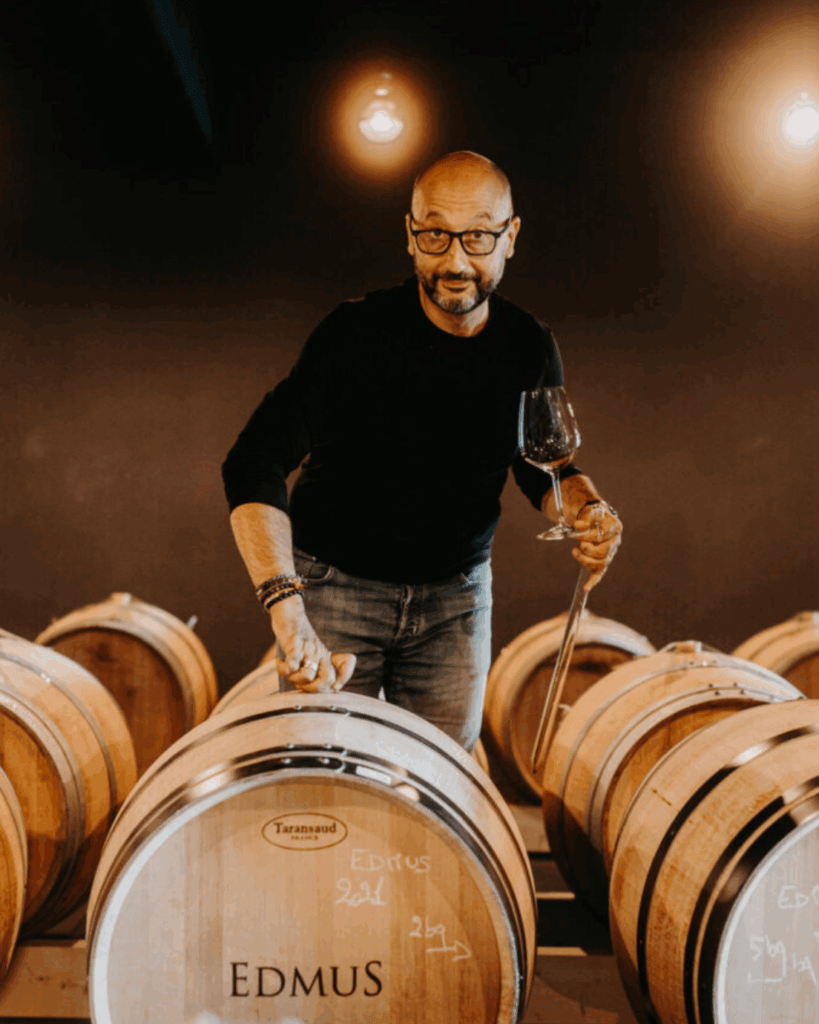
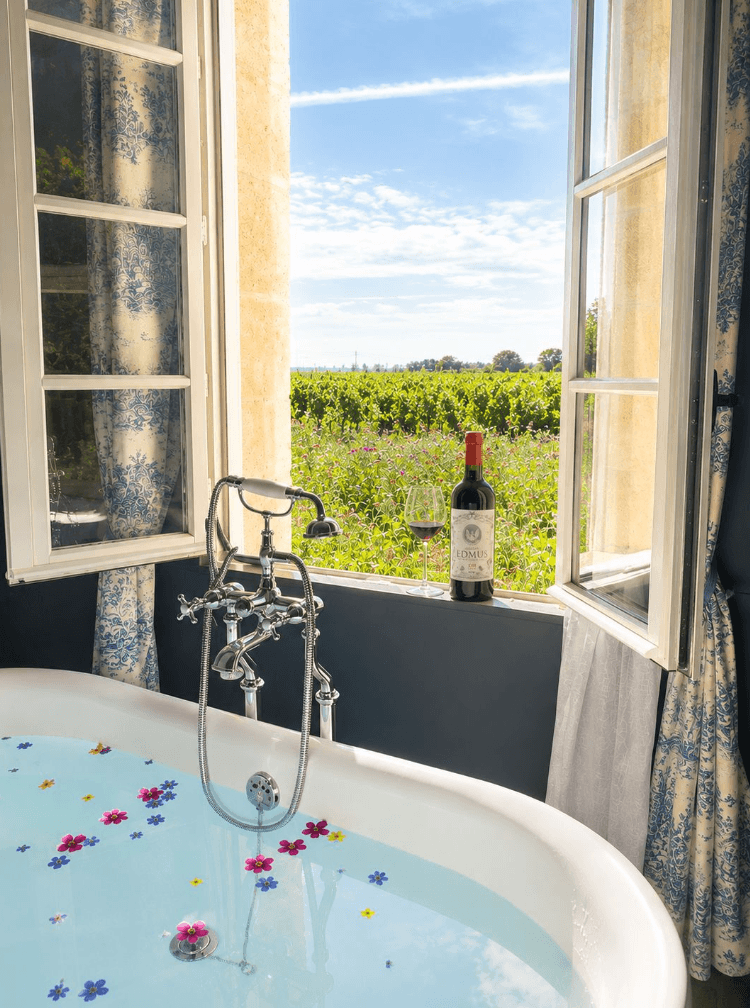
One man who has answers is Laurent David of Château Edmus.
A former Apple chief (who launched the iphone into Europe), he’s not afraid to ruffle feathers in the ultra-traditional Saint-Emilion neighbourhood, making de-alcoholised ‘Grand Cru’ (and gin with the offcuts), chillable ‘claret’ red and a wine ‘for geeks’.
Laurent declares the en primeur system, ‘dead meat’ and has adopted a wine club/direct sales model, inspired by Napa and Burgundy.
He says Bordeaux producers need to be ‘obsessive’ about not only the product but also their customers.
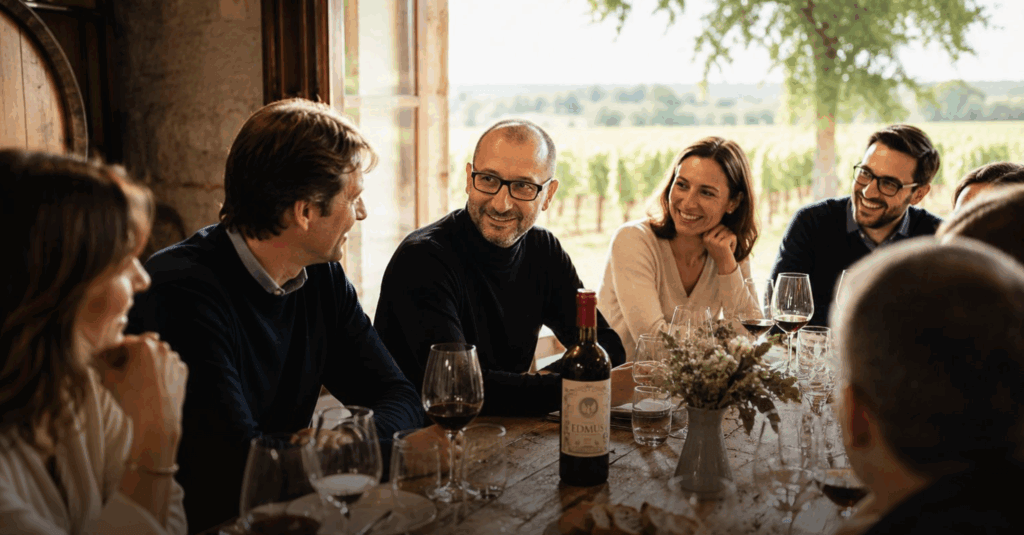
‘Wine has a mission in 2026/7’, he declares: ‘to reconnect people in real life.’
This is the second and concluding episode in our Bordeaux mini-series, in which we say what we think Bordeaux needs to do to reinvent itself (Susie even comes up with an alternative name suggestion for the brand new ‘claret’ category…)
Starring
- Laurent David, Château Edmus
- Susie & Peter
Subscribe
Sign up to Wine Blast PLUS for first-class subscriber-only content, to access our full archive, support the show and get every episode before it goes on free release.
You’ll also get subscriber-only discounts with the likes of Coravin, Jancis Robinson glassware and Academie du Vin Library.
Just visit WineBlast.co.uk to sign up – it’s very easy, and we will HUGELY appreciate your support.

It takes a monumental amount of work to make Wine Blast happen. Your support will enable the show to continue and grow – and we have lots of fantastic ideas of things we’d like to develop as part of Wine Blast to maximise the wine fun. The more people who sign up, the more we’ll be able to do.
Wines
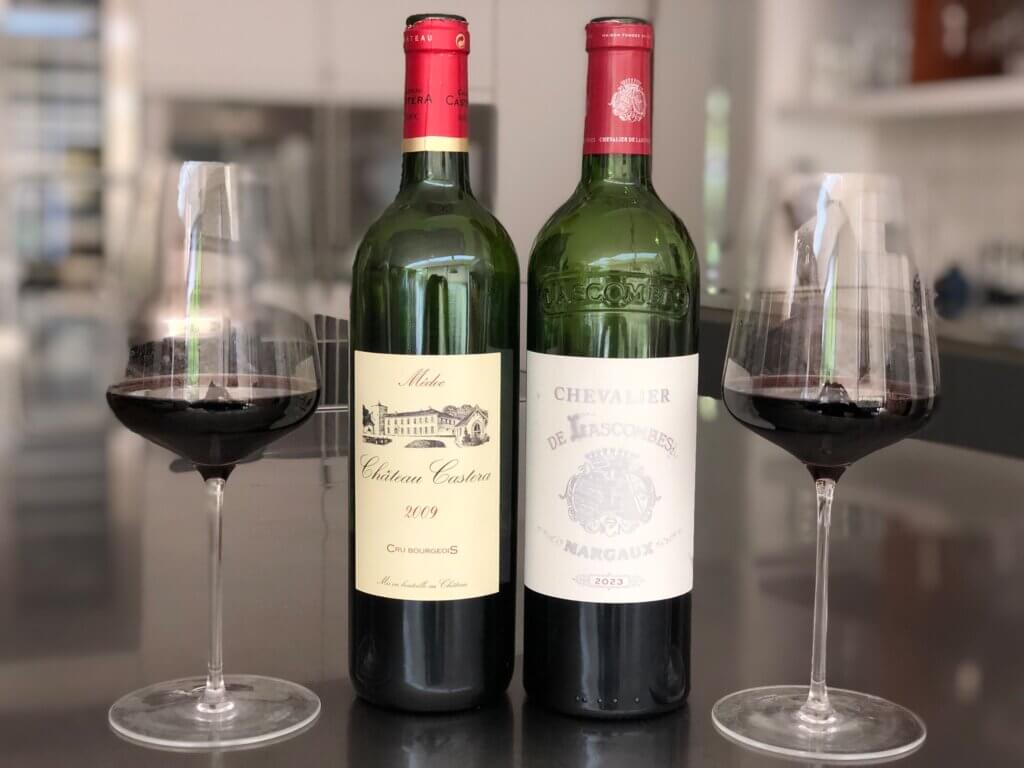
We recommend the following wines in this episode:
- Château Castera Cru Bourgeois 2009, Médoc, 14% (€53 for the MAGNUM)
- Chevalier de Lascombes 2023, Margaux, 13.5% (£36)
Links
- In this episode we mention a previous episode that touched on Bordeaux white wine, and starring Chateau Margaux winemaker Philippe Bascaules: Keep Calm and Sauvignon
- And of course, if you haven’t already, please do listen to the first part of this mini-series: Bordeaux on the Brink Part 1
- You can find our podcast on all major audio players: Apple Podcasts, Spotify, Google, Amazon and beyond. If you’re on a mobile, the button below will redirect you automatically to this episode on an audio platform on your device. (If you’re on a PC or desktop, it will just return you to this page – in which case, get your phone out! Or find one of the above platforms on your browser.)
Video Clip
Get in Touch!
We LOVE to hear from you.
You can send us an email. Or find us on social media (links below).
Or, better still, leave us a voice message via the magic of SpeakPipe:
Transcript
This transcript was AI generated. It’s not perfect.
Welcome back to Bordeaux on the Brink – Part 2
Susie Barrie MW 0:05
Hello, you’re listening to Wine Blast! Welcome to the second and concluding part of our ‘mini’ mini -series on Bordeaux. A frank take on a famous wine region currently beset by woes, but also showing fighting spirit in response.
Peter Richards MW 0:21
Yes, hello, welcome. First things first, apologies for my voice. It needs to be said…
Susie Barrie MW 0:25
A bit gravelly today, aren’t you?!
Peter Richards MW 0:27
Gravelly is about right.
Susie Barrie MW 0:28
Too much wine, was it worth it?
Peter Richards MW 0:30
It was 100% worth it. It was too much wine, I can confirm. Although, in my defence, I have to say it was pretty nice wine. It was good wine. Where was it from? Including really nice uh Bordeaux. It was Chateau Meyney 2016 in magnum. Very generous friend. Under your gravelly. I I call it research. Applied research. Anyway, I’m feeling emotional and a little bit weary today. However, we’re going to crack on uh because we’re talking to people on the ground in Bordeaux, seeing this situation unfold in real time. It’s been called the worst crisis for the region since phylloxera and the Great Depression, which gives a sense of the scale of the challenge. And the question is: where does Bordeaux go from here? Check out this taster of what’s coming up:
Laurent David 1:13
It’s tough, very tough. Bordeaux is on a journey to reinvent itself and we should take some risks to try new things. And I’m very confident that Bordeaux is waking up uh every day stronger. Wine has a mission in 2026-2027: to reconnect people in real life.
Susie Barrie MW 1:31
So that’s Laurent David, a former Apple boss who launched the iPhone into Europe before ditching the tech bro life to become a wine producer in Saint Emilion, and who feels wine can learn a few things from disruptive tech, but tech can also learn a few things from wine. We’ll be hearing lots of fascinating stuff from him in this episode. Plus, we’ll be giving our own considered views on the current situation and recommending a couple of wines too, which we have in front of us.
Peter Richards MW 1:58
Yep, lots to be getting on with, um, including getting stuck into these delicious looking wines, which counts as work, right? Indeed. Right. So you are in our first episode, we heard from Chloe Cazaux Grandpierre about the challenges Bordeaux has been facing lately. Uh, we started with the scary wildfires in 2026, which don’t seem to have given rise to smoke taint in the wine, so the final proof will only be in the pudding once the wines are made. And we briefly touched on the crazy 2026 vintage. Uh, very hot, very dry, a record early start to the harvest, but which has recently seen late season rain and some hail storms.
Susie Barrie MW 2:35
Even more eye-opening were Chloe’s stats on shifting consumption trends and the contraction of the Bordeaux vineyard. Wine consumption in France fell 60% between 1960 and 2020, with red wine falling particularly out of favour. As a result, the Bordeaux vineyard has shrunk by more than 20% in just three years, going from 109,000 hectares in 2023 to 86,000 in 2026, the lowest level since 1986, and with more vines potentially to come out. The landscape of Bordeaux has changed, said Chloe, noting that things like olives, apples, and goji berries are now replacing vines.
Peter Richards MW 3:19
Yeah, Chloe reported that wine producers are struggling, uh, saying it’s not just a wine crisis, but it’s also a human crisis, and that the stereotypical image of Bordeaux Grand Cru Classe owners in fine suits and fancy cars was not the reality of a region of 4,300 producers, down from nearly 7,000 in 2016, it should be noted. The majority of whom are smaller family enterprises, with the average price of Bordeaux in French supermarkets around 5 to 6 euros.
Susie Barrie MW 3:45
To add in a few further details of our own, total Bordeaux AOP production has fallen from 577 million litres in 2016, so just a decade ago, to 298 million litres in the 12 months to March 2026. That’s a near halving of output and the lowest level in decades. What’s more, between 2018 and 2025, average vineyard land prices fell sharply across the region from 23% in prestigious Pauillac to 46% in Lalande de Pomerol, 50% in Fronsac, and up to 74% elsewhere.
Peter Richards MW 4:25
Yeah, those are big falls, aren’t they? And data from the LivEx Bordeaux 500 index shows the region’s fine wine market losing nearly a fifth of its value over the past five years. More strikingly, uh LivEx’s Regional Market Share by Value shows Bordeaux still the dominant force, with just over a third of the market, but its share has nearly halved since 2012 when it accounted for nigh-on 70% of trading.
Step forward Laurent David
Susie Barrie MW 4:50
So Bordeaux finds itself in a pickle. What to do?! Well, we all know that definition of insanity as doing the same thing over and over but expecting different results. Clearly, the world has changed dramatically since the heady days of the 1990s, and new thinking is required. The challenge for Bordeaux is how to reconcile tradition, given it’s forged a fearsome reputation over the centuries, largely based on classic styles of red wine, with innovation that seems vital right now.
Peter Richards MW 5:23
Yeah, step forward, Laurent David. He took over Chateau Edmus in Saint-Émilion in 2019 after a long search. Uh, right from the start, he set out to think different, as per Apple’s famous slogan. He crowdfunded the acquisition with a diverse group of what he dubbed wine angels, uh, realising they would not only provide capital, but also, perhaps more importantly, a sounding board and a receptive market for the wine.
Susie Barrie MW 5:49
And the disruptive spirit didn’t end there. Rather than selling into La Place, the famous sales hub of brokers, courtiers, and merchants that buy then sell Bordeaux wines all over the world, Laurent opted for a direct sales model, setting up a wine club to encourage not only sales but also visits and experiences.
Peter Richards MW 6:11
The latter real life engagement was important to Laurent. He actually grew up in Bergerac, I believe, and remembers doing vintage with his grandfather when young, saying the wine itself wasn’t great, but what was great was the shared moment, the fun of the occasion. Part of his mission now is to remind younger drinkers, especially, how wine, in his words, can be a better product than an iPhone.
Susie Barrie MW 6:32
A noble mission if ever there was one! So let’s bring Laurent in now. And I asked him if being an outsider from a tech background coming into the Bordeaux wine community was a hindrance or a help, or a bit of both.
Laurent David 6:48
Well, it is what it is, so I will as I’m a very positive person, I’d rather take it as an advantage and something positive to drive me. Now, uh wine world is very far away from the tech world, no doubt. Uh but the need to think differently, to do things differently, is here now, uh in our days in 2026, more than I need in at every level. So coming with from an industry where you have to rethink what you do every day, competition is very tough, and innovation drive things, uh, I think that was more an advantage than anything else. Now, without myself not knowing anybody was in this world, is in the industry, you know, I started from a blank page. You can say it’s an advantage or not. I don’t know, it’s it is what it is, but for at least from my side, I was free to make my own decision and not to have, you know, centuries of uh family behind my my or beef for me uh pushing me to drive in a direction or another. No, no. I think I have more much more freedom as a new winemaker, definitely.
Susie Barrie MW 8:00
And how’s the 2026 vintage looking? Um, particularly in the face of climate change, you know, like I imagine that’s impacting you as well.
Laurent David 8:10
No, we we had we had super high temperatures this year. Uh three times we were above uh 40 something degrees. So at that stage, the the grapes, the wine stops developing. Basically, they stop, just it stops. And to go back into growth uh requires temperatures going down, nights to be colder. And this happened. So we had kind of three cycles uh this summer, uh, which give uh uh something very very unique. I think 2026 will be very unique. Number one, it’s gonna be small in volume, that’s for sure. There were not a lot of water in order to get the grapes, you know, big and red. So uh um number two, uh uh uh I think it’s gonna be an interesting one uh uh in terms of degree of alcohol. We we were thinking, I got God, we’re gonna go to the 30, 40 degrees and great level of alcohol, 14, 16 degrees. Uh in fact, not so much. I think we we at least on Edmus we we’re probably at 13, 13.5, which is perfect.
Susie Barrie MW 9:09
And how has that happened then? Why why is the alcohol not as high as you thought it would be?
Laurent David 9:14
Because we managed to add some very cold nights, especially in August. Magic happened, and now we’re in September, we’re early September, and another magic happened, we got some rain. So suddenly the grapes that were very small and very low juice just managed to grow a little bit. So this is where your alcohol level and sugar level goes down, and this is where uh uh you you get more more juice.
Susie Barrie MW 9:40
So just talking about the 2026 vintage um and selling it, uh many people are saying that the en-primeur system is no longer working. What’s your view on the system and if it needs to change, what could or should replace it?
Laurent David 9:57
Well, this system is dead. Dead for sure, dead meat. And and we have to face it, I mean, people hoping that this will come back in some days. No, the world has changed. People move to other types of wines. The system itself was based on a kind of potential speculation. So you buy something right now, you get a great price advantage, and when it’s released, uh uh the price are going up, and you can benefit from uh uh uh a value added, right? Uh and this is no longer the case. Uh uh volumes are too big, too high, and and and prices of the wine were skyrocketed and probably uh got a peak, and there there’s no room for speculation. And maybe there will be one or two wines uh out of that, right? Uh but but uh the system itself is kind of broken. So so I don’t think we need to hope or uh think or pray for that system to go back. We have to think differently. And and in my previous life at Apple, uh uh we were obsessed about knowing the customers, where the phones, where the Macs were going, how people were using it, who were they, uh how what were their hurdles, their problems, what did they like so much. And it was about knowing the customer, the consumer, the end one, the end one, the one very at the very end, right? Even though you have in the channels, you have distributors, wholesalers, blah, blah, blah. But it’s obsession of knowing the customer. In the wine world, uh, especially in Bordeaux, it’s not the case. The system is such that there’s uh actors, companies in between that are cutting the wires from production to consumption. And this is this is weird considering that some of those brands are, I would say, luxury brands. And if you think about luxury brands, their obsession is to know the customers. LVMH, Dior, uh, Chanel, they all want to know everything about the customers. And in the wide world, not so much, which is weird. So I think that the the probably the the different way to to to hack now will be about knowing the customer, building a relationship with the customer, getting the feedback, uh, uh personalising things, delivering experiences on top of just a liquid.
Susie Barrie MW 12:19
And now you do, I know, take a very different approach to the en primeurs at uh Chateau Edmus. Um you sell your wines direct to customers um when they’re ready to drink. Um you set up a wine club, Club Edmus, which is a bit more like the US model, um through which I think I think most of your wine is is sold that way. You know what are the the pros and the cons of that approach and what could the rest of Bordeaux learn from what you’re doing?
Laurent David 12:45
What we try to do on our small scale is exactly what you mentioned. So basically, we took inspirations on oh oh oh Napa Valley US is selling the wine, is connecting with consumers. Uh, I used to spend there a lot of time and I enjoyed it and I learned a lot of things. I also got inspiration a lot from Burgundy with allocation system. We we’re a small, you know, we we 1.6 hectares, so we we do 5,000 grand crude bottle, that’s it. So we have to know where it’s going. We have to keep the maximise the value and and build a strong relationship with uh our consumers. So so the the the the learnings of that is yes, it works. Two it’s a lot of work, because of course, yes, if you sell all your production in one batch to a wholesaler, you’re done and and oh sorry, it’s probably easier, but we know the system is broken. So so you have to know your customers, you have to know where your wine is going. So you have to to think marketing, and you know, marketing sometimes in wine world was a very naughty uh world. People don’t want to say they do marketing, but yes, of course, everybody does marketing, and you have to understand your customers and how do they enjoy and or not enjoy your your product. So I think it should be an obsession, it’s a it’s a mind shift about you know channel to consumer. And and you know, we we we have to be all obsessed about getting back to uh uh top of mind of younger generation, Gen Z. How do we get Gen Z uh looking at um what we do, how they can find benefits, enjoy, knowing this is alcohol and they’re they’re and knowing this is something we make so uh snobbish and far away from their language, their the knowledge that you they they seem to need a master uh five years of study before even say a word about what they feel like when they they drink a wine. So we have a lot of work to do on marketing sign, on distribution side, and we also need to also to work the taste, the flavour of the wine. And this is where uh uh uh I’m very happy that we Bordeaux has made a major shift this year, relaunching the uh the claret, which is a major major milestone.
On en primeur, La Place – and the big ‘claret’ debate
Peter Richards MW 15:00
OK so we’re gonna pause at this juncture before we launch into the maelstrom of the claret / CLARET debate, which we touched on in our last episode, and we’ll come on to shortly in this one because Laurent has some very interesting things to say about it. But I wanted to pick up on his comments about the en primeur system, um, something we should perhaps briefly explain.
Susie Barrie MW 15:18
Yeah, definitely. Um so en primeur or futures, is an inspired idea. If you’re a top Bordeaux wine producer. You get everyone to come and taste and then buy the new wine you’ve just made, so you get cash in hand years in advance of that bottle being ready to drink. But it only works if, firstly, people want your wine and demand is greater than supply, think FOMO, and also if prices for the wine go up after people buy en primeur. This is what helped fuel a Bordeaux speculation boom in the 90s and naughties.
Peter Richards MW 15:51
But as Laurent indicates, this is patently not the case any longer. Uh going back to LivEx data, it’s clear that the system hasn’t really worked since the 2008 vintage, uh after the 2009-2010 vintages were overpriced, of course. And since then, only the modest vintages of 2011 to 2015 have yielded a positive return. Um, of course, this is aggregated data, you know, some chateaux or individual properties might have bucked the trend, but that is the trend. Um, and there is just plenty of past stock available to buyers at often similar or cheaper prices than the new vintage. Um, cue a backlog of stock inventory and a series of pretty listless en primeur campaigns.
Susie Barrie MW 16:28
Which is presumably why Laurent calls on primeur ‘dead meat’ and has adopted a completely different sales model. Um we’ll come on to our thoughts on this in due course, but it’s also interesting to pick up on Laurent’s take on how Bordeaux’s traditional sales model through the negociant wholesalers has prevented producers having a direct relationship with their customers.
Peter Richards MW 16:49
Yeah, this is fascinating. Um he says Bordeaux producers should be obsessed not only with their product but also their customers, just like Apple is, just like all the other luxury goods producers are. But this hasn’t historically been the case in Bordeaux, given the way the wholesalers have sold the wines for the chateaux. Uh clearly he thinks this needs to change now, and it has to be about more than just selling a liquid.
Susie Barrie MW 17:10
And talking of liquid, uh let’s get back to the big Claret / CLARET debate. Oh, yeah. So this is a new category officially launched in 2026, but applicable from the 2025 vintage. Now the idea is to promote fresh, easy-going, chillable reds as Bordeaux looks to target younger drinkers. It’s an entirely separate category from Clairet, which is a traditional rosé style from the region.
Peter Richards MW 17:37
Yeah, there is confusion over the nomenclature, as we discussed in the last episode, and as you’ll hear now. Just by way of further preface, uh Laurent is a big fan of Claret. Uh he made one right from the start. It’s called Claret de Marguerite, uh 100% Merlot from Chateau Edmus, and it sells for around 20 euros.
Susie Barrie MW 17:55
So let’s talk about that. Um we’ve got uh how we actually say that word, because there is claret, there’s claret, there’s claret. Um we’re talking about the one in the middle, aren’t we? There, um how do you pronounce it?
Laurent David 18:10
The French people will will have to say it in order to get the right way using the English accent. So as we speak in English, it’s kind of tricky. Um but claret, it’s le claret, uh uh is probably the right thing, the right way to say it. Uh La Clairet is this kind of uh rose wine from Bordeaux that uh nobody drinks. Uh uh, but Le Claret is this it’s going back to something more fruity, juicy, without wood, without tannins, something that you can drink a little bit cold at 14-16 degrees, you know, easy, uh straightaway pleasure, uh uh no no headache, no right, no something fun. And and definitely uh after two years working with the the the Bordeaux wine syndicate and their teams, we were a group of 30 winemakers all over the region from uh from Saint Emilion to everywhere in Bordeaux. Uh I was participating to the to the group. We made some tests, we made the first version two years ago and a new version right now, and and it is very successful. I think this is back to the roots of uh of great wine, of affordable wine, of pleasure wine straight away. This is not something you should keep in your cellar 20 years. This is something you you you open the bottles and you might find some little bit of sweetness uh uh in it, but you know, it’s not a sugar wine. It’s about you know to keep to keep some a little bit of two or three, four grams of uh the wine, the the the the sugar of the grapes in the wine, and this is just fantastic. The results are amazing. We we launched, we made uh at Edmus, we made only 800 bottles because of our side size. We we introduced it to uh at our annual event, we call it Les Rencontres d’Edmus in June, where the wine club is invited for for lunch in uh in the cellar. Feedback were amazing. People got as much bottles as they could in their the tank of their cars when they leave. It was it was super cool. We also create a cocktail with it, yes, something very simple inspired by by uh the this uh Spain, where they have over there what they call the tinto de verano, which is a two ingredients, uh this type of fruity uh uh wine and uh kind of lemonade type of thing, tonic. Uh uh it’s 50-50, ice, uh, and and that’s it. Level of alcohol goes down to half of what it is. You get the bubble, you get a bit of sugar from the the lemonade, and it this is so great. And and and success is there. And I think this is probably one way to consume wine differently.
Susie Barrie MW 20:51
Yeah, I I totally always says Marguerite, isn’t it? The um the one you’ve made. Yeah. Um I mean I totally agree, but honestly, Laurent, as a marketeer or a person who understands marketing, shouldn’t the three names have been a little bit more distinct? Is it not confusing if you consumer?
Laurent David 21:10
You want my my personal opinion?
Susie Barrie MW 21:11
I do want your personal opinion.
Laurent David 21:13
Yes, we should have found another name!
Susie Barrie MW 21:15
Yes, exactly.
Laurent David 21:17
Sure, yeah, it’s it’s uh yeah, especially for English speaking people where claret already means some things. Yeah. Um but you have a point. So so it has been very smart from from Bordeaux to uh organisation since wine syndicate to to to kind of decide to relaunch this version of the claret name is something. But you know, my my my own prediction is that La Clairet, which is the Rosé version, will disappear very soon because uh claret, Le Claret Le Claret uh will be so successful that we will just replace the rosé. That’s my bet. Let’s see, uh let’s reconvene us. In a couple of years to see where we are at. But see if you got your bet right. Yeah, the success so far has been and the response has been amazing.
Susie Barrie MW 22:08
But equally still, you could say, you know, another name for it would have been a good idea, wouldn’t it? So listen, Laurent, you make um your very traditional wine, um, your Chateau Edmus Grand Cru, and you also make the more innovative uh Marguerite. Um do you think this is the way to go then for Bordeaux producers, to multitask a bit more, as it were, and market both styles?
Laurent David 22:31
Yeah, I mean, Chateau Edmus is very unique. We probably, you know, uh very advanced into our RD and we are testing a lot of things. Uh a few years ago we made uh a de-alcoholised version of our grand cru. We were one of the first to do it. With the alcohol we made, we made, uh we removed from the grand cru, we made a gin. Uh so I mean we we take we we’re learning. I think we’re on a journey. Bordeaux is on a journey to reinvent itself and and we should take some risks to to try new things.
Laurent David 23:01
Uh the way we I look at our wines today, we do four wines, okay, in Chateau Edmus, on 1.6 hectares. Very small. But listen to that. Uh we I’m I’m thinking about consumption moments. Because what we used to have in the past was a kind of traditional, you know, uh uh Sunday lunch where the father and the family around, and you’re getting your Bordeaux claret bottle, and everybody was kind of learning, sharing about that. This is gone. This time is over. 50% of the households now are formed with a single mom or single dad. That’s what it is. Women and men that are all working. Consumption moments are different. So one should adapt to that. And the single traditional Grand Cru bottle for the Sunday thing is is not the answer.
Laurent David 23:52
So, what we have done, we have four four types of wine today. We have uh wine, which is uh our claret, which is for a kind of aperitif. You can drink it cold or in cocktail. So aperitif is very important. Uh uh uh and and the rising moment of our consumption is is is here. Uh uh number two is what we call um uh is a second wine we call uh uh celebration. Celebration is a collaboration we made with some young uh uh winemakers, uh neighbors, uh where we took their grapes and we we did the wine ourselves, so that helped us to get more wine. And this is where I was looking for a wine which has uh a red wine uh uh with very few tannins and no wood inside. It’s kind of a two or three years old wine. And this is the kind of wine you drink at 16, 18 degrees Celsius. So very cold. And this wine is made for uh uh not everyday because that doesn’t exist, everyday wine, but it’s more it’s made for uh uh what we call in France Aperodinatoire. I can’t even translate it in English. I’m sorry for that. But you know, this apérodinatoire is a moment where you have some friends coming to your house, you have not planned for a dinner, but just take a bottle, you look at what you have in the fridge, so cherry tomatoes, cheese, uh, whatever proscuito you have, and uh and you go for it. And this kind of dinner, lunch, uh dinner rather say, uh is becoming very, very popular.
Susie Barrie MW 25:20
Sort of impromptu.
Laurent David 25:22
Imprompt wine, yeah, yeah, exactly. So so you have a wine that needs to fit kind of lots of uh uh whatever you have in the fridge. This is very successful. We made first uh uh first 1,200 bottles of it three years ago. It was only for our wine club. It’s all gone. People love it. The year after we managed to do uh 2,500 bottles, all gone. And this year we have made almost uh 5,000 bottles, and they’ve all been acquired by uh Monoprix, which is uh a supermarket uh kind of iron chain in France, probably like uh Waitrose in the UK. And they they they just bought it because they love that wine and they love the concept of it. It’s an organic wine, it’s in a bottle that used to be uh it’s a recycled uh bottle, not uh glass, but the bottle used used to be used uh once before. It helps us to reduce the level of CO2 of the wine by uh 76%, because the bottle is the the bottleneck of the CO2 in the wine. So so we we have a big ethic there. Wine is super juicy, uh uh uh uh super uh gourmand uh wine, and that that celebration is just a hit. It’s a banger, definitely, for for us.
Laurent David 26:36
So we have that that that first wine’s uh uh claret celebration, not a moment. We have the grand cru, which is the wine moment. A wine moment is a moment not always a dinner or lunch, but is a moment you decide to open a bottle with somebody because you want to have a moment, you want to have a discussion, you want to pause. And and this is this is grand cru. For me, grand cru is a magic tool for uh uh uh our social life. The magic tool to engage, to discuss. Alcohol effect helping uh you know, with moderation, of course. You you you start to deliver things, you start to listen differently, and you start to build a different relationship. And this is why why we make this wine. It’s it’s a wine moment, right?
Laurent David 27:24
And then we have another one, which is uh a very, I would say, geeky wine. We made two from 200 to 300 bottles of it. It’s 100% Cabernet Franc, uh raised into uh uh an egg, egg uh shape tank we we found in Burgundy. It has no sulfites, it’s what they call in France natural wine. Uh it is, I mean it’s it’s for geek. Let’s call it the way it is. It this is for kind of degustation. That’s a type of wine you you’re not looking for food with, no pairing. It’s it’s something that you that’s uh enough on itself, on its own. And so this is those are our four wines, four different moments, four different types of people. And this is how we try to talk about wine, how people can have these moments, and you know, without having a diploma or without having a WSET4. It’s uh who cares about that? I hate when people start to tell you about, oh, you know, but I don’t know anything about wine. Do you like it or don’t you like it? Question number one, most important thing.
Peter Richards MW 28:28
Okay, so lots to digest there, um, but all fundamentally centred around his different thinking about wine occasions or consumption moments rather than simply wine tradition. Um, hence de-alcoholised grand cru and gin, which I’m sure some of his neighbours in Saint Emilion must think is utterly heretical. Um, through to apérodinatoire.
Susie Barrie MW 28:49
Love it.
Peter Richards MW 28:50
Um not sure I quite got that, did you?
Susie Barrie MW 28:53
I think so.
Peter Richards MW 28:54
But I appreciated the general sentiment anyway. I uh and then he’s even considerate enough to make a wine for geeks like us. Bless him, bless him.
Susie Barrie MW 28:59
Uh he’s certainly taking risks, and and I guess it’s refreshing in lots of ways. Um and clearly successful with his club members. I mean, he’s open about not everything he tries being a great success, wine in tubes being one of those. Uh but he says the de-alcoholised wine has gone down really well, for example, and he’s keen to share his experience with others, like providing open source code in the tech world. So, again, a collaborative approach. We love a good collab. A collab.
Peter Richards MW 29:27
Elton John and Ed Sheeran spring to mind, David Bowie and Queen. I’ll stop there before I start embarrassing myself even more than I usually do. Let’s take a break instead.
MID-EPISODE RECAP
Peter Richards MW 29:37
To recap so far, Bordeaux is struggling in the face of changing wine consumption trends and a changing climate. New arrivals like Laurent David are advocating a different kind of thinking beyond en primeur and la place to direct sales, in-person experiences, and an obsessive focus on products and customers. That and new kinds of wines designed for consumption moments rather than what tradition dictates.
The crisis – and the future
Susie Barrie MW 30:02
But however optimistic you may be, however much disruption you have in your DNA, rising to meet these challenges is a tall order. I asked Laurent how it feels to be a wine producer in Bordeaux right now.
Laurent David 30:16
I like challenges, I like battles. So it’s tough. I mean, nobody should ignore that. It’s very tough. Tougher for probably generations that are just an inheritance of something that used to be an amazing thing and then it’s not that no longer working. Uh uh for us at Chateau Edmus is something different because we see more opportunities than challenges. I think the Bordeaux and the winemaker spirit has always have a fighting spirit, a capacity to reinvent uh themselves, to try new things. And I’m very confident that Bordeaux uh uh uh has waken up and is waking up uh every day stronger. I think the the simple fact that this region is made on wine uh for centuries, that will keep on going. It will be different. Uh uh, there will be ups and down. Uh, I think the crisis is not over. We still have some some months, years uh in front of us. But I see that people are now taking the back to the the the fight with with innovation, with uh new ideas, with pricing, uh prices are becoming more and more reasonable, so affordable, and they will so they will meet more customers. Now the en primeur thing, uh en primeur, as I told you before, is something that needs to be totally reinvented. I will move to uh uh not en primeur wines to sell, but more to deliverables, so wines you can drink right now rather than wine you can drink in uh in five years. That will be my my preferred option. Sell what people can drink now.
Susie Barrie MW 31:58
And other than say pricing, what do you think the region needs to do to overcome the challenges we’ve just talked about, you know, to get ahead, to reconnect with wine drinkers, with the new generation, you know, and forge a a brighter future?
Laurent David 32:14
I think it’s it’s all about uh uh uh working on the product on the wine itself, which is something they have made, especially with the new claret. Uh now it’s uh it’s uh it’s go and get the people to taste it. Uh uh so go back to markets, take your uh take your car, take your your plan, and go all over and get the people to taste those wines. And and don’t be shy, go there, go in front of the customers and and get people in the eyes in front of you and taste that. So that is something reconnecting with the customers. Uh and something that also uh this region has as a great advantage, it’s it’s beautiful. And for tourism, it is something that is magic. Uh, we see a lot of more and more wine tourism uh uh uh business coming here. And a few years ago, you couldn’t even visit a chateau, right? They were just shut down or closed, or they would there are nobody. Now this has changed. And a lot of people are knocking at the door, and more and more offer here is happening. And uh you you can you can you can go to most wineries, uh get an appointment, or just go and and and doors will be open for you to to meet, discuss, taste, stay, remain, uh, have a have a board of uh cheese with. And and this offering is kind of doubling, tripling every year now. And I think that it’s a way to welcome people. It’s a way to open the doors, to show your knowledge, to show who you are. And once you get the people connecting in front of you, eyes in the eyes, you you you you cheer with them. I mean, they’re your customer for life.
Susie Barrie MW 33:54
And how do you see the future um and how would you like to see the future more broadly for Bordeaux?
Laurent David 34:01
Uh more broadly for wine. I think we we we winemakers from all over the world have to do a great work to connect with younger generation, the 25, 28, right? And to get them to wine, uh uh uh uh to make them understand the beauty of it, to make them understand the power of this beverage that helps it’s a show social network. Young generation, a passionate social network, and wine is a social network. It gets helps you to engage with people, to talk, to to to you know, to to to to find your your lover. And I would really like a younger generation to understand and to to to go back to wine and to the art of living, meeting people in real life, uh having food, lunch, uh tearing up. So this this is uh this is where I think wine has a mission. Wine has a mission in 2026, 2027, to reconnect people in real life. And and from Bordeaux to uh to the Cannes to Burgundy to Napa to all countries in the world, this is where all winemakers should make an effort to connect with younger generation for younger generation to engage with this fantastic social network, which is wine.
Susie Barrie MW 35:18
Laurent, this has been absolutely fascinating. Thank you so much.
Laurent David 35:21
It was great to talk to you, Susie. Hope to see you in Chateau Edmus soon.
Peter Richards MW 35:30
I absolutely love that mission statement for wine to reconnect people in real life. IRL people. IRL baby. I mean, and wine is a social network that has beauty and purpose and is way better than any Instagram or TikTok or X or LinkedIn or whatever. Am I ranting?
Susie Barrie MW 35:50
Just a bit, just a bit. Gravelly rant, gravelly rant today. Uh but yeah, I mean yeah, I mean, this is what wine needs to do, and it’s what Bordeaux needs to do right now and into the future. Wine is, as we say, about human connection, about making memories, celebrating moments, and that’s a really powerful message, if that is, you can get people to listen to you and hear it.
Peter Richards MW 36:13
Which is why Laurent emphasises the importance of Bordeaux winemakers getting out and about, getting people tasting their wines, meeting them in person, welcoming them to their wineries and Bordeaux as tourists, just like Chloe said in the last episode. Um, he admits it’s tough, it’s a crisis that still has a course to run, but you know, I think he’s right about Bordeaux’s resilience and capacity for reinvention. Um, someone said Bordeaux was dead on social media to us recently, and I think it’s far from dead. Um, and it will be fascinating to see how it comes back swinging.
What Bordeaux needs to do – according to us
Susie Barrie MW 36:41
So, with that in mind, what would our recommendations be for Bordeaux? Lauren did ask me at one point what I would suggest as an alternative name for Claret, for instance. So I feel we probably should contribute in the spirit of constructive criticism.
Peter Richards MW 36:56
Yeah, I’m not sure we can solve a Claret conundrum. Probably not. Laurent didn’t address every issue. Okay. Um I guess we could start at the beginning um with the production side of things. Um I think Bordeaux needs to evolve. Um, it needs to reassess, needs to be open to moving with the times. Ideally, it will still manage to retain a focus on what’s made it great, which is, of course, the perfumed, elegant, food-friendly, mid-weight, ageable, savoury red wines. But even that will need an openness to adapting, for example, using different grape varieties. If Merlot’s going to get too alcoholic, then bring back later ripening Carmen ere, maybe Malbec, bring in Cab Franc or Cabernet Sauvignon, or yes, Touriga Nacional or others like it. It’s worth a try.
Susie Barrie MW 37:37
Yeah, and I think at the same time, I think Bordeaux needs to embrace innovation, you know, make a forte out of it. They can probably get away with it in a way that, for example, Burgundy or Champagne can’t. You know, they’ve always been a diverse region, making whites, sweets, rosy, etc. So play up to that. Bordeaux has lots of history making white wine, and it’s what many other regions are doing in the face of climate change because you can harvest whites earlier. So why not pivot back to that? You know, people want whites, they’re in demand, and Bordeaux can make great whites in a range of styles.
Peter Richards MW 38:11
Yeah, we had uh Philippe Basaules from Chateau Margaux on recently, didn’t we, talking about talking about whites?
Susie Barrie MW 38:16
Absolutely. I mean, sadly, I don’t think rich sweet styles have a bright future beyond a very small niche. But yes to orange, yes to rose, yes to sparkling, yes to no low, yes to chillable reds.
Peter Richards MW 38:29
I’m gonna stop you there, chillable reds. You said the klaxon phrase.
Susie Barrie MW 38:33
It’s flagged, it’s flagged.
Peter Richards MW 38:36
Let’s get into it. What about this claret, claret, claret debate? Uh what to do, what to whatever?
Susie Barrie MW 38:43
Okay, so I think this new claret category is, or claret, or whatever you want to call it, is a case of great idea, poor execution. I wonder whether it might have been rushed through given the scale of the crisis, and without proper consideration of how it might land in English speaking markets, or possibly politics got involved, who knows?
Peter Richards MW 39:03
Who knows, who knows? One person said it was typically French to fuck it up like this. Let me pardon my French. Uh but yeah.
Susie Barrie MW 39:09
Anyway, I think they need to absolutely promote the hell out of this concept. And it’s great they’re going for funky modern packaging. They just need a different name for it.
Peter Richards MW 39:19
So go on then. What should they call it?
Susie Barrie MW 39:22
Well, I did You won’t be surprised that I did think about this after chatting with Laurence. And um, well, I thought, what about BX? It’s kind of contemporary. I think it’s the way most people shorten Bordeaux in a tasting note, it’s certainly the way I do. And it’s easy to say.
Peter Richards MW 39:39
Yeah, in French. BX. Um that could work. Do you think so? I think you’re a marketing genius. Well, I know I know you’re a marketing genius. Um I think that’s really interesting. I mean, you can we can go on like this phrases, can we? But I think I think that’s an inspired idea.
Susie Barrie MW 39:53
It wouldn’t get mixed with claret, would it?
Peter Richards MW 39:55
It’s uh certainly wouldn’t. And uh yeah. Um I don’t know. Let’s see whether you’re whether your uh inspiration is. We’ll see, we’ll see. Uh let’s keep an eye on that, people. Um either way, uh, you know, I think the category itself may well prove really successful for the region, um, as long as the wines are good and it doesn’t become about cynical volume because you know, bad chillable reds. It can be pretty awful, kind of what did what did Tim North of uh Gayda call them in our Pays d’Oc episode?
Susie Barrie MW 40:21
Oh, I I like I I know what he said. He said like ‘cold tea’.
Peter Richards MW 40:23
Yeah, cold cold tea. That’s why it’s all good, and and then Laurent actually said it’s the kind of wine that used to be made under the radar in Bordeaux as a kind of saignee to bleed off to it was bled off to concentrate the big reds in the era of Parker. But all the winery workers just then sort of kept it for themselves and enjoyed drinking it. So it’s an interesting little history there. So it’s a good product. Um, but yeah, I just really don’t think the claret name will stick, at least in English speaking markets. Um, right, what next?
Susie Barrie MW 40:51
Well, just to finish back on production, I think Bordeaux needs to do less and do it better. So make less wine off better terroir. Um it needs to embrace sustainability as fully as possible, from organic vineyards to biodiversity to lowering carbon footprints, and then shout about that. You know, if it needs to irrigate, that water needs to be from renewable sources rather than groundwater reserves or drinking water. Though ideally, I think other solutions should be found, you know, like lowering planting density, canopy management, etc. Um, winemakers should intervene as little as possible in the winery and create wines that speak of the place and are as authentic as possible. You know, enough of the overripe, over-oaked, overly alcoholic styles. Bordeaux should be refreshing, you know, some of this is definitely happening, but more can be done.
Peter Richards MW 41:40
Yeah, and just to touch on your point about shouting, the communication job is huge and is vital. Um, of all the things on the to-do list, I think this one is paramount. You know, Bordeaux has effectively lost touch with a generation of wine drinkers because it suffered from the perception of being haughty and distant with bling bling wines, a phrase Chloe memory used in the last episode, that are unreachable in price and un-relatable in style. But, you know, as we’ve discovered, that’s not the overwhelming reality of the region. Um so Bordeaux needs to get out into the world, talk to real wine drinkers in real life, convince them to give their time and money and drinking attention to Bordeaux to give it another chance, effectively, um, and then not let them down.
Susie Barrie MW 42:20
Yeah, yeah, absolutely. The wines have to back up the message. It’s pointless otherwise, you know. But I agree, changing the image is key right now. Bringing people with you. Bordeaux has often been referred to as the world’s largest fine wine region or similar. And it’s always puzzled me because yes, you have some amazing wines, but the whole region, you know, there’s a lot of very humble, very ordinary, very everyday wine that Bordeaux has always made. It’s not a bad thing as long as it’s decent. Um, so emphasise the good value credentials, you know, the human stories, the humility, and the hard work that’s in Bordeaux, too.
Peter Richards MW 42:57
Yeah, I think Laurent’s point about obsession with the product and the end drinkers is vital too. La Place needs serious reform. The system isn’t totally broken, but you just can’t get away with the kind of barriers that have historically existed between producers and drinkers. Um, so direct sales need to find their place within the matrix, and then the negociants and brokers need to find ways to be useful and harness their powers of sales and marketing and an administration alongside the producers. Um, there’s still a role for that kind of expertise in sales force and management. It just shouldn’t get in the way of producers getting much closer to their consumers.
Susie Barrie MW 43:28
Yeah, and I think it’s high time, as we’ve pretty much said, that en primeur has a fundamental reset too. And it is a good idea to have an annual jamboree to welcome people to Bordeaux, get them together and talk about the latest vintage, but don’t sell people wines that haven’t even been finalised yet. Uh you know, sure give people a sneak peek of a taste, but sell the previous year’s wine that’s now in bottle, and sell some older vintages too, which you, the producer, have aged in your cellar, so a guarantee of provenance. And also make it an about more than just the top five to ten percent of the region’s producers.
Peter Richards MW 44:04
I 100% agree with all of this. Um, and I was listening to Laurent David speaking on Jane Anson’s podcast, where he suggested making it not just a business thing, uh, as En primeur has tended to be, but open to the public too. Um, like the Cannes Film Festival with lots of events going on all over the place with different audiences, let the trade do their thing. Uh, Bordeaux sales are really important for so many global wine businesses, after all. But also, you know, welcome in a wider audience. Um, I think it would come across really well to recognise the fact En primeur isn’t working anymore and be proactive and constructive in finding a new system fit for purpose moving forwards, almost a sort of mea culpa.
Susie Barrie MW 44:39
Yeah, I mean I think ultimately Bordeaux just needs to face up to its issues and get people drinking. We were talking to someone in Fine Wine recently who said people just aren’t drinking the Bordeaux they’ve laid down. So when they do buy more, it’s like a blocked pipe that keeps filling up but without a release at the other end. And that kind of thing doesn’t tend to end well, does it?
Peter Richards MW 44:59
It does not. Um talking of facing up to issues, given what we discussed in our last episode, I think Bordeaux should make a concerted effort to support its winemakers going through tough times. Um, and not just the winemakers, but the barrel makers, bottle makers, wholesalers, uh, all the related industries. The more they act as a supportive community and are seen to be proactive and compassionate, the stronger they will be as a unit. Uh, and it will reflect well on them too, because looking after people, after all, is what makes a sustainable industry.
Susie Barrie MW 45:28
It’s a big old job, isn’t it? Um, but it’s now on ever for Bordeaux, which needs to think differently. Uh, they need to focus on communication and people, including getting people to visit by ramping up the wine tourism efforts and infrastructure, and then manage the Landes forest better so it reduces the risk of wildfires, which end up scaring off lots of tourists. They did this summer, didn’t they? Um I mean it would also help if the government would rethink the Loi Evin legislation which makes marketing wine unnecessarily hard. Um, but I think that’s probably for another day. Maybe it’s another day, another another argument.
Two tasty Bordeaux recommendations
Peter Richards MW 46:04
Yeah. Let us know if you have any suggestions for how Bordeaux should deal with the current situation or look to get ahead in the future. We’d love to hear from you. Before we finish, we just wanted to say a quick word about the wines we have in our glasses. Uh, do you want to go first?
Susie Barrie MW 46:16
I do, I do. Um, yeah, definitely. Uh so I’ve got the Chateau Castera Cru Bourgeois 2009. It’s a bottle we just pulled out of our racks, and it’s a brilliant example of what good classic Red Bordeaux is all about. It’s 17 years old and has this like wonderful kind of smoky, meaty, gamey, sort of cassis perfume that you’d expect. And then in the mouth it’s got fine tannin, juicy acidity, and then a lovely warming, spicy finish. It’s quite a spicy finish in it. It is, it is. I mean, you know, the warmth of vintage, isn’t it? Yeah, the warmth of the alcohol from the vintage. But just a bit about Castera, it’s a property um near St Estephe, and they do lots of things, uh, lots of the things we’ve talked about in these episodes. Uh they’re big on biodiversity and corporate social responsibility. They sell direct, uh, they age their own wines, they make other stuff like a white, a rose, a blanc de noir, um, they welcome visitors, and the wine is good value. You know, newer vintages are around, I think, 20 to 23 euros per bottle. And this one, which is 17 years old, as we said, from the excellent 2009 vintage, it is more expensive at 50 euros, but it’s still available and well worth a try.
Peter Richards MW 47:28
I used in their cellars, and it is definitely well worth a try. It’s absolutely delicious, isn’t it? It really is beautiful. Beautiful. Sorry, reaching across here. I’ve got the another wine, the Chevalier de Lascombes 2023, which is quite a grand property being a Margaux second growth, I think it is. Um, but this is its second wine. Um, so not super crazy pricing at about £36 a bottle. Um, it was the first vintage that new winemaker Axel Heinz had full control over. Um, it’s got this wonderfully sort of fresh, floral, herbal aromatic, doesn’t it? It sort of leaps out of the glass at you, together with a sort of crunchy but structured, elegant palate that will age very well. It’s still quite young, actually. It’s very polished, very classic Bordeaux, but also just a lovely wine. Um, as is the 2023 Grand Vin as well, but that’s 70 odd quid. Um, and it’s nice to touch on Margaux, given Chloe mentioned it in the previous episode. And I think this is a good example of doing less on the winemaking front to create a better result, uh, as you sort of touched on. Um, some of this was aged in amphoras rather than oak barrels to emphasise the fruits. Is that kind of thing?
Susie Barrie MW 48:31
Right, so I think that’s us, isn’t it, as we raise our glasses of beautiful Bordeaux. Um, thanks to Laurent David, and thanks to you for listening. Until next time, cheers!